
How do Mid-Market Leaders turn ERP complexity into a competitive advantage? From ERP to AI, The Admiral Navigator charts the path from challenge to outcome. Hear CEOs, CFOs & CIOs share the frameworks, risks, and wins that deliver predictable scaling, decision clarity, and measurable results—ready to act on the moment you press play.
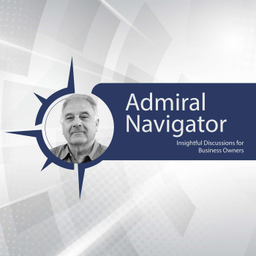
The Admiral Navigator
Claim This Podcastby Admiral Consulting Group
8 episodes
Updated Daily
Accepts GuestsHas SponsorsLocation 🇺🇸
Podcast Overview
How do Mid-Market Leaders turn ERP complexity into a competitive advantage? From ERP to AI, The Admiral Navigator charts the path from challenge to outcome. Hear CEOs, CFOs & CIOs share the frameworks, risks, and wins that deliver predictable scaling, decision clarity, and measurable results—ready to act on the moment you press play.
Language
🇺🇲
Publishing Since
10/9/2025
1 verified phone number on file for The Admiral Navigator
Pitch yourself as a guest, propose sponsorships, or reach out directly to the host.
Recent Episodes
August 12, 2026
Warehouse Automation & Inventory Accuracy with Business Central (Plus Copilot AI)
<p>Smarter warehouses, fewer errors, higher ROI.</p><p><br></p><p><strong>Show Notes:</strong></p><p>Warehousing is where operational profit is won—or quietly lost. In this episode, Mike Lordi sits down with Admiral Consulting Group’s Dominick Zappia and Ben Lane to break down how Microsoft Dynamics 365 Business Central helps mid-market teams improve inventory accuracy, speed up fulfillment, reduce manual processes, and gain real-time visibility across warehouses. You’ll also hear how Copilot and AI are reshaping order processing, exception management, and reporting—so leaders can make faster, more confident decisions without relying on spreadsheets or tribal knowledge.</p><p><br></p><p><strong>Guests:</strong></p><p>Dominick Zappia, Partner at Admiral Consulting Group</p><p>Personal LinkedIn: <a href="https://www.linkedin.com/in/dominick-zappia-7756484/">Dominick Zappia</a></p><p>Ben Lane, Business Central Practice Manager at Admiral Consulting Group</p><p>Personal LinkedIn: <a href="https://www.linkedin.com/in/bennylane/">Ben Lane</a></p><p>Host:</p><p>The Navigator, brought to you by Admiral Consulting Group</p><p>Mike Lordi, Partner at Admiral Consulting Group</p><p>Personal LinkedIn: <a href="https://www.linkedin.com/in/mike-lordi-0a476625/">Mike Lordi</a></p><p>Company Website: <a href="https://admiral-usa.com/">Admiral USA | Website</a></p><p><br></p><p><strong>Key Discussion Points:</strong></p><p>1. The hidden cost isn’t labor—it’s “system friction”: Disconnected tools create compounding errors, delays, and financial leakage.</p><p>2. Inventory accuracy is a profit lever: Fixing “what you think you have vs what you</p><p>3. Process beats technology: Automation only works when baseline workflows are defined and standardized first.</p><p>4. Real-time operations reduce key-person risk: When knowledge is stored in systems—not people—teams scale with less fragility.</p><p>5. Shipping automation is an ROI accelerant: Embedded tools can automate labels, tracking, and customer notifications while reducing errors.</p><p>6. AI forecasting can reduce both stockouts and overbuying: Demand planning improves with reorder logic + AI-assisted forecasting and seasonality insights.</p><p>7. Copilot turns operational data into decisions faster: Summaries, exceptions, automated workflows, and sales order agents reduce manual work and speed execution.</p><p>Notable Quotes:</p><p>• On disconnected systems + chaos: “Disconnected systems… they’re just not fully integrated. So they have poor visibility into inventory.”</p><p>• On the cost of manual warehouse operations: “A lot of manual effort or processes from receiving to picking and then manually posting it later…”</p><p>• On why inventory accuracy matters: “Inventory accuracy… is crucial because there’s money there.”</p><p>• On process before automation: “There’s no automation if your processes are broken. Again, process first, then automation.”</p><p>• On eliminating tribal knowledge risk: “Now they’re doing everything from one system… it’s available to everybody to see in real time.”</p><p>• On Copilot’s advantage inside Business Central: “Microsoft has incorporated Copilot so deeply in Business Central that the functionality already exists without having to build it out.</p><p><br></p><p><strong>Chapters</strong></p><p>• 00:00 — Intro: why warehouse ops break mid-market scale</p><p>• 03:05 — Biggest warehouse inefficiencies in legacy ERP environments</p><p>• 05:16 — Running multiple warehouses + distribution centers efficiently</p><p>• 07:09 — Planning + forecasting tools to maintain optimal stock levels</p><p>• 10:09 — Shipping automation + carrier integrations (labels, tracking, notifications)</p><p>• 12:49 — KPIs that improve fastest after implementation</p><p>• 15:00 — “Process first” implementation mindset + building the foundation</p><p>• 18:39 — How Admiral evaluates WMS options (native vs robust solutions)</p><p>• 20:41 — How AI is being used in warehouse automation + fulfillment</p><p>• 21:12 — Copilot benefits: automation, exceptions, natural language workflows</p><p>• 22:26 — Sales Order Agent: email → order creation → documents</p><p>• 26:35 — Why Copilot inside BC is different (deep native integration)</p><p>• 32:39 — Real transformation outcomes: accuracy, returns, turnover, efficiency</p><p>• 43:41 — Biggest “aha” moments: one system + KPI reporting visibility</p>
July 8, 2026
How CFOs Reduce Close Time, Costs, and Risk With ERP
<p>ERP decisions don’t fail because of bad software; they fail because of weak business cases. In this episode, Mike Lordi sits down with Dominick Zappia and Ben Lane to break down what mid-market CFOs should demand from an ERP investment. Moving beyond feature lists and vendor noise, the conversation focuses on what truly drives financial outcomes: time savings, operational clarity, and control. If you're still relying on manual processes, disconnected systems, or Excel-heavy reporting, this episode will reframe how to evaluate ERP, and what “ROI” should really mean.</p><p><br></p><p><strong>Key Discussion Points:</strong></p><ol><li>ERP ROI is driven by outcomes—not features</li></ol><p>CFOs must evaluate time savings, error reduction, and decision speed—not system capabilities.</p><ol><li>Manual processes are silently eroding margin</li></ol><p>Every rekey, spreadsheet, and workaround introduces cost, delay, and risk.</p><ol><li>Close speed is a proxy for financial control</li></ol><p>A 5–8 day close isn’t just inefficient; it delays critical decisions and increases risk exposure.</p><ol><li>Order-to-cash acceleration directly improves cash flow</li></ol><p>Faster invoicing and collections reduce DSO and strengthen working capital.</p><ol><li>Excel dependency creates fragmented, untrustworthy data</li></ol><p>Multiple versions of truth undermine reporting confidence and executive decision-making.</p><ol><li>Integration, not features, is what unlocks efficiency</li></ol><p>ERP must unify CRM, finance, and operations into a real-time system of record.</p><ol><li>AP automation is the fastest path to immediate ROI</li></ol><p>Invoice capture, approvals, and payments can be streamlined quickly with measurable cost savings.</p><p><br><strong>Guests:</strong></p><p>Dominick Zappia, Partner at Admiral Consulting Group</p><p>Personal LinkedIn: <a href="https://www.linkedin.com/in/dominick-zappia-7756484/">Dominick Zappia</a></p><p> </p><p>Ben Lane, Business Central Practice Manager at Admiral Consulting Group</p><p>Personal LinkedIn: <a href="https://www.linkedin.com/in/bennylane/">Ben Lane</a></p><p><br></p><p><strong>Host:</strong></p><p>The Navigator, brought to you by Admiral Consulting Group</p><p>Mike Lordi, Partner at Admiral Consulting Group</p><p>Personal LinkedIn: <a href="https://www.linkedin.com/in/mike-lordi-0a476625/">Mike Lordi</a></p><p>Company Website: <a href="https://admiral-usa.com/">Admiral USA | Website</a></p><p><br></p><p><strong>Notable Quotes:</strong></p><ul><li>“ERP decisions don’t fail because of bad software, they fail because of bad business cases.”</li><li>“They’re selling capabilities instead of outcomes.”</li><li>“The real question isn’t whether eight days works; it’s what those eight days are costing you.”</li><li>“Garbage in, garbage out; your reporting is only as good as your data.”</li><li>“If your ERP isn’t reducing time, improving clarity, and strengthening control, it’s just adding complexity.”</li></ul><p><strong>Chapters</strong></p><p>00:00 – Opening: ERP Decisions & Business Case Failure</p><p>Why most ERP investments fail before implementation even begins</p><p>01:30 – The Noise: Features, Discounts, and Misleading Value</p><p>Why first-year discounts and feature lists distract CFOs from real ROI </p><p>05:30 – Time = Money: Order-to-Cash Acceleration</p><p>How ERP impacts revenue velocity and cash flow</p><p>08:00 – Integration vs. Fragmentation</p><p>Eliminating manual handoffs and syncing systems in real time</p><p>11:00 – Close Speed & Financial Accuracy</p><p>Why faster close cycles improve decision-making and reduce risk</p><p>15:30 – The Hidden Risk of Excel Dependency</p><p>How spreadsheets create inconsistencies and operational drag </p><p>20:30 – Forecasting & Trust in the Numbers</p><p>Using real-time operational data to improve forecasting accuracy </p><p>24:00 – When Systems Break: Outgrowing Accounting Software</p><p>Early warning signs your current system can’t scale </p><p>27:00 – AP Automation: Quick Wins for CFOs</p><p>Reducing cost and risk through workflow automation </p><p>30:00 – From Processing to Strategic Finance</p><p>Freeing finance teams to focus on analysis and planning</p><p>33:00 – Single Source of Truth</p><p>What CFOs should expect from a modern ERP system</p><p>35:00 – Final Takeaways: What CFOs Should Demand</p><p>The 5 core requirements of a strong ERP business case</p>
June 11, 2026
How AI Is Transforming Business Central for CFOs
<p>AI-powered ERP turns disconnected data into faster decisions, better forecasting, and dramatically shorter financial close cycles.</p><p><br></p><p><strong>Show Notes:</strong></p><p>In this episode of Admiral Navigator, Dominick Zappia speaks with Tristan Threlkeld and Ryan Peterson about the growing intersection of ERP modernization, AI, Microsoft Fabric, and intelligent business operations.</p><p><br></p><p>The conversation begins with the realities many mid-market organizations face as they move from legacy systems like Dynamics GP, SL, or QuickBooks into Microsoft Dynamics 365 Business Central. One of the largest challenges is not simply migrating data — it is restructuring how organizations think about financial data, dimensions, reporting, and operational visibility.</p><p><br></p><p>The guests explain how Microsoft Fabric and Data Lakes solve a major concern for CFOs: preserving decades of historical ERP transactions without cluttering the new ERP environment. Rather than migrating every historical transaction directly into Business Central, organizations can centralize legacy and current data into a unified data platform that becomes a “single source of truth.”</p><p><br></p><p>A major focus of the episode is how AI changes ERP from reactive reporting into proactive operational intelligence. Instead of manually building reports and dashboards, finance teams can ask natural-language questions and receive AI-generated insights, forecasts, anomaly detection, and automated recommendations.</p><p><br></p><p>The discussion also explores Data Courage’s suite of AI-powered Business Central applications, including Financial Intelligence, Customer Intelligence, and Chief Accountant Assistant. These tools help organizations dramatically reduce manual processes, automate month-end close tasks, improve forecasting accuracy, and surface operational risks before they become major problems.</p><p><br></p><p>One of the most compelling moments comes when the guests explain how some organizations have reduced month-end close cycles from multiple weeks down to just a few business days using AI-assisted accounting workflows.</p><p><br></p><p>The episode concludes with a forward-looking discussion about the future of intelligent ERP systems. The guests emphasize that AI will not replace finance professionals, but it will fundamentally change how finance teams operate by eliminating repetitive manual work and enabling more strategic decision-making.</p><p><br></p><p><strong>Key Discussion Points:</strong></p><p>1. ERP modernization is no longer just about replacing software. Modern ERP platforms combined with AI and Fabric create a connected operational intelligence layer across the business.</p><p><br></p><p>2. You do not need to migrate 20 years of ERP transactions into Business Central.</p><p>Historical data can remain accessible and analyzable through Fabric and Data Lakes without overcomplicating ERP implementations.</p><p> </p><p>3. AI-powered finance tools can dramatically reduce month-end close cycles.</p><p>Some organizations reduced close processes from weeks down to days using AI-assisted accounting workflows.</p><p> </p><p>4. Microsoft Fabric creates a true “single source of truth.”</p><p>Organizations can combine ERP, CRM, operational systems, spreadsheets, and external applications into one connected data environment.</p><p><br></p><p>5. The future of ERP is conversational and predictive.</p><p>Finance leaders can ask natural-language business questions and receive immediate insights, analysis, and forecasting recommendations.</p><p><br></p><p>6. Poor data quality becomes a major risk in AI environments.</p><p>“Garbage in, garbage out” becomes amplified with AI, making governance and data structure increasingly important.</p><p><br></p><p>7. AI adoption is becoming a competitive requirement.</p><p>Organizations delaying AI experimentation risk falling behind operationally and strategically.</p><p><br><strong><br>Guests:<br></strong>Tristan Threlkeld<br>Director of Sales & Business Development at Data Courage<br>Personal LinkedIn: <a href="https://www.linkedin.com/in/tristan-threlkeld-b7a46530/">Tristan Threlkeld<br></a>Company Website: <a href="https://www.datacourage.com/">Data Courage<br></a><br>Ryan Peterson<br>Director of Data & AI North America at Data Courage<br>Personal LinkedIn: <a href="https://www.linkedin.com/in/patersonryan/">Ryan Peterson<br></a>Company Website: <a href="https://www.datacourage.com/">Data Courage<br></a><br></p><p><strong>Host:</strong><br>The Navigator, brought to you by Admiral Consulting Group<br>Dominick Zappia, Partner at Admiral Consulting Group<br>Personal LinkedIn: <a href="https://www.linkedin.com/in/dominick-zappia-7756484/">Dominick Zappia</a><br>Company Website: <a href="https://admiral-usa.com/">Admiral Consulting Group<br></a><br></p><p><strong>Notable Quotes:</strong></p><p>• “What happens when ERP stops being just a system of record and starts becoming a system of intelligence?”</p><p>• “Human driven, AI powered. That’s how it should be.”</p><p>• “You don’t have to think about what questions to ask anymore. Ask it everything.”</p><p>• “Gone are the days where you have to manually build financial reports.”</p><p>• “If you’re not already using AI to some capacity, you’re already far behind.”</p><p><br></p><p><strong>Chapters:</strong></p><p>00:00 Opening: Intelligent ERP and AI</p><p>00:45 Why Admiral Consulting and Data Courage Partner</p><p>02:00 Challenges Migrating from GP, SL, and QuickBooks</p><p>04:00 Preserving Legacy ERP Data with Fabric</p><p>07:00 What Microsoft Fabric and Data Lakes Actually Are</p><p>11:00 Combining ERP and Operational Data</p><p>13:00 Fabric vs Traditional FP&A Tools</p><p>18:00 Turning ERP Data into Business Intelligence</p><p>20:00 AI Apps Inside Business Central</p><p>24:00 Customer Intelligence and Predictive Alerts</p><p>26:00 AI-Powered Month-End Close Automation</p><p>31:00 Real-World Custom AI Implementations</p><p>37:00 AI Risks, Data Governance, and Adoption</p><p>40:00 The Future of Intelligent ERP</p><p>45:00 Closing Thoughts and Wrap-Up</p>
8 total episodes available
Deep-dive analytics for The Admiral Navigator
Frequently asked questions
Have a different question and can't find the answer you're looking for? Reach out to our support team by sending us an email and we'll get back to you as soon as we can.
- What is The Admiral Navigator?
- How often does this podcast release new episodes?
This podcast updates daily.
- Where can I listen to this podcast?
This podcast is available on 4 platforms including Apple Podcasts, Spotify, and more. You can also use the RSS feed directly.
- Does this podcast accept guests?
Yes, this podcast regularly features guests.
Legal Disclaimer
Pod Engine is not affiliated with, endorsed by, or officially connected with any of the podcasts displayed on this platform. We operate independently as a podcast discovery and analytics service.
All podcast artwork, thumbnails, and content displayed on this page are the property of their respective owners and are protected by applicable copyright laws. This includes, but is not limited to, podcast cover art, episode artwork, show descriptions, episode titles, transcripts, audio snippets, and any other content originating from the podcast creators or their licensors.
We display this content under fair use principles and/or implied license for the purpose of podcast discovery, information, and commentary. We make no claim of ownership over any podcast content, artwork, or related materials shown on this platform. All trademarks, service marks, and trade names are the property of their respective owners.
While we strive to ensure all content usage is properly authorized, if you are a rights holder and believe your content is being used inappropriately or without proper authorization, please contact us immediately at hey@podengine.ai for prompt review and appropriate action, which may include content removal or proper attribution.
By accessing and using this platform, you acknowledge and agree to respect all applicable copyright laws and intellectual property rights of content owners. Any unauthorized reproduction, distribution, or commercial use of the content displayed on this platform is strictly prohibited.