

The Grit Factor Podcast brings real conversations with founders, entrepreneurs, and builders. No fluff. Just honest stories, hard lessons, and practical takeaways you can apply right now. New interviews plus solo episodes on mindset, leadership, and execution.
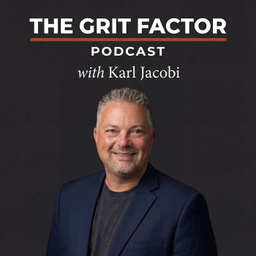
The Grit Factor Podcast w/ Karl Jacobi
Claim This Podcastby Karl Jacobi
5.0(5 reviews)
49 episodes
Updated Daily
Accepts GuestsHas SponsorsLocation 🇺🇸
Podcast Overview
The Grit Factor Podcast brings real conversations with founders, entrepreneurs, and builders. No fluff. Just honest stories, hard lessons, and practical takeaways you can apply right now. New interviews plus solo episodes on mindset, leadership, and execution.
Language
🇺🇲
Publishing Since
1/21/2026
Reach the team behind The Grit Factor Podcast w/ Karl Jacobi
Verified contact details for this show aren't on file yet — sign up to get notified when they land.
Recent Episodes
July 21, 2026
Episode 048: He Asked God to Break Him. The Answer Arrived the Next Morning with Evan Poling.
<p><strong>Episode Summary</strong></p><p>Evan Poling is in the middle of his fight right now. No victory lap. No bonus chapter. Two and a half years into building Biz Retire, fifty thousand dollars of his own money gone, working a part time job at a business consultancy to pay the bills while his wife carries the financial weight at home, and the people closest to him still quietly wondering if he should just get a real job. He is not here to tell you it worked out. He is here to tell you what it actually costs to keep going when nothing has moved yet.</p><p>But underneath the business story is a prayer he made as a young man that landed differently than he expected. He was sleeping in a house with his grandparents visiting, lying on the living room floor under skylights, and he prayed something he meant without fully understanding the implications. God, break me and remake me. The next morning his ROTC scholarship was gone. An hour later he was fired from his gas station job. Then he went to his girlfriend's house, jerked the wheel on a newly paved road, and fractured his spine. She shattered her heel. Her parents sued. All in the span of about twenty four hours. He finished college with no student loan debt anyway. He met his wife through a different kind of crazy prayer. He found healing from an addiction to pornography he had carried since childhood through a men's group he almost never had the courage to walk into. And he built a resume exposing financial crimes at some of the largest banks in the world before walking away from all of it to bet on himself.</p><p>He is an Army National Guard veteran, a former combat medic, a double major in accounting and financial economics, and a man who discovered embezzlement at Raising Cane's that led to fourteen arrests in his first financial analyst role. He understands money better than almost anyone in the room. And he knows now that money is a result, not a goal. The people who chase it as a goal will compromise everything to get it. He watched them do it. He almost became one of them.</p><p>This episode is for the man who has been grinding in isolation, carrying something he has never said out loud, and wondering if the prayer he made actually got heard.</p><p><strong>In This Episode, You'll Discover:</strong></p><ol><li>What Evan actually saw inside the financial crimes world at Chase and other major banks, how a financial analyst role at Raising Cane's led to fourteen arrests from his embezzlement analysis, and what a decade of tracking how money actually moves taught him about what is broken at the heart of how most people relate to wealth</li><li>Why Evan engineered himself out of his own job by teaching his team lead to do his work, gave away four team members to another team, and ended up working four to five hours a week before his employer eventually let him go, and what the transition from W-2 to entrepreneurship actually felt like when the busyness that got rewarded in corporate stopped working</li><li>The night under the skylights and the prayer that started it all: God, break me and remake me, and the next morning sequence of a lost scholarship, a firing, a car accident, a fractured spine, and a lawsuit landing within hours of each other</li><li>The addiction to pornography Evan has carried since childhood, how he tried to pray it away and read his Bible harder and do all of it in isolation for years, and what finally changed when he walked into a men's group called Revive Forty and spoke it out loud to twenty people who had been there themselves</li><li>What seventy percent of Christian men struggling with pornography actually means in raw numbers for the United States, and why Evan believes both the shame and the silence are the weapons that keep men locked inside it</li><li>How Evan's wife has quietly held the family together financially while he builds Biz Retire, the infertility they have been navigating at the same time, and the honest admission about the pride cost of earning less now than he did twelve years ago</li><li>Why eighty percent of businesses that go to market never sell, what owners get wrong about the value they have actually built versus the potential they think a buyer should pay for, and what it looks like to package your business like a product rather than a personal legacy</li><li>The vision Evan is building toward with Biz Retire, a platform that connects business owners, buyers, and advisors directly without the inefficient broker-in-the-middle model that dominates the industry today</li></ol><p><strong>Key Takeaways:</strong></p><ol><li><strong>Choose Your Hard.</strong> Evan's directive when faced with any difficult decision. Being fat is hard. Being fit is hard. Choose your hard. Being broke is hard. Building something uncertain is hard. Choose your hard. At every crossroads, both directions have a cost. The only question is which cost you can live with. Pick the one that builds something and go.</li><li><strong>Money Is a Result. Not a Goal.</strong> Evan watched people cross every line imaginable to get it. He saw the most successful general manager at Raising Cane's embezzling from the register because they had decided they deserved more. The condition of the heart that puts money at the top of the priority list will eventually justify anything. Service first. Money follows real value. The Bible says it. Evan has seen the alternative.</li><li><strong>Speaking It Out Loud Steals Its Power.</strong> Whatever you are carrying in silence is heavier than it has to be. Evan carried a pornography addiction for years in isolation, praying it away, trying harder alone. The night he walked into a room of twenty men and said it out loud, something broke. James 5:16 is not a religious cliche. It is a mechanism. Confession shared loses its grip. Confession buried tightens it.</li><li><strong>The Busyness That Gets Rewarded in a W-2 Will Betray You in a Business.</strong> Showing up is nine tenths of the battle in a corporate job. In entrepreneurship it is nothing. The discipline that moves the needle is not hours logged. It is effective action on the things that actually matter, done consistently, in a direction that serves a real market need. Most people carry the old system into the new game and wonder why the scoreboard does not move.</li><li><strong>God Does Not Break You to Punish You. He Breaks You to Rebuild You.</strong> Evan prayed that prayer haphazardly, without fully understanding what he was inviting. The next day looked catastrophic. The next decade looked like redemption. No student loan debt. The love of his life. A faith that became his own instead of borrowed. Looking back at the boulder, it is obvious. In the middle of it, it was just pain. That is always the sequence.</li><li><strong>Productive Procrastination Is Still Procrastination.</strong> The tasks that feel like productivity, knocking out emails, reorganizing files, clearing inboxes, are dopamine hits that confirm you are busy without moving the needle. Every entrepreneur who came from a W-2 world brings this habit with them. Recognizing it is the first step. Building the tolerance to sit with the discomfort of doing the scary high-leverage thing instead is the actual work.</li><li><strong>Package Your Business Like a Product Before You Try to Sell It.</strong> Eighty percent of businesses that go to market will never sell. Not because they have no value. Because the owner has not made the value visible, documented, and transferable. A buyer does not want to buy a job. They want to buy a machine. If you cannot step away and have it run, you have not built a business. You have built a dependency on yourself.</li><li><strong>Imagine Your Funeral. Then Build Backwards.</strong> Evan's question for the next guest is the most clarifying exercise in the episode. When people stand up at your funeral, what will they actually say? Is that what yo...</li></ol>
July 17, 2026
Episode 047: Bet on Yourself Before Anyone Else Sees It with Walid Chaya.
<p><strong>Episode Summary</strong></p><p>Walid Chaya grew up in Fairfax County, Virginia, the son of Lebanese immigrants who crossed an ocean with two thousand dollars, no English, and a plan that did not include their son becoming an actor. They pictured a doctor. A lawyer. Something with a name everybody recognized. Then Walid was five years old and went backstage at an Arabic musical adaptation of Romeo and Juliet in Lebanon, saw a bag of money that turned out to be a deck of playing cards, and fell completely in love with the organized chaos behind the curtain. He memorized every word of that show. He can still recite it today.</p><p>What followed was a commitment to a path with no salary, no map, and no promise it would ever pay off. And nobody warned him about the gap. The part of the story that sits between the dream and the arrival. Years of doing everything right. The training, the auditions, the commute from his cousin's house in Connecticut to Hell's Kitchen every day through the darkness of a New York winter. The side gigs tutoring students. The PA work on set. The friends at NBC who could not get their own resume to the seventh floor. And the moment he was already in his car on the highway heading back to DC to pack up and quit, when a single text message from a friend with an acting studio arrived and he pulled straight off the exit.</p><p>He did not quit. He stayed eight years in New York. He built a teaching career alongside the acting career. He moved to LA. He opened his own studio. Nineteen years and eight locations later, Studio for Performing Arts LA is the official acting partner of the City of West Hollywood. He has appeared on Madam Secretary, The Blacklist, Hulu projects, and award-winning independent films. He is now directing and producing his own feature film, Crazy Rich Arabs, a twin identity-swap comedy that he describes as The Parent Trap meets Crazy Rich Asians with a Beirut backdrop, in which he plays both twins. He told his parents he may not have become a doctor or a lawyer, but he has played both on screen. He thinks that counts.</p><p>This episode is for anyone grinding in the gap between the dream and the proof, wondering if they are crazy to keep going.</p><p><strong>In This Episode, You'll Discover:</strong></p><ol><li>What Walid saw backstage at an Arabic musical in Lebanon at age five that permanently redirected his life, and why a bag full of playing cards was the most important thing he ever held</li><li>How a Lebanese immigrant family that arrived in America with two thousand dollars and no English became the backbone of Walid's belief in himself, and why he says knowing where he came from is half his secret sauce</li><li>The eight-year New York grind in detail, the two and a half hour daily commute from Connecticut in the middle of winter, the PA work that kept landing him in casting rooms, and why he was already in his car on the highway heading back to DC to quit when everything changed</li><li>Why Walid looks at his resume before every audition, not to impress himself but to remind himself of the evidence of everything he has already built, and why that habit is one of the most underrated tools in a performer's or entrepreneur's arsenal</li><li>What it looks like to run a performing arts school across eight locations with a staff of twenty while simultaneously acting, directing, and producing original work, and why the daunting feeling never goes away no matter what level you reach</li><li>The calculated risk philosophy Walid uses for every major decision, why he never jumps off a cliff but takes one small step at a time, and the directing analogy that makes the big picture manageable when it would otherwise be paralyzing</li><li>Why Walid believes the most important question anyone can ask themselves when finding their path is simply where do you feel at home, and the honest warning he gives students who arrive with blind faith in a direction that has no realistic roots in them</li><li>What Crazy Rich Arabs is about, why Walid is playing both twins, and how listeners can support the production right now before shooting begins in October</li></ol><p><strong>Key Takeaways:</strong></p><ol><li><strong>Bet on Yourself Before Anyone Else Sees It.</strong> This is the whole episode in five words. Nobody handed Walid a roadmap. Nobody validated the path. His parents did not understand it. The industry certainly did not roll out a welcome mat. He bet on something in himself before any external evidence existed to justify that bet. That is not delusion. That is the specific kind of courage that separates the people who get there from the people who almost did.</li><li><strong>One Tick at a Time.</strong> Walid's most practical piece of advice is the simplest. A clock does not jump to the next hour. It moves one tick at a time, every second, consistently, for sixty minutes. The actors and entrepreneurs who make it do not lunge at the finish line. They show up for the tick in front of them. One class. One audition. One email. One day.</li><li><strong>The Gap Is Part of the Journey. Not a Sign Something Is Wrong.</strong> Everyone who has ever built something real has spent time in the gap between the dream and the arrival. Most people interpret that gap as evidence they should stop. Walid is evidence that the gap is just the middle of the story. The people who stay in it long enough get to the other side. The ones who leave do not find out.</li><li><strong>Look at the Evidence Before You Listen to the Doubt.</strong> Walid reads his resume before every audition. Not to brag. Not to feel superior. To remind himself that he has already done real things. The doubt voice is loud. The evidence voice is quieter. You have to deliberately turn up the volume on the evidence.</li><li><strong>The Daunting Feeling Does Not Mean You Are Not Ready. It Means You Are Growing.</strong> Walid says it plainly. Every new level feels bigger than him. That is not a warning sign. That is proof he is in new territory. The surgery feels more daunting than the physical because it should. You have to build the team to match the level, not wait until the fear goes away.</li><li><strong>If Your Circle Does Not Encourage You to Grow, You Are Not in a Circle. You Are in a Cage.</strong> Karl said it. Walid lived it. The people who get you to the next level are the ones who can see it before you do. The people who cannot see it do not mean you harm. They just do not have access to what is inside you. Be careful about who you take direction from.</li><li><strong>Calculated Risk Is Not Recklessness. It Is Strategy.</strong> Walid has never jumped off a cliff in business. Every major move has been researched, mentored, eased into, and expanded gradually. One location to eight. One program to twenty staff. One self, one city, one act at a time. The bold appearance of what he has built is the result of a thousand small deliberate steps, not one giant leap.</li><li><strong>You Won't Break My Soul.</strong> Walid's mantra on the hard days is specific and personal. A Beyonce lyric that came on the radio at exactly the right moment and gave him language for the thing he already knew. Whatever or whoever is trying to take your peace, your clarity, your momentum today, they do not get that power. That is yours. Full stop.</li></ol><p><strong>Timestamps:</strong></p><ul><li>[00:00] Karl introduces Walid Chaya: actor, writer, director, acting school founder, son of Lebanese immigrants, and the man who has played both the doctor and the lawyer his parents wanted him to be</li><li>[03:00] Beirut at age five, the Arabic Romeo and Juliet, the bag of money that was actually playing cards, and the organized chaos backstage that started everything</li><li>[07:00] Growing up between Fairfax County and Lebanon every summer, how those annual returns shaped his identity and his Arabic, and the performing a...</li></ul>
July 14, 2026
Episode 046: I Couldn't Save My Father. So I Gave My Kidney to a Stranger with Matthew Harmody
<p><strong>Episode Summary</strong></p><p>Dr. Matthew Harmody was twenty years old and an engineering student when his mother called to tell him his father had been rushed to the Cleveland Clinic. Both kidneys had completely failed. The man who had done everything for himself, a strong, healthy veteran, an outdoorsman, a mechanic, was going on emergent dialysis. For the next nine years, Matthew watched the decline up close. Nine years of a once-vibrant man being slowly hollowed out by a process that kept him alive but would not let him live. At the end of it, his father had had enough. He withdrew from dialysis. He passed away. And Matthew, who had spent those nine years reading everything he could find about kidney disease and helping his father navigate the medical system, decided to go back to school at thirty and become an emergency physician.</p><p>He spent twenty-five years in emergency medicine. He saw dialysis patients nearly every day. Every one of them reminded him of his father. And in 2017, he donated one of his own kidneys to a complete stranger through an anonymous living donation program, because if he could not save his father, he could at least give someone else the chance his father never had.</p><p>That would already be a complete story. It was only the beginning. A few years after the donation, a Kilimanjaro climb to raise awareness led to a bigger idea. What if a team of kidney donors climbed the highest peak in every single state in the country? What if they did it fast enough to break a Guinness World Record? What if they used the whole thing to show the world that giving a piece of yourself does not make you smaller?</p><p>Forty-one days and one hour later, Dr. Harmody and four other kidney donors had set the world record for the fastest team to summit all fifty state high points. From Denali in Alaska to Britton Hill in Florida. Through record snowfall in the Pacific Northwest. Through two in the morning trailheads in the cold and rain. Through RV laundromats and hunger and exhaustion and the kind of personality friction that only shows up when people have not slept in days. They finished. And somewhere in California, between Mount Whitney and the next summit, an email arrived. Someone had registered to be considered as a living kidney donor for the first time, strictly because of seeing their story on social media. That was the whole point.</p><p>This episode is for anyone who has watched someone they love fight something they could not fix, and is still trying to figure out what to do with that.</p><p><strong>In This Episode, You'll Discover:</strong></p><ol><li>What nine years of watching his father decline on dialysis actually looked like, how it redirected an engineering career toward medical school at thirty, and why Matthew says the most difficult race he has ever run was the one his father ran for nine years just trying to stay alive</li><li>What anonymous living kidney donation is, how the process works, why Matthew's father refused to accept a kidney from a family member, and what the decision to donate to a complete stranger cost him in conversations with his own family</li><li>The Guinness World Record attempt that brought five kidney donors together across fifty states in an RV, the record snowfall in the Pacific Northwest that nearly derailed the whole thing, and the specific moment in a laundromat in California that made the entire ordeal worth every sleepless mile</li><li>The three most common myths about living kidney donation that Matthew dispels regularly, including age limits, income loss during recovery, and physical restrictions after the surgery</li><li>Why ninety-three thousand people are currently on the transplant waitlist for kidneys in this country, why roughly half of them will die before a kidney becomes available, and why the gold standard solution is a living donor rather than a deceased one</li><li>The Jesuit high school motto that has guided every chapter of Matthew's life, men for others, and why he measures the value of every role he has held by how many people it allowed him to reach</li><li>Why Matthew's book Ascending America is not just a kidney donation story, how it covers everything from what causes kidney disease to the future of pig-to-human kidney transplants, and why even someone with zero interest in organ donation would find it worth reading</li><li>The lesson from a Steven Levitt study on quitting early that Matthew applies to every major decision, and why he believes sticking with something past the point of diminishing returns can cost you just as much as giving up too soon</li></ol><p><strong>Key Takeaways:</strong></p><ol><li><strong>If You Cannot Save the Person in Front of You, Save the Next One.</strong> Matthew could not give his father a kidney. His father would not accept one. For nine years he watched that decision play out. Then he gave his kidney to a stranger and spent his post-retirement years trying to make sure the next family does not have to go through what his did. Grief that moves forward is not the same as grief that stops. It is the most productive version of love.</li><li><strong>Giving a Piece of Yourself Does Not Make You Smaller.</strong> This is the thesis behind everything Matthew does. The Kilimanjaro climb, the fifty state record, the book, the advocacy work. The people who give do not diminish. They expand. The kidney is gone. Everything that followed the donation is bigger than anything that came before it.</li><li><strong>Purpose Far Exceeds the Obstacles In Its Path.</strong> Matthew's definition of grit is precise and hard-won. Having a purpose that is large enough changes the math on every obstacle between you and it. The two in the morning trailhead in the rain is not a hardship when you know what it is for. The laundromat is not a low point when an email arrives saying someone just signed up to donate because of your story.</li><li><strong>Hard Decisions Lead to Easy Lives. Easy Decisions Lead to Hard Ones.</strong> Matthew says this to his two boys and lives it himself. Leaving a comfortable engineering career for medical school at thirty was hard. Donating a kidney to a stranger was hard. Setting a world record with four teammates in an RV was hard. Every one of those decisions built a life he would not trade for the easier version.</li><li><strong>The Difficult Race Was Not Yours.</strong> Matthew's perspective check in the middle of the hardest stretches of the fifty-state attempt was always the same. His father ran for nine years on dialysis. Three times a week. Every week. For nine years. That is the benchmark for difficult. Everything else is relatively small potatoes. Find the person in your life who ran the hardest race and let their story put yours in proportion.</li><li><strong>Know When to Quit Early.</strong> Matthew is as clear about this as he is about perseverance. There is a point of diminishing returns in every career, every relationship, every chapter of life. Sticking with something past that point because you are afraid of what change looks like is not grit. It is avoidance dressed up as commitment. Grit and wisdom sometimes look identical from the inside. You have to learn to tell them apart.</li><li><strong>The Complication Rate of Donating a Kidney Is on Par With Delivering a Baby.</strong> Matthew puts this in context deliberately. Thousands of women deliver babies every day in this country. Nobody suggests they are being reckless. The risk profile of living kidney donation is comparable. Most people do not know that. Most people do not know you can donate a kidney at eighty. Or that lost income during recovery can be reimbursed. Or that there are no physical limitations after the surgery. The myths are the barrier.</li><li><strong>Measure Impact in Concentric Circles.</strong> Matthew learned to think about impact as an engineer thinks about a system. T...</li></ol>
49 total episodes available
Similar Podcasts
Discover related shows you might enjoy
Deep-dive analytics for The Grit Factor Podcast w/ Karl Jacobi
Frequently asked questions
Have a different question and can't find the answer you're looking for? Reach out to our support team by sending us an email and we'll get back to you as soon as we can.
- What is The Grit Factor Podcast w/ Karl Jacobi?
- How often does this podcast release new episodes?
This podcast updates daily.
- Where can I listen to this podcast?
This podcast is available on 4 platforms including Apple Podcasts, Spotify, and more. You can also use the RSS feed directly.
- Does this podcast accept guests?
Yes, this podcast regularly features guests.
Legal Disclaimer
Pod Engine is not affiliated with, endorsed by, or officially connected with any of the podcasts displayed on this platform. We operate independently as a podcast discovery and analytics service.
All podcast artwork, thumbnails, and content displayed on this page are the property of their respective owners and are protected by applicable copyright laws. This includes, but is not limited to, podcast cover art, episode artwork, show descriptions, episode titles, transcripts, audio snippets, and any other content originating from the podcast creators or their licensors.
We display this content under fair use principles and/or implied license for the purpose of podcast discovery, information, and commentary. We make no claim of ownership over any podcast content, artwork, or related materials shown on this platform. All trademarks, service marks, and trade names are the property of their respective owners.
While we strive to ensure all content usage is properly authorized, if you are a rights holder and believe your content is being used inappropriately or without proper authorization, please contact us immediately at hey@podengine.ai for prompt review and appropriate action, which may include content removal or proper attribution.
By accessing and using this platform, you acknowledge and agree to respect all applicable copyright laws and intellectual property rights of content owners. Any unauthorized reproduction, distribution, or commercial use of the content displayed on this platform is strictly prohibited.