
I’m recording the King James Version of the Bible, one chapter at a time. The KJV is renowned for its linguistic beauty, and the New Testament of the KJV is based on the Received Text, which I believe is the most trustworthy and original text of the New Testament books. There’s a certain power in reading Bible books as a whole. Bible-in-a-year plans are great, but they have a few pitfalls: (1) They typically chop the Bible up into unnatural parts (readings from several books each day). This makes it harder to understand each book and remember it distinctly. (2) If it’s not January 1, we aren’t likely to start a Bible-in-a-year reading plan. Every day is an excellent day to start reading the Bible. (3) At the end of the year — once we’ve completed reading the whole Bible — we might think we’re “done.” Our goal shouldn’t simply be to read the whole Bible; our goal should be to read the whole Bible and to read the Bible every day of our life. We’re never done.
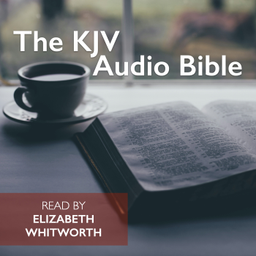
The KJV Audio Bible
Claim This Podcastby Elizabeth Whitworth
Podcast Overview
I’m recording the King James Version of the Bible, one chapter at a time. The KJV is renowned for its linguistic beauty, and the New Testament of the KJV is based on the Received Text, which I believe is the most trustworthy and original text of the New Testament books. There’s a certain power in reading Bible books as a whole. Bible-in-a-year plans are great, but they have a few pitfalls: (1) They typically chop the Bible up into unnatural parts (readings from several books each day). This makes it harder to understand each book and remember it distinctly. (2) If it’s not January 1, we aren’t likely to start a Bible-in-a-year reading plan. Every day is an excellent day to start reading the Bible. (3) At the end of the year — once we’ve completed reading the whole Bible — we might think we’re “done.” Our goal shouldn’t simply be to read the whole Bible; our goal should be to read the whole Bible and to read the Bible every day of our life. We’re never done.
Language
🇺🇲
Publishing Since
4/8/2025
Reach the team behind The KJV Audio Bible
Verified contact details for this show aren't on file yet — sign up to get notified when they land.
Recent Episodes
June 13, 2026
Exodus 29
Read Exodus 29. The LORD instructed Moses on how to consecrate Aaron and his sons for the priesthood. The ceremony required specific animals and bread offerings to be prepared in advance: a young bullock, two rams without blemish, and unleavened bread, cakes mixed with oil, and wafers anointed with oil, all made from wheat flour. These were to be placed in a basket and presented at the door of the tabernacle of the congregation. Moses was then directed to bring Aaron and his sons to the tabernacle door and wash them with water. He was to dress Aaron in the priestly garments — the coat, the robe of the ephod, the ephod itself, the breastplate, and the curious girdle of the ephod — and place the mitre on his head with the holy crown attached. Aaron's sons were also to be clothed with coats, girdles, and bonnets. This act of dressing them in their garments constituted an anointing and consecration to the priesthood. The first animal sacrifice was the bullock, offered as a sin offering. Aaron and his sons were to lay their hands on its head at the tabernacle door, after which Moses would slay it. Moses was to take some of the bullock's blood and put it on the horns of the altar with his finger, pouring the rest at the base of the altar. The fat, the caul over the liver, and the two kidneys with their fat were to be burned on the altar, while the flesh, skin, and dung of the bullock were to be burned outside the camp, as it was a sin offering. The first ram was then to be offered as a burnt offering. Aaron and his sons would lay their hands on its head before it was slain, and its blood was to be sprinkled around the altar. The ram was to be cut into pieces, with its head, pieces, and fat washed and then burned entirely on the altar. This was described as a sweet savor, an offering made by fire unto the Lord. The second ram served as the ram of consecration. After Aaron and his sons laid their hands on it and it was slain, Moses was to take some of its blood and put it on the tip of Aaron's right ear, the thumb of his right hand, and the great toe of his right foot, and likewise for each of Aaron's sons. The remaining blood was to be sprinkled on the altar. Moses was then to take of the blood from the altar and the anointing oil and sprinkle it on Aaron and his sons and their garments, consecrating them and their garments together. Following this, Moses was to take the fat portions of the ram, the rump, the fat covering the inwards, the caul of the liver, the two kidneys with their fat, and the right shoulder. From the basket of unleavened bread, he was to add one loaf, one cake of oiled bread, and one wafer, and place all of these into the hands of Aaron and his sons to be waved before the Lord as a wave offering. Moses would then take them from their hands and burn them on the altar as a burnt offering, a sweet savor before the Lord. The breast of the ram was also to be waved before the Lord and was Moses' portion as the officiating priest, while the heave shoulder belonged to Aaron and his sons as their due from the children of Israel in all future offerings. The LORD then established the sacred garments of Aaron as a lasting inheritance. After Aaron's death, his garments were to be passed to his sons, who would wear them during their own seven-day anointing and consecration in the tabernacle. Each day of the consecration period, a bullock was to be offered as a sin offering to make atonement, and the altar itself was to be purified and anointed to make it most holy. Following the seven days of consecration, the regular daily offerings were prescribed. Each morning and evening, a year-old lamb was to be offered on the altar as a continual burnt offering, accompanied by a tenth deal of flour mingled with beaten oil and a fourth part of a hin of wine as a drink offering. These daily offerings were to be maintained throughout all generations at the door of the tabernacle, where the LORD promised to meet with Moses and w
June 6, 2026
Exodus 28
Read Exodus 28. The LORD instructed Moses to bring forward his brother Aaron and Aaron's sons — Nadab, Abihu, Eleazar, and Ithamar — to serve as priests before Him. To mark them for this sacred office, the LORD commanded that holy garments be made for Aaron, both "for glory and for beauty." He directed Moses to call upon all who were wise-hearted and filled with the spirit of wisdom to craft these garments, which would consecrate Aaron to the priesthood. The first and most prominent garment described was the ephod, a ceremonial vestment to be made of gold, blue, purple, and scarlet threads woven with fine linen. It was to have two shoulder pieces joined at its two edges. A skillfully woven belt of the same materials was to be attached to it. Two onyx stones were to be engraved with the names of the twelve tribes of Israel — six names on each stone — and set in gold filigree settings on the shoulders of the ephod. These stones were to serve as memorial stones before the LORD, so that Aaron would bear the names of the children of Israel upon his shoulders as a continual remembrance. Next came the breastplate of judgment, crafted with the same fine workmanship and materials as the ephod. It was to be square and folded double, forming a kind of pouch. Set into it were twelve precious stones arranged in four rows of three, each stone engraved with the name of one of the twelve tribes of Israel. The stones specified were sardius, topaz, and carbuncle in the first row; emerald, sapphire, and diamond in the second; ligure, agate, and amethyst in the third; and beryl, onyx, and jasper in the fourth — all set in gold settings. The breastplate was to be attached to the ephod by gold rings and chains of pure gold, bound at the top and secured with blue lace at the bottom so that it would not come loose. In this way, Aaron was to bear the names of the twelve tribes over his heart whenever he entered the holy place, as a continual memorial before God. Within the breastplate, Aaron was to carry the Urim and the Thummim, sacred objects used for discerning God's judgment. These were to rest over Aaron's heart whenever he came before the LORD, so that he would perpetually bear the judgment of the children of Israel before Him. God then described the robe of the ephod, which was to be made entirely of blue. It was to have a woven opening at the top for the head, reinforced like the collar of a coat of armor so that it would not tear. Along the hem, alternating pomegranates of blue, purple, and scarlet — made of linen — and golden bells were to be attached all around. Aaron was to wear this robe when he ministered, so that the sound of the bells would be heard as he entered and exited the holy place before the LORD. This detail was given with a solemn warning: The bells were to ensure Aaron did not die in the LORD's presence. Following the robe, God commanded that a plate of pure gold be made and engraved with the words "HOLINESS TO THE LORD." This golden plate was to be fastened with a blue lace to the front of Aaron's mitre and worn upon his forehead. Its purpose was to bear any iniquity attached to the holy offerings of Israel, so that the people's gifts might be accepted before the LORD. The remaining garments — a coat, a mitre, and a girdle — were to be made for Aaron with fine linen. God also specified that linen coats, girdles, and bonnets were to be made for Aaron's sons. In addition, linen breeches were to be fashioned for both Aaron and his sons, reaching from the waist to the thighs, to cover their nakedness as they served at the altar, so that they would not bear iniquity and die. Exodus 28 concludes by stating that these garments were to be put upon Aaron and his sons when they were anointed and consecrated to serve in the priest's office. This was declared to be a statute forever, to be observed by Aaron and his descendants.
May 31, 2026
Exodus 27
Read Exodus 27. Exodus 27 opens with the LORD giving Moses detailed instructions for constructing the altar of burnt offering for the tabernacle. The altar was to be built from shittim wood and measured five cubits long, five cubits wide, and three cubits tall, making it a large square structure. The LORD directed that horns be fashioned at each of its four corners as part of the same piece, and that the entire altar be overlaid with brass. All of the altar's utensils — including pots, shovels, basins, forks, and fire pans — were also to be made of brass. The LORD then instructed Moses to make a brass grating in the form of a network, to be placed beneath the altar's ledge, with a brass ring at each of its four corners. Carrying poles made of shittim wood and covered in brass were to be inserted through these rings, allowing the altar to be transported. The altar itself was to be constructed as a hollow shell made of planks. Exodus 27 then turns to the instructions for the courtyard of the tabernacle. The courtyard was to be enclosed by linen curtains hanging from brass posts set in brass bases, with the south and north sides each measuring one hundred cubits and the east and west sides measuring fifty cubits. The posts were to have silver hooks and silver bands. Special attention was given to the entrance of the courtyard, which faced east. The gateway was to be twenty cubits wide and screened with a decorative curtain of blue, purple, and scarlet yarn along with finely twisted linen, the work of an embroiderer. The four posts supporting this curtain were also to have silver hooks and bands, set in brass bases. Finally, the LORD commanded that the Israelites be required to bring pure, pressed olive oil to keep the lamps of the tabernacle burning continually. This was to be a lasting ordinance for the generations to come, observed by Aaron and his sons from evening until morning before the LORD.
80 total episodes available
Similar Podcasts
Discover related shows you might enjoy
Authorized KJV Audio Bible
Faith Designs

Audio Bible (KJV)
Audio Bible

Bible Time, Reading the KJV Together
Brother Ernie

KJV Bible Chronological Daily Reading
Michael Wilkinson
Daily Scripture: Chronological Bible Readings (KJV)
C Levi Farrell

Listen To The Bible In A Year - KJV
Bob Williams
Bible (KJV), Complete by King James Version (KJV)
Valerio Di Stefano
Deep-dive analytics for The KJV Audio Bible
Frequently asked questions
Have a different question and can't find the answer you're looking for? Reach out to our support team by sending us an email and we'll get back to you as soon as we can.
- What is The KJV Audio Bible?
- How often does this podcast release new episodes?
This podcast updates daily.
- Where can I listen to this podcast?
This podcast is available on 4 platforms including Apple Podcasts, Spotify, and more. You can also use the RSS feed directly.
- Does this podcast accept guests?
Yes, this podcast regularly features guests.
Legal Disclaimer
Pod Engine is not affiliated with, endorsed by, or officially connected with any of the podcasts displayed on this platform. We operate independently as a podcast discovery and analytics service.
All podcast artwork, thumbnails, and content displayed on this page are the property of their respective owners and are protected by applicable copyright laws. This includes, but is not limited to, podcast cover art, episode artwork, show descriptions, episode titles, transcripts, audio snippets, and any other content originating from the podcast creators or their licensors.
We display this content under fair use principles and/or implied license for the purpose of podcast discovery, information, and commentary. We make no claim of ownership over any podcast content, artwork, or related materials shown on this platform. All trademarks, service marks, and trade names are the property of their respective owners.
While we strive to ensure all content usage is properly authorized, if you are a rights holder and believe your content is being used inappropriately or without proper authorization, please contact us immediately at hey@podengine.ai for prompt review and appropriate action, which may include content removal or proper attribution.
By accessing and using this platform, you acknowledge and agree to respect all applicable copyright laws and intellectual property rights of content owners. Any unauthorized reproduction, distribution, or commercial use of the content displayed on this platform is strictly prohibited.