UUMUAC (You Me Act): The Unitarian Universalist Multiracial Unity Action Council
Claim This Podcastby Barbara Jean Walsh
Podcast Overview
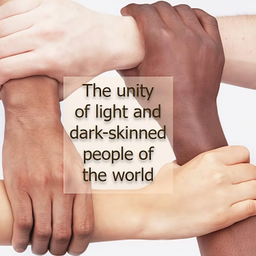
<p>UUMUAC stands for <a target="_blank" rel="noopener noreferrer nofollow" href="https://uumuac.org"><strong>Unitarian Universalist Multiracial Unity Action Council</strong></a>, but you don't need to be a Unitarian or a Universalist to understand our message: </p><p>We need to work together to build the world that Martin Luther King dreamed of, a world where people are judged by who they are and what they do - not the color of their skin. </p><p>UUMUAC hosts a monthly vespers service via Zoom and <a target="_blank" rel="noopener noreferrer nofollow" href="https://www.youtube.com/channel/UCI_LLePt59InvDs47ylqVSw"><strong>YouTube</strong></a>, featuring speakers who are both articulate and passionate about both multiracial unity and liberal religion. This podcast will extract sermons from those services and other UUMUAC-sponsored online events. Note: If you would like to attend Vespers by Zoom, so you can participate in the conversation, please use our <a target="_blank" rel="noopener noreferrer nofollow" href="https://www.uumuac.org/"><strong>CONTACT FORM</strong></a> at the bottom of our webpage.</p><p>In future episodes, we will be sharing sermons delivered by one of our co-founders, the late Rev. Dr. Finley Campbell, who left an impressive legacy of his writings and speeches, including a large collection of taped sermons that have not yet been digitized.</p><p>Here's a little more about who we are and what we believe:</p><p><strong>The UUMUAC Vision & Mission</strong></p><p><strong>Preamble</strong></p><p>Racism and related forms of prejudice are revealed when someone treats another person differently due to their perceived race or ethnicity. These prejudices affect people around the world. Such disrespectful conduct is especially harmful in religious communities because of their commitment to strong ethical and moral standards.</p><p><strong>Vision Statement</strong></p><p>We envision our congregations, associations, and communities as being not color blind but color appreciative; as judging and treating people by the content of their character, not the color of their skin, their cultural heritage, or other identity; and as treasuring all forms of diversity in the context of Martin Luther King’s Jr’s “Beloved Community.” We call this vision Multiracial Unity.</p><p><strong>Mission Statement</strong></p><p>It is the mission of the Unitarian Universalist Multiracial Unity Action Council to foster activities for multiracial unity and to counter racism and neo-racism through worship, education, bearing witness, and other actions, and to find and engage like-minded individuals and groups. We affirm the inherent worth and dignity of every person, and strive to defend freedom, reason and tolerance as articulated in the Seven Principles of Unitarian Universalism adopted in 1985. This includes promoting their use in individual congregations, through congregational autonomy, and in our own actions.</p><p>We looking forward to hearing from you!</p><p></p><p></p><p></p>
Language
🇺🇲
Publishing Since
11/1/2025
Reach the team behind UUMUAC (You Me Act): The Unitarian Universalist Multiracial Unity Action Council
Verified contact details for this show aren't on file yet — sign up to get notified when they land.
Recent Episodes

June 19, 2026
Dancing with the Panthers Part Two
<p>Reverend Dr. Finley C. Campbell opens this segment by describing how the Indiana chapter of the Black Panther Party confronted the distorted public image that dominated local perceptions—an image of armed, threatening Black men shaped largely by media caricature. To counter this, the Panthers worked closely with Black student unions, insisting that these groups not isolate themselves on campus but instead engage openly with white students. Their goal was to humanize the movement, dismantle fear, and demonstrate that the Panthers were not anti‑white extremists but community‑oriented organizers. Campbell recounts taking Panthers into small Indiana towns and churches during his congressional run, where face‑to‑face encounters helped shift attitudes and reveal the Party’s actual commitments.</p><p>Campbell and Dr. Jon Rice then address the proliferation of Panther‑inspired groups, including the White Panther Party and similar formations in the U.S. and abroad. These groups adopted the Panthers’ program wholesale, often as a form of solidarity or self‑defense in the face of police violence and political repression. The speakers contrast these organizations with the Weathermen, whose destructive tactics the Panthers rejected. Rice emphasizes that the Panthers operated under democratic centralism—members could debate policy, but once decisions were made, discipline and order were expected. Even the Party’s use of firearms was framed as political education about legal rights, not as preparation for armed conflict.</p><p>The conversation turns to the impact of COINTELPRO. Campbell and Rice explain that once Panther leadership was jailed on fabricated charges, younger, less disciplined recruits were more easily provoked into armed confrontations with police—encounters the original leadership had deliberately avoided. This shift contributed to the Party’s vulnerability. The speakers also explore ideological influences, especially Malcolm X, whose later work encouraged cross‑racial alliances and a Marxist analysis. They distinguish the Panthers’ approach from the Nation of Islam, which many Panthers viewed as politically passive or aligned with establishment power, even as Rice acknowledges the personal guidance he received from individual Muslims during his youth.</p><p>Religion more broadly played a complex role. Campbell describes how the Panthers in Indiana evaluated churches based on whether they supported community programs like free breakfasts. Ministers who embraced liberation theology were welcomed as allies, while those preaching passivity or personal enrichment were sharply criticized. The Party also grappled with internal issues, including sexism. Women leaders such as Roz Frazier pushed back against the expectation that female members serve primarily in support roles, insisting on full participation and equal respect within the movement.</p><p>Finally, the speakers address membership expectations and the harsh realities of organizing in places like Chicago’s West Side, where police corruption, mafia influence, and political silence in the face of violence fueled radicalization. Rice recalls that joining the Panthers required both ideological commitment and personal courage, as members routinely faced threats from law enforcement and criminal networks. The assassination of local Black officials and the refusal of political leaders to speak out deepened the sense that revolutionary action was necessary. The segment closes with the reminder that these pressures shaped both the rise of the Party and the forces that ultimately contributed to its decline.</p>

May 8, 2026
The Four Horsemen of the Apocalypse
<p>Rev. Jack Reich opens his sermon with Isaac Asimov’s reminder that “if knowledge can create problems, it is not through ignorance that we will solve them,” setting a tone rooted in evidence, clarity, and moral responsibility. He contrasts the everyday issues Americans believe are most urgent—rising costs, taxes, crime, immigration—with the deeper, structural crises that truly threaten our collective future. This mismatch between public perception and actual danger, he argues, undermines our ability to act effectively as citizens.</p><p>Reich identifies four overarching crises: climate change, extreme inequality, pervasive violence, and the erosion of voting rights and democratic functioning. These are not isolated problems but interconnected systems shaping American life. Climate change threatens long‑term survival; inequality distorts democracy; violence saturates daily experience; and political division, fueled by defensiveness and misinformation, weakens the nation’s capacity to respond. As he notes, “a population that insists on believing in the facticity of fairy tales” becomes less capable of solving real‑world problems.</p><p>A major theme of the sermon is the need to look beneath surface‑level symptoms to the underlying causes: failures in education, the decline of critical thinking, the rise of defensiveness, and the cultural elevation of belief over evidence. Reich critiques the ways religious certainty, anti‑intellectualism, and lack of discernment have made Americans vulnerable to manipulation and unable to confront hard truths. Rebuilding discernment—especially through early childhood reading, civic learning, and a renewed respect for science—is framed as essential to national survival.</p><p>Reich also highlights the epidemic of loneliness and alienation in American society. He calls for rebuilding community life through new forms of gathering, honest conversation, and shared purpose. He urges listeners to imagine a society that invests in children, supports teachers, guarantees healthcare, rejects violence, and cultivates courageous dialogue about the future we want. Structural reforms—such as strengthening workers’ rights, addressing inequality at its roots, and recommitting to democratic participation—are presented as necessary steps toward renewal.</p><p>In closing, Rev. Reich reframes the “Four Horses of Our Apocalypse” not as biblical omens but as modern forces—defensiveness, inequality, violence, and democratic decay—that threaten the nation’s moral and civic fabric. Yet his message remains hopeful: by confronting root causes, rebuilding community, and choosing evidence over illusion, Americans can still shape a just and sustainable future. The sermon invites listeners into a deeper conversation about responsibility, courage, and the work of collective repair.</p><p></p>

April 27, 2026
Howard Thurman: Medicine for Our Times (Kennedy, 2022)
<p>This episode introduces listeners to the life and wisdom of <strong>Howard Thurman</strong>, the influential mystic, theologian, and spiritual guide whose work shaped generations of activists, including Martin Luther King Jr. Drawing from a 2022 video presentation by <strong>Rev. Dr. Mellen Kennedy</strong>, along with two excerpts from a 1976 PBS interview with Thurman, the episode highlights why his teachings remain “medicine for our times.”</p><p>Rev. Kennedy opens with one of Thurman’s most beloved lines: “Don’t ask yourself what the world needs. Ask yourself what makes you come alive.” She situates her message within a larger interfaith project co‑hosted by the Springfield Vermont Universalist Meeting House and the Empowerment Center in Maryland—an effort to bring Thurman’s legacy to new audiences.</p><p>Listeners first hear Thurman in his own voice. In the PBS interview, he recalls his childhood in Daytona Beach, where the ocean, night sky, and a sturdy backyard oak tree formed the foundation of his earliest religious experiences. Sitting with his back against the tree during storms, he learned that beneath life’s turbulence there is a deeper stability. Nature, he explains, taught him to speak aloud to God and to feel part of a “rhythmic flow of life.”</p><p>Rev. Kennedy frames Thurman as a healer for three modern ailments: <strong>fear</strong>, <strong>environmental disconnection</strong>, and <strong>social divisiveness</strong>. She describes fear as a “second pandemic” that constricts our thinking and compassion. Thurman’s practices of silence, grounding, and communion with nature offer a path back to clarity and courage.</p><p>Environmental crisis, she argues, stems from forgetting our place within the natural world. Thurman’s spirituality—rooted in direct experience of sky, sea, and earth—invites us to reconnect with the living world as a source of wisdom and belonging.</p><p>The third ailment, divisiveness, is addressed through a second interview excerpt. Thurman explains that when one goes deeply inward, one “comes up inside every other living person.” True self‑knowledge reveals universal kinship. Rev. Kennedy connects this insight to Mother Teresa’s practice of seeing the divine “in all of his many disguises.”</p><p>She also highlights the influence of Thurman’s grandmother, an enslaved African woman whose stories instilled in him a lifelong sense of dignity: “You are not slaves. You are a child of God.” This grounding enabled Thurman to resist fear and to become a spiritual anchor for the Civil Rights Movement. John Lewis called him a saint; King drew heavily from his teachings, especially on nonviolence.</p><p>Rev. Kennedy closes by urging listeners to practice what Thurman lived: silence, rootedness, connection, and love. She quotes his reminder that we are living “where the old is breaking up and the new is being born”—a moment not for despair but for engagement. Thurman’s legacy calls us to become healing presences in a bruised and beautiful world.</p><p></p>
17 total episodes available
Deep-dive analytics for UUMUAC (You Me Act): The Unitarian Universalist Multiracial Unity Action Council
Frequently asked questions
Have a different question and can't find the answer you're looking for? Reach out to our support team by sending us an email and we'll get back to you as soon as we can.
- What is UUMUAC (You Me Act): The Unitarian Universalist Multiracial Unity Action Council?
<p>UUMUAC stands for <a target="_blank" rel="noopener noreferrer nofollow" href="https://uumuac.org"><strong>Unitarian Universalist Multiracial Unity Action Council</strong></a>, but you don't need to be a Unitarian or a Universalist to understand our message: </p><p>We need to work together to build the world that Martin Luther King dreamed of, a world where people are judged by who they are and what they do - not the color of their skin. </p><p>UUMUAC hosts a monthly vespers service via Zoom and <a target="_blank" rel="noopener noreferrer nofollow" href="https://www.youtube.com/channel/UCI_LLePt59InvDs47ylqVSw"><strong>YouTube</strong></a>, featuring speakers who are both articulate and passionate about both multiracial unity and liberal religion. This podcast will extract sermons from those services and other UUMUAC-sponsored online events. Note: If you would like to attend Vespers by Zoom, so you can participate in the conversation, please use our <a target="_blank" rel="noopener noreferrer nofollow" href="https://www.uumuac.org/"><strong>CONTACT FORM</strong></a> at the bottom of our webpage.</p><p>In future episodes, we will be sharing sermons delivered by one of our co-founders, the late Rev. Dr. Finley Campbell, who left an impressive legacy of his writings and speeches, including a large collection of taped sermons that have not yet been digitized.</p><p>Here's a little more about who we are and what we believe:</p><p><strong>The UUMUAC Vision & Mission</strong></p><p><strong>Preamble</strong></p><p>Racism and related forms of prejudice are revealed when someone treats another person differently due to their perceived race or ethnicity. These prejudices affect people around the world. Such disrespectful conduct is especially harmful in religious communities because of their commitment to strong ethical and moral standards.</p><p><strong>Vision Statement</strong></p><p>We envision our congregations, associations, and communities as being not color blind but color appreciative; as judging and treating people by the content of their character, not the color of their skin, their cultural heritage, or other identity; and as treasuring all forms of diversity in the context of Martin Luther King’s Jr’s “Beloved Community.” We call this vision Multiracial Unity.</p><p><strong>Mission Statement</strong></p><p>It is the mission of the Unitarian Universalist Multiracial Unity Action Council to foster activities for multiracial unity and to counter racism and neo-racism through worship, education, bearing witness, and other actions, and to find and engage like-minded individuals and groups. We affirm the inherent worth and dignity of every person, and strive to defend freedom, reason and tolerance as articulated in the Seven Principles of Unitarian Universalism adopted in 1985. This includes promoting their use in individual congregations, through congregational autonomy, and in our own actions.</p><p>We looking forward to hearing from you!</p><p></p><p></p><p></p> - How often does this podcast release new episodes?
This podcast updates daily.
- Where can I listen to this podcast?
This podcast is available on 4 platforms including Apple Podcasts, Spotify, and more. You can also use the RSS feed directly.
- Does this podcast accept guests?
Yes, this podcast regularly features guests.
Legal Disclaimer
Pod Engine is not affiliated with, endorsed by, or officially connected with any of the podcasts displayed on this platform. We operate independently as a podcast discovery and analytics service.
All podcast artwork, thumbnails, and content displayed on this page are the property of their respective owners and are protected by applicable copyright laws. This includes, but is not limited to, podcast cover art, episode artwork, show descriptions, episode titles, transcripts, audio snippets, and any other content originating from the podcast creators or their licensors.
We display this content under fair use principles and/or implied license for the purpose of podcast discovery, information, and commentary. We make no claim of ownership over any podcast content, artwork, or related materials shown on this platform. All trademarks, service marks, and trade names are the property of their respective owners.
While we strive to ensure all content usage is properly authorized, if you are a rights holder and believe your content is being used inappropriately or without proper authorization, please contact us immediately at hey@podengine.ai for prompt review and appropriate action, which may include content removal or proper attribution.
By accessing and using this platform, you acknowledge and agree to respect all applicable copyright laws and intellectual property rights of content owners. Any unauthorized reproduction, distribution, or commercial use of the content displayed on this platform is strictly prohibited.
