- 18
- Episodes
- 6
- Ratings
- Weekly
- Cadence
- 2026
- First episode
About Veda & Vitality
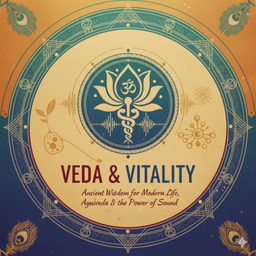
Veda & Vitality bridges ancient Vedic wisdom with modern systems biology to help high-pressure professionals reclaim their natural energy. By translating the world's oldest system of personalized preventative health—Ayurveda—into evidence-based protocols, we empower individuals to optimize focus, sleep, and digestion. Our approach integrates the science of life with the power of sound, utilizing traditional Sanskrit chanting and linguistic exploration to foster mental clarity and spiritual alignment. Our mission is to provide the tools for a life lived with deep purpose and lasting vitality,
- Publisher
- Anindita Sarkar
- Category
- religion & spirituality
- Language
- en
- Explicit
- No
- First episode
- 20 Apr 2026
- Latest episode
- 13 Sept 2026
Latest episodes
18 episodes in the feed.
13 Sept 2026
Episode 18: Synthesis — Om Purnamadah Purnamidam
Here's a strange little idea to sit with: what if nothing about you actually needs fixing? Not the Vata days, not the Pitta days, not the Kapha days — what if the wobble between all three is itself the whole point, and wholeness was never something you had to go get? Welcome back to Veda & Vitality — where ancient timeless wisdom meets everyday life. Ayurveda, Vedic wisdom, Sanskrit — traditions where health, mind, and daily rhythm are inseparable — made practical for anyone ready to live with more clarity, energy, and intention. I am Anindita Sarkar, your host, innovation leader, and researcher. We've spent three episodes on three doshas — Vata's need for rhythm, Pitta's need for cooling, Kapha's need for activation. If you've been listening along, you might be tempted to think of these as three separate problems needing three separate fixes. But that's not quite how Ayurveda actually holds it. You're not one dosha with two annoying visitors — you're all three, all the time, in a ratio that's constantly shifting with the season, the time of day, the stress of your week. The mantras weren't meant as three separate tools. They were meant as three doors into the same room. Today's mantra is the one that names that room. It comes from the Isha Upanishad, and it's often called the Purnamadah Shanti Mantra — the invocation of fullness. Sanskrit breakdown: ॐ पूर्णमदः पूर्णमिदं पूर्णात्पूर्णमुदच्यते। पूर्णस्य पूर्णमादाय पूर्णमेवावशिष्यते॥ Om Purnamadah Purnamidam, Purnat Purnamudachyate, Purnasya Purnamadaya Purnamevavashishyate. • पूर्ण (Purna) — "full," "complete," "whole." This word repeats five times in the verse — the whole point is the repetition, wholeness insisting on itself. • अदः (Adah) — "that," referring to something distant or unseen — often read as the vast, unmanifest whole. • इदं (Idam) — "this," referring to what's immediate and here — the visible, tangible world, or in our context, you, today, exactly as you are. • पूर्णात् पूर्णम् उदच्यते (Purnat Purnam Udachyate) — "from fullness, fullness arises" — udachyate meaning "rises up" or "is produced." • पूर्णस्य पूर्णम् आदाय (Purnasya Purnam Adaya) — "taking fullness from fullness" — adaya meaning "having taken." • पूर्णम् एव अवशिष्यते (Purnam Eva Avashishyate) — "fullness alone remains" — avashishyate, "remains" or "is left over." Read plainly: that is whole, this is whole, from wholeness, wholeness comes. Take wholeness from wholeness, and wholeness still remains. It's less a statement and more a kind of math problem that refuses to reduce — no matter what you take away, take out, or struggle with, what's left is still whole. Vata's scatter, Pitta's heat, Kapha's heaviness — none of it subtracts from the wholeness underneath. They're just weather. Not identity. This is a closing practice, so treat it that way. Sit quietly, without needing to fix your posture or your mood first. Read the verse through once, slowly, in English is completely fine. Then sit for one minute in silence — no correcting, no optimizing, nothing to achieve. If a dosha shows up loudly during that minute — restlessness, irritation, heaviness — let it be there. The practice isn't to make it go away. It's to notice that it doesn't change what's underneath. That's the arc — four mantras, three doshas, and one thread underneath all of it. Thank you for sitting with this series. Next episode, we step away from the dosha frame entirely and into something I've been wanting to explore for a while — so stay close, and I'll see you then.
6 Sept 2026
Episode 17: Kapha — Charaiveti Charaiveti
Some days the couch wins. You know you'd feel better moving, but everything in you says "not yet, maybe later, it's fine." If that's a once-in-a-while thing, no problem. If it's most days — that's Kapha asking for a nudge. Welcome back to Veda & Vitality — where ancient timeless wisdom meets everyday life. Ayurveda, Vedic wisdom, Sanskrit — traditions where health, mind, and daily rhythm are inseparable — made practical for anyone ready to live with more clarity, energy, and intention. I am Anindita Sarkar, your host, innovation leader, and researcher. We've grounded Vata and cooled Pitta. Now, Kapha — earth and water, the dosha of stability, structure, and steadiness. In balance, Kapha is patience, endurance, a calm and loving presence. Out of balance, it's heaviness, inertia, the sense of being stuck — physically, mentally, in a routine that's stopped serving you. Where Vata needed rhythm and Pitta needed cooling, Kapha needs one thing: activation. Today's phrase isn't really a mantra in the meditative sense at all — it's closer to a mantra of motion, a phrase from the Aitareya Brahmana that's been used for centuries as, essentially, marching orders for a mind that's settled too deep into comfort. Sanskrit breakdown: The phrase is चरैवेति चरैवेति — Charaiveti Charaiveti. • चर् (Char) — the root meaning "to move," "to walk," "to wander." It's the same root you'll find in words related to travel and pilgrimage. • एव (Eva) — an intensifier, roughly "indeed" or "surely" — it's doing the work of emphasis, making the instruction firmer. • इति (Iti) — a closing marker, often used the way we'd use quotation marks — "thus," or "so it is said." So चरैवेति (Charaiveti) roughly renders as "keep walking, indeed" or "onward, surely" — and the tradition repeats it twice, चरैवेति चरैवेति, doubling the instruction the way you might say something twice to make sure it lands. It's not poetic in the way Om Namo Narayanaya is, and it's not devotional in the way the Gayatri is. It's blunt. It's a phrase literally used to tell tired travelers: don't stop here, there's more ahead, and the moving itself is the point. Kapha doesn't respond well to sitting still with this one — the practice here is different from the last two episodes. Say the phrase out loud, with some actual vigor, while doing something physically active: a brisk walk, climbing stairs, even just standing up and stretching through your whole body. Repeat it three or four times, timed to your steps or your movement. The goal isn't stillness — it's using the phrase as a rhythm to override the inertia that Kapha defaults to. If you only do one thing from this whole arc, let it be getting up and saying this once, today. Closing: Vata grounded. Pitta cooled. Kapha activated. Next time, we bring all three together — one mantra, drawn from a very different corner of the tradition, that speaks not to any single dosha but to the wholeness underneath all of them. That's where this arc lands.
30 Aug 2026
Episode 16: Pitta — Gayatri Mantra
You know the feeling — you're right, you can prove you're right, and somehow that's making everything worse. The sharper the argument, the hotter the room gets. That's Pitta talking. And today's episode is about turning down the heat without turning off the fire. Welcome back to Veda & Vitality — where ancient timeless wisdom meets everyday life. Ayurveda, Vedic wisdom, Sanskrit — traditions where health, mind, and daily rhythm are inseparable — made practical for anyone ready to live with more clarity, energy, and intention. I am Anindita Sarkar, your host, innovation leader, and researcher. Last episode we sat with Vata and its need for rhythm and steadiness. Today, Pitta — fire and water, the dosha of transformation, digestion, and intensity. In balance, Pitta is focus, drive, sharp discernment. Out of balance, it's irritability, perfectionism, that particular heat that shows up as impatience with yourself and everyone around you. Here's the thing about cooling Pitta: it doesn't want to be shut down. It wants to be redirected — pointed toward something luminous instead of something combustive. Which is why today's mantra is one of the oldest and most well-known in the entire tradition: the Gayatri Mantra. Not because it's about fire — it's actually a mantra of light — but because it takes Pitta's native intensity and gives it somewhere clear and expansive to go. Sanskrit breakdown: The Gayatri, in full, is longer than what we've worked with so far, so let's take the heart of it: ॐ भूर्भुवः स्वः, तत्सवितुर्वरेण्यं, भर्गो देवस्य धीमहि, धियो यो नः प्रचोदयात् Om Bhur Bhuvah Svah, Tat Savitur Varenyam, Bhargo Devasya Dhimahi, Dhiyo Yo Nah Prachodayat. • भूर्भुवः स्वः (Bhur Bhuvah Svah) — the three realms: earth, atmosphere, and the wide sky beyond. A way of orienting yourself in the whole of existence before asking for anything. • तत् सवितुः वरेण्यं (Tat Savitur Varenyam) — "that most excellent light" — Savitr refers to the illuminating, life-giving quality of the sun, not the sun as an object of worship, but as the clearest available image for insight and clarity. • भर्गो देवस्य धीमहि (Bhargo Devasya Dhimahi) — "we meditate on that radiance" — bhargas meaning brilliance or the burning away of what's unnecessary. This is the cooling move: not extinguishing Pitta's fire, but letting it burn clean instead of sharp. • धियो यो नः प्रचोदयात् (Dhiyo Yo Nah Prachodayat) — "may it illuminate our understanding" — dhi is insight or intellect, and prachodayat is a request for that insight to be awakened, directed, set into motion. The whole mantra is a request for clarity of mind rather than heat of reaction — which is precisely what an activated Pitta needs. Pitta responds to coolness, spaciousness, and unhurried pacing — the opposite of its natural intensity. Practice this one in the early morning, ideally facing an open window or outdoors, before the day's friction starts. Say it once through slowly — you can absolutely read it rather than memorize it at first. Then take thirty seconds of silence afterward. That silence matters more than it seems; it's where the "cooling" actually happens, not in the words themselves. Closing: Fire cooled. Next time, we go the opposite direction — Kapha, the dosha of earth and water, doesn't need calming. It needs waking up. I'll bring a mantra that's less a chant and more a command to keep moving.
23 Aug 2026
Episode 15: Vata — Om Namo Narayanaya
There's a particular kind of tired that isn't about sleep. It's the tired of a mind that's been skittering all day — six tabs open, three conversations half-finished, a body that forgot to eat lunch until 3pm. If that's you more often than not, this episode is for you. Welcome back to Veda & Vitality — where ancient timeless wisdom meets everyday life. Ayurveda, Vedic wisdom, Sanskrit — traditions where health, mind, and daily rhythm are inseparable — made practical for anyone ready to live with more clarity, energy, and intention. I am Anindita Sarkar, your host, innovation leader, and researcher. We've spent the last few episodes exploring individual mantras — Asato Ma Sadgamaya's movement from confusion to clarity, Lokah Samastah's wish for shared wellbeing, Om Namah Shivaya's quiet transformation. Starting today, we're doing something a little different: a four-part arc built around the three doshas — Vata, Pitta, Kapha — the constitutional patterns Ayurveda uses to describe how energy moves through us. Each dosha gets its own mantra, chosen not because it's "assigned" to that dosha in some ancient rulebook, but because the quality of the sound and the rhythm of repetition genuinely counters what that dosha tends toward when it's out of balance. Today: Vata. Vata is air and space — movement, change, quickness. In balance, it's creativity and adaptability. Out of balance, it's the scattered mind, the racing thoughts, the body that can't settle. What Vata needs isn't more stimulation. It needs rhythm. Something steady to hold onto. Sanskrit breakdown: Today's mantra is ॐ नमो नारायणाय — Om Namo Narayanaya. • ॐ (Om) — the seed sound, the hum that's said to underlie all vibration. We've talked about this before: think of it less as a religious symbol and more as the sound equivalent of a deep breath — a reset before anything else begins. • नमो (Namo) — from the root nam, meaning "to bow" or "to yield." Not bowing to a figure, but a gesture of settling — a letting go of the need to control every variable, which is exactly the antidote to Vata's restlessness. • नारायणाय (Narayanaya) — "to Narayana," a name meaning "one who rests in and moves through the waters" — nara (waters, or the flow of existence) and ayana (resting place, or path). You don't need any belief system to use this word. Think of it as an image: something vast, unhurried, and utterly steady — the quality Vata is missing when it's spun up. Put together, the phrase is a turning toward steadiness — an invocation of what is unhurried, said slowly enough that the saying itself becomes the steadying. Here's how to use it. Vata calms best through repetition and rhythm, not intensity. Sit somewhere warm — Vata is also cold and dry, so warmth matters here. Repeat the phrase slowly, eleven times, matching it to your breath: inhale on "Om Namo," exhale on "Narayanaya." Don't rush the count. If your mind wanders — and it will, that's Vata being Vata — just come back to the rhythm without judgment. Three minutes is enough to start feeling the nervous system downshift. Closing: Next time, we move from air to fire. Pitta doesn't need grounding — it needs cooling. And there's one mantra I've been saving for exactly this moment: the Gayatri. Join me for that.
26 Jul 2026
Episode 14 - The Five Elements
Right now, without changing anything, notice this: there's solidity under you — the earth element. There's moisture somewhere in your body. There's warmth. There's breath moving air in and out. And there's the space that lets all of it happen at all. You just moved through all five elements in about ten seconds, and you probably didn't notice any of it until I pointed it out. Ayurveda's entire framework — everything about doshas, digestion, energy, balance — starts right here, with these five elements. Today's mantra is built to walk you through them, one at a time. Welcome back to Veda & Vitality — where ancient timeless wisdom meets everyday life. Ayurveda, Vedic wisdom, Sanskrit — traditions where health, mind, and daily rhythm are inseparable — made practical for anyone ready to live with more clarity, energy, and intention. I am Anindita Sarkar, your host, innovation leader, and researcher. Last episode, we widened our attention outward with Lokah Samastah Sukhino Bhavantu — compassion as a radius we keep expanding. Today we come back down into the body, because Ayurveda never separates the two. How you relate to the world outside and how your own elements are balanced inside are the same conversation, just viewed from different angles. Om Namah Shivaya is one of the most chanted mantras in this tradition, and it's often taught as a five-part structure — each of the five syllables after Om corresponding to one of the five elements. This is what makes it the perfect bridge into where we're headed next: a future arc where we'll match specific mantras to specific doshas. Today is the groundwork. Once you know the elements, the doshas will make immediate sense — because a dosha is really just a particular combination of these same five elements, expressing itself as a tendency in your body and mind. And to be clear, as always — this isn't devotional practice. Shiva here isn't a figure to worship; think of "Shiva" as pointing to the same formless awareness we talked about back in Episode 10 with So Hum — the "I" underneath all your changing states. Namah Shivaya is a bow to that awareness, just approached this time through matter instead of through identity. ॐ नमः शिवाय Om Namah Shivaya • ॐ (Om) — the base sound, often described as containing all sound and silence. Not an element itself, but the ground all five arise from. • न (Na) — associated with earth (Prithvi). Solidity, structure, the ground beneath everything else. • मः (Mah) — associated with water (Jal). Fluidity, cohesion, the element that lets things flow and bind together. • शि (Shi) — associated with fire (Agni). Transformation, heat, the element that converts one thing into another — food into energy, raw material into insight. • वा (Va) — associated with air (Vayu). Movement, breath, the element behind circulation and change of position. • य (Ya) — associated with ether or space (Akasha). The space that contains all the others — without it, nothing else has room to exist. So the mantra itself is a five-step walk through everything you are made of, syllable by syllable — and Namah itself simply means "bow" or "salutation." Try this today: as you chant each syllable, place attention on the corresponding element in your own body. Na — feel the weight and solidity of your body against the ground. Mah — notice any sense of fluidity — saliva, the moisture in your eyes, your pulse. Shi — notice warmth, digestion, anywhere energy is being converted. Va — follow your breath moving. Ya — notice the space around your thoughts, the pause between one breath and the next. You don't need to diagnose anything. Just notice which element feels loudest today, and which feels quiet or absent. That's simply useful information — not a problem to fix, just a data point about where you are right now. So — five mantras in, we've covered identity, mortality, release and direction, compassion, and now the elements themselves.
19 Jul 2026
Episode 14 - May all beings, everywhere, be at ease
Think about the last time you felt truly at ease — not just relaxed, but whole. Chances are, someone else was doing well too. Maybe you'd just helped a friend. Maybe you watched a stranger have a good day and felt lighter for it. There's a reason for that. In Ayurveda, this feeling has a name — ojas — the subtle reserve of vitality that builds when the mind is settled and the heart is open. And one of the fastest ways tobuild ojas isn't more rest, or better food. It's compassion. Today's mantra is built entirely around that idea. Welcome back to Veda & Vitality — where ancient timeless wisdom meets everyday life. Ayurveda, Vedic wisdom, Sanskrit — traditions where health, mind, and daily rhythm are inseparable — made practical for anyone ready to live with more clarity, energy, and intention. I am Anindita Sarkar, your host, innovation leader, and researcher. Last episode, we sat with Asato Ma Sadgamaya — the prayer of release, of moving from what's false toward what's true. That mantra was inward-facing. It asked: what am I ready to let go of, and what direction am I actually walking in? Today's mantra takes that same clarity and turns it outward. Once you know your own direction a little better, something interesting happens — you start to notice everyone else walking their own path too. That's where Lokah Samastah Sukhino Bhavantu lives. It's often translated as a wish for the wellbeing of all beings, but I want to reframe that for you the way we reframe everything on this show: not as a devotional recitation, but as a technology of attention. This mantra trains where your attention goes. Most of us have a natural radius of care — our family, close friends, maybe people who look and live like us. This mantra is a deliberate exercise in widening that radius. Not because it's morally superior to have a bigger radius — but because, energetically, a mind stuck in a narrow radius of concern tends to run hot, tense, and depleted. Compassion, practiced this way, is less about being a good person and more about how your nervous system settles when you stop bracing against everyone outside your immediate circle. Let's look at the Sanskrit itself: लोकाः समस्ताः सुखिनो भवन्तु Lokah Samastah Sukhino Bhavantu • लोकाः (Lokah) — "worlds," or "beings." Not just people — the word implies all realms, all forms of life. • समस्ताः (Samastah) — "all," "every one," entirety without exception. This is the word doing the heavy lifting — it's what makes the wish universal rather than personal. • सुखिनः (Sukhinah) — "happy," but sukha runs deeper than pleasure. It's ease, a good and unobstructed flow of life — the opposite of dukha, obstructed flow. • भवन्तु (Bhavantu) — "may they become" or "let it be so." A verb of active becoming, not passive hope. Put together: May all beings, everywhere, be at ease. There's a coda often added — Om Shanti, Shanti, Shanti — peace invoked three times, traditionally said to address peace within us, peace between us, and peace in the larger forces around us. You may hear that closing added in some versions of this chant. Here's a simple way to work with this today — and it directly builds on the radius idea. Sit quietly. As you begin the mantra, picture one specific person — someone easy to care about. Let the wish land on them fully: may you be at ease. With each repetition, widen the circle. Someone you're neutral about. Someone you find difficult. Your neighborhood. Your city. Strangers you'll never meet. You don't have to force warmth you don't feel yet. Just notice where the widening gets effortful — that edge is useful information. That's your radius, right now, today. Ayurveda would say a body in balance can hold a wider radius more easily; a body under strain contracts back toward self-protection. So if the exercise feels hard on a given day, that's not failure — that's data about where you are.
5 Jul 2026
Episode 12: Asato Ma: The Mantra of Leading Yourself Forward
Have you ever caught yourself in a loop — a worry that isn't real yet, a story about yourself that stopped being true years ago, a fear that lives more in your head than in your life? The Vedic tradition had a word for that state. Asat. The unreal. And it had a mantra for moving out of it. Today — Asato Ma Sadgamaya. This mantra comes from the Brihadaranyaka Upanishad — one of the oldest and most philosophical of the Upanishads, a text less concerned with ritual and more with the nature of reality itself. It is not a deity mantra. There is no named form being invoked here. This is a mantra of direction — three lines, each one a movement. From one state toward another. And just as I said with the Mahamrityunjaya — this is not religious practice. It is a technology of attention. A way of orienting the mind. असतो मा सद्गमय । तमसो मा ज्योतिर्गमय । मृत्योर्मा अमृतं गमय । ॐ शान्तिः शान्तिः शान्तिः ॥ Asato Ma Sadgamaya Tamaso Ma Jyotirgamaya Mrityor Ma Amritam Gamaya Om Shanti Shanti Shanti Three lines. One structure. Let's open each one. असतो मा सद्गमय — Asato Ma Sadgamaya असत् — Asat. The unreal. The false. Not liesexactly — more like the mental constructions we mistake for reality. The anxious projection. The outdated self-image. The narrative we keep running that no longer serves us. मा — Ma. Here it means from — lead me from. सत् — Sat. The real. The true. What actually is — not what fear imagines, not what habit assumes. Sat is also one of thethree qualities of Brahman in Vedic philosophy: Sat-Chit-Ananda — being, consciousness, bliss. Sat is the ground of what is undeniably real. गमय — Gamaya. Lead me. Move me. Take me toward. This verb is a request, but also an intention — a direction you aresetting for yourself. Lead me from the unreal toward the real. तमसो मा ज्योतिर्गमय — Tamaso Ma Jyotirgamaya तमस् — Tamas. Darkness. But in Ayurveda and Vedic thought, tamas is more than the absence of light — it is heaviness,inertia, the fog of confusion, the exhaustion that makes everything feel stuck. If you've ever had a day where nothing feels possible, where you can't see a way forward — that is tamas at work. ज्योतिः — Jyotih. Light. Radiance. The flameof awareness. In Sanskrit, jyoti appears everywhere — in the Gayatri Mantra, in the names of teachers, in temple lamps. It is not just physical light. It is the light that allows seeing — clarity, discernment, the mind's ability to perceive what is true. Lead me from darkness toward light. मृत्योर्मा अमृतं गमय — Mrityor Ma Amritam Gamaya You'll recognize this territory from last episode. Mrityu — death, impermanence, the fear of ending. Amrita — that which does not die. A-mrita — the negation of mrita, of death.Amrita is also the word for the nectar of immortality in Vedic lore. But here the movement is slightly differentfrom the Mahamrityunjaya. There, we asked to be released — like the cucumber from the vine. Here, we ask to be led toward what is undying. It is less about letting go and more about moving forward. Less release, more orientation. Lead me from death toward what isdeathless. ॐ शान्तिः शान्तिः शान्तिः — Om Shanti Shanti Shanti Three repetitions of Shanti — peace. What strikes me about this mantra is how precisely it maps to the inner life. The first line is about perception — am I seeing clearly, or am I caught in a story? The second is about energy — am I moving from heaviness toward aliveness? The third is about identity — am I identified with what changes, or with what endures? Three questions. Every single morning, if you let them be. This mantra is beautiful for the transitionmoments of a day — the hinge points. Morning, before you pick up your phone. Midday, when the mental noise peaks. Evening, as a way of releasing what the day accumulated. You don't need 108 repetitions. You can simply say it once — slowly, with the three movements felt rather than just spoken.
28 Jun 2026
Episode 11: The Mahamrityunjaya Mantra: The Great Victory Over Fear
There is a mantra in the Vedic tradition so old, so layered, that it has been chanted at bedsides, at dawns, at crossroads— wherever a human being has stood face to face with fear, with illness, with the unknown edge of things. It isn't a prayer for magic. It's a practice for courage. Today, we go deep into the MahamrityunjayaMantra. The name alone tells you everything. Maha — great. Mrityu — death. Or more precisely, the fear of ending. Of dissolution. Jaya — victory. Triumph. The Great Victory Over Death. Now — and I want to say this clearly at the start — this is not a religious invocation, and it is not about defeating physical death. This mantra is one of the oldest in the Rigveda. It belongs to Rishi Vashishtha, offered to Rudra — the Vedic form of Shiva as the transformative force of nature. And what it really addresses is something every one of us carries: the deep human anxiety around impermanence. Around loss.Around change we didn't choose. That is the death this mantra speaks to. ॐ त्र्यम्बकंयजामहे सुगन्धिं पुष्टिवर्धनम् ।उर्वारुकमिव बन्धनान् मृत्योर्मुक्षीय माऽमृतात् ॥ Om Tryambakam Yajamahe Sughandhim Pushtivardhanam Urvarukamiva Bandhanaan Mrityor Mukshiya Maamritaat ॐ — Om. The universal sound. The field from which everything arises. त्र्यम्बकं — Tryambakam. Tri — three. Ambaka — eye. The three-eyed one. This is Rudra, Shiva — whose third eye is the eye of wisdom that sees beyond surface appearance, beyond theimmediate. यजामहे — Yajamahe. We honor, we revere, we offer ourselves toward. This is not supplication — it's a conscious turning toward. सुगन्धिम् — Sughandhim. The fragrant one. In Vedic poetry, fragrance is a quality of the divine — it spreads withouteffort, it permeates everything it touches. This is also an image of health: a life that has wholeness, that radiates outward. पुष्टिवर्धनम् —Pushtivardhanam. Pushti — nourishment, flourishing.Vardhanam — that which increases, that which grows. The one who increases our nourishment. This is deeply Ayurvedic — Ojas, vitality, the body's deepest intelligence being cultivated. उर्वारुकम् इव — Urvarukamiva. Like a cucumber. Yes — this is one of the most vivid, grounded images in all of Vedic poetry. The ripe cucumber that releases itself from the vine naturally,without force, without rupture. The stem doesn't snap. The fruit simply... lets go when it is ready. बन्धनात् — Bandhanaat. From bondage.From that which binds. The fears, the attachments, the loops of anxiety we cannot seem to exit. मृत्योः — Mrityor. From death — from the grip of impermanence, of fear-of-ending. मुक्षीय — Mukshiya. May I be liberated. May I be released. This is moksha in its verb form — not an abstract destination, but an active, present movement toward freedom. मा अमृतात् — Maamritaat. Not fromimmortality. Don't sever me from what is deathless. Don't cut me off from the undying. Keep me connected to that thread. We honor the three-eyed, fragrant one who increases our flourishing — may we be released from the bondage of fear and impermanence, as the ripe cucumber releases naturally from the vine — and may we never be severed from what is trulyundying. Traditionally, it is chanted 108 times — a full mala. But that is not the only way in. You can begin with 11 repetitions, or simply with one — said slowly, meaning held in your awareness. The best time is early morning, or any moment when you are facing something difficult. A health challenge. A transition. Grief. Anxiety about the future. This mantra doesn't promise those things away. It offers a different relationship to them. Sit quietly. Breathe. And as you chant — or even just listen — hold that image of the cucumber. Ripe. Ready. Releasing without force.
21 Jun 2026
10. The Breathe that already knows your Name
Welcome back to Veda & Vitality — where ancient timeless wisdom meets everyday life. Ayurveda, Vedic wisdom, Sanskrit — traditions where health, mind, and daily rhythm are inseparable — made practical for anyone ready to live with more clarity, energy, and intention. I am Anindita Sarkar, your host, innovation leader, and researcher. Right now — before you do anything else — just breathe. Notice the inhale. Notice the exhale. Here's something I want you to sit with: your breath has been making a sound since the moment you were born. Not a sound you produce. A sound that happens through you. In Vedic tradition, the ancient teachers listened carefully to that sound and named it. They called it So Hum. And today, that's what we're exploring. So Hum is what's known as an Ajapa mantra — the mantra that is not chanted. Ajapa literally means "without repetition," because you are not the one repeating it. Your breath is. Every inhale carries the sound So. Every exhale carries Hum. Twenty-one thousand, six hundred times a day — without effort, without intention — this has been happening inside you. The practice of So Hum isn't learning something new. It's slowing down enough to notice what has always been true. In Sanskrit, this natural breath-sound is also called Hamsa — हंस — the sacred swan. The swan in Vedic imagery is the bird of pure discernment — the one who can separate milk from water. Your breath is already that swan. So Hum is simply the act of recognizing it. Let's stay with the Sanskrit for a moment — because the meaning here is the whole teaching. So Hum is two words: सः — Sah — "That." The vast. The universal. The beyond-you. अहम् — Aham — "I am." The individual self. The one breathing. Together: So Hum — I am That. Not this — not the role you play, not the name on your email, not the noise running in your head. That — the intelligence that moves through everything, that holds the whole thing together. The breath is making this declaration every single moment. Inhale — So — a reaching toward the vast. Exhale — Hum — a releasing back into it. The self and the infinite, breathing each other. This is not a religious idea. It is a perceptual shift — an invitation to experience yourself as something larger than the small, worried mind. So Hum can be practiced two ways — and both are valid. The first is pure listening. No chanting, no effort. You sit, close your eyes, and attend to the breath. Let the inhale arrive. Hear So. Let the exhale release. Hear Hum. You are not producing anything — only noticing. The second is gentle mental repetition. As you inhale, you silently say So. As you exhale, Hum. The breath leads; the mantra follows. If the mind wanders — and it will — So Hum brings you back. Not as a correction. As a return. Even five minutes shifts something. It has been part of my daily practice for years — not as a ritual I have to perform, but as a homecoming I return to. In Ayurveda, Prana — life force — moves on the breath. When the breath is agitated, Prana scatters. When it's steady and conscious, Prana settles. The mind follows. So Hum works because it doesn't fight the mind. It doesn't ask you to suppress thought or force stillness. It gives the mind something true to rest in — the breath — and something meaningful to rest with — the recognition that you are more than the noise. The mantra and the breath are already one. You are just listening in. So this week — try the listening practice. Five minutes. Eyes closed. Let the breath come and go. And when you're ready, let So Hum arise with it. Notice what settles. Notice what opens. And if So Hum becomes something you return to beyond this week — good. That's exactly what it's for. Not a technique for a single session, but a thread you can pick up anywhere, any time. Even in the middle of a difficult day. Just one breath. So. Hum.
14 Jun 2026
9.The Vibration Your Body Already Knows — A Sanskrit Sound Experiment
Welcome back to Veda & Vitality — where ancient timeless wisdom meets everyday life. Ayurveda, Vedic wisdom, Sanskrit — traditions where health, mind, and daily rhythm are inseparable — made practical for anyone ready to live with more clarity, energy, and intention. Namaster, I am Anindita Sarkar, your host, innovation leader, and researcher. This week I did something a little different. Every morning — before tea, before my phone, before anything else — I chanted. Same sounds, five minutes, seven days straight. And I want to tell you exactly what I noticed. Because it surprised me. Let's start with Om — the most ancient of all Sanskrit sounds. Not a word, not a prayer — a sound. A vibration. In Sanskrit philosophy, Om is considered the primordial sound — the hum from which all creation emerges. Now — before we go further, let me address what some of you might be thinking. Is this religious? The short answer is no. Om predates organised religion. It appears in the Vedas — texts that are fundamentally about the nature of existence, consciousness, and the universe — not doctrine, not deity worship, not ritual belonging. You don't need to believe anything to chant it. You just need a voice and a few minutes. Think of it the way you might think of a tuning fork. A tuning fork doesn't ask you what religion you are. It just vibrates at a specific frequency — and that frequency has an effect. Om works the same way. The sound itself is the practice. My experiment with Om I chanted Om for five minutes each morning. What I noticed by day three: a strange stillness after. Not tiredness — more like the mental noise had been... rinsed. My first thoughts of the day felt cleaner, less reactive. The second chant I experimented with is the Gayatri Mantra — one of the most sacred verses in the Vedas, over 3,000 years old. It's traditionally chanted at sunrise — a salutation to the divine light, and a request for illumination of the mind. ॐ भूर्भुवः स्वः Om Bhur Bhuvaḥ Svaḥ Sanskrit Devanagari Meaning Together: We invoke all three planes of existence — body, breath, and consciousness. तत् सवितुर्वरेण्यं Tat Savitur Vareṇyaṃ Sanskrit Devanagari Meaning Together: That divine light of the sun — the most worthy of all. भर्गो देवस्य धीमहि Bhargo Devasya Dhīmahi Together: We meditate upon the radiant, purifying light of the divine. धियो यो नः प्रचोदयात् Dhiyo Yo Naḥ Prachodayāt Together: May that light illuminate and inspire our intellect. Full meaning in one breath: We meditate on the radiant light of the divine sun — that illuminates all three planes of existence. May that light purify and inspire our minds toward higher understanding. When to Chant Brahma Muhurta — Early Morning (Most Powerful) About 1.5 hours before sunrise Noon — Madhyahna Sandhya The midday transition Dusk — Evening Sandhya Traditionally, the Gayatri Mantra should not be chanted at night, as it does not coincide with the solar energies that the mantra venerates. Ideally, the Gayatri Mantra should be recited at least three times, but it can be repeated up to 108 times. For beginners, 11 times is a great starting point My experiment with Gayatri The Gayatri Mantra is longer, more complex — and that's actually the point. Your mind has to stay with it. There's no room for your to-do list when you're tracking those syllables. I found it almost meditative by default — like a moving anchor. What shifted for me: I noticed I started my mornings with an orientation toward clarity, not urgency. It sounds subtle. It didn't feel subtle. Day 1–2: Five minutes of Om. Slow, eyes closed, feel where the vibration lands in your body. Day 3: Try the Gayatri Mantra. Just follow and feel. Then come tell me what happened. DM me, leave a comment, send a message. I genuinely want to know. If today's episode resonated — share it with one person who might need a quieter morning. Until next time — live with rhythm, not rush.
31 May 2026
8. The Kitchen Pharmacy — Spices and Sacred Superfoods
Have you ever stopped to look at your kitchen counter and realized that you are standing in a sanctuary? Your kitchenisn't just a place to prep fuel for a busy workday — it's a temple. And your spice rack? That's your primary care physician. In the modern world, we look for wellness in plastic supplement bottles and synthetic extracts. In the Vedas, the ultimate pharmacy has always been right in front of us, resting inthe simple, vibrant seeds and roots we use every day. Today, werediscover what our grandmothers already knew — that the most powerful medicine on earth has always lived in the kitchen, waiting quietly in a handful of seeds, a pinch of root, a curl of bark. And we explore the living, breathing relationship between your food, your spices, and your vitality. Welcome back to Veda & Vitality — the space where we translate the world's oldest preventative health systems into evidence-based protocols for high-pressureprofessionals. I am Anindita Sarkar, your host, innovation leader, and researcher. Together, we explore how to reclaim our natural energy, optimize focus, and align our modern lives with natural rhythms using the twin powers of Ayurveda and sacred sound. Today, we are stepping up to the stove to uncoverthe secret alchemy of the kitchen pharmacy. Sanskrit chant — Annapurna StotramBefore we go deeper, let us ground ourselves in the energy of this episode with a verse from the Annapurna Stotram — a devotional hymn to the goddess of nourishment, the divine keeper of the kitchen pharmacy. नित्यानन्दकरी वराभयकरी सौन्दर्यरत्नाकरी Nityānandakarī varābhayakarī saundarya-ratnākarī — "She who brings eternal joy, who grants boons and removes fear, the ocean of beauty and jewels —" निर्धूताखिलघोरपावनकरी प्रत्यक्षमाहेश्वरी Nirdhūtākhilaghorapāvanakarī pratyakṣamāheśvarī — "She who purifies all that is terrible and fierce, the great goddess, manifest and present —" प्रालेयाचलवंशपावनकरी काशीपुराधीश्वरी Prāleyācalavamśapāvanakarī kāśīpurādhīśvarī — "Purifier of the lineage of the snowy mountain, sovereign of the city of Kashi —" Without spices, the dense nutrients in your food can clog the Srotas — the subtle biological channels of the body — creating Ama, or toxic metabolic sludge. Spices carry a unique quality known as Deepana and Pachana: they kindle your Agni, your digestive fire, and enliven the Prana, the life-force, of thefood itself. Modern research confirms what the Rishis knew intuitively that ensures your cells can actually absorb, assimilate, and utilize the nourishment you consume. So which spices should live at the center of your kitchen pharmacy? Turmeric. Curcumin, its primary bioactive compound, is one of the most researched anti-inflammatory molecules on the planet. In Ayurvedic terms, it clears Pitta aggravation, purifies the blood, and opens the channels of consciousness. Combine it with black pepper — the piperine in black pepper increases curcumin absorption by up to 2,000 percent. Ginger. Dry ginger — Sunthi — is considered the most sattvic of all spices. It stimulates Agni without aggravating Pitta, making it the safest, most intelligent digestive activator for high-stress professionals whose fire is either overactive or completely depleted. A quarter teaspoon of dry ginger in warm water each morning is, in Ayurvedic terms, a full-body reset. Ashwagandha. Technically a root, not a spice, but it belongs inyour kitchen. it doesn't push you in one direction, it reads your system and corrects toward balance. Under chronic stress, cortisol dysregulation depletes your Ojas — your vital essence. Ashwagandha restores it. This week, I invite you to one small experiment. Choose one of these three — turmeric, ginger, or ashwagandha — and bring it into your daily rhythm deliberately. Not as a supplement you swallow and forget, but as a practice. Notice how your digestion shifts. Notice how your energy settles.
24 May 2026
7. The Six Tastes: Mapping the Human Experience of Cravings, Nutrition, & Agni
Why do you reach for the salt shaker when you're nervous? Why do we crave sweets when we feel unloved? Nature gave us six tastes—Rasas (रस)—not just as a compass for our survival, but as a language for our soul. In our last episode, we mapped your unique energetic blueprint—the Five Elements and the Doshas. Namaste. I am your host, Anindita Sarkar. Welcome to Veda & Vitality. Today, we move from the 'who' to the 'how,' exploring the flavors that balance those energies. We use this mantra often in our practice, ensuring that the wisdom we share today is received with clarity and nourishes us both • Devanagari: ॐ सह नाववतु । सह नौ भुनक्तु । सह वीर्यं करवावहै । तेजस्वि नावधीतमस्तु मा विद्विषावहै । ॐ शान्तिः शान्तिः शान्तिः ॥ • Transliteration: Oṃ saha nāvavatu saha nau bhunaktu saha vīryaṃ karavāvahai tejasvināvadhītamastu mā vidviṣāvahai oṃ śāntiḥ śāntiḥ śāntiḥ. • Meaning: May we be protected and nourished together. May our study be luminous and our minds free from discord.What is Rasa (रस)? "In Sanskrit, Rasa (रस) means taste, but it also means 'juice' and 'emotion'. The flavor of the life you put into yourself—the physical food and the emotional experiences—literally becomes the 'essence' of your blood plasma. As we learned in our 'Blueprint' episode, everything is made of elements. Each taste is a specific elemental combination: • Sweet — Madhura (मधुर): Composed of Earth (Pṛthivī - पृथिवी) and Water (Āpas - आपस्). It is the 'hug' of the tastes—grounding and nourishing, but heavy if overused. • Sour — Amla (अम्ल): Composed of Earth (Pṛthivī - पृथिवी) and Fire (Tejas - तेजस्). It stimulates digestion and sharpens the senses. • Salty — Lavaṇa (लवण): Composed of Water (Āpas - आपस्) and Fire (Tejas - तेजस्). It holds moisture and tethers a spacey Vata mind back to the earth. • Bitter — Tikta (तिक्त): Composed of Air (Vāyu - वायु) and Ether (Ākāśa - आकाश). The 'detox' taste of kale and turmeric—it helps us let go of what we no longer need. • Pungent — Kaṭu (कटु): Composed of Fire (Tejas - तेजस्) and Air (Vāyu - वायु). The 'wake up' call of ginger and chili that clears the sinuses and mind. • Astringent — Kaṣāya (कषाय): Composed of Air (Vāyu - वायु) and Earth (Pṛthivī - पृथिवी). It 'knits' things together but can create dryness if taken in excess. The Human Connection for Balancing the Doshas "The core principle is simple: 'Like increases like'." • For Fiery Pitta: Avoid too much Fire (Tejas); reduce Pungent, Sour, and Salty tastes. • For Heavy Kapha: Avoid too much Earth (Pṛthivī); reduce Sweet and Salty flavors. • For Airy Vata: Avoid too much Air (Vāyu); use Sweet and Salty to ground your energy. Drops of Ayurveda (Daily Practice) 1. The Six-Taste Plate: Include a small amount of all six tastes in your main meal to signal 'fullness' to your brain. 2. The Ginger Kindle: Use a slice of ginger (Pungent - Kaṭu) before meals to kindle your digestive fire. 3. The Emotional Check: Ask if you are hungry for the grounding Earth element of a sweet or simply need the emotional 'sweetness' of a connection. As we close our map of the six tastes today, I want to leave you with the ultimate Vedic metric of health: Svastha. In the ancient texts, Svastha doesn't mean your blood panels look 'average' or your fitness tracker gave you a perfect score. Svastha literally translates to 'being seated firmly in your own Self. You are truly healthy when your inner fire is steady, your body eliminates what it doesn’t need, and your spirit, your senses, and your mind are full of genuine bliss. Your vitality isn't a commodity you have to go out and buy—it is a natural state you already possess, waiting for you to clear away the daily sludge. Until next time: feed your body with intention, nourish your soul with awareness, stay grounded, and stay vital. Namaste
17 May 2026
6. The Blueprint of You: Mapping Your Ayurvedic Bio-Type
"What if the antidote to a racing mind isn't a new routine, but adeeper frequency? We often ask, 'What should I eat?' but we rarely ask, 'What am I made of?' The ancient Vedas teach that you are a mirror of the cosmos—composed of the samefive building blocks as the stars and the earth. Namaste. I am your host, Anindita Sarkar. Welcome to Veda & Vitality. Today, we unlock the science of Beej Mantras, and learn how to rewrite your internal frequency from the inside out." 1. Ether (Space) — Ham (हं) • The Blueprint: Governs space, expansion, connection, and communication. It targets the throat chakra region. • Best Use Case: Use when feeling mentally congested, trapped by limiting beliefs, or unable to find the words to express your truth. • Best Timing: Late Morning or Mid-Day. Perfect when shifting tasks or right before giving a presentation to clear the space of the mind and throat 2. Air — Yam (यं) • The Blueprint: Governs movement, breath, and the nervous system. It targets the heart chakra region. • Best Use Case: Use when your mind is racing, or when experiencing high anxiety, scattering, and sleeplessness (Vata imbalance). • Best Timing: Late Afternoon (2:00 PM – 6:00 PM) or Right Before Bed. This is the natural "Vata time" of day when the nervous system begins to fray and needs to be stilled. 3. Fire — Ram (रं) • The Blueprint: Governs transformation, digestion, and focus. It targets the solar plexus region (the seat of Agni). • Best Use Case: Use when experiencing sluggish digestion, low motivation, or procrastination. • Best Timing: 10–15 minutes before major meals. Chanting Ram kindles your digestive fire, preparing the stomach to process food efficiently. Alternatively, use at dawn to wake up your internal drive. 4. Water — Vam (वं) • The Blueprint: Governs fluidity, cohesion, assimilation, and emotional flow. It targets the sacral region. • Best Use Case: Use when feeling emotionally stagnant, rigid, or physically dehydrated and dry. • Best Timing: Evening. Excellent during your twilight wind-down ritual to wash away the psychological grit accumulated throughout a high-pressure workday. 5. Earth — Lam (लं) • The Blueprint: Governs structure, stability, and grounding. It targets the base of the spine (root chakra). • Best Use Case: Use when feeling ungrounded, anxious, hyper-reactive, or completely disconnected from your physical body. • Best Timing: Early Morning (Dawn). Reciting Lam upon waking anchors your energetic body into the physical world before you check your phone or look at emails. Protocol:How Many Times to InvokeThe 3-Breath Re-Tune (Quick State Shift): * Count: 3 timesHow: Take a deep inhale and release the sound slowlyover the entire length of a single exhale.Why: Use this as an "emergency brakes" tool mid-workday to instantly down-regulate your nervous system. The Neuro-Habit Loop (Standard Practice): * Count: 11 times (or 21 times)Why: In the Vedas, repeating a focused vibration 11 timesprovides enough neurological repetition to anchor an inner shift and signal thevagus nerve to settle. The Ritual Sadhana (Deep Reset): * Count: 108 timesHow: Utilizing a traditional mala (prayer beads) tomaintain count without thinking.Why: Best reserved for dedicated morning meditationsessions to entirely rewrite your internal elemental frequency. Deep Teaching: The Five Elements (Pancha Mahabhutas) Explain that everything in the physical world is a combination of these five densities: • Ether & Air: Create movement and communication. • Fire & Water: Create transformation and metabolism. • Water & Earth: Create structure and stability. So, how do five raw cosmic elements become a living human being? Meet the Doshas. These are the three functional intelligences that govern the elements in your body—translating nature's elements into your unique personality, digestion, and vitality
10 May 2026
5. Reclaiming Sleep in a 24/7 World: Fixing Insomnia & The 'Wired but Tired' Brain
We’ve been taught that sleep is a luxury—or worse, a weakness. We stay up late answering 'one last email' and wake up with a phone in our hand, wondering why we feel wiredbut tired.In the West, we track our sleep with rings and watches. In the Vedas, sleep isn't just data; it’s a sacred return to the source. It is the time when the body moves from 'doing' to 'being.' I’m your host, Anindita, and today on Veda & Vitality, weexplore the alchemy of rest and the chant that helps us surrender to it Ratri Suktam (Rig Veda 10.127) The Ratri Suktam is a hymn dedicated to the Goddess of Night. It asks for protection and a peaceful rest, ensuring we wake up with renewed vitality. Recite slowly, with a gentle, descending cadence: • Devanagari Script: ॐ ओषधिभ्यः स्वस्ति । रात्र्यै स्वस्ति । नमो रात्र्यै येयं सर्वं जगदभिबभूव । • English Transliteration: Oṃ oṣadhibhyaḥ svasti | rātryai svasti | namo rātryai yeyaṃ sarvaṃ jagad-abhibabhūva | • Meaning: "May there be well-being for the healing herbs; may there be well-being for the Night. Salutations to the Night, who pervades and protects the entire universe. Meaning & Significance in Ayurveda Oṃ -The primordial sound Connects the individual to the cosmic whole. Oṣadhibhyaḥ-To the medicinal herbs/plants Acknowledges the healing power of nature that works while we sleep. Svasti-Well-being / Peace / Blessing Re-tuning the system to a state of 'Svastha' (ease). Rātryai-To the Night (Goddess Ratri) Recognizing night as a nurturing, protective force. Namo-Salutations / Bowing The act of surrendering the ego and the "to-do list." Yeyaṃ-Who Referring to the night as an active presence. Sarvaṃ-All / Every Signifies the total coverage of rest. Jagad-World / Universe The external world that we retreat from during sleep. Abhibhabhūva-Pervades / Overwhelms Describes the night "enveloping" the world in a protective embrace. When to Recite: • Recite this immediately after turning off screens for the night (about 1 hour before sleep). • Once lying down, before the eyes close, to signal the nervous system to shift from Sympathetic (fight/flight) to Parasympathetic (rest/digest). How Many Times: • The 3-Breath Reset: For a quick transition, recite 3 times—once for the body, once for the mind, and once for the spirit. • The Deep Surrender: Recite 11 times. Modern systems biology calls it the Circadian Rhythm. Ayurveda calls it the Dinacharya (Daily Routine). When you stay up past 10:00 PM, you enter the 'Pitta time' of night. This isn't for working; it's for internal metabolism and liver detoxification. If you're awake, that energy gets diverted to your brain, creating that 'second wind' that keeps you up until 2:00 AM. This creates Ama—mental and physical sludge—that makes you feel foggy the next morning." "To be Svastha (seated in oneself), you must learn to bridge the gap between your busy day and the silent night. Sleep is the ultimate bio-hack; it is when your tissues (Dhatus) actually repair themselves based on the quality of the food you ate earlier in the day." Drops of Ayurveda (Daily Practice) • The 10:00 PM Hard Stop: Try to be in bed by 10:00 PM. This aligns you with the heavy, grounding energy of the earth, making it easier to fall into a deep, dreamless sleep. • The Digital Sunset: One hour before bed, dim the lights and put the phone in another room. Replace the blue light with the 'inner light' of a 5-minute meditation or the chant we practiced today. • The Warm Milk Ritual: If your mind is racing, a cup of warm milk (dairy or almond) with a pinch of nutmeg acts as a natural sedative for the nervous system." "Thanks for spending a few minutes with me. Remember, your productivity is only as good as your recovery. If this episode helped you find a moment of peace, share it with a colleague who hasn't turned off their notifications in a week. Stay grounded, stay vital. Namaste."
3 May 2026
4. The Frequency of Peace: Tools for the Overwhelmed Mind
We live in a world that never stops moving. We have high-pressure jobs, endless notifications, and a mind that often feels like a storm at sea. But what if I told you that the antidote to this chaos isn't a vacation, but a vibration? I’m your host, Anindita, and today on Veda & Vitality, we explore the 'Universal Peace Prayer' from the Yajurveda—a tool to stabilize your mind and reclaim your natural state of Svastha. We will recite this sacred mantra two times. The first time is to seed the vibration in our space, and the second is to allow it to settle into our cellular memory. Devanagari Script:ॐ द्यौ: शान्तिरन्तरिक्षं शान्ति:,पृथ्वी शान्तिराप: शान्तिरोषधय: शान्ति: ।वनस्पतय: शान्तिर्विश्वे देवा: शान्तिर्ब्रह्म शान्ति:,सर्वं शान्ति: शान्तिरेव शान्ति:, सा मा शान्तिरेधि ॥ॐ शान्ति: शान्ति: शान्ति: ॥ English Transliteration:Oṃ dyauḥ śāntir-antarikṣaṃ śāntiḥ, pṛthivī śāntir-āpaḥ śāntir-oṣadhayaḥ śāntiḥ | vanaspatayaḥ śāntir-viśve devāḥ śāntir-brahma śāntiḥ, sarvaṃ śāntiḥ śāntir-eva śāntiḥ, sā mā śāntir-edhi || Oṃ śāntiḥ śāntiḥ śāntiḥ || Deep Teaching: Peace Across the Elements"This mantra, known as the Shanti Paath, is more than just words; it is a request for peace to permeate every layer of existence: Dyauh: Peace in the heavens. Antariksham: Peace in the sky and space. Prithvi: Peace on the earth. Aapah: Peace in the waters. In Ayurveda, we understand that we are a microcosm of this macrocosm. If the space around us is agitated, our inner space—our Manas (mind)—becomes restless, fueled by Raja-Guna." The Modern Connection: From Chaos to Sattva"When we recite this mantra, we are vibrating at a frequency that reduces mental restlessness and creates a 'Sattvic' or harmonious environment. For the high-pressure professional, this is the prerequisite for healing. You cannot optimize your Agni (digestive fire) or your sleep if your system is in a state of 'fight or flight'. Peace is the foundation upon which vitality is built." Drops of Ayurveda (Daily Practice):"Here is how you can take this Vedic wisdom into your high-pressure day: The Optimal Time (Brahma Muhurta): For the deepest impact on your nervous system, recite this Shanti Paath during Brahma Muhurta—the 'ambrosial hours' just before sunrise. This is when the environment is naturally Sattvic and your mind is most receptive. The Ritual of Two: In your personal practice, recite the full mantra two times. Before Focused Work: Recite it immediately before a high-stakes consultation or deep-work session to clear the ego and focus the mind on rejuvenation. The 3-Breath Reset: When a meeting gets heated, stop. Take three deep breaths and silently recite 'Shanti' three times. It tells your nervous system you aren't being chased by a tiger. Space Clearing: Before you start work, play a recording of this mantra to let the sound waves clear 'mental sludge' or Ama from your environment. The Evening Seal: End your day by acknowledging the peace in the elements around you. It helps you transition from 'doing' to 'being,' ensuring you are 'seated in yourself' (Svastha) before sleep." "Thank you for spending a few minutes with me in the space of peace. Remember, your vitality isn't something you have to go out and buy—it's a frequency you can tune into. The next time you say 'Shanti,' remember it is not just a word, but a dialogue with the entire universe. If this episode helped you find a moment of calm, share it with a colleague who needs to hear it. I’m Anindita, reminding you to stay seated in yourself. Om Shanti."
27 Apr 2026
3. Agni and the Alchemy of Life: Transforming Gut Health & Fatigue
Hi everyone, I’m Anindita Sarkar, and this is Veda & Vitality. If you’re someone who spends your day making high-stakes decisions but goes home feeling physically drained and mentally 'on edge,' you’re in the right place. Most of us treat our bodies like machines—we wait for a part to break before we fix it. I’m here to show you a different way. We take the ancient, common-sense wisdom of Ayurveda and map it onto how our bodies actually work today. No jargon, just real tools to help you sleep better, think clearer, and finally get your energy back Think about the last time you ate a 'perfect' healthy meal while you were staring at your inbox or fuming about a meeting. Did you actually feel nourished? Probably not. You probably felt bloated or heavy. That’s because in Ayurveda, how you eat is just as important as what you eat. Today, we’re talking about your inner fire—your Agni. The Invocation: (Recite with warmth) Devanagari: ॐ सह नाववतु । सह नौ भुनक्तु ।सह वीर्यं करवावहै ।तेजस्वि नावधीतमस्तु मा विद्विषावहै ।ॐ शान्तिः शान्तिः शान्तिः ॥ Transliteration: "Oṃ saha nāvavatu saha nau bhunaktu saha vīryaṃ karavāvahai tejasvināvadhītamastu mā vidviṣāvahai oṃ śāntiḥ śāntiḥ śāntiḥ" The "Human" Meaning: "This is an old student-teacher prayer. It basically says: 'May we both be protected, may we both be nourished, and may our work together be full of light.' It’s about turning a simple podcast into fuel for your life." Your Inner Alchemist: "Agni isn't a metaphor—it's your metabolism. It’s the fire that turns a sandwich into 'you.' If that fire is flickering and low, you feel sluggish. If it's a wildfire, you feel burnt out and acidic. We want a steady, glowing hearth. When your Agni is strong, your focus is sharp and your mood is stable. The Reality of 'Ama' (The Sludge): "When we don't 'digest' our day—whether it’s a big lunch or a stressful email—we get Ama. It's the physical and mental sludge. You know that foggy feeling where you can't quite get your gears to turn? That's undigested life. It shows up as that white coating on your tongue in the morning. It's your body's way of saying: 'Hey, I'm overwhelmed. Drops of Ayurveda (Daily Practice): "Here is how you actually use this today: The 3-Breath Rule: Before you eat, just stop. Take three deep breaths. It tells your body you aren't being chased by a tiger, so it can actually start the fire to digest your food. The Morning Check: Tomorrow morning, look at your tongue. If it's coated, your 'fire' is struggling. Try having a warm glass of water with a little ginger instead of that first heavy cup of coffee. Stop 'Topping Off': Only eat when you’re actually hungry. Putting more fuel on a dying fire just puts it out." What 'Health' Actually Means: "In the Vedas, they use the word Svastha for health. It literally means 'being seated in yourself.' Devanagari: समदोषः समाग्निश्च समधातुमलक्रियः ।प्रसन्नात्मेन्द्रियमनाः स्वस्थ इत्यभिधीयते ॥ The Reality: You aren't just healthy because your labs look 'okay.' You’re healthy when your digestion is easy, your energy is steady, and your mind is actually happy. That is the goal of everything we do here. Closing Note:"Thanks for spending a few minutes with me. Remember, your vitality isn't something you have to go out and buy—it's something you already have, we just need to clear away the sludge. If this helped you, send it to a friend who is feeling the burnout. We're all in this together. I’ll see you in the next episode. Namaste.
20 Apr 2026
2. Engineering a Sattvic Environment: Shanti Mantras for Stress & Workspace Anxiety
"Welcome to Veda and Vitality. I’m your host, and today we are looking at the Shanti Mantras. While often translated simply as 'peace,' we’re going to look at these chants as a form of environmental engineering—creating a Sattvic state where the body’s biological noise is lowered, allowing for true systemic healing and clarity." "Today we focus on a specific Shānti Pāṭha taken from the Krishna Yajurveda Taittiriya Upanishad (2.2.2). Traditionally known as the 'Teacher-Student' mantra, it is recited to harmonize the energetic field between the giver and the receiver of knowledge, ensuring that the transmission of wisdom remains pure and undistorted." Devanagari Script: ॐ सह नाववतु।सह नौ भुनक्तु।सह वीर्यं करवावहै।तेजस्वि नावधीतमस्तुमा विद्विषावहै।ॐ शान्तिः शान्तिः शान्तिः ॥ Transliteration:Oṃ saha nāvavatusaha nau bhunaktusaha vīryaṃ karavāvahaitejasvi nāvadhीtamastumā vidviṣāvahaiOṃ śāntiḥ śāntiḥ śāntiḥ "The mantra translates to: 'May the Divine protect us both together. May we be nourished together. May we work together with great energy. May our study be effective and brilliant. May there be no hostility or misunderstanding between us.'" Why do we say Shanti three times?"In the Vedic tradition, we repeat Shanti thrice to pacify the Trividha Tapa—the three categories of disturbances that prevent a Sattvic state: Adhyatmika: Disturbances arising from our own body and mind (pain, anxiety, or illness). Adhibhautika: Disturbances arising from other living beings or our immediate environment (noise, insects, or difficult people). Adhidaivika: Disturbances from natural or unseen forces (weather, fate, or cosmic events). By chanting it three times, we are systematically 'clearing the signal' across all three levels of our existence." Oṃ: The primordial sound, the universal frequency. Saha (सह): Together; in conjunction with. Nau (नौ): Us two (referring to the dual relationship). Avatu (अवतु): May He protect/govern. Bhunaktu (भुनक्तु): May He nourish. Vīryaṃ (वीर्यम्): Vitality, prowess, or heroic energy. Karavāvahai (करवावहै): May we both achieve or exert. Tejasvi (तेजस्वि): Full of Tejas (brilliance, fire, or spiritual luster). Adhītam (अधीतम्): That which is studied or learned. Astu (अस्तु): Let it be so. Mā (मा): Not (the negative particle). Vidviṣāvahai (विद्विषावहै): May we not dispute or feel animosity. Śāntiḥ (शान्तिः): Peace; pacification of disturbances. Why: To transition the mind from a Rajasic (active/distracted) state to a Sattvic (clear/receptive) state. This mirrors the shift from sympathetic dominance to parasympathetic receptivity, optimizing the brain for neuroplasticity. When: Recite this before any deep work, collaborative research, or teaching session to ensure biological alignment. How Many: Recite the full mantra once, ending with the intentional triple Shanti to address the three realms of suffering. "By chanting these words from the Taittiriya Upanishad, we are setting a biological and energetic boundary for our work. Thank you for tuning into Veda and Vitality. May your week be full of Tejas and void of Vidviṣa."
20 Apr 2026
1. The Blueprint of Healing: Awakening Inner Vitality with the Dhanvantari Maha Mantra & Ayurveda
Namaste. I am Anindita Sarkar a researcher and practitioner. Welcome to Veda and Vitality, where we explore the vibrational heart of Ayurveda. My mission is to help practitioners and students master the sacred Sanskrit chants that underlie our healing science. This isn't just about pronunciation—it’s about integrating the spiritual pulse of the Vedas into your clinical practice and personal vitality. Om Namo Bhagavate Vasudevaya Dhanvantaraye Amrita Kalasha Hastaya Sarva Maya Vinashanaya Trailokya Nathaya Shri Mahavishnave Namaha The Full Meaning "I bow to the Divine Lord Vasudeva, the celestial physician Dhanvantari, who holds the golden pot of nectar in his hand. I offer my salutations to the one who removes all fears and diseases, the protector of the three worlds, and the sustainer of all life." Word-by-Word Recital & Meaning (Nirukta) Instruction: Speak each Sanskrit word slowly and clearly, followed by its meaning. Om Namo Bhagavate... I offer my salutations to the Divine Lord. Vasudevaya... To the one who lives in all things, the indwelling soul. Dhanvantaraye... To Lord Dhanvantari, the God of Ayurveda. Amrita Kalasha Hastaya... To him who carries the pot of nectar in his hand. Sarva Maya Vinashanaya... To the destroyer of all delusions, fears, and diseases. Trailokya Nathaya... To the Lord and protector of the three worlds. Shri Mahavishnave Namaha... I bow to the great Lord Vishnu, the sustainer of life. Why, When, and How Many Times Why: To clear the practitioner's ego and focus the mind on pure rejuvenation. When: During Brahma Muhurta (early morning) or immediately before starting a consultation or preparing herbs. How Many: 3 times to sanctify body, speech, and mind, or 108 times for deep spiritual 'charging.' Closing Note "Thank you for joining me on Veda and Vitality. As you carry this chant into your practice, remember that the vibration of the word is as potent as the herbs themselves. May your study of the Vedas bring clarity to your hands and peace to your heart. Stay grounded in the wisdom of Ayurveda. Namaste."
Reach and audience
Public platform figures. Ratings count people who left a rating, not total listeners.
- Apple Podcasts (US)
- 5.0 / 5
- 1 ratings
- Spotify
- 5.0 / 5
- 5 ratings
Contact Veda & Vitality
- Guest appearances
- Does not typically book guests
Based on episode analysis; this does not confirm that the show is currently accepting guests.
Host of Veda & Vitality?
Claim your podcast to manage its listing and keep your show details accurate.
Pod Engine is an independent podcast discovery and analytics service and is not affiliated with or endorsed by this podcast. Artwork and show content belong to their owners. Full legal notice.
Explore this show
Podcast research with Pod Engine