- 15
- Episodes
- 2025
- First episode
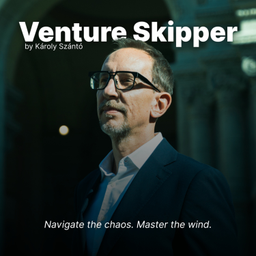
About Venture Skipper by Karoly Szanto
Venture Skipper sails through venture building, investments, and funding with Karoly Szanto, a lifelong sailor turned venture builder. Blending storytelling, strategy, and straight talk, it offers sharp reflections and deep talks with founders, investors, and thinkers redefining how ventures are built. Whether steering a startup or managing a fund, learn to stay calm in high winds, make better course calls, and build ventures that thrive under pressure. You can’t control the wind, but you can always adjust your sails. Available on Spotify, YouTube, and Apple Podcasts.
- Publisher
- Karoly Szanto
- Category
- business
- Language
- en
- Explicit
- No
- First episode
- 9 Nov 2025
- Latest episode
- 2 Jun 2026
Latest episodes
15 episodes in the feed.
2 Jun 2026
The Invisible Infrastructure of University Venture Capital
Thierry Heles, founder and editor of "The Next Leap", joins Károly Szántó and Thijmen Meijer for a conversation on the state of university venture capital globally. Thierry Heles has spent 12 years tracking spinouts, university funds, and the professionals who move between them. In this episode, he shares what that research produces: around 108 university-backed funds active in Europe, around 250 globally, a talent pipeline constrained by compensation structures that cannot compete with the corporate sector, European LP capital that remains nationally siloed, and why multi-university fund models are structurally necessary for any fund that needs a viable pipeline. Topics covered in this episode: How Thierry entered the field and what has kept him in it for 12 years University fund coverage across Europe, Japan, Australia, and the US The talent pipeline into TTOs and UVC funds TTO compensation and why experienced candidates do not enter the field Fund sizes and LP composition across geographies Why European pension funds allocate a fraction of one percent to venture capital The structural case for multi-university fund models Why university funds require external management and legal separation from the institution The Next Leap: http://thenextleap.is UniVCC: univccoalition.org Timecode: 00:00 Welcome and setup 01:04 Origin of the podcast 02:31 Entering university VC 05:24 What makes it fascinating 07:48 Talent and career paths 11:12 Who leads university funds 15:49 Geography and mobility 17:38 Europe fund landscape 21:14 Global count and Japan 24:22 Cross-border ecosystems 28:47 Late-stage funding gap 29:52 Funding Scale Reality 30:15 Investor Geography Bias 31:36 Multi-University Fund Models 33:11 Building a Pipeline 34:25 Audience and Coverage 36:38 Policy Voices on Air 38:03 LPs and Investability 40:40 Pension Funds Risk Gap 41:37 Europe vs US Allocation 44:35 Incentives and Fee Support 46:25 Talent Paths and Pay 51:57 Fund Turnarounds Lessons 54:13 External Management Best Practice 55:34 No One Size Fits All
26 May 2026
The Diagnostic Is Well Known. The System Is Still Incomplete
The Diagnostic Is Well Known. The System Is Still Incomplete European tech transfer has been debated for over two decades. The bottlenecks are identified. The system is still incomplete. Christophe Haunold has been inside that system for 30 years. He built and led one of France's regional tech transfer companies, served as president of ASTP, and created the central tech transfer office at the University of Luxembourg. What follows draws entirely from our recent conversation. The Question That Opens the Door Christophe does not open with the word commercialization. He asks something more basic: would you like your scientific results to become useful to someone? Nobody answers no. Public researchers chose their careers for intellectual freedom and time to make mistakes. Once the answer is yes, the conversation about pathways (company creation, licensing, industry collaboration) can happen on the researcher's terms. The Fantasy of the Researcher-Entrepreneur One assumption persists in European innovation policy: every researcher should become a businessman. Christophe called it a nightmare. The goal is to provide the right environment for those with the ambition, not push everyone toward entrepreneurship. The TTO: Compliance Office or Strategic Tool Three points stood out. Alignment: IP is only a tool, and a TTO is only a tool. Resources: most TTOs consider themselves too small, and a complete team needs competencies across IP, legal, science, and finance. Differentiation: a large technological university requires a different approach than a small humanities university. The structural answer is mutualization. In France, one tech transfer company per region served multiple universities. The pipeline became large enough to build a complete team and develop real expertise. IP Strategy and the University Equity Debate Christophe's position: five to ten percent initial equity is an acceptable range. The principle he advocates is speed. With sufficient volume, you offer a ready-to-use process and stop negotiating over uncertainty. The worst situation is founders fighting the university from the start. They are on the same side of the table. The university's main objective is impact, not IP revenue. What Stays With Me After 15 or 20 years, the system is still incomplete. Christophe's approach: sit on the same side of the table as the researcher, and find conditions acceptable to investors, to the company, and to the university. Because the main objective of a university is not to make money with IP. It is to create impact. Timecode: 00:00 Meet Christophe Haunold02:30 From Chemical Engineering to Knowledge Transfer06:04 Europe's Innovation Landscape and ASTP11:38 Motivating Researchers to Commercialize19:24 Building Teams and Attracting Business Talent23:22 Capital Gaps and TTO Decisions31:28 Why University IP Goes Unused35:15 Investment Readiness and Licensing Strategy40:45 University Equity and Fast Track Frameworks48:05 Shared TTO Models, Deep Tech, and Closing Thoughts Links: Károly Szántó : https://www.karolyszanto.com/ (https://www.karolyszanto.com/) UniVCC : https://univccoalition.org/ (https://univccoalition.org/) Guest: Christophe Haunold: https://www.linkedin.com/in/christophe-haunold/
7 May 2026
IP Ownership, Spinout Structure, and the Case of University of Pannonia
University of Pannonia Chancellor Zsolt Csillag and researcher Dr Gabor Jarvas join Karoly Szanto to discuss the IP licensing model the university developed to make its spinouts investable for institutional capital. The model separates property rights from operational ownership. The university retains the intellectual property and receives a royalty on net revenue. The researchers own and manage the spinout company, which holds an exclusive licence to develop and commercialise the IP. Csillag explains the institutional reasoning: why universities that attempt to act as equity investors encounter legal and financial constraints they are not equipped to manage, how the University of Pannonia Technology Transfer Company is structured as a cost centre rather than a revenue-generating entity, and what the KPI framework looks like when spinout capital attraction becomes a national policy indicator. Jarvas describes the process from the researcher's side: the prostate cancer diagnostic method that became the first spinout, 56 contract versions, the importance of consulting the venture capital perspective early, and what a structure that keeps every stakeholder motivated through multiple funding rounds actually requires. Karoly Szanto contextualises the University of Pannonia model within the European UVC landscape, where around 25% of research reaching the spinout phase attracts venture capital, and where the Netherlands and Denmark have recently moved to address ownership structure at the policy level. For UVC GPs, LPs evaluating spinout investability across the European UVC segment, university leadership teams, and anyone working on IP strategy or technology transfer policy, this conversation surfaces the structural decisions that determine whether external capital can enter a university spinout. 00:00 Introduction and topic 02:47 University KPIs and funding 07:47 IP and spinout metrics 11:08 Researcher entrepreneurial motivation 14:12 Why not university ownership 24:13 iPsy research and lessons learned 28:14 Royalty-based IP model 33:16 Investor perspective and trends 48:41 TTC and the university toolkit 01:02:59 International connections and capital network 01:10:04 Closing messages and goodbye Links: Karoly Szanto LinkedIn: https://www.linkedin.com/in/karolyszanto1/ (https://www.linkedin.com/in/karolyszanto1/) Karoly Szanto Personal Website: https://www.karolyszanto.com/ (https://www.karolyszanto.com/) University Venture Capital Coalition: https://univccoalition.org/ (https://univccoalition.org/) Guests: Chancellor Zsolt Csillag: https://www.linkedin.com/in/csillag-zsolt-a1649142/ (https://www.linkedin.com/in/csillag-zsolt-a1649142/) Dr. Gábor Járvás: https://www.linkedin.com/in/gabor-jarvas/ (https://www.linkedin.com/in/gabor-jarvas/)
8 Apr 2026
EP12 - Towards a Legible Asset Class: The Evolution of UVC
University venture capital, or UVC, is gaining visibility across global innovation ecosystems. More universities are launching funds, and more capital is entering the space. Yet performance remains uneven and difficult to evaluate from an institutional perspective. In this episode, Karoly Szanto explores why the core challenge is not a lack of activity, but a lack of coherence. He breaks down the structural factors that determine whether university spinouts attract venture capital, including IP alignment, equity structures, and market visibility. The conversation also addresses why UVC is still not fully legible as an asset class, and how fragmented data, inconsistent benchmarks, and limited comparability affect capital allocation decisions. Rather than proposing new solutions, this discussion focuses on what is already emerging. A more connected, structured layer that links existing knowledge, data, and actors into a system that can be understood and evaluated. From fragmented insights to accumulated knowledge. That is how UVC evolves into a category that institutional capital can engage with at scale. Timecode: 00:00 Why Universities Underperform 01:16 Fixing Spinout Funding Gaps 02:16 Value of University VC Funds 02:32 Why Launching Is Complex 04:00 Learning From a Community 05:23 Deep Tech Investing Talent 06:45 Missing Entrepreneur Operators 07:38 Venture Builders for Spinouts Links: Karoly Szanto LinkedIn: https://www.linkedin.com/in/karolyszanto1/ (https://www.linkedin.com/in/karolyszanto1/) Karoly Szanto Personal Website: https://www.karolyszanto.com/ (https://www.karolyszanto.com/) UniPrisma: https://uniprisma.com/ (https://uniprisma.com/) Guests: Thijmen Meijer: https://www.thijmenmeijer.com/ (https://www.thijmenmeijer.com/)
1 Apr 2026
EP 11- The Questions That Still Don’t Have Clear Answers In University Venture Capital
University Venture Capital is no longer experimental. Funds are being launched. Spinouts are increasing. Ecosystems are forming. But if you look closer, something is missing. Not activity. Structure. In this episode, we explore the questions that still don’t have clear answers in UVC: How should these funds actually be structured? What does performance mean in this context? How do IP, ownership, and governance work across institutions? And why is it still so difficult to compare opportunities from an LP perspective? The challenge is not a lack of effort. It is fragmentation. Knowledge exists. But it does not accumulate. This creates an uneven landscape in which strong institutions move forward while others rebuild from scratch. The real opportunity is not to standardize the system. It is to make it learn faster. Because in the end, the speed of evolution depends on the speed of learning. Timecode 00:00 Uni VCC Begins 00:28 The Lonely Founder Problem 01:52 Key Challenges to Solve 03:07 What Uni VCs Optimize For 04:39 Deep Ecosystems Breakthrough 07:17 Building the Coalition Platform 12:04 Infrastructure and Co-Investing 14:57 Policy Makers and EU Workshop 17:39 Who the Platform Serves Links: Karoly Szanto LinkedIn: https://www.linkedin.com/in/karolyszanto1/ (https://www.linkedin.com/in/karolyszanto1/) Karoly Szanto Personal Website: https://www.karolyszanto.com/ (https://www.karolyszanto.com/) UniPrisma: https://uniprisma.com/ (https://uniprisma.com/) Guests: Thijmen Meijer: https://www.thijmenmeijer.com/ (https://www.thijmenmeijer.com/)
25 Mar 2026
EP10 - Why University Venture Capital Hasn’t Scaled -Yet
In this conversation with Thijmen Meijer, we unpack a key challenge in university venture capital. Why is it still difficult to attract LP capital, despite strong research and innovation coming from universities? We go into: Why are fragmented fundraising limits a scale What LPs actually look for when allocating capital How coordinated efforts between universities could change the game Why structure and trust matter more than hype This is not about building one big fund. It’s about building a system that works for investors, universities, and founders. If you are part of the venture ecosystem, this conversation is worth reflecting on. Timecode: 00:00 M2.3 The missed opportunity in fundraising for venture capital funds 00:00 M2.3 Addressing Fundraising Challenges 02:17 (Q to Karoly) Event Planning and Execution Links: Karoly Szanto LinkedIn: https://www.linkedin.com/in/karolyszanto1/ (https://www.linkedin.com/in/karolyszanto1/) Karoly Szanto Personal Website: https://www.karolyszanto.com/ (https://www.karolyszanto.com/) UniPrisma: https://uniprisma.com/ (https://uniprisma.com/) Guests: Thijmen Meijer: https://www.thijmenmeijer.com/ (https://www.thijmenmeijer.com/)
19 Mar 2026
EP09 - Building a Collaborative Infrastructure for University Venture Capital
In this episode of Venture Skipper, Karoly Szanto and Thijmen Meijer discuss the structural challenges around university venture capital and why the ecosystem remains fragmented. This conversation explores a new initiative to build a coalition around university venture capital. The goal is to gather structured data, connect practitioners, and create a platform where universities and investors can share knowledge, benchmark performance, and collaborate on venture creation. This episode is an open invitation to universities, venture capital funds, tech transfer offices, and investors who believe that collaboration can unlock the full potential of academic innovation. If you want to understand how venture ecosystems are built, this conversation is a good place to start. Timecode: 00:00 (Karoly) Introduction to University Venture Capital (Karoly) 00:22 Building a Unified Community 01:34 Research and Data Gathering 03:23 (Q to Karoly)Creating a Collaborative Platform 06:13 (Q to Thijmen)Operational Plans and Membership 07:17 Karoly rephrases Links: Karoly Szanto LinkedIn: https://www.linkedin.com/in/karolyszanto1/ (https://www.linkedin.com/in/karolyszanto1/) Karoly Szanto Personal Website: https://www.karolyszanto.com/ (https://www.karolyszanto.com/) UniPrisma: https://uniprisma.com/ (https://uniprisma.com/) Guests: Thijmen Meijer: https://www.thijmenmeijer.com/ (https://www.thijmenmeijer.com/)
16 Mar 2026
EP08 - Building The Missing Infrastructure For University Venture Capital
Universities generate extraordinary innovation. Yet most university spinouts struggle to reach venture scale. In this conversation, Karoly Szanto explores a problem inside the global innovation ecosystem. Thousands of universities operate technology transfer offices, but only a small fraction run venture capital funds. Even fewer share structured data or best practices. The result is fragmentation. Strong institutions succeed, but many others attempt to build venture structures without guidance. Karoly explains the cultural gap between academia and venture capital, why equity and royalty structures often discourage investors, and how a shared ecosystem could unlock far greater impact from university research. This discussion looks beyond individual startups and focuses on the system around them. Because sometimes the real opportunity is not the next company. It is fixing the infrastructure that allows innovation to scale Timecode: 00:00 Origin Story 00:52 Outreach Findings 01:58 TTO vs University VC 02:49 Need for Platform 04:03 Venture Studio Model 05:07 Ecosystem Upside 06:34 Europe Stats Gap 08:38 Culture Clash 11:04 Bad Deal Terms 11:33 Market Friendly Fix 14:55 Closing Thoughts Links: Karoly Szanto LinkedIn: https://www.linkedin.com/in/karolyszanto1/ (https://www.linkedin.com/in/karolyszanto1/) Karoly Szanto Personal Website: https://www.karolyszanto.com/ (https://www.karolyszanto.com/) UniPrisma: https://uniprisma.com/ (https://uniprisma.com/) Guests: Thijmen Meijer: https://www.thijmenmeijer.com/ (https://www.thijmenmeijer.com/)
4 Mar 2026
EP07 - Co-Investing In The Storm: Rethinking Capital Partnerships in Early-Stage MedTech
In this episode, I speak with Peter M. Kovacs and Thijmen Meijer about co-investors in early-stage MedTech and BioTech. We cut through labels and focus on what actually matters: skin in the game, trust, and execution. What we cover: Why investor type matters less than incentives, capability, and character Two co-investor profiles that create the strongest execution synergies Peter’s view on family offices: values first, personal trust, relationship over transaction Thijmen’s reality check: introductions beat cold outreach Why focused micro funds and emerging managers can outperform fee-driven models What real de-risking looks like when you are building under pressure If you are a founder, LP, family office, or emerging manager looking for clarity over hype, this conversation is for you. Timecode: 00:00 Introduction to Key Stakeholders 00:22 Types of Co-Investors 01:09 Value Proposition and Commitment 02:10 Investor Specialization and Synergies 03:26 Role of Angel Investors 04:02 Corporate Venture Capital 04:44 Family Offices and Personal Touch 08:56 Challenges in Different Regions 09:32 Building Relationships with Investors 10:34 High Net Worth Individuals 18:02 Micro Funds and Emerging Managers 19:51 Conclusion and Future Outlook Links: Karoly Szanto LinkedIn: https://www.linkedin.com/in/karolyszanto1/ (https://www.linkedin.com/in/karolyszanto1/) Karoly Szanto Personal Website: https://www.karolyszanto.com/ (https://www.karolyszanto.com/) UniPrisma: https://uniprisma.com/ (https://uniprisma.com/) Guests: Thijmen Meijer: https://www.thijmenmeijer.com/ (https://www.thijmenmeijer.com/) Peter M. Kovacs Personal Website:https://www.petermkovacs.com/ (https://www.petermkovacs.com/)
25 Feb 2026
EP 06 - Execution Is The Moat: Why Science Alone Isn’t Enough
In this episode, I break down what investors often miss when they fund science without systems in place. Great science is not enough. A venture needs an operating rhythm, communication discipline, vendor control, and accountability that holds under pressure. We talk about: Why science ventures fail even when the tech is real The four systems that de-risk execution How to evaluate a team beyond charisma and slide decks Why operating systems are a fairer way to back underdogs, including female founders in femtech Practical questions investors can ask to spot execution strength early If you invest in deep tech, medtech, or university spinouts, this is for you. Less noise. More clarity. Timecode: 00:00 Introduction and Welcome 00:21 Achievements and Progress 01:38 Lessons for Startup Founders 02:56 Building a Strong Global Team 04:44 Handling Underperformance 09:36 Future Challenges and Milestones 13:28 Fundraising Challenges for FemTech 27:36 The Importance of Value-Driven Partnerships 31:29 Conclusion and Gratitude Links: Karoly Szanto LinkedIn: https://www.linkedin.com/in/karolyszanto1/ (https://www.linkedin.com/in/karolyszanto1/) Karoly Szanto Personal Website: https://www.karolyszanto.com/ (https://www.karolyszanto.com/) UniPrisma: https://uniprisma.com/ (https://uniprisma.com/) Guests: Roswitha Verwer: https://www.linkedin.com/in/roswitha-verwer-b2b636137/ (https://www.linkedin.com/in/roswitha-verwer-b2b636137/) Peter M. Kovacs Personal Website:https://www.petermkovacs.com/ (https://www.petermkovacs.com/)
28 Jan 2026
EP05 - Great Science, Weak Bridges: Europe’s Commercialization Paradox
In this episode, Karoly Szanto speaks with Peter M Kovacs and Thijmen Meijer about the real reasons European university spin-offs struggle to become venture fundable. Topics we cover: Europe’s commercialization gap and why it is biggest in Central and Eastern Europe Why only a minority of spin-offs ever become investable The mindset issue: waiting for somebody else to make things happen How to build investor readiness through clear milestones and a measurable North Star Team design, role clarity, and why founders sometimes need a different CEO profile Clinical validation, de-risking, and ecosystem building as the path to real traction Why “we raised money” is not the real headline A practical takeaway: If money is not a constraint, what is the best version of your venture? Then ask: what part of that can you achieve without money, starting next week? If you build, fund, or support deep tech, biotech, or medtech ventures, this is for you. Timecode: 00:00 Introduction and Meeting the Guests 00:16 Challenges Faced by European Startups 04:44 The Importance of Mindset in Commercialization 07:43 Building Effective Teams for Startups 14:04 Investment Challenges and Opportunities 17:15 The Role of Clear Goals and Milestones 21:40 The Investor's Perspective 25:26 Introduction to Portfolio Companies 25:45 The Need for New Investment Models 26:05 Technological Boom and Efficiency 26:29 Building Companies for Impact 27:30 Challenges in Deep Tech Investment 27:50 Value-Driven Founders 29:12 Operational Models and Risk Mitigation 30:50 Identifying Good Partners 32:55 Scaling Up and Future Goals 33:43 Investor and Founder Dynamics 37:09 Cultural Differences in Startups 46:40 Lab Space and Resource Challenges 49:39 Networking and Collaboration 51:57 Preparing for Global Markets Links: Karoly Szanto LinkedIn: https://www.linkedin.com/in/karolyszanto1/ (https://www.linkedin.com/in/karolyszanto1/) Karoly Szanto Personal Website: https://www.karolyszanto.com/ (https://www.karolyszanto.com/) UniPrisma: https://uniprisma.com/ (https://uniprisma.com/)
4 Dec 2025
EP04 - Origin Story of UniPrisma: Why Co-Working Matters More Than Ever
In this episode of Venture Skipper, I talk with Thijmen Meijer about how UniPrisma actually started. Not as a theory, but as a response to real gaps in early-stage venture building. We discuss the inefficiencies we both saw when working with founders. The pressure of fundraising. The lack of hands-on support. The mistakes founders make when they are pushed to focus more on investors than on customers. And the missing collaboration in the university spinoff ecosystem. You will hear why we created a venture studio that co-builds with founders. How we help startups become investable. How we help them use the investment well. And why connecting the right investors around each company matters more than filling a cap table. We also talk about the need for a platform that connects university venture capital actors, share playbooks, and builds a more aligned ecosystem for research-based ventures. This is the real origin story of UniPrisma. Simple, practical, grounded. It was born from gaps we both refused to ignore. Timecode: 00:00 Introduction to UniPrisma 00:37 Identifying the Inefficiency Gap 01:30 Building Ecosystems for Startups 02:51 Making Startups Investment Ready 03:29 The Importance of Market Intelligence 08:15 The Origin Story of UniPrisma 14:29 The Role of Talent in Startup Success 15:39 Challenges in University Spin-offs 17:31 The Future of University Venture Capital Links: Uniprisma: https://uniprisma.com/
27 Nov 2025
EP03 - Becoming the Chaos Coordinator: Turning Early Stage Disorder into Direction
In this episode of Venture Skipper, I explore why early-stage ventures feel chaotic and why this is not a problem but a signal. I talk about my own story, from navigating family crisis as a teenager to crossing the Atlantic as a sailor, and how these moments shaped my approach to innovation. We dive into why founders need to obsess over customer pain, not product features. Why limited resources are your greatest teacher. Why gut feeling is simply pattern recognition. And why responsibility is the foundation of real progress. If you are an investor, a builder, or a founder trying to find direction in uncertainty, this episode will help you read the chaos instead of fighting it. Listen, reflect, and stay in the storm long enough for clarity to appear. Timecode: 00:00 Embracing Chaos: My Journey Begins 01:33 The Role of Chaos in Innovation 02:29 Focusing on the Client's Pain Points 05:54 The Lean Approach to Startups 07:57 Learning and Adapting Through Experience 08:51 Trusting Gut Feelings in Decision Making 11:19 The Power of Asking the Right Questions Links: Uniprisma: https://uniprisma.com/
21 Nov 2025
EP02- Truth, Flexibility, and the Real Test of a Founder
In this episode of Venture Skipper, I break down how I evaluate founders long before any investment is on the table. This is not about pitch decks, market slides, or polished storytelling. It is about presence, truth, and the ability to build a shared narrative under pressure. I explain: How I read founders in the first meeting. Why I begin with trust, not skepticism. How I deep research process tests the real assumptions behind a thesis. Why most founders fail the conversation that follows. How strong opinions combined with flexibility create a real partnership. Why the early stage is won or lost through character, not perfection. If you want a candid look into the mental models behind venture building, this episode will give you a clear, honest view of what separates founders who break from founders who build. Listen if you value depth, truth, and the kind of clarity that does not come from playbooks. Timecode: 00:00 Introduction: Deep Dive into Interests 00:51 Evaluating Startups: The Human Element 01:50 The Importance of Due Diligence 02:33 Research and Frameworks 03:59 The Critical Conversation with Founders 04:32 Building Meaningful Partnerships 05:21 Decision-Making and Human Factors 05:58 Conclusion: Achieving Success Beyond Business Links: Uniprisma: https://uniprisma.com/
9 Nov 2025
EP01 - Chaos to Clarity: The Journey That Led Me to Found UniPrisma
In this episode of Venture Skipper I go back to the beginning. No pitch, no slides. Just the real story behind how a boy from Budapest, shaped by Libya, family collapse, and national league sailing, became a venture builder and fund architect working with founders, universities, and investors across the globe. I share: How moving to North Africa at seven broke my bubble and trained me to think beyond one truth. What carrying financial responsibility for my family as a teenager taught me about crisis, character, and ownership. Why sailing, including an Atlantic crossing, became the foundation of my leadership and my way of reading risk. How I accidentally entered sales, then international business, and discovered I could build trust based on honesty instead of theatre. How I moved into venture capital, co created funds and accelerators, and why I became dissatisfied with traditional VC behavior. Why I founded UniPrisma to co build with serious founders, authentic investors, and institutions who want structure without politics. This episode is for investors who are tired of polished narratives, founders who have been through real storms, and builders who want to work with someone who cuts through the noise and stands in the boat with them. If you want to understand how I think, how I decide who to work with, and why I believe in structure as flow, not cage, start here. Timecode: 00:00 – Introduction: A Sailor’s Beginning 00:31 – Moving to North Africa: The First Big Shift 01:00 – Discovering Sailing and the Meaning of Responsibility 02:19 – Forces Greater Than You 02:50 – The End of a Dream 03:52 – Six Years Away from the Water 04:16 – An Introvert’s Bet: Entering Sales 05:07 – Lessons from Danish Mentors 06:05 – From Candles to Code: Transition into IT 07:00 – A Global Career Across 50 Countries 07:28 – Discovering Venture Capital 08:14 – Building Ventures and Funds 09:13 – The Gap in the Startup World 09:49 – The Birth of UniPrisma 10:16 – Closing Reflections: Taking Risks Together Links: Uniprisma: https://uniprisma.com/
Contact Venture Skipper by Karoly Szanto
- Guest appearances
- Books guests
Based on episode analysis; this does not confirm that the show is currently accepting guests.
Host of Venture Skipper by Karoly Szanto?
Claim your podcast to manage its listing and keep your show details accurate.
Pod Engine is an independent podcast discovery and analytics service and is not affiliated with or endorsed by this podcast. Artwork and show content belong to their owners. Full legal notice.
Explore this show
Podcast research with Pod Engine