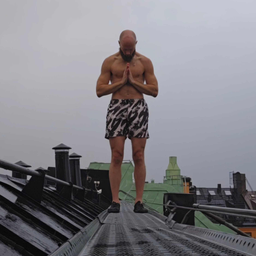
Victor's Oddyssey
Life form. Human being. Self-expressionist. Victor Salander.
- 35
- Episodes
- 2026
- First episode
About Victor's Oddyssey
Life form. Human being. Self-expressionist. Victor Salander. victorsalander.substack.com (https://victorsalander.substack.com?utm_medium=podcast)
- Publisher
- Life form. Human being. Self-expressionist. Victor Salander.
- Category
- health & fitness · society & culture
- Language
- en
- Explicit
- No
- First episode
- 12 Mar 2026
- Latest episode
- 17 Jun 2026
Latest episodes
35 episodes in the feed.
17 Jun 2026
Dreamscape Diaries: Morphine Trippin On Garam Masala
Cycle 13, day whatever. Wednesday, June 17th, 3:48 in the morning. I want to relay a lighter experience, as I got the privilege to currently experience it very weirdly. If you’ve heard my last messages, it’s light in the context of this much harder overall journey that I’m now making together with all of you guys. But yeah, let’s start on the lighter note here. Enter Morphine What’s happened over the last couple of weeks, basically, is that due to me having such constant pain and pressure internally from tumor activity and swelling around my thoracic back and around the liver, I’ve started to take anti-pain agents for the first time in my life. The family of anti-pain agents that you usually land with when you have organ failure, from my understanding, is the morphine family—or maybe it’s called the opioid family. Within that family, you have a lot of different varieties of morphine. The one I first got acquainted with was a fast-acting one in pill form. The reason I needed it was that I’d spent two days in the hospital bed, and that bed really doesn’t work for me and my back. My back completely shut down on me and started to cramp up and stiffen. That pain didn’t allow me to sleep anything. So after my brother Philip helped me source an improvised bed of hard, tough mattresses on the floor, I also asked for some kind of pain relief and started off with five milligrams of direct-acting morphine, which kicks in and is supposed to stay in the system for five-plus hours. Quite soon thereafter, in the middle of the night, I felt it didn’t suffice, so I took another five milligrams. For a few days, I only had the fast-acting morphine to test, and I tested it quite cautiously. I didn’t want to just up the dosage. I actually lowered the dosage by each day. So I just had five milligrams in the night and nothing in the daytime. But then, after a week in the hospital ward, my body was in an even worse state, and I was to leave anyway. It was for the better, because that environment kills you. Just the beeps in the middle of the night. Never-ending sterile interiors. The hierarchy of the nurses. Some of them having superfluous tasks based on protocol where they want to check in on you in the middle of the night to take your blood pressure, and you have to meddle with them in order not to be woken up four or five hours earlier than they actually need to take some blood sample. Just a lot of those things. Slow-Acting Experiments After coming back home, still in the same shitty health state, I spoke to the nurses helping me at home. They seemed more adept at this pain-relief thing. So they introduced me to slow-acting morphine, which is a different formulation. It’s also in pill form, but the way it’s formulated means your body takes it up much more slowly, spread out over time. That’s the main one I’ve been using since. I’ve tried different dosages, but what seems to be working for me now is to have two pills a few hours before going to bed. Then they start acting throughout the night. I’ve been unsure about the daytime pain relief, because in the daytime I’m still popping corticosteroids—prednisolone—which, as you guys know, I’m very ambivalent about. We’ve tried fast-acting morphine during the daytime as well, but one of the most annoying things with that one is that every time I’ve taken it, it has 100% induced what I call “locked ears syndrome.” You feel like you have an airlock in your ears. Given that I want to try and have a few people over every now and then—the few that I have energy to meet, which is like one or two people per day maximum—that locked-ears feeling is such a handicap. I’m trying to at least look people in the eye while talking to them and trying to express myself and have us share this genuine, emotionally intimate moment. But then I have the locked ears, which is bizarre. So I tell anyone who comes by that I need to look down sometimes, because when I look down, the airlock dissipates for a few seconds. Which is super weird. Then again, the fast-acting one also seems like the level of morphine goes up in the blood much faster and isn’t steady over time. You could have a pump put in and fully control the rate, but I don’t think I want the rate to be the same throughout the day. So I’ll probably stick with the slow-acting one for now. The Hundred-Foot Journey What happened at the end of the day was that I had taken a quick-acting one via syringe, and that one was starting to dissipate. I made the choice to take one five-milligram slow-acting pill in the afternoon, and then, similar to before, I took two a few hours before going to bed. What that effectively did was create a peak in the middle of the night which should correspond to fifteen milligrams of slow-acting morphine. For some reason, it gave me a high. A few days ago, I had suggested to my brother Philip and Jonna that I wanted the three of us to watch a movie together. I wanted us to find a movie that was quite light-hearted, where we could all relax together and get into a nice state of mind where we could reflect a bit more and ideally release more emotionally. After some back and forth, Jonna found a movie called The Hundred-Foot Journey. It mainly takes place in France. An Indian family ends up in the French countryside wanting to start an Indian restaurant, and their neighbor is a one-Michelin-star French restaurant run by an older lady. It was a really nice movie. You can imagine it as a clash of cultures and cuisines—France and India. We all appreciated it. The movie ended. We had some discussions. People went to bed. Morphine Trippin’ on Garam Masala During the night, I felt this high—the peak of the morphine kicking in. It felt so weird. I had this rush, and my mind connected the rush to the Indian cuisine. So when the rush came, it was like when the Indian spices came into the dish. These rushes came and went because the way I’m trying to sleep right now is weird as well. I don’t have any position where I can fully relax. So I’m constantly switching positions, but there are only a few positions available to me at all. I’m trying to lie on my side, basically only on the right side of my torso. Then there are minute variations, and very often I need to get up from that position and reset. The reset is where I’m kind of half-lying, half-sitting in a child’s pose with my elbows bent at ninety degrees. My elbows have had so much pressure on them these last couple of weeks. It’s insane. I’ve just been in this cramped-up child’s pose. But throughout the night, I’m still having a bit of this high at the peak. So it’s an interesting, very confusing experience. At first, I didn’t really know what was happening because the rushes were so intense. I’m also sensing a sweetness in my palate from this chemical, biochemical rush. When I’m trying to rehydrate, there’s already a taste in my mouth from the experience. I’m currently trying to very aggressively rehydrate with water and electrolytes. I picked one with flavoring, which I usually don’t do. But because I have to drink so much salt now, it’s hard to just have that salt flavor all the time. So I have a citrus flavoring. But then there was this other flavor on my tongue while I was drinking it. Which is interesting. We’ll see what the rest of the night has to offer. As always, it will be unsteady sleep. But at least for tonight, I might have some more highs. Sleep in Limbo If you have any funny sleeping experiences, relay them. I find it fascinating to ponder sleep, especially when your health is in such a limbo. There are so many things that can happen to your sleep experience. If I showed you my sleep curves, especially for the last month, but even more so for the last two weeks, they’re as scattered as any human sleep could possibly be. It’s like, from one minute to the next, I’m sleeping or awake. But I think through the tenacity I built by just staying in bed and not allowing myself to be psychologically burdened by having such interrupted sleep, I’m still almost always able to rack up four and a half hours at least. And if I’m lucky, it’s even six or six and a half hours. I think I managed that the other day. So even through these rougher patches of this journey—and they are definitely rough—every day requires so much from me now to hold on and to try and have this equilibrium, at least just slowly disintegrating as opposed to fully crashing. I’m still thankful for some moments here and there. And I’ll continue to be thankful for any small, small, small win that I can get. Bless you all, fam. Be mindful of your life force. Namaste. This is a public episode. If you would like to discuss this with other subscribers or get access to bonus episodes, visit victorsalander.substack.com (https://victorsalander.substack.com?utm_medium=podcast&utm_campaign=CTA_1)
15 Jun 2026
Farewell, Longevity Fighters
Dear Longevity Fighters, It’s unfortunate that I have to announce that my longevity journey is about to end. After struggling for the past two years to the utmost of my abilities, trying to lift every stone that I could see along the path, and through this gut-wrenching, instinctual, nerve-wracking, endless, ceaseless struggle to find a way to combat the diagnosis of widely spread Stage IV GEJ adenocarcinoma, things have unfortunately reached a dead end. My liver is completely failing on me, and there is no solution in sight. If you know me well, then you know I will have tried to find every last drop of possibility to solve this. But there isn’t one. No longevity cure currently existing would be able to reverse my trend right now. So unfortunately, now it’s just a matter of days left. It’s a pity. I really appreciate some of the friendships I made here in this group and how we bonded over our shared interest in prolonging and promoting life force. There are so many aspects to this—whether biological, such as supplementation and diet; musculoskeletal and nervous system health; psychological health; neuroendocrine health—you name it. But it’s been a treat. Especially those of you I’ve met in person and built close connections with. Eric being the main one. I have to say: Love you, Eric. And I can only hope for the very best for the rest of you guys in your journey onward—in terms of promoting life balance, longevity, health, and increasing your healthspan. I’m hoping that some of you will be able to celebrate your 100-year anniversary together, still in quite good health. My personal conviction is not that any of you will ever live forever. I don’t think that’s the point of longevity anyway. Life has a cycle. There is a natural cycle to life. But the longer you can extend it while still living a healthy life, the better. The more value you can extract for yourself, the more value you can also bring back to your community. Not much more to say. Just hoping for all of you to embrace your life force and to really hone in on that life balance. As I always say: Be mindful of your life force, fam. Much love to all of you. This is a public episode. If you would like to discuss this with other subscribers or get access to bonus episodes, visit victorsalander.substack.com (https://victorsalander.substack.com?utm_medium=podcast&utm_campaign=CTA_1)
14 Jun 2026
A Warm Farewell
Fam. Most beloved fam. We’re here in my bedroom. It’s June 17th. Quarter past one at night. Cycle 13. Day... it doesn’t matter anymore. Because this is the last cycle. This is the last one. And I’m here for sending myself off, and sharing this last step in the journey with you guys. A journey that has been such a toil for me. Such hard labor. To give you a bit of an overview, because this is going to be quite a long message from my side, I’ll start off by focusing on this last part of my life’s journey. The last two years battling metastatic cancer. I’ll turn some of those stones again for you guys, but also for myself, to reminisce and to try and encapsulate what a f*****g struggle this has been. It’s inhuman. It really is. Metastatic cancer is such an inhuman situation to be going through. Inhumane. And then, if I still have the energy, I want to open myself up even more for you guys and talk about my whole life story. The remaining 38 years stretching back. Try and find some narrative there. That will be what it will be. But I want to try and find some way of being a bit more open now, in this last message with you. Because one of the things I realized quite early in life, but started to implement more and more, is how important it is to be genuine with the people you care about. And I intend to be that all the way here. So let’s see what comes out. And then, going through that, I’m hoping we’ll end up in gratitude and appreciation. And the ultimate aim for me now, in this last stage, is release. To find some sort of release. Even through all the pain I’m experiencing right now. To find resolve and emotional release from all of this. I’m hoping you’ll stay with me for this whole journey. You don’t have to listen through it in one go. It’s going to be hours long, probably. But I’d very much appreciate it if anyone gets anything out of this. And I’ll probably be around for a few more days. So feel very free to write me. Even if you’ve just been a pure stalker up until now throughout these two years, which I feel is completely understandable as well. It’s so hard to approach this life situation, especially if you can’t relate from your own day-to-day life. But this is my way to connect back to you once more. And I’ll try to do it from the deepest of places now. I just need a bit of beverage before getting going. That was the introduction. The Beginning Of The End Imagine yourself being a 37-year-old Swedish man. You’ve just arrived in Italy. It’s summertime. You’re about to attend the wedding of two very dear friends. These friends had the brilliant idea of asking all of their guests to chip in a bit extra so they could stage the wedding in the most lovely old monastery. An old convent sitting atop a hill overlooking the Tuscan countryside. You are driving a rental car together with your girlfriend. You’ve already spent a few days in the area and are now winding your way up a country road toward the monastery. From a distance, you catch sight of it. A tall stone tower. A sprawling complex. Perched above the landscape. Five or ten minutes later, you arrive. Guests are pouring in. People are greeting one another. Many haven’t seen each other in years. We’re all accommodated in these tiny former nuns’ chambers in the tower. And we’re in for such a treat. A three-day celebration. Everything is lovely. The food. The weather. The company. The love. I remember especially the groom’s friendship circle. For a group of Swedish men, they were remarkably emotionally close. You could tell they genuinely opened up to one another in a way I hadn’t often witnessed among large groups of men in Sweden. I felt welcomed into that community. The main wedding day began with the ceremony itself. Then followed a long wedding night. A lot of dancing. One of my favorite things in life. I love long nights of wedding dancing. Even cultures where people don’t normally dance will dance at weddings. And I want everyone to dance when there’s a dance floor. So I was dancing. Carousing. Enjoying life. Then came the morning after. Jonna and I woke up. And I noticed a small bulge on the left side of my neck. I thought: “This is clearly just a lymph node, right?” I’d had enlarged lymph nodes before. Usually from infections. They always disappeared. But this was unusual. It was in my neck. So I thought: “I’ll look into it when I get home.” We still had over a week left of vacation. We continued to the Tuscan coast. Had a lovely time. No obvious symptoms. Then we flew home. The very next day I was back at work. And almost immediately I started feeling strange. My head felt like it was in a frying pan. I couldn’t focus. Couldn’t concentrate. I felt stupid. I told my colleagues I couldn’t focus on numbers or tasks. And with each passing day it got worse. Soon I was visiting the emergency room. Then again. And again. And again. Because I looked healthy. I looked like a fit middle-aged man. Younger than my age, even. I’m almost certain most of them assumed I was a hypochondriac. But I kept going back. Six. Seven times. Until finally they agreed to biopsy the lymph node. By then I had already found two additional enlarged nodes. And another one deep beneath the clavicle. I still had no idea what was going on. The biopsy eventually came back. At first, I was told there was no cancer. Negative. But the doctor had only read the first page. His superior caught the mistake. The second page showed findings strongly suggestive of malignancy. Not lymphoma. Something else. A cancer that had spread into the lymphatic system from somewhere else. That was the beginning. And from there, everything accelerated. Diagnosis, Treatment, and the War Room Now that there was evidence of malignancy, I finally became part of the system. Once cancer enters the picture, the machinery starts moving. I was sent for a PET-CT scan. A PET scan is one of the standard tools used to identify metabolically active tumor tissue throughout the body. The procedure is quite fascinating. First, you’re given beta blockers. Most people know beta blockers as medication used to dampen anxiety, but in this context they serve a different purpose. They reduce uptake in brown fat tissue so that the scan becomes easier to interpret. Then you’re injected with radioactive glucose. The principle is straightforward. Most cancer cells are extraordinarily hungry for glucose. They rely heavily on glucose metabolism and therefore absorb more of the radioactive tracer than most healthy tissues. After the injection, you lie in the scanner. The PET portion shows where the radioactive glucose accumulates. The CT portion provides information about tissue structure and density. Overlay those two layers together and you have a powerful tool for identifying suspicious areas. A few days later, the results came back. They had found the primary tumor. A large lesion located in the gastroesophageal junction — the area where the esophagus meets the stomach. In Swedish it’s called the magmun. The muscular gateway between the esophagus and the stomach. A place I had never really thought about before. Why would I? I hadn’t experienced reflux. I hadn’t experienced obvious swallowing difficulties. Nothing that would have made me suspect that area. Yet there it was. A tumor approximately three by three centimeters in size. Occupying roughly a third of the circumference of the esophagus at that location. And that wasn’t all. The scan also revealed extensive lymphatic spread. Twenty. Maybe thirty lymph nodes. Lighting up. Some around the esophagus. Others stretching down into the abdomen. Others reaching up into the neck. The disease had already established itself throughout the lymphatic system. I was handed the diagnosis. Stage IV cancer. Metastatic cancer. What many people simply call terminal cancer. Palliative cancer. The statistics are brutal. The question is often not if. It’s when. The Surgeon The first specialist I met was a surgeon. I was referred to Karolinska Huddinge, where they specialize in upper gastrointestinal cancers. The first thing they wanted to do was visually confirm the tumor through an endoscopy. A gastroscopy. A tube down the throat. I chose not to take full anesthesia. A mistake. I would never make that decision again. You feel everything. The tube. The gag reflex. The convulsions. The sensation of your body trying to reject the foreign object. It’s like having someone shove an arm down your throat while your body desperately tries to expel it. A Matrix moment. Like when Neo has all the cables pulled from his body. Horrible. Afterwards I met with the surgeon. He began discussing what surgery would actually mean. And it terrified me. To remove the tumor, they would need to remove the entire gastroesophageal junction. But not only that. They would also need to remove roughly two-thirds of the stomach. The practical outcome would resemble a severe gastric bypass. A drastically reduced stomach. No natural barrier between stomach acid and esophagus. Constant reflux. Permanent digestive limitations. I remember leaving that conversation with a single conviction: If there is any possible way to avoid that surgery, I will. The Oncologist Then came the oncologist. The first oncologist I met was not a people person. He had already decided what he was going to say before entering the room. He sat down. Barely maintained eye contact. And told me: “You have stage IV cancer. This is a death sentence.” That was essentially the message. Delivered coldly. Clinically. Without humanity. Now, I don’t need false hope. I never have. Truth matters. But if you’re going to tell someone the hardest truth of their life, at least look them in the eye. At least create a dialogue. At least acknowledge the person sitting in front of you. Instead, it felt as though the conversation was already over before it began. Jonna and I left that meeting knowing one thing: We needed a different oncologist. Immediately. We switched. Our next oncologist was much warmer. An Icelandic physician. Kind. Open. Supportive. Though in hindsight I sometimes think he became too supportive. Too willing to follow my ideas. Too willing to become a fan rather than a challenger. And when you’re fighting something this serious, you need both. You need support. But you also need resistance. You need perspectives that push back. Perspectives that challenge your assumptions. Still, I appreciated him greatly. Because at that stage, I was desperately trying to find a way forward. Water Fasting and the Decision to Fight I was terrified of chemotherapy. Everything I read focused on the downsides. The toxicity. The damage. The long-term risks. The complications. I spent every waking hour researching alternatives. Clinical trials. Experimental approaches. Anything. I found a few possibilities. Some in China. Some in the United States. None realistically accessible. Eventually I arrived at a conclusion. I would enter conventional treatment. But on my own terms. The key insight came through the work of Dr. Valter Longo. Differential stress resistance. Differential stress sensitization. The concept that fasting can place healthy cells into a more protected state while simultaneously making cancer cells more vulnerable. The theory made sense. The early research was compelling. And most importantly, it gave me agency. It gave me something to do. Something beyond simply showing up and receiving treatment. So I committed. Multi-day water fasting. Aggressive water fasting. Electrolytes only. No calories. No shortcuts. The first cycle I experimented cautiously. The results weren’t great. My gut suffered. After that I shifted fully into six-day water fasts surrounding treatment. Cycle after cycle. Again and again. Four days of chemotherapy. Six days of fasting. Recovery. Refeeding. Strength training. Recovery protocols. Then back into the fire. Over. And over. And over. A rhythm emerged. A brutal rhythm. But a rhythm nonetheless. The Cost of Survival The treatment cycles came every fourteen days. Initially. And that became a problem. Because six days of fasting left only eight days to recover. Eight days to rebuild body weight. Eight days to regain strength. Eight days to prepare for the next assault. I was shrinking. Rapidly. My body weight dropped from around ninety kilos down toward seventy-eight. That wasn’t sustainable. Eventually I convinced the system to extend the cycles to twenty-one days. That decision may have saved me. Suddenly I had time. Time to eat. Time to recover. Time to train. Time to rebuild. And rebuild I did. I became methodical. Disciplined. Obsessive. I tracked everything. Calories. Weight. Training. Symptoms. Sleep. Every variable I could reasonably monitor. I worked closely with my coach Simon Milak. Strength training became one of the pillars of my survival strategy. I wasn’t training for aesthetics. I wasn’t training for performance. I was training because I needed reserves. Because sooner or later another treatment cycle would arrive. And I needed something left in the tank when it did. For a while, it worked. Remarkably well. Half a year later, the scans showed what felt impossible. No detectable disease above the threshold of detection. A temporary victory. A beautiful victory. But only a temporary one. Because metastatic cancer rarely disappears completely. It simply retreats. And waits. A Warm Farewell Cancer. Love. Travel. Purpose. Friendship. Mortality. Gratitude. Remission, Relapse, and the Road Back Into Treatment For a moment, it looked as though we had won. Not permanently. I never believed that. But after half a year of treatment, fasting, recovery protocols, strength training, and relentless discipline, the scans showed something remarkable. No detectable disease above the threshold of detection. The primary tumor was no longer lighting up. The lymphatic activity had disappeared from view. It was the closest thing to remission I had ever dared hope for. And yet, even during that period, something felt off. The cancer appeared to be retreating, but my nervous system was not recovering. My endocrine system was not recovering. Something else had begun to unravel. The Strange Collapse After my ninth treatment cycle, we made a decision. Since the scans looked so good, we agreed to stop the chemotherapy and continue only with antibody-based treatment. That same evening after the infusion, my body turned inside out. Not physically. Systemically. It felt as though some internal switch had been flipped. I could not relax. My nervous system refused to settle. I was wired and exhausted at the same time. Circadian rhythm disappeared. Sleep became fragmented. Strange bodily sensations emerged. Weird signals. Weird reactions. Things I had never experienced during the intensive chemotherapy period itself. Ironically, I had tolerated the aggressive treatment better than whatever was now happening. The symptoms continued. Weeks turned into months. I tried everything I could think of. Trying to Rebuild I focused entirely on recovery. HBOT. Relaxation protocols. Sauna. Training. Careful nutrition. Walking. Sleep optimization. Breathing exercises. Anything that seemed remotely promising. I tried to restore balance. But the body refused. Eventually I reached a point where even strength training became difficult. The reserves simply were not there. So I shifted my focus. If conventional training wasn’t working, maybe movement itself was the answer. That summer I discovered sprinting. I joined a program led by Eric Haas. Existential Hormesis. Movement. Nature. Play. Natural locomotion. Climbing. Running. Jumping. Exploring. And something came alive in me again. Summer of Life The summer of 2025 became one of the most beautiful summers of my life. I spent hours outside. Running barefoot across grass. Climbing trees. Moving through nature. Feeling sunlight on my skin. I had never spent that much time outdoors in adulthood. The life force seemed to be returning. For the first time in a long while, I felt hopeful. Not intellectually. Viscerally. The body itself felt hopeful. And the scans supported that hope. Three months after the first clean scan, another scan arrived. Still clean. No obvious signs of progression. Life seemed to be stabilizing. A New Direction At the same time, I began questioning my entire professional life. I had spent years sitting indoors. Working on abstract problems. Managing projects. Living inside screens. Living inside timelines. Living inside systems. And I started asking myself: If I get a second chance at life, what kind of life do I actually want? The answer surprised me with its simplicity. I wanted trees. I wanted weather. I wanted physical work. I wanted visible results. I wanted to solve real problems. I wanted to spend my days outdoors. I wanted to feel the seasons again. And so I applied for arborist training. Tree work. Tree care. Arboriculture. It felt right immediately. Not intellectually. Bodily. It felt like returning home to something I had never fully explored. The First Relapse Then came the first scan that changed everything. I had barely started the program. Three or four days into school. I returned to the hospital for a follow-up scan. And there it was. The first relapse. A handful of lymph nodes. Small signals. Not dramatic. Not catastrophic. But unmistakable. The disease was active again. And I stood at a crossroads. Do I restart treatment immediately? Or do I wait? I chose to wait. Partly because the progression seemed limited. Partly because I desperately wanted to see if normal life could still exist. Partly because I wanted to continue school. To continue becoming an arborist. To continue becoming the person I felt myself turning into. So I waited. Three more months. The Second Scan The next scan was worse. Not dramatically worse. But worse. More nodes. More activity. More spread. Still not enough to force my hand. At least that was how I reasoned. So I waited again. Looking back, I understand why I made that decision. But I also understand the price. Because when the following scan arrived, the disease had accelerated. This time there was no ambiguity. The cancer was back in force. Signals stretched throughout the lymphatic system. From the abdomen. Up along the spine. Into the neck. Around the clavicles. Around the axilla. The burden looked heavier than it had even at diagnosis. And suddenly the illusion of stability disappeared. Back Into the War Room There was no longer a choice. Treatment had to resume. The question became: What treatment? Part of me wanted to continue with the protocol that had already worked. We had evidence. Real evidence. Not theories. Not hopes. Evidence. The combination of chemotherapy, fasting, recovery, and training had produced extraordinary results before. So I argued for maintaining that approach. And we did. Three more treatment cycles. Three more rounds of war. Three more rounds of fasting. Three more rounds of rebuilding. But this time something was different. The scans after those cycles did not show the clear regression we had seen before. Some areas improved. Others didn’t. And then, for the first time, a new organ entered the story. The liver. The scan wasn’t definitive. The findings were vague. Diffuse uptake. Cloud-like patterns. Maybe inflammation. Maybe tumor activity. Maybe both. But it was enough to create concern. And enough to force another decision. The Next Escalation At that point we faced two broad options. One was to switch chemotherapy regimens. Move from FOLFOX to FOLFIRI. A familiar battlefield. Different weapons. Similar war. The second option was more aggressive. Enhertu. An antibody-drug conjugate. A treatment specifically designed to target HER2-positive cancer cells. My cancer was strongly HER2-positive. That much we knew. The logic was compelling. The treatment would bind to HER2 receptors. The cancer cells would internalize the antibody. And once inside, chemotherapy payloads would be released. The cell would self-destruct. At least in theory. And when those cells died, additional drug molecules could spill into surrounding tissue and create a so-called bystander effect. Potentially killing neighboring cancer cells as well. It was powerful. Promising. And frightening. Because it also came with unknowns. Especially for someone like me whose entire strategy revolved around fasting. The traditional chemotherapy agents depended heavily on cellular metabolism. Fasting appeared to create a protective effect. Enhertu worked differently. Its uptake depended on HER2 expression rather than metabolic activity. Meaning many of my assumptions no longer applied. Still. The disease was progressing. The situation demanded action. And so I chose the more aggressive option. Enhertu. I hoped it would become the next chapter in the story. Instead, it became the beginning of the final one. A Warm Farewell (Continued) The Last Treatment I chose Enhertu. Not because it was safe. Not because it was proven. But because it represented a new mechanism. A new angle of attack. A new possibility. At that stage, I felt that if I was going to continue fighting, I needed to be willing to take calculated risks. The old strategy had stopped delivering the same results. Something had changed. The disease had adapted. Or perhaps the balance between treatment and disease had shifted. Either way, I felt compelled to move. So I prepared for the treatment. I adjusted my fasting protocol. Instead of the six-day water fasts that had accompanied my chemotherapy cycles, I reduced it to three days. I reasoned that the biology was different now. The protective effect of fasting might still matter, but not in the same way. And more importantly, I was already feeling weaker. The body was sending signals. Signals I did not fully understand at the time. The First Signs Before the infusion even happened, things were already beginning to change. My final strength training session before treatment took place on May 4th. I remember it clearly because it would turn out to be the last proper training session of my life. At the time, I didn’t know that. I simply noticed that something felt off. After the session, I developed a deep stiffness around my thoracic spine. Not ordinary soreness. Not the satisfying soreness that follows a good workout. Something different. Something deeper. Over the following days, it spread. Pressure developed around my rib cage. Around the lower border where the ribs meet the abdomen. My energy started disappearing. Not all at once. Gradually. Like a battery being drained without being recharged. I stopped training. Partly because treatment was approaching. Partly because my body no longer wanted to cooperate. Fasting Into Uncertainty On May 11th, I began fasting. Three days. No calories. Just fluids and electrolytes. I skipped HBOT that week. I didn’t want to combine too many variables with a completely new treatment. Then came May 13th. The infusion day. Enhertu. Two hours. And then back home. The first symptoms weren’t dramatic. Mild nausea. Lack of appetite. A strange feeling that something inside me had shifted. By day three, I began refeeding. Not aggressively. Carefully. I listened to my body. And my body was telling me something important. It didn’t want to continue fasting. The reserves weren’t there. The vitality wasn’t there. The confidence wasn’t there. So I listened. And I ate. The Weight Begins to Fall When I started fasting on May 11th, I weighed 89.5 kilograms. For weeks before that, I had been hovering around 90. Sometimes slightly above. Sometimes slightly below. I had rebuilt myself. The strength training. The recovery. The careful refeeding. The structure. All of it had brought me back. But now something new was happening. I wasn’t recovering after treatment. I wasn’t regaining weight. I wasn’t rebuilding. The machinery that had always allowed me to bounce back was failing. At first, I thought it was temporary. Just another difficult cycle. Just another obstacle. There had been many before. But this one didn’t behave like the others. Each day I ate less. Each day digestion became harder. Each day energy became scarcer. And each day the scale moved in the wrong direction. The Downward Spiral By late May, I was no longer living. I was surviving. The distinction matters. Living implies expansion. Curiosity. Creativity. Movement. Plans. Surviving is narrower. Surviving is about getting through the next hour. The next meal. The next attempt at sleep. The next bathroom visit. The next wave of pain. For nearly two weeks, I existed in a fetal position. Curled forward. Breathing deeply. Trying to tolerate sensations that seemed impossible to tolerate. I couldn’t exercise. I couldn’t walk normally. I couldn’t think clearly. I couldn’t sleep. My entire day became one long negotiation with discomfort. And still nobody knew exactly what was happening. The Liver Appears The blood tests worsened. The scans worsened. My skin changed. My eyes changed. I became visibly yellow. Jaundiced. When my oncologist saw me, there was no longer any ambiguity. This wasn’t theoretical. This wasn’t subtle. This wasn’t a number on a spreadsheet. My liver was failing. The question was why. And even then, answers came painfully slowly. More scans. More waiting. More investigations. More uncertainty. I had already been sounding the alarm for weeks. But now the situation had become impossible to ignore. Finally, I was admitted to the hospital. The Ward I hated the ward. I still hate the ward. I understand its purpose. I understand the people working there are doing their best. But I hated being there. The mattress destroyed my back. The constant interruptions destroyed my sleep. The routines felt designed for systems rather than humans. After two nights, my brother found a harder mattress for me. A simple act of care. A practical act of love. And suddenly I was sleeping on the floor in the corner of the room because that was the only place where I could accumulate a few hours of sleep. Those small things become enormous when you’re ill. The right mattress. The right pillow. A familiar blanket. A hand on your shoulder. A quiet room. The things you never think about become everything. Morphine I had avoided morphine for as long as I could. Pain medication in general. Partly because I wanted to understand my body. Partly because I wanted clarity. Partly because I wanted control. But eventually pain becomes stronger than philosophy. The first night I took morphine, I felt defeated. The second night I felt grateful. The third night I felt realistic. Because the truth is simple: Sleep matters. Pain relief matters. Survival matters. And if morphine was what allowed me to accumulate a few hours of sleep, then morphine became part of the strategy. Not because I wanted it. Because I needed it. Searching for an Answer The scans showed a thrombosis. A blood clot. In the portal vein. The major vessel feeding the liver. The strange thing was that once they reviewed older scans, they realized it had already been there. Months earlier. Nobody had recognized it at the time. Or at least nobody had acted on it. So now we were left wondering: Was the clot the cause? A contributor? A consequence? Or simply another symptom? Nobody knew. Anticoagulants were started. Fragmin injections. Every day. Another piece added to an already absurd puzzle. And still the liver continued to deteriorate. The bilirubin climbed. The jaundice worsened. The fatigue deepened. The answers remained elusive. This is a public episode. If you would like to discuss this with other subscribers or get access to bonus episodes, visit victorsalander.substack.com (https://victorsalander.substack.com?utm_medium=podcast&utm_campaign=CTA_1)
Contact Victor's Oddyssey
- Guest appearances
- Does not typically book guests
Based on episode analysis; this does not confirm that the show is currently accepting guests.
Host of Victor's Oddyssey?
Claim your podcast to manage its listing and keep your show details accurate.
Pod Engine is an independent podcast discovery and analytics service and is not affiliated with or endorsed by this podcast. Artwork and show content belong to their owners. Full legal notice.
Explore this show
Podcast research with Pod Engine