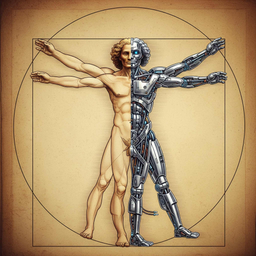
Vīta Brevis, Wit Artefāctōrum Ætērna Podcast
Ash Stuart
5.0from 1 ratings
- 139
- Episodes
- 1
- Ratings
- Weekly
- Cadence
- 2024
- First episode
About Vīta Brevis, Wit Artefāctōrum Ætērna Podcast
Exploring innovation, progress and achievement: a first-principles approach to everything that matters; combining history, epistemology, economics, anthropology, geopolitics, finance, philology, etymology and more... for, life is short, knowledge forever. ashstuart.substack.com (https://ashstuart.substack.com?utm_medium=podcast)
- Publisher
- Ash Stuart
- Category
- history · technology
- Language
- en
- Explicit
- No
- First episode
- 20 Sept 2024
- Latest episode
- 16 Oct 2026
Latest episodes
139 episodes in the feed.
16 Oct 2026
The Story of Money: The Incantation of Inflation
We have previously looked at money creation - how currency actually comes into being, Episode 027 (https://ashstuart.substack.com/p//ecfin027-the-story-of-money-the-rabbit-hole-of-money-creation), and money supply, the amount of this currency available for people to use to measure and transact all the goods and services they wish to in an economy. Let’s today get closer to the heart of a matter that we likely think of a lot more. On the face of it, inflation does not need explained. Anyone who’s gone to the grocery store has experienced it - you see that carton of milk with a price tag of 5 bucks, but wait a minute! Only yesterday it was 4 bucks!! So yes, that’s all it is. On the face of it. There is indeed more to explore about the phenomenon though, so stick with me, even though I can’t give you the secret to how to get that milk price to go back to 4 bucks. The Upward Currents of Currency In fact if you’ve been following this series, we have skirted around this idea quite a few times, when we discussed price (https://ashstuart.substack.com/p//ecfin003-the-story-of-money-the-enigma-of-price), the Spanish silver tragedy in Episode 022 (https://ashstuart.substack.com/p//ecfin022-the-story-of-money-the-mafia-of-mercantilism), and perhaps most vividly, in supply and demand (https://ashstuart.substack.com/p//ecfin017-the-story-of-money-the-dance-of-supply-and-demand). Even the very last episode, on coin debasement, was very much inflation in action. As we saw when discussing those topics, there are a great many factors that bear upon the price of an item, and therefore the presence of inflation - a rise in the price over time: a rise in demand, a greater amount of money supply, and other factors that would devalue the currency, some of which deserve their own episodes, which I hope is of, at any rate, interest! The coin episode offered an old-school way of the devaluation of money, but in the modern world, scenarios such as the ones just hinted at, all fundamentally decrease the worth of that cash in hand, hence the need for more of it to purchase the same item, compared to yesterday. (Ok, ok, inflation doesn’t happen every single day, but my yesterday-today depiction was just representative.) But here’s thing, while we may wince at the idea of a rise in the prices of goods, governments actually actively want inflation! Inflation Nation We’ve looked at inflation from a buyer’s angle, to understand all this deeper, let’s look at it from other angles. Imagine you owe someone a 500 dollars. Between yesterday and today, continuing our grocery example, that same amount today buys less milk, or any other amount whose price has risen. Which means, if you’re paying back that money today or tomorrow, you’re in effect paying back less than when you borrowed it earlier on. Thanks to inflation, you’ve enjoyed the effects of debt erosion! (Now apply this to that mortgage going 30 years.) Imagine you are an employer with salaries to pay. The costs of production have gone up, or some other variable has worsened the situation, and you want to manage this by cutting pay. With inflation, say of 2%, freezing pay simply means the employer executes an effective pay cut of 2%, essentially by stealth -- much easier than announcing pay cuts right? Now who in the land is one of the biggest debtors and employers? It’s the state. Furthermore, the state is the entity that handles the currency - it can print more of it and deploy other levers in its toolkit to manipulate it. This is why government officials put on some trim suits and grim ties and go on TV to announce that their policy is working - for the stated period, they have achieved their targeted inflation! Using bigger numbers to measure the growth of the economy (the GDP, I’ll come to it too), makes for better headlines - nominal growth looks more impressive than real growth, and isn’t that politically convenient? The Devil You Know Cynical as that may sound, it may not be that bad. Firstly, let me caveat that many of these goals and policies are debated with varying opinions held, some of it on the basis of political ideology - I’m not endorsing one view or another. But yes, the counterpoint to this is that this is a net positive for the economy as a whole, it gives the government meaningful room to manage the money supply, so it doesn’t go too far off in either direction, and a bunch of other statistical and economic factors too advanced for this piece, which we’ll come to in due course. Thus the relatively small amount of 2% has emerged, as an international consensus in the 1990s, as an ideal target to maintain. Similarly, there is the argument that that 2% inflation rather than wage cuts is overall a smoother way out and makes it easier for the labor market to reallocate workers and absorb shocks. But returning to our own experience, while keeping the wider economy and policy still in mind, the biggest threat to the economy, and one that impacts our action is not such inflation as described above, but rather deflation. And that’s a topic for another day. Article written by Ash Stuart Images, video, voice narration and some footnotes generated by AI Nothing in this presentation constitutes as advice - financial, investment or other This is a public episode. If you would like to discuss this with other subscribers or get access to bonus episodes, visit ashstuart.substack.com (https://ashstuart.substack.com?utm_medium=podcast&utm_campaign=CTA_1)
9 Oct 2026
The Story of Money: The Conundrum of Coin Debasement
We traced in Episode 031 (https://ashstuart.substack.com/p//ecfin031-the-story-of-money-why-gold) the emergence of gold and silver as ‘pure’ and ‘noble’ metals perfectly suited to serve our economic needs in the form of money, and then in Episode 032 (https://ashstuart.substack.com/p//ecfin032-the-story-of-money-gold-or-silver) their comparative importance and finally in Episode 033 (https://ashstuart.substack.com/p//ecfin033-the-story-of-money-the-origins-of-the-coin) how money took shape - in the form of coins. Remember the final words in that piece? “What could go wrong?” And oh boy wrong it did go so many times, and sometimes so spectacularly, that you’d think it was farce, vaudeville and tragedy rolled into one! In this piece, I’ll briefly touch upon the broad forces and phenomena at play in this context, but we will definitely come back with specific stories from specific events in history. With the advent of coinage, the issuance of a standard specie - ie, with a certain fixed size and weight, by the king or state meant that the unit of measure of value was now fixed and established as uniform. The implicit understanding was that if the coins were melted down and sold in the market, it would be worth the same as if the coins were spent, they would both fetch, say, 10 sacks of grain. In other words, the face value of the coin is the same as its value by weight. And then the fun begins! A Clippery Slope Let’s say I’m looking at a shiny new silver coin and it says “One Denarius” on it, so I can be sure of buying that much by face value. Now what if I chip or shave off a small portion of the edge of the coin - which is not that hard given silver is not that hard, what if I do this for a 100 such coins, even a 1000. Now I have all these clippings I can melt and voila, I have new money! As the Dire Straits didn’t sing: money for nothing and chips for free! Apart from this method, which is called clipping, there were other ones, but the idea was the same, leech off a small, seemingly imperceptible quantity of the metal from each coin while also trying to pass off the counterfeited coin as if it were the real thing. Incidentally, coin-clipping as a problem is attributed to have been solved by our good friend the Master of the Mint at Britain’s Royal Mint we met back in episode 032 - yes, Isaac Newton! The legacy still stands even though we don’t engage in clipping - ridges, reeds or grooves you see around the side of a coin, the process being called reeding or milling. And needless to say kings and states came down heavily on individuals engaging in such debasing of coins. But was it only the ordinary people who did such stuff? An Alloyed Bad Oh no! Coin debasement gets even spicier when the king himself got down to it. Not by clipping mind you, but let’s look into how. Issuing coinage has a cost, obviously the metal being used, plus the process of minting the coins, the labor thereof etc. So I’m sitting on my throne, I have these ‘One Denarius’ coins of silver serving the economy, but hold on, I have a brilliant idea (or a cunning plan if you watch the comedy Black Adder, very apt for the current context!) For the next batch I’m going to print, why don’t I use a tiny bit of copper, like about 5% of the weight that goes into the minting process. I mean, nobody will know right? My subjects aren’t that smart, even if a few are, it’ll still look the same to most of them? What could go wrong? Face of Base And to that refrain, we can add another one - and where will it all end? Because, spoiler alert, it always ended in tragedy. In a system where the face value of a coin is understood by everyone to be the same as the intrinsic value of the weight of the coin, it’s not hard to see how detrimental this is - and this was very tempting for kings and governments, because when done in seemingly small measures of adulteration, they could hope to get away with it. But if you’ve done it once why not do it again, with a bit more of the cheaper metal? Eventually people will find out, the coins will mean much less, people will trust them much less, but the king saved some of the actual precious metal he could by then have used elsewhere. Like, for example, there was also the time-lag factor, between a new batch of debased coins issued -- say there was a war and the king wanted more money, as there always was and kings always did: by the time the debased money entered the wider economy, and the detrimental effects rippled through, the king had gotten away with that metal he saved and used elsewhere. And despite my example of the Roman denarius, this happened across cultures and territories. Gresham’s law, which we explored in Episode 32, that bad money drives out good money, inevitably kicked in: if you had some good pristine older coins and some dodgy looking newer ones, which one would you spend and which ones melt or hoard? So yes, debasement of coins meant the debasement of money, disruption of trade, erosion of trust in the state, but somehow it was as ubiquitous as money itself. Today, we don’t use money in the same way, our coins by definition do not match the intrinsic value of the metal used. But there is one other specter of the debasement of money, whether material or otherwise, that still haunts us today. And that we shall explore next! Article written by Ash Stuart Images, video, voice narration and some footnotes generated by AI Nothing in this presentation constitutes as advice - financial, investment or other This is a public episode. If you would like to discuss this with other subscribers or get access to bonus episodes, visit ashstuart.substack.com (https://ashstuart.substack.com?utm_medium=podcast&utm_campaign=CTA_1)
2 Oct 2026
The Story of Money: The Origins of the Coin
Over the last couple of episodes we’ve explored the use of gold and silver as money and the tussle between the two. Let’s now get to the question of ‘form factor’: To appreciate the value of coins, something we’re so used to and thus take for granted, we have to position ourselves to the earlier reality. We have a broad idea that from the earliest time that communities traded widely, they simply exchanged goods with each other - barter. I’ve discussed aspects of this in some of the earliest episodes. From there on, as we traced in Episode 031 (https://ashstuart.substack.com/p//ecfin031-the-story-of-money-why-gold), with gold and silver emerging as useful means to represent value by weight of either metal, the practice of carrying out trade using ingots or bullions - pieces of the metal, arose. Think of it as chocolate or soap bars - in the former case, it may even have functioned as money on the playground back when you were a kid in school! Except that these were made of metal, cast into similar moulds as these more familiar objects are. (Just ask Charlie Bucket or Willy Wonka!) But this presented a few problems. Firstly, these metal bars were bulky. And then they were typically worth way more than could be used for normal goods on a general basis. (Let’s call it the rich man’s cash?) Also, given the potential for adulteration of these metal bars with inferior metals, each load of metal had to be weighed every time to assess their purity. All Loads Lead to Lydia Enter Lydia! A wealthy and prosperous kingdom in Western Anatolia, around the years 600 before our era. Located at the crossroads of a growing Greece to the west, Egypt to the south, and the Persians to the east (and even some Central Asian groups in the north), Lydia was very well placed as a trade corridor leading to the said prosperity. It was here that a certain king Alyattes is attributed to have taken a more systematic approach to the whole affair: mint a circular piece with specific images on both sides, sort of like simple medals. These early coins were made of electrum, an alloy of gold and silver, abundantly available in the rivers of the region. The Point of Crisis But the relative quantities of gold and silver in these electrum coins varied, sort of recreating a similar problem as we saw in the previous episode but in alloy form! Practically, it was hard to assess the exact value of any given coin. The next breakthrough is attributed to his successor, king Croesus, yes he who still lives on in our idiom “as rich as Croesus”! His primary innovation was to switch to issuing coins in standardized pure gold or pure silver, around the year 550 BCE. In fact, he is said to be the inventor of the world’s first bimetallic system. To Coin a New Phase So yes, Croesus’s innovation we may say helped him become, well, as rich as Croesus! But let’s explore how revolutionary it was at the time. The idea of coins, and their use, quickly spread across the wider region, with polities such as the Greek states and soon the Persians adopting them rapidly, marking a new phase in the history of money. Coins were significantly more useful than the older ways - unlike the previous, somewhat grassroots and voluntary methods, coins were issued by the state, you may say money was nationalized. Why did this matter? For one, it meant, there was a standard, and the standard was backed by the authority of the state. This meant it solved the problem of independent verification, which was as we saw a huge barrier to trade. As we can imagine -- and even though some of the early coins were still too valuable to fetch a loaf of bread, they were lighter, more portable and eventually more granular in allowing for the measure of value of a greater variety of goods. In the tailoring analogy I’ve taken a few times previously in this series, imagine that tailors used to measure cloth simply by their fingers and hands - Croesus gave them a proper, standard measuring tape to use instead! Thus trade velocity increased significantly perhaps with many more people, at least other kings, also becoming as rich as Croesus. As for the original rich kid, well Lydia was conquered by Cyrus king of the Persians within his lifetime, with history leaving no clues as to his ultimate fate, and consigning a once prosperous and expanding kingdom right at the center of the old world to but a footnote in the history books. I mean, how many of us have heard of Lydia? Still, even in obscurity, Lydia’s invention conquered the world. Coins survived the advent of paper money, and, in our swipe-and-go plastic payments age, we still don’t toss a credit card in the air to decide heads or tails - we may still prefer to reach out to our pockets for a coin! So the Lydians gave us, as we’ve seen, this pure, pristine and standard way of measuring money, made of shiny gold or silver. What could go wrong eh? Article written by Ash Stuart Images, video, voice narration and some footnotes generated by AI Nothing in this presentation constitutes as advice - financial, investment or other This is a public episode. If you would like to discuss this with other subscribers or get access to bonus episodes, visit ashstuart.substack.com (https://ashstuart.substack.com?utm_medium=podcast&utm_campaign=CTA_1)
Reach and audience
Public platform figures. Ratings count people who left a rating, not total listeners.
- Spotify
- 5.0 / 5
- 1 ratings
Host of Vīta Brevis, Wit Artefāctōrum Ætērna Podcast?
Claim your podcast to manage its listing and keep your show details accurate.
Pod Engine is an independent podcast discovery and analytics service and is not affiliated with or endorsed by this podcast. Artwork and show content belong to their owners. Full legal notice.
Explore this show
Podcast research with Pod Engine