
This is how Easter dishes are in the world<br />Holy Week and the arrival of Easter are for many cultures rooted in religious tradition an important event of the year where gastronomy is also the protagonist. Giving Easter eggs in European countries, consuming fish in Latin countries or "stews" to represent the Holy Thursday dinner, are some of these gastronomic customs around these celebrations.<br /><br />Here are the typical dishes to commemorate this time of year in some parts of the world.<br /><br />Latin preparations<br /><br />Argentina:<br /><br />The vigil empanadas are typical (mainly those stuffed with tuna), and stewed with cod or dogfish. Sweets become the main ingredients in most desserts.<br /><br />Chile:<br /><br />Some types of empanadas with seafood are usually eaten, with vegetables, sometimes fruit jam (pears, alcayotas), or chopped apples (this is typical in the South), but in general, the first one is more commonly consumed and massive, along with the cheese frit, which is almost always made with millefeuille dough.<br /><br />Ecuador:<br /><br />For Easter a dish called "Fanesca" is prepared, a type of soup prepared with vegetables, cereal grains, and salted cod, which is usually accompanied with molo (a kind of mashed potato) and with fig candy. In some places it is accompanied with choclotandas (also known as humitas), which is a sandwich prepared with ground corn (young corn), milk, egg, cheese and butter wrapped in corn leaves and steamed.<br /><br />European dishes<br /><br />Germany:<br /><br />Osterlamm (Easter Lamb) is a very typical sweet dish that is prepared with some variations depending on the area of the country. In this case, in addition to traditional Easter dishes such as Hefezop (a type of brioche) and decorated boiled eggs, they also incorporate more modern recipes that include all kinds of omelets.<br /><br />Croatia:<br /><br />A very typical dish is Pinca bread, very similar to the German sweet Hefezopf. During the Easter holidays in Croatia it is also customary to eat boiled ham, spring onions and radishes.<br /><br />Spain:<br /><br />Traditional Spanish gastronomy is very varied. For example, there are the Torrijas, a whole institution, which are nothing more than slices of bread sautéed in milk or wine, with spices and battered in egg that are then fried in the pan with olive oil.<br /><br />Onion soup is another typical dish of Holy Week in Spain. Other common sweet delicacies are the Easter Buñuelos and the Mona de Pascua, a type of cake typical of Catalonia that in its most traditional version is covered with rolled almonds and decorated with colored eggs and figurines.<br /><br />France:<br /><br />The French also eat lamb at Easter and their specialty is “Le Gigot d’Agneau Pascal”. The leg of the lamb is marinated with garlic, salt, pepper and olive oil and roasted in the oven. If there are leftovers, they are used to prepare sandwiches the next day. It is traditionally served with green beans and roasted potatoes...<br /><br />Discover more typical dishes of these dates in this podcast.
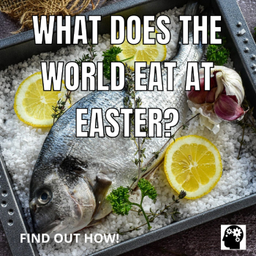
What Does The World Eat At Easter?
Claim This Podcastby Find Out How!
Podcast Overview
This is how Easter dishes are in the world<br />Holy Week and the arrival of Easter are for many cultures rooted in religious tradition an important event of the year where gastronomy is also the protagonist. Giving Easter eggs in European countries, consuming fish in Latin countries or "stews" to represent the Holy Thursday dinner, are some of these gastronomic customs around these celebrations.<br /><br />Here are the typical dishes to commemorate this time of year in some parts of the world.<br /><br />Latin preparations<br /><br />Argentina:<br /><br />The vigil empanadas are typical (mainly those stuffed with tuna), and stewed with cod or dogfish. Sweets become the main ingredients in most desserts.<br /><br />Chile:<br /><br />Some types of empanadas with seafood are usually eaten, with vegetables, sometimes fruit jam (pears, alcayotas), or chopped apples (this is typical in the South), but in general, the first one is more commonly consumed and massive, along with the cheese frit, which is almost always made with millefeuille dough.<br /><br />Ecuador:<br /><br />For Easter a dish called "Fanesca" is prepared, a type of soup prepared with vegetables, cereal grains, and salted cod, which is usually accompanied with molo (a kind of mashed potato) and with fig candy. In some places it is accompanied with choclotandas (also known as humitas), which is a sandwich prepared with ground corn (young corn), milk, egg, cheese and butter wrapped in corn leaves and steamed.<br /><br />European dishes<br /><br />Germany:<br /><br />Osterlamm (Easter Lamb) is a very typical sweet dish that is prepared with some variations depending on the area of the country. In this case, in addition to traditional Easter dishes such as Hefezop (a type of brioche) and decorated boiled eggs, they also incorporate more modern recipes that include all kinds of omelets.<br /><br />Croatia:<br /><br />A very typical dish is Pinca bread, very similar to the German sweet Hefezopf. During the Easter holidays in Croatia it is also customary to eat boiled ham, spring onions and radishes.<br /><br />Spain:<br /><br />Traditional Spanish gastronomy is very varied. For example, there are the Torrijas, a whole institution, which are nothing more than slices of bread sautéed in milk or wine, with spices and battered in egg that are then fried in the pan with olive oil.<br /><br />Onion soup is another typical dish of Holy Week in Spain. Other common sweet delicacies are the Easter Buñuelos and the Mona de Pascua, a type of cake typical of Catalonia that in its most traditional version is covered with rolled almonds and decorated with colored eggs and figurines.<br /><br />France:<br /><br />The French also eat lamb at Easter and their specialty is “Le Gigot d’Agneau Pascal”. The leg of the lamb is marinated with garlic, salt, pepper and olive oil and roasted in the oven. If there are leftovers, they are used to prepare sandwiches the next day. It is traditionally served with green beans and roasted potatoes...<br /><br />Discover more typical dishes of these dates in this podcast.
Language
🇺🇲
Publishing Since
1/11/2022
1 verified contact email on file for What Does The World Eat At Easter?
Pitch yourself as a guest, propose sponsorships, or reach out directly to the host.
Recent Episodes
January 11, 2022
Easter Traditional Food from Around the World
What do Americans eat at Easter?<br /><br />Well, cooked ham with brown sugar glaze is one of the favorite dishes for Americans to celebrate dinner dinners for Easter, Christmas and Thanksgiving.<br /><br />But what do they eat at this time in the rest of the world? We tell you about it in this podcast.
1 total episodes available
Deep-dive analytics for What Does The World Eat At Easter?
Frequently asked questions
Have a different question and can't find the answer you're looking for? Reach out to our support team by sending us an email and we'll get back to you as soon as we can.
- What is What Does The World Eat At Easter??
- How often does this podcast release new episodes?
This podcast updates daily.
- Where can I listen to this podcast?
This podcast is available on 4 platforms including Apple Podcasts, Spotify, and more. You can also use the RSS feed directly.
- Does this podcast accept guests?
No, this podcast does not typically feature guests.
Legal Disclaimer
Pod Engine is not affiliated with, endorsed by, or officially connected with any of the podcasts displayed on this platform. We operate independently as a podcast discovery and analytics service.
All podcast artwork, thumbnails, and content displayed on this page are the property of their respective owners and are protected by applicable copyright laws. This includes, but is not limited to, podcast cover art, episode artwork, show descriptions, episode titles, transcripts, audio snippets, and any other content originating from the podcast creators or their licensors.
We display this content under fair use principles and/or implied license for the purpose of podcast discovery, information, and commentary. We make no claim of ownership over any podcast content, artwork, or related materials shown on this platform. All trademarks, service marks, and trade names are the property of their respective owners.
While we strive to ensure all content usage is properly authorized, if you are a rights holder and believe your content is being used inappropriately or without proper authorization, please contact us immediately at hey@podengine.ai for prompt review and appropriate action, which may include content removal or proper attribution.
By accessing and using this platform, you acknowledge and agree to respect all applicable copyright laws and intellectual property rights of content owners. Any unauthorized reproduction, distribution, or commercial use of the content displayed on this platform is strictly prohibited.