
Why Rushed Requirements Kill Massive Projects
Claim This Podcastby Srikanth Shastri
Podcast Overview
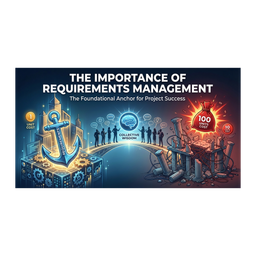
<p><strong>The Importance of Requirements Management</strong></p><p>Requirements management is the foundational anchor for any project's success. According to the sources, <strong>every problem encountered in an engagement ultimately has its roots in requirements</strong>, because a problem is simply the state of not meeting a requirement.</p><p>Failure in engagements is almost always a failure to meet expectations, often resulting from a missed requirement or an expectation that was never properly surfaced. Requirements should never be viewed as just a deliverable document, a project phase, or a governance checkbox; rather, <strong>requirements represent the "collective wisdom" of everyone involved in an engagement</strong>—from the business sponsor to the end user. When this wisdom is not gathered with discipline, the unaddressed needs simply go "underground" and inevitably resurface later at a significantly greater cost.</p><p>The critical financial importance of getting requirements right is quantified by the empirically validated <strong>1:10:100 Rule</strong>:</p><ul><li><strong>Fixing a defect at the requirements stage costs 1 unit.</strong></li><li><strong>Fixing the same defect during development costs 10 units.</strong></li><li><strong>Fixing it after go-live in production costs 100 units.</strong></li></ul><p>Despite this, organisations often succumb to the pressure to <strong>show momentum</strong> and compress the requirements phase, falsely believing they are saving time. In reality, they are choosing to pay exponentially more later. When teams rush to build solutions without first understanding the requirements, such as adopting a generic automation without asking what problem it is meant to solve, they end up with projects where "many activities happened," but "nothing meaningful moved". Ultimately, everything in a planned engagement, including risk management and long-term benefits realization, is built upon the foundation of solid expectations and requirements management</p>
Language
🇺🇲
Publishing Since
4/24/2026
Reach the team behind Why Rushed Requirements Kill Massive Projects
Verified contact details for this show aren't on file yet — sign up to get notified when they land.
Recent Episodes
May 30, 2026
Requirements Elicitation - Gemba Walk
<p>This training curriculum outlines a structured methodology for <strong>Gemba Walks</strong>, a leadership practice focused on observing work where it actually occurs to drive <strong>continuous improvement</strong>. Rather than acting as a punitive audit, the program emphasizes a <strong>process-oriented approach</strong> that builds trust and psychological safety among team members. The framework is divided into a <strong>ten-phase lifecycle</strong>, guiding leaders through preparation, firsthand observation of work cycles, and the validation of findings with objective data. Practical application focuses on <strong>client ID management</strong>, helping participants identify operational waste and systemic root causes rather than blaming individuals. By distinguishing between <strong>value-adding activities</strong> and pure waste, the materials provide a roadmap for translating field observations into <strong>measurable KPI enhancements</strong>. The ultimate goal is to move beyond static dashboards and institutionalize permanent improvements through <strong>standardized follow-up</strong> and re-validation.</p>
May 27, 2026
Requirements Management in the Era of AI
<p>These sources provide a comprehensive framework for <strong>Requirements Management in the era of Artificial Intelligence</strong>, primarily through a guest lecture and its accompanying podcast script. The material centers on the core philosophy that project failure stems from <strong>unmet expectations</strong>, making the rigorous translation of customer needs into structured requirements essential. While AI acts as a <strong>powerful force multiplier</strong> that can compress the drafting process from weeks to days, the authors warn that it must not replace <strong>human judgment</strong>. They introduce the <strong>Rule of 1:10:100</strong>, illustrating how the cost of fixing errors escalates exponentially the longer they remain undetected. To combat this, the text advocates for <strong>traceability</strong> and the 5-step <strong>Voice of the Customer</strong> process to ensure every feature serves a verified business need. Ultimately, the sources emphasize that the time saved by AI should be <strong>reinvested into deeper understanding</strong> rather than simply pursuing more speed.</p>
May 1, 2026
The Architecture of Knowledge Management
<p>The provided text argues that extensive <strong>FAQ pages and static documentation</strong> are symptoms of <strong>organizational failure</strong> rather than signs of maturity. Instead of "digital hoarding" in dead archives, the author advocates for <strong>Knowledge Management</strong>, where insights are converted into <strong>active tools and embedded guardrails</strong> directly within a workflow. This transformation is achieved through the <strong>COIN principle</strong>, which focuses on <strong>collateralizing</strong> knowledge into reusable assets and <strong>institutionalizing</strong> them so they become the default way of working. By following the <strong>7D life cycle</strong> and the <strong>DIIA flow</strong>, organizations can move from reactive problem-solving to <strong>anticipatory business partnership</strong>. Ultimately, the goal is to reduce the burden on <strong>human memory</strong>, ensuring that the system itself prevents errors while freeing individuals for <strong>higher-level strategic innovation</strong>.</p>
6 total episodes available
Deep-dive analytics for Why Rushed Requirements Kill Massive Projects
Frequently asked questions
Have a different question and can't find the answer you're looking for? Reach out to our support team by sending us an email and we'll get back to you as soon as we can.
- What is Why Rushed Requirements Kill Massive Projects?
<p><strong>The Importance of Requirements Management</strong></p><p>Requirements management is the foundational anchor for any project's success. According to the sources, <strong>every problem encountered in an engagement ultimately has its roots in requirements</strong>, because a problem is simply the state of not meeting a requirement.</p><p>Failure in engagements is almost always a failure to meet expectations, often resulting from a missed requirement or an expectation that was never properly surfaced. Requirements should never be viewed as just a deliverable document, a project phase, or a governance checkbox; rather, <strong>requirements represent the "collective wisdom" of everyone involved in an engagement</strong>—from the business sponsor to the end user. When this wisdom is not gathered with discipline, the unaddressed needs simply go "underground" and inevitably resurface later at a significantly greater cost.</p><p>The critical financial importance of getting requirements right is quantified by the empirically validated <strong>1:10:100 Rule</strong>:</p><ul><li><strong>Fixing a defect at the requirements stage costs 1 unit.</strong></li><li><strong>Fixing the same defect during development costs 10 units.</strong></li><li><strong>Fixing it after go-live in production costs 100 units.</strong></li></ul><p>Despite this, organisations often succumb to the pressure to <strong>show momentum</strong> and compress the requirements phase, falsely believing they are saving time. In reality, they are choosing to pay exponentially more later. When teams rush to build solutions without first understanding the requirements, such as adopting a generic automation without asking what problem it is meant to solve, they end up with projects where "many activities happened," but "nothing meaningful moved". Ultimately, everything in a planned engagement, including risk management and long-term benefits realization, is built upon the foundation of solid expectations and requirements management</p> - How often does this podcast release new episodes?
This podcast updates daily.
- Where can I listen to this podcast?
This podcast is available on 4 platforms including Apple Podcasts, Spotify, and more. You can also use the RSS feed directly.
- Does this podcast accept guests?
Information about guest appearances is not available.
Legal Disclaimer
Pod Engine is not affiliated with, endorsed by, or officially connected with any of the podcasts displayed on this platform. We operate independently as a podcast discovery and analytics service.
All podcast artwork, thumbnails, and content displayed on this page are the property of their respective owners and are protected by applicable copyright laws. This includes, but is not limited to, podcast cover art, episode artwork, show descriptions, episode titles, transcripts, audio snippets, and any other content originating from the podcast creators or their licensors.
We display this content under fair use principles and/or implied license for the purpose of podcast discovery, information, and commentary. We make no claim of ownership over any podcast content, artwork, or related materials shown on this platform. All trademarks, service marks, and trade names are the property of their respective owners.
While we strive to ensure all content usage is properly authorized, if you are a rights holder and believe your content is being used inappropriately or without proper authorization, please contact us immediately at hey@podengine.ai for prompt review and appropriate action, which may include content removal or proper attribution.
By accessing and using this platform, you acknowledge and agree to respect all applicable copyright laws and intellectual property rights of content owners. Any unauthorized reproduction, distribution, or commercial use of the content displayed on this platform is strictly prohibited.