
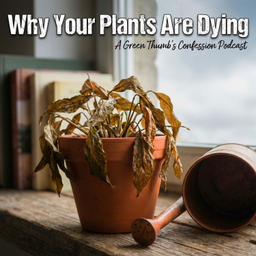
Why Your Plants Are Dying?
Claim This Podcastby abdelhamid bou ikhessayen
Podcast Overview
<p><strong>Why Your Plants Are Dying</strong> is a practical, science-focused gardening podcast for home gardeners who are tired of confusing, contradictory advice.</p><p>If your plants keep dying, turning yellow, growing weak, or refusing to flower or fruit — even though you water them, fertilize them, and follow online tips — this podcast is for you.</p><p>Each episode:</p><ul><li>Takes one common plant problem</li><li>Explains what gardeners usually do wrong</li><li>Breaks down what science and horticulture say actually matters</li><li>Separates myths, trends, and marketing from real plant biology</li></ul><p>We cover soil health, watering mistakes, nutrients, light, pests, diseases, composting, fertilizers, indoor plants, vegetable gardens, and popular gardening myths — in simple language anyone can understand.</p><p>No fluff. No trends. No TikTok hacks. Just clear explanations so you can stop guessing and start growing healthy plants.</p>
Language
🇺🇲
Publishing Since
1/10/2026
Reach the team behind Why Your Plants Are Dying?
Verified contact details for this show aren't on file yet — sign up to get notified when they land.
Recent Episodes
February 16, 2026
Why TikTok Gardening Advice Is So Conflicting
<p>This Episode analyze the intersection of <strong>horticultural practices</strong> and <strong>digital media trends</strong>, with a particular focus on the influence of <strong>TikTok</strong> on modern gardening. Expert contributors evaluate popular "hacks"—such as using <strong>banana peels</strong> as fertilizer or <strong>volcano mulching</strong>—to distinguish between scientifically sound advice and harmful misinformation. The collective text addresses the <strong>TikTok algorithm's</strong> role in promoting viral but often oversimplified content, contrasting this with research-backed guidance from <strong>Extension services</strong> and experienced botanists. Additionally, the materials cover technical aspects of <strong>social media marketing</strong>, including <strong>affiliate commissions</strong> and <strong>content creator strategies</strong> within the platform's e-commerce ecosystem. By examining specific plant care issues like <strong>drainage</strong>, <strong>pruning</strong>, and <strong>soil health</strong>, the sources provide a comprehensive look at how gardeners can navigate a landscape filled with both <strong>innovation and myths</strong>.</p>
February 15, 2026
Are Coffee Grounds Good for Plants or Not?
<p>This Episode examine the diverse impacts of <strong>repurposing coffee grounds</strong> in gardening, agriculture, and waste management. While grounds provide essential nutrients like <strong>nitrogen</strong> and attract beneficial <strong>earthworms</strong>, they can be harmful to <strong>acid-sensitive plants</strong>, seeds, and young seedlings due to residual <strong>caffeine</strong>. Research highlights caffeine’s <strong>allelopathic properties</strong>, which can inhibit the growth of certain weeds and pathogens but may also disrupt <strong>soil bacteria</strong> and prove <strong>toxic to pets</strong>. Experts generally recommend <strong>composting grounds</strong> before use to stabilize pH levels and reduce chemical intensity. Furthermore, the text explores specialized applications, such as using grounds to <strong>foster predatory fungi</strong> or as a substrate for <strong>edible mushroom cultivation</strong>. Individual gardening experiences emphasize that while coffee waste is a valuable <strong>organic resource</strong>, its effectiveness depends on the specific needs of the local ecosystem.</p><p></p>
February 14, 2026
Is Permaculture Science or Philosophy?
<p>This Episode collectively explore <strong>permaculture</strong> and <strong>social ecology</strong> as holistic frameworks for designing sustainable, resilient human habitats by imitating <strong>natural ecosystems</strong>. The texts outline core methodologies such as <strong>forest gardening</strong>, <strong>water harvesting</strong>, and <strong>soil building</strong> through techniques like sheet mulching and hugelkultur. Beyond practical gardening, the authors examine the <strong>scientific evidence</strong> and <strong>philosophical foundations</strong> of these systems, connecting them to concepts of <strong>agroecology</strong> and <strong>dialectical naturalism</strong>. They emphasize a move away from industrial agriculture toward <strong>polycultures</strong> and integrated designs that favor <strong>renewable resources</strong> and biological diversity. Furthermore, the documents address the <strong>economic and social dimensions</strong> of ecological living, advocating for community-based land use and a shift in labor perspective from passive consumption to active, <strong>regenerative production</strong>. Ultimately, the sources present a vision of a <strong>harmonious relationship</strong> between humanity and the environment, mediated by observation, ethical design, and systemic thinking.</p>
30 total episodes available
Deep-dive analytics for Why Your Plants Are Dying?
Frequently asked questions
Have a different question and can't find the answer you're looking for? Reach out to our support team by sending us an email and we'll get back to you as soon as we can.
- What is Why Your Plants Are Dying??
<p><strong>Why Your Plants Are Dying</strong> is a practical, science-focused gardening podcast for home gardeners who are tired of confusing, contradictory advice.</p><p>If your plants keep dying, turning yellow, growing weak, or refusing to flower or fruit — even though you water them, fertilize them, and follow online tips — this podcast is for you.</p><p>Each episode:</p><ul><li>Takes one common plant problem</li><li>Explains what gardeners usually do wrong</li><li>Breaks down what science and horticulture say actually matters</li><li>Separates myths, trends, and marketing from real plant biology</li></ul><p>We cover soil health, watering mistakes, nutrients, light, pests, diseases, composting, fertilizers, indoor plants, vegetable gardens, and popular gardening myths — in simple language anyone can understand.</p><p>No fluff. No trends. No TikTok hacks. Just clear explanations so you can stop guessing and start growing healthy plants.</p> - How often does this podcast release new episodes?
This podcast updates daily.
- Where can I listen to this podcast?
This podcast is available on 4 platforms including Apple Podcasts, Spotify, and more. You can also use the RSS feed directly.
- Does this podcast accept guests?
No, this podcast does not typically feature guests.
Legal Disclaimer
Pod Engine is not affiliated with, endorsed by, or officially connected with any of the podcasts displayed on this platform. We operate independently as a podcast discovery and analytics service.
All podcast artwork, thumbnails, and content displayed on this page are the property of their respective owners and are protected by applicable copyright laws. This includes, but is not limited to, podcast cover art, episode artwork, show descriptions, episode titles, transcripts, audio snippets, and any other content originating from the podcast creators or their licensors.
We display this content under fair use principles and/or implied license for the purpose of podcast discovery, information, and commentary. We make no claim of ownership over any podcast content, artwork, or related materials shown on this platform. All trademarks, service marks, and trade names are the property of their respective owners.
While we strive to ensure all content usage is properly authorized, if you are a rights holder and believe your content is being used inappropriately or without proper authorization, please contact us immediately at hey@podengine.ai for prompt review and appropriate action, which may include content removal or proper attribution.
By accessing and using this platform, you acknowledge and agree to respect all applicable copyright laws and intellectual property rights of content owners. Any unauthorized reproduction, distribution, or commercial use of the content displayed on this platform is strictly prohibited.