
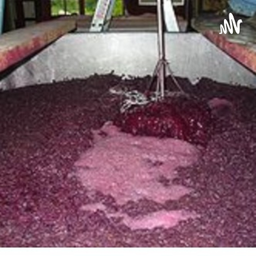
Most red wines derive their color from grape skins (the exception being varieties or hybrids of non-vinifera vines which contain juice pigmented with the dark Malvidin 3,5-diglucoside anthocyanin) and therefore contact between the juice and skins is essential for color extraction. Red wines are produced by destemming and crushing the grapes into a tank and leaving the skins in contact with the juice throughout the fermentation (maceration). It is possible to produce white (colorless) wines from red grapes by the fastidious pressing of uncrushed fruit. This minimizes contact between grape juice and skins (as in the making of Blanc de noirs sparkling wine, which is derived from Pinot noir, a red vinifera grape.)
Wine Making Podcast
Claim This Podcastby Tylera A Brown
3.0(2 reviews)
1 episodes
Updated Daily
Accepts GuestsHas Sponsors
Podcast Overview
Most red wines derive their color from grape skins (the exception being varieties or hybrids of non-vinifera vines which contain juice pigmented with the dark Malvidin 3,5-diglucoside anthocyanin) and therefore contact between the juice and skins is essential for color extraction. Red wines are produced by destemming and crushing the grapes into a tank and leaving the skins in contact with the juice throughout the fermentation (maceration). It is possible to produce white (colorless) wines from red grapes by the fastidious pressing of uncrushed fruit. This minimizes contact between grape juice and skins (as in the making of Blanc de noirs sparkling wine, which is derived from Pinot noir, a red vinifera grape.)
Language
🇺🇲
Publishing Since
4/29/2021
1 verified contact email on file for Wine Making Podcast
Pitch yourself as a guest, propose sponsorships, or reach out directly to the host.
Recent Episodes
April 29, 2021
Wine making
Crushing is the process when gently squeezing the berries and breaking the skins to start to liberate the contents of the berries. Destemming is the process of removing the grapes from the rachis (the stem which holds the grapes). In traditional and smaller-scale wine making, the harvested grapes are sometimes crushed by trampling them barefoot or by the use of inexpensive small scale crushers. These can also destem at the same time. However, in larger wineries, a mechanical crusher/destemmer is used. The decision about destemming is different for red and white wine making. Generally when making white wine the fruit is only crushed, the stems are then placed in the press with the berries. The presence of stems in the mix facilitates pressing by allowing juice to flow past flattened skins. These accumulate at the edge of the press. For red winemaking, stems of the grapes are usually removed before fermentation since the stems have a relatively high tannin content; in addition to tannin they can also give the wine a vegetal aroma (due to extraction of 3-isobutyl-2-methoxypyrazine which has an aroma reminiscent of green bell peppers.)
1 total episodes available
Deep-dive analytics for Wine Making Podcast
Frequently asked questions
Have a different question and can't find the answer you're looking for? Reach out to our support team by sending us an email and we'll get back to you as soon as we can.
- What is Wine Making Podcast?
- How often does this podcast release new episodes?
This podcast updates daily.
- Where can I listen to this podcast?
This podcast is available on 4 platforms including Apple Podcasts, Spotify, and more. You can also use the RSS feed directly.
- Does this podcast accept guests?
No, this podcast does not typically feature guests.
Legal Disclaimer
Pod Engine is not affiliated with, endorsed by, or officially connected with any of the podcasts displayed on this platform. We operate independently as a podcast discovery and analytics service.
All podcast artwork, thumbnails, and content displayed on this page are the property of their respective owners and are protected by applicable copyright laws. This includes, but is not limited to, podcast cover art, episode artwork, show descriptions, episode titles, transcripts, audio snippets, and any other content originating from the podcast creators or their licensors.
We display this content under fair use principles and/or implied license for the purpose of podcast discovery, information, and commentary. We make no claim of ownership over any podcast content, artwork, or related materials shown on this platform. All trademarks, service marks, and trade names are the property of their respective owners.
While we strive to ensure all content usage is properly authorized, if you are a rights holder and believe your content is being used inappropriately or without proper authorization, please contact us immediately at hey@podengine.ai for prompt review and appropriate action, which may include content removal or proper attribution.
By accessing and using this platform, you acknowledge and agree to respect all applicable copyright laws and intellectual property rights of content owners. Any unauthorized reproduction, distribution, or commercial use of the content displayed on this platform is strictly prohibited.