"Work Sucks and then you Die" is the lifeline you need when your job feels like it's sucking the soul right out of you. Because let's face it: life is too short to be stuck in a bad job. We dive deep into the trenches of terrible workplaces, sharing both outrageously funny and downright awful stories of bad bosses, toxic cultures, and soul-crushing tasks. But it's not all doom and gloom! We're here to help you take back your time, your life, and your sanity. After-all, your job will be posted before your obituary will.
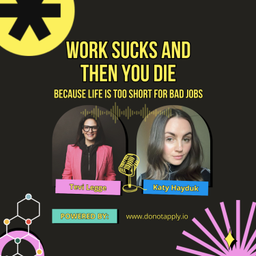
Work Sucks And Then You Die
Claim This Podcastby Tevi Legge and Katy Hayduk
5 episodes
Updated Daily
Accepts GuestsHas Sponsors
44
Podcast Authority
BetaFairBased on show quality, social media presence, reviews, charts, and more

Quality61
Social0
YouTube68
Engagement0
Podcast Overview
"Work Sucks and then you Die" is the lifeline you need when your job feels like it's sucking the soul right out of you. Because let's face it: life is too short to be stuck in a bad job. We dive deep into the trenches of terrible workplaces, sharing both outrageously funny and downright awful stories of bad bosses, toxic cultures, and soul-crushing tasks. But it's not all doom and gloom! We're here to help you take back your time, your life, and your sanity. After-all, your job will be posted before your obituary will.
Language
🇺🇲
Publishing Since
4/8/2025
Unlock The Full Podcast Authority Score Report
See how your podcast performs across key metrics
44
Podcast Authority
BetaFairBased on show quality, social media presence, reviews, charts, and more
Quality61
Social0
YouTube68
Engagement0
8
Excellent Areas
0
Good Performance
11
Growth Opportunities
excellent
Publishing Consistency
Every 0 days
Performing excellently!
poor
Episode Thumbnails
Recommendations available
Unlock the full report to see detailed tips
+16 More Metrics
Unlock comprehensive insights including:
- • YouTube presence analysis
- • Social media reach metrics
- • RSS compliance scoring
- • Podcast 2.0 features
- • Technical standards
What's Included in Your Full Report
Detailed Analytics
- Complete breakdown of all 19 authority metrics
- Personalized recommendations for each metric
- Industry benchmarks and comparisons
- Technical RSS feed analysis and compliance scoring
Growth Strategies
- Step-by-step action plans for improvement
- Quick wins to boost your score immediately
- Pro tips from successful podcasters
Get your free podcast insights report
See how your show performs across every key metric
Instant delivery
No spam
Attract Better Guests
High authority scores make your podcast more attractive to industry leaders and influencers who want to appear on credible shows.
Secure Sponsorships
Sponsors look for podcasts with proven authority and engagement. Your score demonstrates your podcast's value to potential partners.
Grow Your Audience
Understanding your strengths and weaknesses helps you make data-driven decisions to expand your listener base effectively.
1 verified contact email on file for Work Sucks And Then You Die
Pitch yourself as a guest, propose sponsorships, or reach out directly to the host.
Recent Episodes
April 9, 2025
The Underbelly of Recruitment
<p>Episode 5 Show Notes: The Talent Recruitment Rat Race</p><p>Introduction</p><ul><li><p>Tevi introduces Katie and sets the stage for a discussion on talent recruitment, the current job landscape, and how to ace interviews.</p></li><li><p>The episode will explore the shift away from traditional resumes and the potential of DNA's skills-based approach.</p></li></ul><ul><li><p>Katie shares her experience starting in recruitment in 2020, just before the pandemic.</p></li><li><p>She began in an agency environment, which she describes as a sales-focused "rat race" with high stress due to commission-based pay.</p></li></ul><ul><li><p>Recruitment agencies are heavily sales-focused, often prioritizing speed over finding the best candidate.</p></li><li><p>Companies frequently work with multiple agencies, creating a competitive environment where agencies rush to submit candidates.</p></li><li><p>Katie expresses her concerns about the fundamental problems with recruitment agency processes, noting that the focus is on finding a "decent" candidate quickly rather than the "best" fit.</p></li><li><p>Recruiters often skim the top of available candidates, contacting whoever responds quickly to their LinkedIn messages or cold calls.</p></li></ul><ul><li><p>The agency model can be frustrating for recruiters who want to provide the best candidates but are limited by time and competitive pressures.</p></li><li><p>Hiring managers may not always provide complete information, leading to inefficiencies and wasted effort.</p></li><li><p>Recruiters act as middlemen, potentially losing important information in communication between hiring managers and candidates.</p></li></ul><ul><li><p>Katie moved to an RPO company, working more directly with internal hiring teams and gaining better insight into company processes.</p></li><li><p>She worked with TikTok during a period of rapid growth, recruiting for technical roles like site reliability engineers and machine learning engineers.</p></li><li><p>TikTok had high standards for candidates, considering factors like education, previous companies (e.g., FAANG), and specific boot camps.</p></li></ul><ul><li><p>The conversation shifts to the importance of skills over traditional criteria like education and company pedigree.</p></li><li><p>Tevi and Katie discuss the tendency for companies to prioritize "thinkers" over "doers" and the need to focus on skills required to execute the job.</p></li><li><p>They highlight the underappreciation of soft skills and transferable skills, which can set top-tier candidates apart.</p></li><li><p>Many candidates struggle to recognize and articulate their own transferable skills.</p></li></ul><ul><li><p>DNA aims to help candidates identify their transferable skills and connect them with opportunities based on their abilities.</p></li><li><p>The platform addresses the limitations of traditional hiring systems, which often narrow the talent pool based on superficial criteria.</p></li><li><p>Focusing on skills broadens the talent pool and helps companies find the right people to execute their vision.</p></li><li><p>Hiring managers should prioritize the skills needed for the job and recognize that traditional criteria may not always be the best indicators of success.</p></li></ul><p>Katie's Background in RecruitmentThe Realities of Recruitment AgenciesThe Impact on Candidates and CompaniesTransition to Recruitment Process Outsourcing (RPO)The Focus on Skills vs. Traditional CriteriaDNA's Skills-Based Hiring Platform</p>
April 9, 2025
Are You Feeling LinkedOUT??
<p>Episode 4</p><p><br /></p><p>Are you feeling LinkedOUT?</p><p><br /></p><p>Is the perpetuation of toxic corporate culture on LinkedIn leaving you feeling lost and confused? Us too. </p><p><br /></p><p>In this episode we unpack the inauthenticity of LinkedIn, how and why its designed that way, and places you can go if you want to show up as your real self (spoiler alert - LinkedIn is not necessarily the place). </p><p><br /></p><p>Tevi and Katy tackle "hustle culture" in this episode of Work Sucks and Then You Die, arguing for intentional productivity over constant grinding. They dissect the origins of this always-on mentality, from the Industrial Revolution to social media, and its impact on well-being and work environments. They emphasize rest, realistic expectations, and aligning work with meaningful goals. The pair also highlights the need for transparent communication between employers and employees to avoid mismatched expectations and toxic workplaces.</p><p><br /></p><p>Subscribe to ensure you never miss an episode, and follow along on our social channels: </p><p>Instagram: @do.not.apply</p><p>YouTube: Do Not Apply</p><p>Tik Tok: @do.not.apply</p><p>Facebook: @DoNotApply</p><p>LinkedIn: @Do Not Apply</p>
April 9, 2025
Debunking Hustle Culture
<p>Episode 3</p><p>In this episode of Work Sucks and Then You Die, Tevi and Katy challenge the glorification of "hustle culture" and advocate for intentional productivity. They discuss how the pressure to constantly work can lead to burnout, stress, and toxic work environments. They explore the origins of hustle culture, from the Industrial Revolution to the rise of social media, and share their own experiences with balancing work and well-being. They emphasize the importance of rest, setting realistic expectations, and focusing on activities that drive meaningful progress.</p><p>Hustle Culture: The idea that constant work and productivity are the keys to success, often at the expense of rest and personal well-being.</p><p>Intentional Productivity: Focusing your efforts on activities that directly contribute to achieving your goals.</p><p>The Origins of Hustle Culture: From the Industrial Revolution and capitalism to the tech boom and social media, the glorification of constant work has evolved over time.</p><p>The Downsides of Hustle Culture: Burnout, stress, mental health issues, and toxic work environments.</p><p>Work-Life Balance: It's not always a 50/50 split, but taking breaks and resting is essential for long-term success and well-being.</p><p>Cultural Expectations: The importance of transparent communication between employers and employees about expectations regarding time, energy, and work style.</p><p>Toxic Work Environments: How mismatched expectations and resentment can create a negative atmosphere within an organization.</p><p>DNA's Approach: Creating matches between people and companies that are compatible in terms of cultural expectations and work styles.</p><p><br /></p><p><br /></p>
5 total episodes available
Deep-dive analytics for Work Sucks And Then You Die
Frequently asked questions
Have a different question and can't find the answer you're looking for? Reach out to our support team by sending us an email and we'll get back to you as soon as we can.
- What is Work Sucks And Then You Die?
- How often does this podcast release new episodes?
This podcast updates daily.
- Where can I listen to this podcast?
This podcast is available on 4 platforms including Apple Podcasts, Spotify, and more. You can also use the RSS feed directly.
- Does this podcast accept guests?
No, this podcast does not typically feature guests.
Legal Disclaimer
Pod Engine is not affiliated with, endorsed by, or officially connected with any of the podcasts displayed on this platform. We operate independently as a podcast discovery and analytics service.
All podcast artwork, thumbnails, and content displayed on this page are the property of their respective owners and are protected by applicable copyright laws. This includes, but is not limited to, podcast cover art, episode artwork, show descriptions, episode titles, transcripts, audio snippets, and any other content originating from the podcast creators or their licensors.
We display this content under fair use principles and/or implied license for the purpose of podcast discovery, information, and commentary. We make no claim of ownership over any podcast content, artwork, or related materials shown on this platform. All trademarks, service marks, and trade names are the property of their respective owners.
While we strive to ensure all content usage is properly authorized, if you are a rights holder and believe your content is being used inappropriately or without proper authorization, please contact us immediately at hey@podengine.ai for prompt review and appropriate action, which may include content removal or proper attribution.
By accessing and using this platform, you acknowledge and agree to respect all applicable copyright laws and intellectual property rights of content owners. Any unauthorized reproduction, distribution, or commercial use of the content displayed on this platform is strictly prohibited.