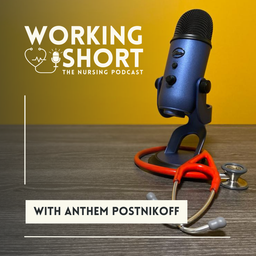
In the whirlwind of bedside nursing I find myself seeking a space for nurses from all backgrounds and experiences to come together. This is a space for us to share our stories, our best and worst moments, where we can learn from one another about the different worlds of nursing, and build a community for nurses. My hope is that by holding space for the difficult and challenging parts of nursing we can find solace and solutions that help to move the profession forward and allow us to highlight the wonderful, humbling, and soul serving benefits of being a nurse.
Publisher
Anthem Postnikoff
Category
health & fitness · health & fitness · health & fitness
In this honest reflection episode, we explore the messy, beautiful, non-linear evolution of nursing confidence — from those overwhelming early shifts to the moment things start to “click”… and what it feels like to become new again in a new unit.
Whether you're one year in, five years in, or stepping into a new specialty, this conversation offers reassurance, connection, and clarity.
The mental load of the first 1–2 years
Running every decision by someone — and why it’s normal
How systems + routines finally fall into place
Becoming aware of the whole unit, not just your assignment
Learning through mistakes without shame
The “confidence dip” when changing departments
The role of supportive teams in skill-building
Staying somewhere you love vs. chasing change
Why nursing always keeps you humble
26 May 2026
Let’s Talk to the Rapid Response Nurse!
In an illuminating episode of our podcast, we had the privilege of speaking with Sarah Lorenzini, the eminent voice behind the Rapid Response RN podcast, who joined us for an in-depth discussion on the intricacies of rapid response nursing. If you are an acute care nurse, ER nurse, or simply passionate about nursing, this conversation is essential listening. Sarah shared her passion for rapid response nursing to respond effectively to emergencies outside the emergency room. The aim is to intervene swiftly to prevent emergencies from escalating. She emphasized the proactive nature of her role, explaining how her team frequently responds to early warnings from nurses who have an intuition that "something's up" with their patients. Sarah detailed her process of assessing a patient's stability, which prioritizes compensation symptoms over raw vital signs figures. Sarah advocated for using shared language when calling doctors, emphasizing the urgency of the situation without overwhelming details and being detailed but concise. She also introduced the CUSS method for communication: expressing Concern, Uncomfortableness, and Safety to highlight serious issues effectively. We discussed how med-surg nurses can aid rapid response efforts. Sarah advised having recent vital signs and blood sugar levels ready, being familiar with patient charts, and ensuring IVs are working. She emphasized the importance of teamwork, reiterating that often the simplest interventions—like ensuring a patient’s oxygen is actually flowing—can make significant differences. This conversation provides potent reminders and learning for all in the nursing field. From recognizing subtle warning signs to navigating the nuances of patient wishes and communication with doctors, Sarah Lorenzini offers critical perspectives that underscore the profound responsibility and reward in rapid response nursing. We look forward to future episodes with Sarah and further explorations into the important role nurses play in patient care.
12 May 2026
Let’s Talk to Nurse Keri-Rose
In this episode of Working Short, nurse Carrie Rose shares her medical story living with epilepsy, diagnosed in 2006 with temporal lobe focal aware seizures that were mistaken for panic attacks in high school, leading to antidepressant treatment. After initial seizure control with medication, her condition changed in 2017 with sudden drop attacks captured on security footage and frightening episodes in public, including on an airplane and while cooking with a friend. Evaluation in a seizure investigation unit revealed ictal asystole (her heart stopping during seizures), resulting in driving restrictions, disrupted nursing plans, severe depression worsened by Keppra, and eventual pacemaker placement. SEEG monitoring showed seizures from both sides of her brain, making her not a surgical candidate; probe removal caused a CSF leak and chest symptoms. She completed nursing school, now works in an epilepsy clinic, discusses epilepsy stigma and underfunding, and describes her New York Times “Diagnosis” story and patient support resources.
Reach and audience
Public platform figures. Ratings count people who left a rating, not total listeners.
Apple Podcasts (US)
5.0 / 5
1 ratings
Contact WORKING SHORT: The Nursing Podcast
Guest appearances
Books guests
Based on episode analysis; this does not confirm that the show is currently accepting guests.
Host of WORKING SHORT: The Nursing Podcast?
Claim your podcast to manage its listing and keep your show details accurate.
Pod Engine is an independent podcast discovery and analytics service and is not affiliated with or endorsed by this podcast. Artwork and show content belong to their owners. Full legal notice.
Explore this show Podcast research with Pod Engine