- 27
- Episodes
- 14
- Ratings
- 2014
- First episode
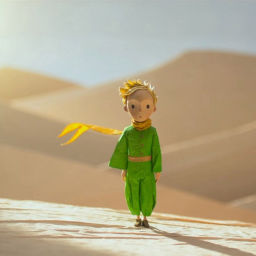
About 小王子The Little Prince
小王子英文版---- (http://mp.weixin.qq.com/s?__biz=MzI3NjE2MzMxNQ==&mid=401719795&idx=1&sn=52b8df157374cea071f95c662b900e43&scene=18#wechat_redirect)点击详情查看英文字幕,练习英语听力的初级教材。喜欢,请点赞。 请关注微信公众号 mfygongzuoshi 获取本专集的 中英文 文本。 (http://mp.weixin.qq.com/s?__biz=MzI3NjE2MzMxNQ==&mid=401719795&idx=1&sn=52b8df157374cea071f95c662b900e43&scene=18#wechat_redirect) 《小王子》是法国作家安托万·德·圣·埃克苏佩里于1942年写成的著名儿童文学短篇小说。本书的主人公是来自外星球的小王子。书中以一位飞行员作为故事叙述者,讲述了小王子从自己星球出发前往地球的过程中,所经历的各种历险。作者以小王子的孩子式的眼光,透视出成人的空虚、盲目,愚妄和死板教条,用浅显天真的语言写出了人类的孤独寂寞、没有根基随风流浪的命运。同时,也表达出作者对金钱关系的批判,对真善美的讴歌。
- Category
- arts · education · kids & family
- Language
- zh
- Explicit
- No
- First episode
- 8 Nov 2014
- Latest episode
- 8 Nov 2014
Latest episodes
27 episodes in the feed.
8 Nov 2014
13The Little Prince(小王子)13
小王子英文版 - the little prince visits the businessman -------------------------------------------------------------------------------------------------------------------------------- The fourth planet belonged to a businessman. This man was so much occupied that he did not even raise his head at the little prince's arrival. "Good morning," the little prince said to him. "Your cigarette has gone out." "Three and two make five. Five and seven make twelve. Twelve and three make fifteen. Good morning. Fifteen and seven make twenty-two. Twenty-two and six make twenty-eight. I haven't time to light it again. Twenty-six and five make thirty-one. Phew! Then that makes five-hundred-and-one-million, six-hundred-twenty-two-thousand, seven-hundred-thirty-one." "Five hundred million what?" asked the little prince. "Eh? Are you still there? Five-hundred-and-one million-- I can't stop… I have so much to do! I am concerned with matters of consequence. I don't amuse myself with balderdash. Two and five make seven…" "Five-hundred-and-one million what?" repeated the little prince, who never in his life had let go of a question once he had asked it. The businessman raised his head. "During the fifty-four years that I have inhabited this planet, I have been disturbed only three times. The first time was twenty-two years ago, when some giddy goose fell from goodness knows where. He made the most frightful noise that resounded all over the place, and I made four mistakes in my addition. The second time, eleven years ago, I was disturbed by an attack of rheumatism. I don't get enough exercise. I have no time for loafing. The third time-- well, this is it! I was saying, then, five -hundred-and-one millions--" "Millions of what?" The businessman suddenly realized that there was no hope of being left in peace until he answered this question. "Millions of those little objects," he said, "which one sometimes sees in the sky." "Flies?" "Oh, no. Little glittering objects." "Bees?" "Oh, no. Little golden objects that set lazy men to idle dreaming. As for me, I am concerned with matters of consequence. There is no time for idle dreaming in my life." "Ah! You mean the stars?" "Yes, that's it. The stars." "And what do you do with five-hundred millions of stars?" "Five-hundred-and-one million, six-hundred-twenty-two thousand, seven-hundred-thirty-one. I am concerned with matters of consequence: I am accurate." "And what do you do with these stars?" "What do I do with them?" "Yes." "Nothing. I own them." "You own the stars?" "Yes." "But I have already seen a king who--" "Kings do not own, they reign over. It is a very different matter." "And what good does it do you to own the stars?" "It does me the good of making me rich." "And what good does it do you to be rich?" "It makes it possible for me to buy more stars, if any are ever discovered." "This man," the little prince said to himself, "reasons a little like my poor tippler…" Nevertheless, he still had some more questions. "How is it possible for one to own the stars?" "To whom do they belong?" the businessman retorted, peevishly. "I don't know. To nobody." "Then they belong to me, because I was the first person to think of it." "Is that all that is necessary?" "Certainly. When you find a diamond that belongs to nobody, it is yours. When you discover an island that belongs to nobody, it is yours. When you get an idea before any one else, you take out a patent on it: it is yours. So with me: I own the stars, because nobody else before me ever thought of owning them." "Yes, that is true," said the little prince. "And what do you do with them?" "I administer them," replied the businessman. "I count them and recount them. It is difficult. But I am a man who is naturally interested in matters of consequence." The little prince was still not satisfied. "If I owned a silk scarf," he said, "I could put it around my neck and take it away with me. If I owned a flower, I could pluck that flower and take it away with me. But you cannot pluck the stars from heaven…" "No. But I can put them in the bank." "Whatever does that mean?" "That means that I write the number of my stars on a little paper. And then I put this paper in a drawer and lock it with a key." "And that is all?" "That is enough," said the businessman. "It is entertaining," thought the little prince. "It is rather poetic. But it is of no great consequence." On matters of consequence, the little prince had ideas which were very different from those of the grown-ups. "I myself own a flower," he continued his conversation with the businessman, "which I water every day. I own three volcanoes, which I clean out every week (for I also clean out the one that is extinct; one never knows). It is of some use to my volcanoes, and it is of some use to my flower, that I own them. But you are of no use to the stars…" The businessman opened his mouth, but he found nothing to say in answer. And the little prince went away. "The grown-ups are certainly altogether extraordinary," he said simply, talking to himself as he continued on his journey.
8 Nov 2014
10The Little Prince(小王子)10
- the little prince visits the king ---------------------------------------------------------------------------------------------------------------------- He found himself in the neighborhood of the asteroids 325, 326, 327, 328, 329, and 330. He began, therefore, by visiting them, in order to add to his knowledge. The first of them was inhabited by a king. Clad in royal purple and ermine, he was seated upon a throne which was at the same time both simple and majestic. "Ah! Here is a subject," exclaimed the king, when he saw the little prince coming. And the little prince asked himself: "How could he recognize me when he had never seen me before?" He did not know how the world is simplified for kings. To them, all men are subjects. "Approach, so that I may see you better," said the king, who felt consumingly proud of being at last a king over somebody. The little prince looked everywhere to find a place to sit down; but the entire planet was crammed and obstructed by the king's magnificent ermine robe. So he remained standing upright, and, since he was tired, he yawned. "It is contrary to etiquette to yawn in the presence of a king," the monarch said to him. "I forbid you to do so." "I can't help it. I can't stop myself," replied the little prince, thoroughly embarrassed. "I have come on a long journey, and I have had no sleep…" "Ah, then," the king said. "I order you to yawn. It is years since I have seen anyone yawning. Yawns, to me, are objects of curiosity. Come, now! Yawn again! It is an order." "That frightens me… I cannot, any more…" murmured the little prince, now completely abashed. "Hum! Hum!" replied the king. "Then I-- I order you sometimes to yawn and sometimes to--" He sputtered a little, and seemed vexed. For what the king fundamentally insisted upon was that his authority should be respected. He tolerated no disobedience. He was an absolute monarch. But, because he was a very good man, he made his orders reasonable. "If I ordered a general," he would say, by way of example, "if I ordered a general to change himself into a sea bird, and if the general did not obey me, that would not be the fault of the general. It would be my fault." "May I sit down?" came now a timid inquiry from the little prince. "I order you to do so," the king answered him, and majestically gathered in a fold of his ermine mantle. But the little prince was wondering… The planet was tiny. Over what could this king really rule? "Sire," he said to him, "I beg that you will excuse my asking you a question--" "I order you to ask me a question," the king hastened to assure him. "Sire-- over what do you rule?" "Over everything," said the king, with magnificent simplicity. "Over everything?" The king made a gesture, which took in his planet, the other planets, and all the stars. "Over all that?" asked the little prince. "Over all that," the king answered. For his rule was not only absolute: it was also universal. "And the stars obey you?" "Certainly they do," the king said. "They obey instantly. I do not permit insubordination." Such power was a thing for the little prince to marvel at. If he had been master of such complete authority, he would have been able to watch the sunset, not forty-four times in one day, but seventy-two, or even a hundred, or even two hundred times, with out ever having to move his chair. And because he felt a bit sad as he remembered his little planet which he had forsaken, he plucked up his courage to ask the king a favor: "I should like to see a sunset… do me that kindness… Order the sun to set…" "If I ordered a general to fly from one flower to another like a butterfly, or to write a tragic drama, or to change himself into a sea bird, and if the general did not carry out the order that he had received, which one of us would be in the wrong?" the king demanded. "The general, or myself?" "You," said the little prince firmly. "Exactly. One much require from each one the duty which each one can perform," the king went on. "Accepted authority rests first of all on reason. If you ordered your people to go and throw themselves into the sea, they would rise up in revolution. I have the right to require obedience because my orders are reasonable." "Then my sunset?" the little prince reminded him: for he never forgot a question once he had asked it. "You shall have your sunset. I shall command it. But, according to my science of government, I shall wait until conditions are favorable." "When will that be?" inquired the little prince. "Hum! Hum!" replied the king; and before saying anything else he consulted a bulky almanac. "Hum! Hum! That will be about-- about-- that will be this evening about twenty minutes to eight. And you will see how well I am obeyed." The little prince yawned. He was regretting his lost sunset. And then, too, he was already beginning to be a little bored. "I have nothing more to do here," he said to the king. "So I shall set out on my way again." "Do not go," said the king, who was very proud of having a subject. "Do not go. I will make you a Minister!" "Minister of what?" "Minster of-- of Justice!" "But there is nobody here to judge!" "We do not know that," the king said to him. "I have not yet made a complete tour of my kingdom. I am very old. There is no room here for a carriage. And it tires me to walk." "Oh, but I have looked already!" said the little prince, turning around to give one more glance to the other side of the planet. On that side, as on this, there was nobody at all… "Then you shall judge yourself," the king answered. "that is the most difficult thing of all. It is much more difficult to judge oneself than to judge others. If you succeed in judging yourself rightly, then you are indeed a man of true wisdom." "Yes," said the little prince, "but I can judge myself anywhere. I do not need to live on this planet. "Hum! Hum!" said the king. "I have good reason to believe that somewhere on my planet there is an old rat. I hear him at night. You can judge this old rat. From time to time you will condemn him to death. Thus his life will depend on your justice. But you will pardon him on each occasion; for he must be treated thriftily. He is the only one we have." "I," replied the little prince, "do not like to condemn anyone to death. And now I think I will go on my way." "No," said the king. But the little prince, having now completed his preparations for departure, had no wish to grieve the old monarch. "If Your Majesty wishes to be promptly obeyed," he said, "he should be able to give me a reasonable order. He should be able, for example, to order me to be gone by the end of one minute. It seems to me that conditions are favorable…" As the king made no answer, the little prince hesitated a moment. Then, with a sigh, he took his leave. "I made you my Ambassador," the king called out, hastily. He had a magnificent air of authority. "The grown-ups are very strange," the little prince said to himself, as he continued on his journey.
8 Nov 2014
15The Little Prince(小王子)15
小王子英文版 - the little prince visits the geographer ----------------------------------------------------------------------------------------------------------------------------- The sixth planet was ten times larger than the last one. It was inhabited by an old gentleman who wrote voluminous books. "Oh, look! Here is an explorer!" he exclaimed to himself when he saw the little prince coming. The little prince sat down on the table and panted a little. He had already traveled so much and so far! "Where do you come from?" the old gentleman said to him. "What is that big book?" said the little prince. "What are you doing?" "I am a geographer," the old gentleman said to him. "What is a geographer?" asked the little prince. "A geographer is a scholar who knows the location of all the seas, rivers, towns, mountains, and deserts." "That is very interesting," said the little prince. "Here at last is a man who has a real profession!" And he cast a look around him at the planet of the geographer. It was the most magnificent and stately planet that he had ever seen. "Your planet is very beautiful," he said. "Has it any oceans?" "I couldn't tell you," said the geographer. "Ah!" The little prince was disappointed. "Has it any mountains?" "I couldn't tell you," said the geographer. "And towns, and rivers, and deserts?" "I couldn't tell you that, either." "But you are a geographer!" "Exactly," the geographer said. "But I am not an explorer. I haven't a single explorer on my planet. It is not the geographer who goes out to count the towns, the rivers, the mountains, the seas, the oceans, and the deserts. The geographer is much too important to go loafing about. He does not leave his desk. But he receives the explorers in his study. He asks them questions, and he notes down what they recall of their travels. And if the recollections of any one among them seem interesting to him, the geographer orders an inquiry into that explorer's moral character." "Why is that?" "Because an explorer who told lies would bring disaster on the books of the geographer. So would an explorer who drank too much." "Why is that?" asked the little prince. "Because intoxicated men see double. Then the geographer would note down two mountains in a place where there was only one." "I know some one," said the little prince, "who would make a bad explorer." "That is possible. Then, when the moral character of the explorer is shown to be good, an inquiry is ordered into his discovery." "One goes to see it?" "No. That would be too complicated. But one requires the explorer to furnish proofs. For example, if the discovery in question is that of a large mountain, one requires that large stones be brought back from it." The geographer was suddenly stirred to excitement. "But you-- you come from far away! You are an explorer! You shall describe your planet to me!" And, having opened his big register, the geographer sharpened his pencil. The recitals of explorers are put down first in pencil. One waits until the explorer has furnished proofs, before putting them down in ink. "Well?" said the geographer expectantly. "Oh, where I live," said the little prince, "it is not very interesting. It is all so small. I have three volcanoes. Two volcanoes are active and the other is extinct. But one never knows." "One never knows," said the geographer. "I have also a flower." "We do not record flowers," said the geographer. "Why is that? The flower is the most beautiful thing on my planet!" "We do not record them," said the geographer, "because they are ephemeral." "What does that mean-- 'ephemeral'?" "Geographies," said the geographer, "are the books which, of all books, are most concerned with matters of consequence. They never become old-fashioned. It is very rarely that a mountain changes its position. It is very rarely that an ocean empties itself of its waters. We write of eternal things." "But extinct volcanoes may come to life again," the little prince interrupted. "What does that mean-- 'ephemeral'?" "Whether volcanoes are extinct or alive, it comes to the same thing for us," said the geographer. "The thing that matters to us is the mountain. It does not change." "But what does that mean-- 'ephemeral'?" repeated the little prince, who never in his life had let go of a question, once he had asked it. "It means, 'which is in danger of speedy disappearance.'" "Is my flower in danger of speedy disappearance?" "Certainly it is." "My flower is ephemeral," the little prince said to himself, "and she has only four thorns to defend herself against the world. And I have left her on my planet, all alone!" That was his first moment of regret. But he took courage once more. "What place would you advise me to visit now?" he asked. "The planet Earth," replied the geographer. "It has a good reputation." And the little prince went away, thinking of his flower.
Reach and audience
Public platform figures. Ratings count people who left a rating, not total listeners.
- Apple Podcasts (US)
- 4.7 / 5
- 14 ratings
Shows with a similar audience



Host of 小王子The Little Prince?
Claim your podcast to manage its listing and keep your show details accurate.
Pod Engine is an independent podcast discovery and analytics service and is not affiliated with or endorsed by this podcast. Artwork and show content belong to their owners. Full legal notice.
Explore this show
Podcast research with Pod Engine