
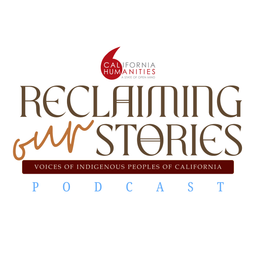
California Humanities Launches Reclaiming Our Stories: Voices of Indigenous Peoples of California
Claim This Podcastby California Humanities
Podcast Overview
<p>Reclaiming Our Stories: Voices of Indigenous Peoples of California is a six-episode podcast series from California Humanities that amplifies the voices, leadership, and lived experiences of Native peoples across the state. The first episode premieres May 5, 2026.</p><p></p><p>Hosted and story-woven by the Honorable Victorio L. Shaw, Esq., a citizen of the Hoopa Valley Tribe and Chief Judge for the Shingle Springs Band of Miwok Indians and the Robinson Rancheria Tribal Courts, the series creates space for Indigenous leaders, artists, educators, and advocates to share their stories — on their own terms.</p><p></p><p>As the United States approaches the 250th anniversary of the Declaration of Independence, Reclaiming Our Stories invites listeners to broaden their understanding of history by centering Indigenous perspectives that are often absent from mainstream narratives.</p><p></p><p>Through conversations rooted in sovereignty, culture, and community, this series reflects the diversity, resilience, and ongoing contributions of Native peoples across California.</p><p></p><p><strong>Production Credits</strong></p><p>Reclaiming Our Stories: Voices of Indigenous Peoples of California was recorded in partnership with Riverside – Nonprofit Podcast Network.</p><p><strong>Storyweaver / Host,</strong> Honorable Victorio L. Shaw, Esq.</p><p><strong>Producer,</strong> Jeff Holden, Hear Me Now Studio</p><p><strong>Recording & Audio Engineer,</strong> Swayer Milam, Hear Me Now Studio</p><p><strong>Director of Marketing & Communications,</strong> Shonda Moore, California Humanities</p><p><strong>Senior Programs Officer,</strong> mariana Aq’ab’al moscoso, California Humanities</p>
Language
🇺🇲
Publishing Since
3/27/2026
1 verified phone number on file for California Humanities Launches Reclaiming Our Stories: Voices of Indigenous Peoples of California
Pitch yourself as a guest, propose sponsorships, or reach out directly to the host.
Recent Episodes
June 2, 2026
Recognition, Rights, and the Space Between—Law & Policy Now
<p>What happens in the space between recognition and justice?</p><p>In Episode 5, Recognition, Rights, and the Space Between—Law & Policy Now, host Victorio L. Shaw speaks with Michelle Lee (Pit River, Cahuilla) and Nicole Myers-Lim (Pomo) about the realities Native communities face when law, policy, and lived experience do not align.</p><p>The conversation explores federal and state recognition, consultation versus consent, urban Indigenous experiences, and the challenges Native communities encounter within systems that were never designed to fully recognize Indigenous sovereignty.</p><p>Listeners will also hear reflections on some of the most pressing policy issues affecting California Native communities today, including the defense of the Indian Child Welfare Act (ICWA), sacred site protection, land stewardship, cultural preservation, and educational representation.</p><p>Throughout the episode, Michelle Lee and Nicole Myers-Lim remind us that sovereignty is not only something negotiated through governments and institutions—it is something practiced daily through relationships, responsibilities, and collective care.</p><p>An artistic interlude offers space for reflection before the conversation returns to questions of protection, accountability, and the future of Indigenous self-determination.</p><p>This episode invites listeners to consider not only what recognition provides, but what justice requires beyond acknowledgment.</p><p>Listener Takeaways</p><p>• Sovereignty is lived and practiced every day, regardless of whether legal systems fully recognize it.</p><p>• Recognition alone does not guarantee protection, accountability, or justice for Native communities.</p><p>• Indigenous communities continue to protect culture, land, children, and future generations through collective responsibility and community care.</p><p>Reflection Question</p><p>Where do we see the limits of recognition, and what would justice require beyond acknowledgment?</p><p>Music Featured in This Episode</p><p>“Mok'e š' ališaw” (It's already day)</p><p>Composed and performed by traditional Indigenous musicians.</p><p>Featured during the episode's artistic interlude as a reflective transition that invites listeners to pause, breathe, and sit with the conversations shared.</p><p>Acknowledgements</p><p>Reclaiming Our Stories: Voices of Indigenous Peoples of California is made possible with support from The 11th Hour Project and the Weingart Foundation.</p><p>Reclaiming Our Stories is a part of By the People: Conversations Beyond 250. By the People: Conversations Beyond 250 is a series of community-driven programs created by humanities councils in collaboration with local partners. The initiative was developed by the Federation of State Humanities Councils and the Smithsonian Center for Folklife and Cultural Heritage.</p><p>Listen + Subscribe</p><p>Episode now streaming.</p><p>Listen. Reflect. Share.</p><p>Listen wherever you get your podcasts.</p><p>Join us in listening deeply.</p>
May 26, 2026
The City Is Native Land (Present)
<p>What happens when we stop imagining cities as separate from Indigenous land?</p><p>In Episode 4 of <strong>Reclaiming Our Stories: Voices of Indigenous Peoples of California</strong>, host <strong>Victorio L. Shaw</strong> speaks with <strong>Cindi Alvitre (Tongva)</strong> and <strong>Corrina Gould (Lisjan Ohlone)</strong> about Native presence, belonging, and responsibility within urban California.</p><p>Together, they challenge the assumption that Indigenous identity exists only in rural or historically distant spaces. Instead, they reflect on cities as layered homelands—places where Native communities continue to live, organize, teach, create ceremony, sustain kinship, and practice care.</p><p>The episode explores migration, relocation, urban Native community-building, cultural continuity, and the everyday labor that sustains Indigenous life in cities. Through reflections on Los Angeles, the Bay Area, Sacramento, and beyond, listeners are invited to recognize the city itself as Native land.</p><p>An artistic interlude woven through the episode offers space for reflection through sound, rhythm, and movement—allowing the city to speak in another register.</p><p>This conversation is ultimately an invitation toward accountability: to place, to community, and to the layered histories that continue beneath streets, neighborhoods, and gathering spaces across California.</p><p>Listener Takeaways</p><ul><li>Indigenous presence in cities is ongoing, rooted, and deeply connected to land, culture, and community.</li><li>Urban Native communities continue practices of care through ceremony, organizing, education, language work, and mutual support.</li><li>Recognizing cities as Native land changes how we understand belonging, responsibility, and place.</li></ul><p>Reflection Question</p><p>Knowing the city you live in is Native land, how does that change the way you move, gather, or show care for that place?</p><p>Music Featured in This Episode</p><p>“<strong>Hu l-molmoloq’iwaš – </strong>The ancestors.” Composed by Deborah L. Sanchez. Featured during the artistic interlude reflecting movement, gathering, and the rhythms of urban Indigenous life.</p><p>Acknowledgements</p><p>Reclaiming Our Stories: Voices of Indigenous Peoples of California is made possible with support from The 11th Hour Project and Weingart Foundation.</p><p>Reclaiming Our Stories is a part of By the People: Conversations Beyond 250. By the People: Conversations Beyond 250 is a series of community-driven programs created by humanities councils in collaboration with local partners. The initiative was developed by the Federation of State Humanities Councils and the Smithsonian Center for Folklife and Cultural Heritage.</p>
May 19, 2026
We Tell Our Own Stories
<p>Episode 3, We Tell Our Own Stories, centers on Indigenous narrative sovereignty and the ongoing work of carrying the story forward.</p><p>Hosted by Victorio L. Shaw, this episode creates space for reflection on what it means for Indigenous peoples to speak for themselves, protect cultural knowledge, and shape public understanding on their own terms.</p><p>Terria Smith (Cahuilla) opens the conversation by reflecting on how story lives within everyday responsibilities and relationships—through family, community care, cultural continuity, and lived experience. Cristina Gonzales (Chumash) continues the dialogue through reflections on leadership, land, art, and the ongoing work of protecting Indigenous knowledge while reshaping public narratives.</p><p>Together, they speak about resisting simplification and erasure while honoring the responsibilities that come with carrying the story into public spaces.</p><p>The episode also explores tensions between visibility and protection, asking how communities decide what stories can be shared publicly and what knowledge must remain held within community, ceremony, and relationship.</p><p>An artistic interlude creates space to pause and listen deeply before the conversation turns toward future generations and the responsibilities of carrying the story forward.</p><p>Throughout the episode, listeners are invited to consider their own relationships to place, memory, listening, and responsibility.</p><p></p><p><strong>Music Featured in This Episode</strong></p><p>“Kip’i suniyuw klek’en hi ’i’ti” (“Right now, I have to stay here.”) Composed by Deborah L. Sanchez</p><p></p><p><strong>Acknowledgements</strong></p><p>Reclaiming Our Stories: Voices of Indigenous Peoples of California is made possible with support from The 11th Hour Project and Weingart Foundation.</p><p>Reclaiming Our Stories is a part of By the People: Conversations Beyond 250. By the People: Conversations Beyond 250 is a series of community-driven programs created by humanities councils in collaboration with local partners. The initiative was developed by the Federation of State Humanities Councils and the Smithsonian Center for Folklife and Cultural Heritage.</p><p></p><p><strong>Listen and Subscribe</strong></p><p>Episode now streaming.</p><p>Listen. Reflect. Share.</p><p>Listen wherever you get your podcasts.</p><p></p>
6 total episodes available
Similar Podcasts
Discover related shows you might enjoy

All My Relations Podcast
Matika Wilbur & Temryss Lane

Code Switch
NPR

Democracy Now! Audio
Democracy Now!

Handsome
Headgum

Fresh Air
NPR

This American Life
This American Life

Hidden Brain
Hidden Brain, Shankar Vedantam

The Daily
The New York Times

Up First
NPR

The Jon Stewart Podcast
Comedy Central

SmartLess
Jason Bateman, Sean Hayes, Will Arnett

Good Hang with Amy Poehler
The Ringer

The Moth
The Moth
Letters from an American
Heather Cox Richardson
Deep-dive analytics for California Humanities Launches Reclaiming Our Stories: Voices of Indigenous Peoples of California
Frequently asked questions
Have a different question and can't find the answer you're looking for? Reach out to our support team by sending us an email and we'll get back to you as soon as we can.
- What is California Humanities Launches Reclaiming Our Stories: Voices of Indigenous Peoples of California?
<p>Reclaiming Our Stories: Voices of Indigenous Peoples of California is a six-episode podcast series from California Humanities that amplifies the voices, leadership, and lived experiences of Native peoples across the state. The first episode premieres May 5, 2026.</p><p></p><p>Hosted and story-woven by the Honorable Victorio L. Shaw, Esq., a citizen of the Hoopa Valley Tribe and Chief Judge for the Shingle Springs Band of Miwok Indians and the Robinson Rancheria Tribal Courts, the series creates space for Indigenous leaders, artists, educators, and advocates to share their stories — on their own terms.</p><p></p><p>As the United States approaches the 250th anniversary of the Declaration of Independence, Reclaiming Our Stories invites listeners to broaden their understanding of history by centering Indigenous perspectives that are often absent from mainstream narratives.</p><p></p><p>Through conversations rooted in sovereignty, culture, and community, this series reflects the diversity, resilience, and ongoing contributions of Native peoples across California.</p><p></p><p><strong>Production Credits</strong></p><p>Reclaiming Our Stories: Voices of Indigenous Peoples of California was recorded in partnership with Riverside – Nonprofit Podcast Network.</p><p><strong>Storyweaver / Host,</strong> Honorable Victorio L. Shaw, Esq.</p><p><strong>Producer,</strong> Jeff Holden, Hear Me Now Studio</p><p><strong>Recording & Audio Engineer,</strong> Swayer Milam, Hear Me Now Studio</p><p><strong>Director of Marketing & Communications,</strong> Shonda Moore, California Humanities</p><p><strong>Senior Programs Officer,</strong> mariana Aq’ab’al moscoso, California Humanities</p> - How often does this podcast release new episodes?
This podcast updates daily.
- Where can I listen to this podcast?
This podcast is available on 4 platforms including Apple Podcasts, Spotify, and more. You can also use the RSS feed directly.
- Does this podcast accept guests?
Yes, this podcast regularly features guests.
Legal Disclaimer
Pod Engine is not affiliated with, endorsed by, or officially connected with any of the podcasts displayed on this platform. We operate independently as a podcast discovery and analytics service.
All podcast artwork, thumbnails, and content displayed on this page are the property of their respective owners and are protected by applicable copyright laws. This includes, but is not limited to, podcast cover art, episode artwork, show descriptions, episode titles, transcripts, audio snippets, and any other content originating from the podcast creators or their licensors.
We display this content under fair use principles and/or implied license for the purpose of podcast discovery, information, and commentary. We make no claim of ownership over any podcast content, artwork, or related materials shown on this platform. All trademarks, service marks, and trade names are the property of their respective owners.
While we strive to ensure all content usage is properly authorized, if you are a rights holder and believe your content is being used inappropriately or without proper authorization, please contact us immediately at hey@podengine.ai for prompt review and appropriate action, which may include content removal or proper attribution.
By accessing and using this platform, you acknowledge and agree to respect all applicable copyright laws and intellectual property rights of content owners. Any unauthorized reproduction, distribution, or commercial use of the content displayed on this platform is strictly prohibited.