
In this podcast series, I intend to have freewheeling conversations with friends and experts in multiple fields.
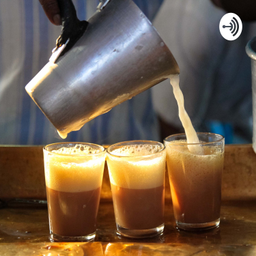
Podcast Overview
In this podcast series, I intend to have freewheeling conversations with friends and experts in multiple fields.
Language
🇺🇲
Publishing Since
8/5/2020
1 verified contact email on file for Chayakkada Chats
Pitch yourself as a guest, propose sponsorships, or reach out directly to the host.
Recent Episodes
April 30, 2021
Why should Covid19 vaccines be exempted from IPRs? with Dr Arjun Jayadev
There is a major debate over intellectual property rights and life-saving medicines, particularly Covid19 vaccines. One year has passed since the pandemic broke out. On the one hand, we have only a handful of vaccines. On the other hand, more than 80% of the world’s vaccines have gone to people in high-income countries, and just 0.3% to people in low-income countries. A major campaign for a "people's vaccine" is now ongoing, which asks for exemption of COVID-19 vaccines from IP protections. They say that removing IPRs would incentivise new producers and help address disparities in vaccine access. But proponents of IPRs argue that it would only disincentivise new producers and investors, which will adversely affect the prospects of vaccine development in the long-run. To understand this debate better, we are today joined by Dr Arjun Jayadev, who is a Professor of Economics at the School of Arts and Sciences at Azim Premji University in Bangalore, India. He was previously Associate Professor of Economics at the University of Massachusetts Boston. He is also closely involved with the Institute for New Economic Thinking. I speak to him about the basic links between IPRs and the pandemic; the long-held orthodoxy in economic theory on the importance of IPRs, especially in areas like health; how IPRs lead to suboptimalities like hoarding of knowledge, vaccine grabs and other global inequalities; the relationship between public funding and vaccine production; whether private profits being produced from public investments; and finally, the problem of vaccine nationalism.
April 17, 2021
On the Second Wave of Covid-19 Infections in India, with Dr T. Sundararaman
Welcome to Episode number 9 at Chayakkada Chats. Just as everyone thought that the Covid crisis was on the ebb, a second wave of infections has spread across large parts of the world. India has been no exception. As of today, we record more than 200,000 infections every day with the total number of active cases at 1.6 million. About 175,000 people have died till now. As we stare at the grim prospect of another lockdown, it is important to ask a few basic questions. How is the second wave different from the first wave? Has India learnt anything from the first wave? What is the story of the new variant of the virus? Is there a shortage of vaccines in India? Was the Indian government too conservative in allowing more vaccines to hit the Indian market? Should India deregulate prices of vaccines so that private players will respond to the price incentives and supply more? To discuss these and more, we are joined today by one of India's foremost public health experts: Dr T. SUNDARARAMAN. Dr Sundararaman spent the first 22 years of his professional life as a member of the faculty and professor of Department of Internal Medicine, JIPMER. He then moved to working with public health systems. He was head of the State Health Resource Center Chhattisgarh from 2002 to 2007. Then he was executive director of National Health Systems Resource Center, from 2007 to 2014. He returned to academics later, as Professor and Dean of the School of Health Systems Studies in Tata Institute of Social Sciences, Mumbai. He is now an independent health consultant. All along, he has also been an activist for health rights and an organizer of people’s health movements or Jan Swasthya Abhiyan as it is popularly known.
October 27, 2020
The Political Message from the Bolivian Elections of 2020, with Sonya Surabhi Gupta
Last week, in a historic event, the Movimiento al Socialismo (MAS), the party of Evo Morales, was returned to power by the people of Bolivia. Evo Morales was the President of Bolivia from 2006 till 2019. In October 2019, though he had conclusively won the elections, he was forced to flee the country by the military and forces aligned to the CIA and the OAS. They argued that the elections were rigged. But it was nothing but a coup. Morales has been living in Mexico and Argentina since 2019. But the October 2020 elections have shown that the verdict of 2019 was not rigged. Loius Arce of MAS will be the new President and David Choquehuanca will be his deputy. These elections have represented a major victory of the Bolivian people against US-led imperialism. To speak about the Bolivian elections, we are joined today by Sonya Surabhi Gupta, Professor of Latin American Studies at Jamia Millia Islamia, New Delhi. Sonya's interests are in the area of contemporary literary and cultural studies of India and Latin America in a comparative cross-cultural context, as well as translation studies. She remains active in her work as a researcher and social activist. In her dual role as a Latin Americanist and a social activist, she is part of the Committees of solidarity with Cuba and Venezuela in India, and is currently one of the General Secretaries of the All India Peace and Solidarity Organization, which is affiliated to the World Peace Council. She has also served as a translator for important Latin American personalities during their official visits to India, such as Nicolás Maduro (when he visited New Delhi as Foreign Minister in 2012), Aleida Guevara and Nora Cortiñas among others.
10 total episodes available
Deep-dive analytics for Chayakkada Chats
Frequently asked questions
Have a different question and can't find the answer you're looking for? Reach out to our support team by sending us an email and we'll get back to you as soon as we can.
- What is Chayakkada Chats?
- How often does this podcast release new episodes?
This podcast updates daily.
- Where can I listen to this podcast?
This podcast is available on 4 platforms including Apple Podcasts, Spotify, and more. You can also use the RSS feed directly.
- Does this podcast accept guests?
Information about guest appearances is not available.
Legal Disclaimer
Pod Engine is not affiliated with, endorsed by, or officially connected with any of the podcasts displayed on this platform. We operate independently as a podcast discovery and analytics service.
All podcast artwork, thumbnails, and content displayed on this page are the property of their respective owners and are protected by applicable copyright laws. This includes, but is not limited to, podcast cover art, episode artwork, show descriptions, episode titles, transcripts, audio snippets, and any other content originating from the podcast creators or their licensors.
We display this content under fair use principles and/or implied license for the purpose of podcast discovery, information, and commentary. We make no claim of ownership over any podcast content, artwork, or related materials shown on this platform. All trademarks, service marks, and trade names are the property of their respective owners.
While we strive to ensure all content usage is properly authorized, if you are a rights holder and believe your content is being used inappropriately or without proper authorization, please contact us immediately at hey@podengine.ai for prompt review and appropriate action, which may include content removal or proper attribution.
By accessing and using this platform, you acknowledge and agree to respect all applicable copyright laws and intellectual property rights of content owners. Any unauthorized reproduction, distribution, or commercial use of the content displayed on this platform is strictly prohibited.