- 14
- Episodes
- 4
- Ratings
- Bi-weekly
- Cadence
- 2025
- First episode
About Off The Charts
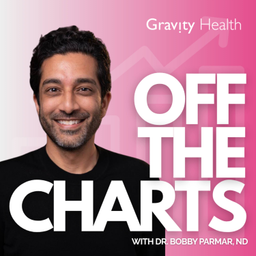
How many podcasts could there poddibly be about correcting medical misinformation now? Why would I add my voice to the chorus that can be so deafening? I've had 18+ years of experience seeing tons and treating everything from A to Z and lemme tell you there's plenty I can add to the conversation. Dive with me into the science of medicine with a heaping side of sass and spice.
- Publisher
- Dr. Bobby Parmar, ND
- Category
- health & fitness · health & fitness · health & fitness
- Language
- en
- Explicit
- No
- First episode
- 12 Nov 2025
- Latest episode
- 19 Sept 2026
Latest episodes
14 episodes in the feed.
19 Sept 2026
PMS, PMDD, Perimenopause & ADHD: Why Symptoms Overlap in Women with Dr. Alexandra Sisam, ND
PMS, PMDD, perimenopause and ADHD can produce overlapping symptoms, but similar symptoms do not always mean the same thing is happening. In this episode of Off the Charts, Dr. Bobby Parmar sits down with Dr. Alexandra Sisam, ND, to unpack the intersection of hormones, mood, ADHD, stress and the nervous system. They discuss PMS vs PMDD vs premenstrual exacerbation (PME), why perimenopause can complicate the picture, and why ADHD-like symptoms, hormonal changes and stress can sometimes be difficult to separate. They also explore progesterone and estrogen, ADHD assessment, stimulant medications, trauma, iron, blood sugar and other factors that may influence symptoms. The central idea: there may not be one thing going on. WHAT YOU’LL LEARN PMS vs PMDD vs premenstrual exacerbation (PME) Why PMDD, perimenopause and ADHD symptoms can overlap How hormonal changes may affect mood, focus and cognition Why ADHD can be difficult to assess during midlife How stress and trauma may complicate the clinical picture Why similar symptoms may require very different approaches TIMESTAMPS 00:00 — Hot open: “There isn’t one thing going on” 00:58 — Introducing Dr. Alexandra Sisam 01:12 — ADHD, perimenopause and PMDD 05:20 — Perimenopause, anger and mood changes 10:43 — What is PMDD? 11:06 — PMS vs PMDD vs PME 12:31 — Progesterone and PMDD 16:27 — Is perimenopause prolonged PMS? 18:48 — Trauma, stress and biological resilience 23:49 — ADHD and hormonal transitions 25:12 — Psychiatric or gynecologic? 30:05 — Why does ADHD seem to be everywhere? 32:03 — ADHD assessment and diagnostic uncertainty 37:45 — Stimulants and ADHD 41:03 — Iron, nutrition and blood sugar 43:04 — Estrogen, ADHD and perimenopause 46:14 — Neuroinflammation 47:46 — Why this needs a Part Two 48:44 — Closing REFERENCES & RESOURCES ACOG — Management of Premenstrual Disorders https://www.acog.org/clinical/clinical-guidance/clinical-practice-guideline/articles/2023/12/management-of-premenstrual-disorders (https://www.acog.org/clinical/clinical-guidance/clinical-practice-guideline/articles/2023/12/management-of-premenstrual-disorders) NICE — Menopause: Identification and Management https://www.nice.org.uk/guidance/ng23 (https://www.nice.org.uk/guidance/ng23) ADHD and Sex Hormones in Females: A Systematic Review https://pubmed.ncbi.nlm.nih.gov/40251875/ (https://pubmed.ncbi.nlm.nih.gov/40251875/) The Menopause Society — Mental Health and the Menopause Transition https://menopause.org/patient-education/menopause-topics/mental-health (https://menopause.org/patient-education/menopause-topics/mental-health) CONNECT WITH THE GUEST Dr. Alexandra Sisam, ND Instagram → https://www.instagram.com/alexandrasisam.nd/ (https://www.instagram.com/alexandrasisam.nd/) Website → https://dralexandrasisam.com/ (https://dralexandrasisam.com/) Mint Integrative Health → https://mintintegrative.com/dr-alexandra-sisam-naturopathic-doctor/ (https://mintintegrative.com/dr-alexandra-sisam-naturopathic-doctor/) CONNECT WITH GRAVITY HEALTH Website → https://www.gravityhealthclinics.com/ (https://www.gravityhealthclinics.com/) Book a Consult → https://gravityhealth.janeapp.com/ (https://gravityhealth.janeapp.com/) FOLLOW US Gravity Health Clinics → https://www.instagram.com/gravityhealthclinics/ (https://www.instagram.com/gravityhealthclinics/) Dr. Bobby Parmar, ND → https://www.instagram.com/docparmar_nd/ (https://www.instagram.com/docparmar_nd/) Dr. Paul Maximus, ND → https://www.instagram.com/drmaximus/ (https://www.instagram.com/drmaximus/) DISCLAIMER This episode is for general educational and informational purposes only and does not constitute medical advice, diagnosis or treatment. Always consult a qualified healthcare professional before starting, stopping or changing medication, supplements, testing or treatment. https://www.gravityhealthclinics.com/terms-of-use (https://www.gravityhealthclinics.com/terms-of-use) https://www.gravityhealthclinics.com/medical-disclaimer (https://www.gravityhealthclinics.com/medical-disclaimer)
17 Aug 2026
When Medicine Doesn’t Believe You: Contested Illnesses with Dr. David Scales & Dara Parker
What happens when you know something is wrong, but medicine cannot measure it, explain it, or agree that it is real? In this episode of Off the Charts, Dr. Bobby Parmar is joined by Dr. David Scales and returning guest Dara Parker for a candid conversation about contested illnesses—conditions patients may have to fight to have recognized. They examine the divide between what patients experience and what the medical system is prepared to diagnose, especially when symptoms do not fit neatly within one specialty. Using IBS as an example, they explore how objective testing helped transform an illness that had often been dismissed into one medicine was more willing to accept as “real.” The conversation expands into Long COVID, ME/CFS, chronic Lyme disease, trauma and chronic pain, specialist silos, private testing, and the line between respecting uncertainty and offering unsupported diagnoses or treatments. They also discuss naturopathic and conventional medicine, health equity, and positive care effects: how trust, competence, reassurance, time, and the patient-provider relationship can influence treatment. Finally, Bobby shares how changing the language used before iron infusions appeared to change patient reactions—bringing the conversation back to placebo, nocebo, the nervous system, and Dara’s reminder that stories can both heal and harm. This is not about believing every diagnosis or abandoning scientific standards. It is about listening carefully, acknowledging uncertainty, and recognizing that the absence of an explanation does not mean a patient’s suffering is not real. WHAT YOU’LL LEARN What contested illnesses are Why some conditions are accepted only once suffering becomes measurable What rectal distention testing reveals about IBS pain sensitivity How Long COVID changed chronic illness research Why complex symptoms fall between specialties How clinicians navigate uncertain tests and diagnoses Where naturopathic and conventional medicine overlap What positive-care, placebo, nocebo, and negative-care effects mean How supportive care becomes a health-equity issue Why clinical language can influence patient experience TIMESTAMPS 00:00 — Hot open: “Illnesses you have to fight to get” 00:38 — Introducing Dr. David Scales and Dara Parker 02:25 — What are contested illnesses? 05:23 — When patients do not fit the medical model 06:24 — IBS and becoming a “real” illness 10:22 — Gender, pain, and medical research 13:33 — Trauma, IBS, endometriosis, and chronic pain 16:14 — Medicine, social science, and the missing evidence 17:41 — Long COVID and infection-associated chronic conditions 20:57 — Can infections leave lasting effects? 25:19 — Dr. House and the problem with medical silos 27:26 — Specialists versus generalists 30:28 — A better model for complex patients 33:00 — Wait times, private testing, and searching for answers 36:14 — When medical uncertainty becomes quackery 39:03 — Where Bobby draws the line 45:56 — Bridging naturopathic and conventional medicine 47:34 — How allopathic medicine views naturopathy 49:50 — Positive care effects versus placebo 52:47 — Supportive care as a health-equity issue 54:11 — Nocebo and negative-care effects 55:30 — Iron infusions and the power of language 57:56 — Harold R. Johnson and stories as medicine 59:16 — Evidence, storytelling, and the art of medicine 59:56 — Closing and the call for part two REFERENCES AND RESOURCES Rectal distention testing in IBS https://pubmed.ncbi.nlm.nih.gov/12055583/ National Academies definition of Long COVID https://www.ncbi.nlm.nih.gov/books/NBK605676/ Placebo and nocebo effects https://pubmed.ncbi.nlm.nih.gov/33075796/ Harold R. Johnson, The Power of Story https://www.haroldrjohnson.ca/ CONNECT WITH THE GUESTS Dr. David Scales https://weillcornell.org/david-alaistair-scales-md-phd Dara Parker https://www.daraparker.com/ CONNECT WITH GRAVITY HEALTH Website → https://www.gravityhealthclinics.com/ Book a Consult → https://gravityhealth.janeapp.com/ FOLLOW US Gravity Health Clinics → https://www.instagram.com/gravityhealthclinics/ Dr. Bobby Parmar, ND → https://www.instagram.com/docparmar_nd/ Dr. Paul Maximus, ND → https://www.instagram.com/drmaximus/ DISCLAIMER This episode is for general educational and informational purposes only and does not constitute medical advice, diagnosis, treatment, or the practice of medicine or any other healthcare service. Always consult a qualified healthcare professional before starting, stopping, or changing medication, testing, or treatment. Listening to this podcast does not create a doctor-patient relationship. For more information: https://www.gravityhealthclinics.com/terms-of-use https://www.gravityhealthclinics.com/medical-disclaimer
7 Jul 2026
IBS, SIBO, and the Gut-Brain Connection with Dr. Rachael Lovink, ND
What if IBS isn’t “just in your head” — but it also isn’t just about food, bacteria, or SIBO? In this episode of Off the Charts, Dr. Bobby Parmar sits down with Dr. Rachael Lovink, ND, a naturopathic doctor and gut health strategist, for a deep conversation about IBS, constipation, gut-brain communication, visceral hypersensitivity, SIBO testing, pelvic floor dysfunction, neuromodulators, and why so many patients get stuck chasing one “root cause.” Dr. Rachael shares how her own experience with IBS shaped the way she now works with patients, especially those dealing with chronic constipation, bloating, abdominal pain, food fear, and long histories of trying diets, antimicrobials, SIBO treatments, functional testing, and supplement protocols without lasting relief. Together, Bobby and Rachael explore why IBS is better understood as a disorder of gut-brain interaction, why validation and education matter so much in care, and why the path forward often requires looking beyond the usual rabbit holes: dysbiosis, SIBO, food triggers, and test results. They also discuss why constipation can be missed even when someone is going to the bathroom daily, why pelvic floor coordination matters, when PEG or RestoraLAX may help or make symptoms worse, what dyssynergic defecation means, and why biofeedback can be an important part of chronic constipation care. This conversation is for anyone who wants a more nuanced way to understand IBS, SIBO, constipation, gut pain, and the nervous system. WHAT YOU’LL LEARN Why IBS is not “just in your head” What disorders of gut-brain interaction are Why visceral hypersensitivity can make normal digestion feel painful Why neuromodulators are used in IBS care Why SIBO testing is not always the best place to start Why dysbiosis does not always mean you need antimicrobials How constipation can be missed, even when someone poops daily Why “just get them pooping” can change the clinical picture When PEG / RestoraLAX may help — and when it may make symptoms worse What dyssynergic defecation means Why pelvic floor assessment matters in chronic constipation Why biofeedback can be important for pelvic floor coordination How IBS, endometriosis, migraines, fibromyalgia, and other chronic pain conditions may overlap Why some patients get stuck in the SIBO treatment loop Why GLP-1 research in IBS is an emerging area to watch REFERENCES Rome IV — Disorders of Gut-Brain Interaction https://pubmed.ncbi.nlm.nih.gov/27147121/ (https://pubmed.ncbi.nlm.nih.gov/27147121/) Rome Foundation — Rome IV Criteria https://theromefoundation.org/rome-iv/rome-iv-criteria/ (https://theromefoundation.org/rome-iv/rome-iv-criteria/) ACG Clinical Guideline: Management of Irritable Bowel Syndrome https://pubmed.ncbi.nlm.nih.gov/33315591/ (https://pubmed.ncbi.nlm.nih.gov/33315591/) Diagnosis and Treatment of Dyssynergic Defecation https://pmc.ncbi.nlm.nih.gov/articles/PMC4930297/ (https://pmc.ncbi.nlm.nih.gov/articles/PMC4930297/) ANMS-ESNM Position Paper and Consensus Guidelines on Biofeedback Therapy https://pmc.ncbi.nlm.nih.gov/articles/PMC4409469/ (https://pmc.ncbi.nlm.nih.gov/articles/PMC4409469/) Pain relief and pain intensity response to GLP-1 receptor agonist ROSE-010 in IBS https://pubmed.ncbi.nlm.nih.gov/35234561/ (https://pubmed.ncbi.nlm.nih.gov/35234561/) Improvement of irritable bowel syndrome with glucagon-like peptide-1 receptor agonists https://pmc.ncbi.nlm.nih.gov/articles/PMC11932899/ (https://pmc.ncbi.nlm.nih.gov/articles/PMC11932899/) CONNECT WITH GRAVITY HEALTH Website → https://www.gravityhealthclinics.com/ (https://www.gravityhealthclinics.com/) Book a Consult → https://gravityhealth.janeapp.com/ (https://gravityhealth.janeapp.com/) FOLLOW US Gravity Health Clinics → https://www.instagram.com/gravityhealthclinics/ (https://www.instagram.com/gravityhealthclinics/) Dr. Bobby Parmar, ND → https://www.instagram.com/docparmar_nd/ (https://www.instagram.com/docparmar_nd/) Dr. Paul Maximus, ND → https://www.instagram.com/drmaximus/ (https://www.instagram.com/drmaximus/) Dr. Rachael Lovink, ND → https://www.drlovink.com/ (https://www.drlovink.com/) DISCLAIMER ⚠️ This video is for educational and informational purposes only and is not medical advice. Always consult a qualified healthcare provider before starting or stopping medication, supplements, diets, or treatment plans. Off the Charts is a podcast by Gravity Health, created for general informational and educational purposes only. It does not constitute the practice of medicine, nursing, or any other healthcare service, and should not be taken as medical advice. Listening to this podcast does not create a doctor–patient relationship. Listeners should always seek the guidance of qualified healthcare professionals regarding any medical condition or treatment. For more information about content use and disclaimers, please visit: https://www.gravityhealthclinics.com/terms-of-use https://www.gravityhealthclinics.com/medical-disclaimer
18 Jun 2026
Why We Need to Talk About Race in Medicine with Nneka Allen
What happens when race is treated as a side note in medicine, instead of a central part of how people move through the world? In this episode of Off the Charts, Dr. Bobby Parmar sits down with Nneka Allen for a deeply personal and necessary conversation about race, medicine, Whiteness, anti-Blackness, and the lived experience of Black patients navigating healthcare systems that were not built with them in mind. They begin with a question that is often avoided: why are people so uncomfortable talking about race, even when race clearly shapes outcomes, experiences, and access to care? From there, the conversation moves through the history of slavery in Canada, the invention of Whiteness and Blackness as social constructs, the medical dehumanization of Black bodies, and the ways these histories continue to show up in modern healthcare. Bobby and Nneka also discuss fibroids, pain treatment, maternal mortality, medical mistrust, weathering, microaggressions, race-conscious care, and what it means to move from bystanding to truth-telling. This is not a conversation about blame for the sake of blame. It is a conversation about responsibility, awareness, history, and what clinicians need to understand if they are serious about providing better care. WHAT YOU’LL LEARN Why race cannot be separated from conversations about medicine and healthcare How Whiteness and Blackness were socially constructed, and why that history still matters Why Black patients often cannot “escape” race in healthcare settings How medical systems have historically dehumanized Black bodies Why Black women’s experiences with fibroids, pain, hysterectomy, and maternal care require more attention What weathering means, and how chronic racist stress can affect health Why “microaggressions” may be better understood as racist abuse What institutional untrustworthiness means in healthcare Why race-conscious care matters more than simply having a provider who looks like you The difference between perpetrating, bystanding, truth-telling, and dissenting behaviors TIMESTAMPS 00:00 — Opening: “Black people don’t have the luxury of escaping race” 00:46 — Introducing Nneka Allen 02:37 — Why people avoid talking about race 05:29 — Slavery in Canada and the erasure of Black history 07:34 — Non-Black people and the racial continuum 08:19 — Why Black people can’t avoid race 09:55 — Fibroids, Black women, and being treated as a footnote in medicine 13:52 — Dr. Uché Blackstock, medical racism, and unequal care 15:03 — Self-advocacy, alternative medicine, and distrust of the medical system 19:08 — Medical experimentation, pain treatment, and maternal mortality 20:29 — Chattel slavery and the dehumanization of Black bodies 22:23 — The speculum, gynecology, and medical history 23:13 — Slavery as an economic system 26:16 — Storytelling, humanity, and listening differently 28:42 — Community, survival, and collective care 30:24 — The duty of non-Black clinicians 31:39 — Weathering and the health effects of chronic racist stress 32:49 — Microaggressions, racist abuse, and Ibram X. Kendi 35:03 — Why minimizing racism causes harm 36:30 — Nneka’s Substack and responding to racism 38:15 — A bank incident and the cost of confronting racism 42:22 — Diversity statements vs accountability 43:58 — Does your doctor have to be Black? 44:12 — What race-conscious care looks like 48:30 — Medical distrust vs institutional untrustworthiness 50:46 — Racism as behavior, not identity 52:21 — Perpetrating, bystanding, truth-telling, and dissenting behaviors 53:11 — Why silence is not neutral ⚠️ This video is for educational and informational purposes only and is not medical advice. Always consult a qualified healthcare provider before starting or stopping medication. REFERENCES Nneka Allen, The Empathy Agency https://www.theempathyagency.ca/meet-the-founder (https://www.theempathyagency.ca/meet-the-founder?utm_source=chatgpt.com) The Empathy Agency https://www.theempathyagency.ca/ (https://www.theempathyagency.ca/?utm_source=chatgpt.com) Ian Williams, Disorientation: Being Black in the World https://www.penguinrandomhouse.ca/books/671554/disorientation-by-ian-williams/9781039000247 (https://www.penguinrandomhouse.ca/books/671554/disorientation-by-ian-williams/9781039000247?utm_source=chatgpt.com) Dr. Uché Blackstock, Legacy: A Black Physician Reckons with Racism in Medicine https://www.penguinrandomhouse.com/books/705871/legacy-by-uche-blackstock-md/ (https://www.penguinrandomhouse.com/books/705871/legacy-by-uche-blackstock-md/?utm_source=chatgpt.com) Ibram X. Kendi, How to Be an Antiracist https://www.penguinrandomhouse.com/books/564299/how-to-be-an-antiracist-by-ibram-x-kendi/ (https://www.penguinrandomhouse.com/books/564299/how-to-be-an-antiracist-by-ibram-x-kendi/?utm_source=chatgpt.com) Audre Lorde, The Master’s Tools Will Never Dismantle the Master’s House https://awpc.cattcenter.iastate.edu/communication/masters-tools-will-never-dismantle-masters-house-oct-29-1979 (https://awpc.cattcenter.iastate.edu/communication/masters-tools-will-never-dismantle-masters-house-oct-29-1979?utm_source=chatgpt.com) Canadian Museum for Human Rights, The story of Black slavery in Canadian history https://humanrights.ca/story/story-black-slavery-canadian-history (https://humanrights.ca/story/story-black-slavery-canadian-history?utm_source=chatgpt.com) The Underground Railroad in Canada https://www.thecanadianencyclopedia.ca/en/article/underground-railroad (https://www.thecanadianencyclopedia.ca/en/article/underground-railroad) Weathering hypothesis and racial health disparities https://pmc.ncbi.nlm.nih.gov/articles/PMC10676285/ (https://pmc.ncbi.nlm.nih.gov/articles/PMC10676285/?utm_source=chatgpt.com) Race-conscious medicine https://pmc.ncbi.nlm.nih.gov/articles/PMC7544456/ (https://pmc.ncbi.nlm.nih.gov/articles/PMC7544456/?utm_source=chatgpt.com) Institutional distrust and building institutional trustworthiness in healthcare https://pmc.ncbi.nlm.nih.gov/articles/PMC7988507/ (https://pmc.ncbi.nlm.nih.gov/articles/PMC7988507/?utm_source=chatgpt.com) Canadian Human Rights Commission: About discrimination https://www.chrc-ccdp.gc.ca/individuals/human-rights/about-discrimination (https://www.chrc-ccdp.gc.ca/individuals/human-rights/about-discrimination?utm_source=chatgpt.com) History of the speculum, J. Marion Sims, and medical experimentation on enslaved Black women https://www.pbs.org/wgbh/americanexperience/features/cancer-detectives-brief-history-speculum/ (https://www.pbs.org/wgbh/americanexperience/features/cancer-detectives-brief-history-speculum/?utm_source=chatgpt.com) Racial disparities in uterine fibroids and hysterectomy https://pmc.ncbi.nlm.nih.gov/articles/PMC3874080/ (https://pmc.ncbi.nlm.nih.gov/articles/PMC3874080/?utm_source=chatgpt.com) Racial disparities in pain treatment https://www.aamc.org/news/how-we-fail-black-patients-pain (https://www.aamc.org/news/how-we-fail-black-patients-pain?utm_source=chatgpt.com) Black maternal mortality and pregnancy-related mortality disparities https://projects.apnews.com/features/2023/from-birth-to-death/black-women-maternal-mortality-rate.html (https://projects.apnews.com/features/2023/from-birth-to-death/black-women-maternal-mortality-rate.html?utm_source=chatgpt.com) CONNECT WITH GRAVITY HEALTH Website → https://www.gravityhealthclinics.com/ (https://www.gravityhealthclinics.com/)Book a Consult → https://gravityhealth.janeapp.com/ (https://gravityhealth.janeapp.com/) FOLLOW US Gravity Health Clinics → https://www.instagram.com/gravityhealthclinics/ (https://www.instagram.com/gravityhealthclinics/)Dr. Bobby Parmar, ND → https://www.instagram.com/docparmar_nd/ (https://www.instagram.com/docparmar_nd/)Dr. Paul Maximus, ND → https://www.instagram.com/drmaximus/ (https://www.instagram.com/drmaximus/)Nneka Allen / The Empathy Agency → https://www.theempathyagency.ca/ (https://www.theempathyagency.ca/?utm_source=chatgpt.com) Off the Charts is a podcast by Gravity Health, created for general informational and educational purposes only. It does not constitute the practice of medicine, nursing, or any other healthcare service, and should not be taken as medical advice. Listening to this podcast does not create a doctor–patient relationship. Listeners should always seek the guidance of qualified healthcare professionals regarding any medical condition or treatment. For more information about content use and disclaimers, please visit: https://www.gravityhealthclinics.com/terms-of-use (https://www.gravityhealthclinics.com/terms-of-use)https://www.gravityhealthclinics.com/medical-disclaimer (https://www.gravityhealthclinics.com/medical-disclaimer)
26 Apr 2026
I Almost Fainted From My IUD — Why Is This Still Normal? | Dr Alex Dragan, ND
Why Women Aren’t Offered Pain Management for IUDs IUD insertion is often described as quick, simple, and routine. But for many patients, “routine” does not mean painless. In this episode of Off the Charts, Dr. Bobby Parmar, ND sits down with Dr. Alex Dragan, ND to ask a question that should feel obvious: Why are so many IUD procedures still done without adequate pain management? Starting with Dr. Dragan’s own experience of nearly passing out during IUD insertion, they unpack what actually happens during the procedure, why some patients experience intense pain, dizziness, or near-fainting, and how that reality has been minimized, normalized, or dismissed in clinical practice. From there, the conversation moves beyond IUDs. They examine how outdated assumptions, gaps in training, misinformation, and systemic bias shape the way women’s pain is understood and treated — and why something as basic as pain relief is still inconsistent across providers. This is not a takedown of individual practitioners. It is a closer look at the gap between what patients experience, what medicine has normalized, and what better, more informed care could look like. WHAT YOU’LL LEARN Why IUD insertion can be significantly more painful for some patients than expected What actually happens physiologically during an IUD procedure (and why pain varies) The role of the cervix, nerve pathways, and the vagal response in pain and fainting Why pain management isn’t consistently offered — even when options exist The difference between ibuprofen, local anesthesia, and newer tools like Penthrox How fear, misinformation, and real patient experiences all shape perception of IUDs Why IUDs are used for more than contraception (including heavy bleeding and perimenopause) How consent, communication, and patient trust influence the overall experience What a more informed, patient-centered approach to procedures could look like TIMESTAMPS 00:00 — Opening: “Why don’t we offer pain management?” 01:30 — A real IUD experience (pain, dizziness, near fainting) 04:45 — What actually happens during insertion 08:20 — The cervix, nerves, and the vagal response 12:10 — Why pain has been minimized in clinical settings 16:30 — What pain management options exist (and why they’re not always used) 22:40 — IUD myths vs reality 28:15 — Fear, TikTok, and patient perception 34:20 — IUDs beyond birth control (bleeding, perimenopause) 40:10 — What better care could look like ⚠️ This video is for educational and informational purposes only and is not medical advice. Always consult a qualified healthcare provider before starting or stopping medication. TOP REFERENCES: Pain Management for Gynecologic Procedures American College of Obstetricians and Gynecologists (ACOG) https://www.acog.org/ Long-Acting Reversible Contraception (IUDs) ACOG Practice Bulletin https://www.acog.org/ Heavy Menstrual Bleeding Guidelines NICE Guideline NG88 https://www.nice.org.uk/ Endometriosis Overview World Health Organization (WHO) https://www.who.int/ Vasovagal Syncope (Fainting Response) StatPearls / NCBI https://www.ncbi.nlm.nih.gov/ CONNECT WITH GRAVITY HEALTH Book a Consult → https://gravityhealth.janeapp.com/ Gravity Health Clinics → https://www.gravityhealthclinics.com/ Mint Reproductive Health → https://mintreproductivehealth.com/ FOLLOW US Gravity Health Clinics → https://www.instagram.com/gravityhealthclinics/ Dr. Bobby Parmar, ND → https://www.instagram.com/docparmar_nd/ Dr. Paul Maximus, ND → https://www.instagram.com/drmaximus/ Dr. Alex Dragan, ND → https://www.instagram.com/dralexdragan/ Off the Charts is a podcast by Gravity Health, created for general informational and educational purposes only. It does not constitute the practice of medicine, nursing, or any other healthcare service, and should not be taken as medical advice. Listening to this podcast does not create a doctor–patient relationship. Listeners should always seek the guidance of qualified healthcare professionals regarding any medical condition or treatment. For more information about content use and disclaimers, please visit: https://www.gravityhealthclinics.com/terms-of-use https://www.gravityhealthclinics.com/medical-disclaimer
1 Apr 2026
Why Confident People Can Feel Powerless in a Medical Setting with Dara Parker
Have you ever left a medical appointment feeling unsettled — not because of what was said, but because of how it felt? You understood the recommendations. You answered the questions. And yet, something didn’t quite land. In this episode of Off the Charts, Dr. Bobby Parmar sits down with Dara Parker to examine that gap — the space between how care is delivered, and how it is actually experienced by patients. Drawing from lived experience, they explore why even confident, well-resourced individuals can feel hesitant, exposed, or less certain of themselves in a clinical setting — and why patients don’t always share everything, even when it matters. This isn’t framed as a failure of individual practitioners. Instead, the conversation looks at the systems, training, and cultural norms that shape how care is practiced — often in ways that are difficult to see from within. The question isn’t simply whether healthcare is working or failing. It’s whether we are paying close enough attention to how it is being experienced. WHAT YOU'LL LEARN Why medical interactions can feel misaligned, even when technically correct How assumptions and communication style shape patient trust Why patients don’t always share everything — even when it matters The role of power dynamics in clinical environments How bias operates within systems, not just individuals What a more collaborative, patient-centered approach to care could look like TIMESTAMPS 0:00 – Opening: When care feels “off” 1:12 – Introducing Dara Parker 2:42 – “Mediocre” experiences across the system 4:19 – Is healthcare shaped by bias? 6:15 – Systems, assumptions, and lived experience 8:12 – Awareness doesn’t remove bias 10:33 – Pain, dismissal, and women’s bodies 12:16 – The role of humility in medicine 14:27 – Patients, information, and trust 19:06 – Lived experience and belief 20:15 – Assumptions in practice (birth control example) 21:54 – Why patients hold things back 24:56 – Confidence vs vulnerability in clinical settings 26:06 – Physical and emotional exposure 29:37 – What a different experience can feel like ⚠️ This video is for educational and informational purposes only and is not medical advice. Always consult a qualified healthcare provider before starting or stopping medication. REFERENCES The Yentl Syndrome Bernadine Healy, The New England Journal of Medicine https://www.nejm.org/doi/abs/10.1056/NEJM199107253250408 (https://www.nejm.org/doi/abs/10.1056/NEJM199107253250408 ) The Girl Who Cried Pain: A Bias against Women in the Treatment of Pain Diane E. Hoffmann and Anita J. Tarzian https://journals.sagepub.com/doi/10.1111/j.1748-720X.2001.tb00037.x (https://journals.sagepub.com/doi/10.1111/j.1748-720X.2001.tb00037.x) Pain Management for In-Office Uterine and Cervical Procedures American College of Obstetricians and Gynecologists https://www.acog.org/clinical/clinical-guidance/clinical-consensus/articles/2025/05/pain-management-for-in-office-uterine-and-cervical-procedures (https://www.acog.org/clinical/clinical-guidance/clinical-consensus/articles/2025/05/pain-management-for-in-office-uterine-and-cervical-procedures) Implicit Bias in Healthcare Professionals: A Systematic Review Clemence FitzGerald and Samia Hurst https://bmcmedethics.biomedcentral.com/articles/10.1186/s12910-017-0179-8 (https://bmcmedethics.biomedcentral.com/articles/10.1186/s12910-017-0179-8) Prevalence of and Factors Associated With Patient Nondisclosure of Medically Relevant Information to Clinicians Andrea G. Levy et al. https://jamanetwork.com/journals/jamanetworkopen/fullarticle/2716996 (https://jamanetwork.com/journals/jamanetworkopen/fullarticle/2716996 ) Towards a Sociological Understanding of Medical Gaslighting in Western Health Care Jessica C.H. Sebring https://onlinelibrary.wiley.com/doi/abs/10.1111/1467-9566.13367 (https://onlinelibrary.wiley.com/doi/abs/10.1111/1467-9566.13367 ) Overview of the National Institutes of Health Investment in Women’s Health Research National Academies / NIH https://www.ncbi.nlm.nih.gov/books/NBK612400/ (https://www.ncbi.nlm.nih.gov/books/NBK612400/) CONNECT WITH GRAVITY HEALTH Website → https://www.gravityhealthclinics.com/ (https://www.gravityhealthclinics.com/) Book a Consult → https://gravityhealth.janeapp.com/ (https://gravityhealth.janeapp.com/) FOLLOW US Gravity Health Clinics → https://www.instagram.com/gravityhealthclinics/ (https://www.instagram.com/gravityhealthclinics/) Dr. Bobby Parmar → https://www.instagram.com/docparmar_nd/ (https://www.instagram.com/docparmar_nd/) Dr. Paul Maximus → https://www.instagram.com/drmaximus/ (https://www.instagram.com/drmaximus/) Dara Parker → https://www.daraparker.com/ (https://www.daraparker.com/) Off the Charts is a podcast by Gravity Health, created for general informational and educational purposes only. It does not constitute the practice of medicine, nursing, or any other healthcare service, and should not be taken as medical advice. Listening to this podcast does not create a doctor–patient relationship. Listeners should always seek the guidance of qualified healthcare professionals regarding any medical condition or treatment. For more information about content use and disclaimers, please visit: https://www.gravityhealthclinics.com/terms-of-use (https://www.gravityhealthclinics.com/terms-of-use) https://www.gravityhealthclinics.com/medical-disclaimer (https://www.gravityhealthclinics.com/medical-disclaimer)
27 Mar 2026
The Low-Histamine Diet That Patients “Hate” (But Works) with Dr Krista Moyer, ND
Histamine isn’t just about allergies. In this episode of Off the Charts, Dr. Bobby Parmar sits down with Dr. Krista Moyer, ND to unpack one of the most misunderstood mechanisms in medicine right now: histamine. From brain fog and anxiety… To IBS, GERD and diarrhea… To heavy bleeding, PMS and perimenopause shifts… Histamine can act as a systems-level amplifier — especially in people with Mast Cell Activation Syndrome (MCAS) or histamine intolerance. Dr. Moyer shares her origin story into histamine medicine and explains: What mast cell activation syndrome (MCAS) actually is How MCAS differs from histamine intolerance The role of DAO and HNMT enzymes When genetics matter — and when they don’t Why perimenopause can amplify histamine symptoms The estrogen ↔ histamine feedback loop How antihistamines (H1, H2) and quercetin are used clinically Why the low histamine diet is temporary — not a life sentence The link between histamine and menstrual pain Brain fog and anxiety as histamine-driven symptoms Why allergist testing doesn’t always rule this out They also break down when to experiment with antihistamines, when diet matters most, and why a bucket-load theory of “histamine burden” often makes more sense than chasing a single trigger. This episode is for anyone who has been told their labs are normal — but still doesn’t feel normal. WHAT YOU'LL LEARN The difference between MCAS and histamine intolerance How histamine affects the gut, brain, skin, and hormones Why perimenopause can amplify histamine symptoms The bucket theory of “histamine load” When the low histamine diet is useful (and how long to try it) How antihistamines and quercetin are used clinically Why allergy testing doesn’t rule histamine issues out TIMESTAMPS 00:00 – Why the low histamine diet feels impossible 02:30 – Dr. Moyer’s origin story 03:55 – What is MCAS? 06:25 – The histamine “bucket” theory 09:27 – Perimenopause & estrogen connection 13:27 – What the low histamine diet involves 19:42 – Antihistamines: H1, H2 & quercetin 22:35 – MCAS explained simply 26:55 – MCAS vs histamine intolerance 29:55 – Digestive symptoms & IBS 31:07 – Pain, PMS & inflammation 32:02 – Brain fog & anxiety 38:04 – Is histamine a villain? 39:18 – Cetirizine & the blood-brain barrier 41:37 – Benadryl for period pain? ⚠️ This video is for educational and informational purposes only and is not medical advice. Always consult a qualified healthcare provider before starting or stopping medication. REFERENCES American Academy of Allergy, Asthma & Immunology (AAAAI) — Mast Cell Activation Syndrome (MCAS) https://www.aaaai.org/conditions-and-treatments/library/allergy-library/mast-cell-activation-syndrome (https://www.aaaai.org/conditions-and-treatments/library/allergy-library/mast-cell-activation-syndrome) National Institutes of Health (NIH) — Mast Cell Activation Syndrome Overview https://www.ncbi.nlm.nih.gov/books/NBK539870/ (https://www.ncbi.nlm.nih.gov/books/NBK539870/) Johns Hopkins Medicine — Mast Cell Disorders https://www.hopkinsmedicine.org/health/conditions-and-diseases/mast-cell-disorders (https://www.hopkinsmedicine.org/health/conditions-and-diseases/mast-cell-disorders) Cleveland Clinic — Histamine Intolerance https://my.clevelandclinic.org/health/diseases/24854-histamine-intolerance (https://my.clevelandclinic.org/health/diseases/24854-histamine-intolerance) Mayo Clinic — Hives (Urticaria) and Mast Cell Overview https://www.mayoclinic.org/diseases-conditions/chronic-hives/symptoms-causes/syc-20352719 (https://www.mayoclinic.org/diseases-conditions/chronic-hives/symptoms-causes/syc-20352719) Journal of Allergy and Clinical Immunology (JACI) — Mast Cell Activation Disorders https://www.jacionline.org/ (https://www.jacionline.org/) National Institutes of Health (NIH) — Histamine Metabolism Overview https://pubmed.ncbi.nlm.nih.gov/17272405/ (https://pubmed.ncbi.nlm.nih.gov/17272405/) CONNECT WITH GRAVITY HEALTH Website → https://www.gravityhealthclinics.com/ (https://www.gravityhealthclinics.com/) Book a Consult → https://gravityhealth.janeapp.com/ (https://gravityhealth.janeapp.com/) Mint Reproductive Health → https://mintreproductivehealth.com/ (https://mintreproductivehealth.com/) Dr. Krista Moyer → http://www.drkristamoyer.com/ (http://www.drkristamoyer.com/) FOLLOW US Gravity Health Clinics → https://www.instagram.com/gravityhealthclinics/ (https://www.instagram.com/gravityhealthclinics/) Dr. Bobby Parmar → https://www.instagram.com/docparmar_nd/ (https://www.instagram.com/docparmar_nd/) Dr. Paul Maximus → https://www.instagram.com/drmaximus/ (https://www.instagram.com/drmaximus/) Mint Reproductive Health → https://www.instagram.com/mintreproductivehealth/ (https://www.instagram.com/mintreproductivehealth/) Dr. Krista Moyer → https://www.instagram.com/drkristamoyer/ (https://www.instagram.com/drkristamoyer/) Off the Charts is a podcast by Gravity Health, created for general informational and educational purposes only. It does not constitute the practice of medicine, nursing, or any other healthcare service, and should not be taken as medical advice. Listening to this podcast does not create a doctor–patient relationship. Listeners should always seek the guidance of qualified healthcare professionals regarding any medical condition or treatment. For more information about content use and disclaimers, please visit: https://www.gravityhealthclinics.com/terms-of-use (https://www.gravityhealthclinics.com/terms-of-use) https://www.gravityhealthclinics.com/medical-disclaimer (https://www.gravityhealthclinics.com/medical-disclaimer)
13 Feb 2026
Should You Test Your Fertility Before Trying? with Dr. Alana Shaw, ND
Fertility testing has become mainstream — but most women still don’t fully understand what those results actually mean. In this episode, Dr. Parmar sits down with Dr. Alana Shaw, ND to unpack what fertility testing actually tells you — and what it doesn’t — in a world flooded with online fertility advice. They break down AMH, antral follicle count, and pelvic/endovaginal ultrasound as screening tools, then connect it to the real-life questions women are asking: “Should I test before I even start trying?” “Does low AMH mean infertility?” “Why is IVF a numbers game?” They also touch on the bigger clinical context — including painful periods that get normalized, and why better screening and better explanations matter. Dr. Shaw also shares about her clinical work at Mint Integrative Health (Vancouver). WHAT YOU'LL LEARN What AMH measures (ovarian reserve) vs what it doesn’t measure (natural fertility prediction) Why low AMH ≠ “you’re infertile” Why IVF outcomes are a “numbers game” What antral follicle count (AFC) is and why it’s often paired with AMH Why age tends to predict egg quality better than AMH does What clinicians can learn from endovaginal ultrasound (cysts, endometriomas, fibroids, adenomyosis screening) Who fertility “pre-screening” may be most helpful for (especially people who want kids but don’t have a pathway yet) TIMESTAMPS 00:00 — Painful periods being normalized 02:00 — “Fertility online” and why people are confused 24:30 — Who should consider prescreening 25:50 — Low AMH: what it means (and what it doesn’t) 26:10 — IVF is a numbers game 35:45 — AFC + endovaginal ultrasound explained 51:50 — IUDs as “good medicine” / non-contraceptive use ⚠️ This video is for educational and informational purposes only and is not medical advice. Always consult a qualified healthcare provider before starting or stopping medication. TOP REFERENCES: Ovarian Reserve Testing (AMH, AFC) + Interpretation ASRM Practice Committee Testing and interpreting measures of ovarian reserve (Committee Opinion, 2020) https://www.asrm.org/practice-guidance/practice-committee-documents/testing-and-interpreting-measures-of-ovarian-reserve-a-committee-opinion-2020/ (https://www.asrm.org/practice-guidance/practice-committee-documents/testing-and-interpreting-measures-of-ovarian-reserve-a-committee-opinion-2020/) NCBI Bookshelf (Endotext) Ovarian Reserve Testing https://www.ncbi.nlm.nih.gov/books/NBK279058/ (https://www.ncbi.nlm.nih.gov/books/NBK279058/) ACOG Practice Bulletin Long-Acting Reversible Contraception: Implants and Intrauterine Devices https://www.acog.org/clinical/clinical-guidance/practice-bulletin/articles/2017/11/long-acting-reversible-contraception-implants-and-intrauterine-devices (https://www.acog.org/clinical/clinical-guidance/practice-bulletin/articles/2017/11/long-acting-reversible-contraception-implants-and-intrauterine-devices) Heavy Menstrual Bleeding Guidance NICE Guideline NG88 (PDF) Heavy menstrual bleeding: assessment and management https://www.nice.org.uk/guidance/ng88/resources/heavy-menstrual-bleeding-assessment-and-management-pdf-1837701412549 (https://www.nice.org.uk/guidance/ng88/resources/heavy-menstrual-bleeding-assessment-and-management-pdf-1837701412549) Endometriosis (Prevalence + Overview) World Health Organization (WHO) Fact Sheet Endometriosis https://www.who.int/news-room/fact-sheets/detail/endometriosis (https://www.who.int/news-room/fact-sheets/detail/endometriosis) CONNECT WITH GRAVITY HEALTH Website → https://www.gravityhealthclinics.com/ (https://www.gravityhealthclinics.com/) Book a Consult → https://gravityhealth.janeapp.com/ (https://gravityhealth.janeapp.com/) Mint Reproductive Health → https://mintreproductivehealth.com/ (https://mintreproductivehealth.com/) Dr. Alana Shaw → https://alanashawnd.com/ (https://alanashawnd.com/) FOLLOW US Instagram (Clinic) → https://www.instagram.com/gravityhealthclinics/ (https://www.instagram.com/gravityhealthclinics/) Dr. Bobby Parmar → https://www.instagram.com/docparmar_nd/ (https://www.instagram.com/docparmar_nd/) Dr. Paul Maximus → https://www.instagram.com/drmaximus/ (https://www.instagram.com/drmaximus/) Mint Reproductive Health → https://www.instagram.com/mintreproductivehealth/ (https://www.instagram.com/mintreproductivehealth/) Off the Charts is a podcast by Gravity Health, created for general informational and educational purposes only. It does not constitute the practice of medicine, nursing, or any other healthcare service, and should not be taken as medical advice. Listening to this podcast does not create a doctor–patient relationship. Listeners should always seek the guidance of qualified healthcare professionals regarding any medical condition or treatment. For more information about content use and disclaimers, please visit: https://www.gravityhealthclinics.com/terms-of-use (https://www.gravityhealthclinics.com/terms-of-use) https://www.gravityhealthclinics.com/medical-disclaimer (https://www.gravityhealthclinics.com/medical-disclaimer)
28 Jan 2026
The Truth About Antidepressants: Depression, Hormones, Pain, and Stigma
Many people wonder whether antidepressants are the right choice — but the conversation is often oversimplified, stigmatized, or incomplete. In this episode of Off the Charts, Dr. Bobby Parmar, ND takes a grounded, compassionate look at antidepressants: how they actually work in the body, why they’re prescribed for more than depression, and how hormones, pain, life stress, and brain chemistry all play a role in mental health decisions. WHAT YOU'LL LEARN How antidepressants affect serotonin, dopamine, and norepinephrine Why antidepressants are used beyond depression, including pain, PMDD, and postpartum mood changes Common concerns around weight gain and side effects How clinicians think about matching medications to symptoms The difference between dependence and discontinuation What to consider if you’re thinking about starting — or eventually coming off — antidepressants This conversation is for anyone who wants a clearer, more honest understanding of antidepressants without fear, judgment, or oversimplification. TIMESTAMPS 0:00 – Why this question matters 0:48 – Why a holistic doctor prescribes antidepressants 5:20 – When lifestyle changes aren’t enough 9:09 – How antidepressants work in the brain 12:05 – Weight gain, metabolism, and SSRIs 15:48 – Side effects and early tolerance 18:22 – Matching antidepressants to symptoms 22:12 – Hormones, depression, and sex differences 24:12 – PMDD and why SSRIs are used 28:43 – Postpartum depression and hormonal shifts 31:30 – Hormones vs depression — does the distinction matter? 33:59 – Antidepressants and chronic pain 39:28 – Dependence vs discontinuation 45:55 – When and how tapering is considered 48:06 – Treatment resistance and alternatives 52:38 – Reducing stigma and fear around antidepressants ⚠️ This video is for educational and informational purposes only and is not medical advice. Always consult a qualified healthcare provider before starting or stopping medication. TOP REFERENCES: Antidepressant Medications (Overview) National Institute of Mental Health (NIMH): https://www.nimh.nih.gov/health/topics/mental-health-medications (https://www.nimh.nih.gov/health/topics/mental-health-medications) Choosing the Right Antidepressant Mayo Clinic: https://www.mayoclinic.org/diseases-conditions/depression/in-depth/antidepressants/art-20046273 (https://www.mayoclinic.org/diseases-conditions/depression/in-depth/antidepressants/art-20046273) Antidepressant Discontinuation Syndrome American Family Physician: https://www.aafp.org/pubs/afp/issues/2006/0801/p449.html (https://www.aafp.org/pubs/afp/issues/2006/0801/p449.html) Going Off Antidepressants: What to Know Harvard Health Publishing: https://www.health.harvard.edu/diseases-and-conditions/going-off-antidepressants (https://www.health.harvard.edu/diseases-and-conditions/going-off-antidepressants) Premenstrual Dysphoric Disorder (PMDD) Johns Hopkins Medicine: https://www.hopkinsmedicine.org/health/conditions-and-diseases/premenstrual-dysphoric-disorder-pmdd (https://www.hopkinsmedicine.org/health/conditions-and-diseases/premenstrual-dysphoric-disorder-pmdd) Antidepressants for Chronic Pain Mayo Clinic: https://www.mayoclinic.org/diseases-conditions/back-pain/in-depth/pain-medications/art-20045647 (https://www.mayoclinic.org/diseases-conditions/back-pain/in-depth/pain-medications/art-20045647) Pharmacogenomics & Medication Metabolism Clinical Pharmacogenetics Implementation Consortium (CPIC): https://cpicpgx.org (https://cpicpgx.org) CONNECT WITH GRAVITY HEALTH Website → https://www.gravityhealthclinics.com/ Book a Consult → https://gravityhealth.janeapp.com/ FOLLOW US Instagram → https://www.instagram.com/gravityhealthclinics/ (https://www.instagram.com/gravityhealthclinics/) Dr. Bobby Parmar, ND → https://www.instagram.com/docparmar_nd/ (https://www.instagram.com/docparmar_nd/) Dr. Paul Maximus, ND → https://www.instagram.com/drmaximus/ (https://www.instagram.com/drmaximus/) Off the Charts is a podcast by Gravity Health, created for general informational and educational purposes only. It does not constitute the practice of medicine, nursing, or any other healthcare service, and should not be taken as medical advice. Listening to this podcast does not create a doctor–patient relationship. Listeners should always seek the guidance of qualified healthcare professionals regarding any medical condition or treatment. For more information about content use and disclaimers, please visit: https://www.gravityhealthclinics.com/terms-of-use (https://www.gravityhealthclinics.com/terms-of-use) https://www.gravityhealthclinics.com/medical-disclaimer (https://www.gravityhealthclinics.com/medical-disclaimer)
14 Jan 2026
Inside the Confident Clinician with Dr. Jordan Robertson, ND
In this episode of Off the Charts, Dr. Bobby Parmar, ND and Dr. Paul Maximus, ND sit down with Dr. Jordan Robertson, ND, founder of The Confident Clinician, for a grounded conversation on what leadership actually looks like in modern clinical practice. Using the Confident Clinician framework, the discussion examines why confidence in medicine is built through judgment, systems, and decision-making—not busyness, credentials, or hustle. Together, they explore why linear growth models break under ambitious goals, how clinicians can expand their impact without burning out, and what it means to lead responsibly as practices and platforms scale. Dr. Robertson shares candid insights on betting on yourself before certainty, building systems instead of relying on individual capacity, and why the most effective clinicians think differently about growth, responsibility, and long-term impact. The conversation also addresses the realities faced by under-resourced clinicians, the importance of dialogue and accountability within professional communities, and how emerging tools like AI should be used to support—rather than replace—clinical judgment. Rather than focusing on trends or quick fixes, this episode positions leadership as a daily practice and scalability as a design challenge. It reflects the core philosophy of The Confident Clinician: that confidence is earned through clear thinking, strong systems, and intentional leadership. This discussion is especially relevant for clinicians navigating growth, leadership responsibilities, or systemic constraints, and for anyone interested in how modern medicine can evolve thoughtfully without compromising trust, expertise, or integrity. WHAT YOU'LL LEARN Why getting “busier” often leads to diminishing returns in clinical practice What leadership looks like when decisions are made without perfect conditions How clinicians can scale their impact without relying on hustle or burnout The difference between linear growth and system-level thinking in healthcare Why under-resourced clinicians experience stress, criticism, and negativity differently How to approach growth as an ecosystem design problem rather than an individual effort The role of judgment, communication, and leadership in a future shaped by AI Why betting on yourself — and building the right support systems — matters in long-term clinical impact TIMESTAMPS 0:00 – Leadership Is a Daily Choice 4:07 – Breaking Rules to Lead Better 10:05 – Building Outside Broken Systems 15:48 – Under-Resourced Clinicians 19:47 – Leadership Means Disappointment 23:43 – Saying Yes Before Certainty 29:04 – Why 10x Requires Different Thinking 34:03 – Designing Systems for Scale 37:59 – AI Won’t Replace Clinicians 41:51 – Sandboxed AI in Medicine 45:07 – What Patients Actually Need 58:41 – Raising the Standard in ND Medicine 1:06:02 – Final Takeaways TOP REFERENCES The Confident Clinician - https://confidentclinicianclub.com/ (https://confidentclinicianclub.com/) Dr. Jordan Robertson, ND - https://drjordannd.com/ (https://drjordannd.com/) This resource page is for educational purposes only and does not constitute medical advice. CONNECT WITH GRAVITY HEALTH Website → https://www.gravityhealthclinics.com/ (https://www.gravityhealthclinics.com/) Book a Consult → https://gravityhealth.janeapp.com/ (https://gravityhealth.janeapp.com/) FOLLOW US Instagram → https://www.instagram.com/gravityhealthclinics/ (https://www.instagram.com/gravityhealthclinics/) Dr. Bobby Parmar, ND → https://www.instagram.com/docparmar_nd/ (https://www.instagram.com/docparmar_nd/) Dr. Paul Maximus, ND → https://www.instagram.com/drmaximus/ (https://www.instagram.com/drmaximus/) Dr. Jordan Robertson, ND → https://www.instagram.com/drjordannd/ (https://www.instagram.com/drjordannd/) Off the Charts is a podcast by Gravity Health, created for general informational and educational purposes only. It does not constitute the practice of medicine, nursing, or any other healthcare service, and should not be taken as medical advice. Listening to this podcast does not create a doctor–patient relationship. Listeners should always seek the guidance of qualified healthcare professionals regarding any medical condition or treatment. For more information about content use and disclaimers, please visit: https://www.gravityhealthclinics.com/terms-of-use (https://www.gravityhealthclinics.com/terms-of-use) https://www.gravityhealthclinics.com/medical-disclaimer (https://www.gravityhealthclinics.com/medical-disclaimer)
24 Dec 2025
You Can’t Out-Coffee a Mineral Deficiency: The Iron Crisis Hiding in Plain Sight with Dr. Paul Maximus, ND
Iron deficiency is one of the most common and most misunderstood medical issues affecting women today. In this episode of Off the Charts, Dr. Bobby Parmar, ND and Dr. Paul Maximus, ND break down why so many patients are told their labs are “normal” while they continue to experience exhaustion, brain fog, hair loss, chronic pain, mood changes, and low libido. The conversation explores how laboratory reference ranges differ from clinical reality, why iron deficiency is routinely missed until it becomes anemia, and how outdated screening practices disproportionately affect women. This is especially true for those with heavy periods, perimenopause, inflammatory conditions, plant-based diets, or absorption issues. Dr. Parmar and Dr. Maximus explain why oral iron often fails, why symptoms can persist well above traditional ferritin cutoffs, and why IV iron is positioned as a system-level solution rather than unnecessary intervention. The discussion covers bone marrow iron stores, ferritin targets, pregnancy and postpartum depletion, libido, mental health, and energy regulation. This episode challenges the idea that feeling tired, foggy, or unwell is simply part of being a woman. If you have ever been told your labs are fine but your body says otherwise, this conversation puts iron deficiency back where it belongs: front and center. WHAT YOU’LL LEARN Why iron deficiency is often missed until anemia The difference between lab reference ranges and clinical thresholds Why symptoms can exist above “normal” ferritin levels Why oral iron frequently fails How menstruation, pregnancy, and inflammation affect iron The role of iron in energy, mood, libido, and cognition Why IV iron is framed as system relief What patients should ask for and what doctors should reconsider TIMESTAMPS 00:00 Introduction and hot open 02:00 Why iron deficiency is missed in women 05:00 Lab reference ranges versus clinical thresholds 08:00 Ferritin, bone marrow iron, and symptoms 12:00 Oral iron failure and absorption issues 15:00 Menstrual blood loss, pregnancy, and iron depletion 18:00 Iron, neurotransmitters, and libido 20:00 Addressing criticism around iron infusions 23:00 Anemia as the final stage of deficiency 25:00 Cost, benefits coverage, and private pay realities 27:00 Why the system does not emphasize iron deficiency 28:00 Closing thoughts: know your number and fix it TOP REFERENCES Iron Rx Universe – IV iron and ferritin education https://ironrxuniverse.com (https://ironrxuniverse.com) Iron deficiency without anemia – clinical review (NIH / PMC) https://www.ncbi.nlm.nih.gov/pmc/articles/PMC5986027/ (https://www.ncbi.nlm.nih.gov/pmc/articles/PMC5986027/) Heavy menstrual bleeding and iron deficiency (ACOG) https://www.acog.org (https://www.acog.org) Iron deficiency in pregnancy (WHO / PMC) https://www.ncbi.nlm.nih.gov/pmc/ (https://www.ncbi.nlm.nih.gov/pmc/) This resource page is for educational purposes only and does not constitute medical advice. CONNECT WITH GRAVITY HEALTH Website → https://www.gravityhealthclinics.com/ (https://www.gravityhealthclinics.com/) Book a Consult → https://gravityhealth.janeapp.com/ (https://gravityhealth.janeapp.com/) Mint Reproductive Health → https://mintreproductivehealth.com/ (https://mintreproductivehealth.com/) FOLLOW US Instagram → https://www.instagram.com/gravityhealthclinics/ (https://www.instagram.com/gravityhealthclinics/) Dr. Bobby Parmar → https://www.instagram.com/docparmar_nd/ (https://www.instagram.com/docparmar_nd/) Dr. Paul Maximus → https://www.instagram.com/drmaximus/ (https://www.instagram.com/drmaximus/) Off the Charts is a podcast by Gravity Health, created for general informational and educational purposes only. It does not constitute the practice of medicine, nursing, or any other healthcare service, and should not be taken as medical advice. Listening to this podcast does not create a doctor–patient relationship. Listeners should always seek the guidance of qualified healthcare professionals regarding any medical condition or treatment. For more information about content use and disclaimers, please visit: https://www.gravityhealthclinics.com/terms-of-use (https://www.gravityhealthclinics.com/terms-of-use) https://www.gravityhealthclinics.com/medical-disclaimer (https://www.gravityhealthclinics.com/medical-disclaimer)
10 Dec 2025
Why Medicine Still Fails Women with Kaz Twomey
Medicine wasn’t built for women — and today, the consequences show up in every corner of healthcare. From misdiagnosed pain to delayed diagnoses, from biased research to outdated medical training, women around the world are still fighting to be heard, believed, and properly treated. In this episode, Dr. Bobby Parmar, ND sits down with activist and storyteller Karen “Kaz” Twomey for a powerful conversation about the gender data gap and how it continues to shape women’s health outcomes. Together, they explore why conditions like endometriosis, PCOS, perimenopause, and iron deficiency are so often dismissed or overlooked; how historical bias has shaped modern gynecology; and why women still struggle to find accurate information, compassionate care, and timely diagnosis. This episode dives into the cultural, scientific, and systemic roots of medical sexism, the lingering influence of the WHI hormone therapy study, and the growing movement of women reclaiming their own health literacy through social media, advocacy, and community education. If you’ve ever wondered why women’s symptoms are minimized, why diagnostic delays are so common, or why women’s health research lags behind — this conversation pulls back the curtain. WHAT YOU’LL LEARN Why women’s symptoms are dismissed The gender data gap • Endometriosis & PCOS Pain bias in gynecology Iron deficiency & pregnancy Estrogen fear & the WHI study Ireland’s Repeal movement How culture shapes women’s care What needs to change in medicine TIMESTAMPS 00:00 – Introduction 01:00 – The gender data gap 05:00 – Endometriosis, PCOS, & delayed diagnosis 10:00 – Iron deficiency & overlooked symptoms 15:00 – The WHI study & hormone therapy confusion 20:00 – Social media & women reclaiming health literacy 25:00 – Pain bias & gynecology 30:00 – Ireland’s Repeal movement & reproductive rights 40:00 – The roots of medical misogyny 45:00 – What better care looks like TOP REFERENCES Invisible Women (Caroline Criado Perez) https://www.penguinrandomhouse.com/books/610351/invisible-women-by-caroline-criado-perez/ (https://www.penguinrandomhouse.com/books/610351/invisible-women-by-caroline-criado-perez/) The Menopause Society (formerly NAMS) https://www.menopause.org/ (https://www.menopause.org/) WHI Hormone Therapy Study (JAMA) https://jamanetwork.com/journals/jama/fullarticle/195120 (https://jamanetwork.com/journals/jama/fullarticle/195120) Endometriosis Diagnostic Delay — Review (NIH / PMC) https://www.ncbi.nlm.nih.gov/pmc/articles/PMC6752380/ (https://www.ncbi.nlm.nih.gov/pmc/articles/PMC6752380/) PCOS Rotterdam Criteria Summary (NIH / PMC) https://www.ncbi.nlm.nih.gov/pmc/articles/PMC4387639/ (https://www.ncbi.nlm.nih.gov/pmc/articles/PMC4387639/) IUD Insertion Pain Research (ACOG) https://www.acog.org/clinical/clinical-guidance/committee-opinion/articles/2016/07/clinical-guidance-for-IUDs (https://www.acog.org/clinical/clinical-guidance/committee-opinion/articles/2016/07/clinical-guidance-for-IUDs) This resource page is for educational purposes only and does not constitute medical advice. CONNECT WITH GRAVITY HEALTH Website → https://www.gravityhealthclinics.com/ (https://www.gravityhealthclinics.com/) Book a Consult → https://gravityhealth.janeapp.com/ (https://gravityhealth.janeapp.com/) Mint Reproductive Health → https://mintreproductivehealth.com/ (https://mintreproductivehealth.com/) FOLLOW US Instagram → https://www.instagram.com/gravityhealthclinics/ (https://www.instagram.com/gravityhealthclinics/) Dr. Bobby Parmar → https://www.instagram.com/docparmar_nd/ (https://www.instagram.com/docparmar_nd/) Dr. Paul Maximus → https://www.instagram.com/drmaximus/ (https://www.instagram.com/drmaximus/) Kaz Twomey → https://www.instagram.com/kaztwomey/?hl=en (https://www.instagram.com/kaztwomey/?hl=en) Off the Charts is a podcast by Gravity Health, created for general informational and educational purposes only. It does not constitute the practice of medicine, nursing, or any other healthcare service, and should not be taken as medical advice. Listening to this podcast does not create a doctor–patient relationship. Listeners should always seek the guidance of qualified healthcare professionals regarding any medical condition or treatment. For more information about content use and disclaimers, please visit: https://www.gravityhealthclinics.com/terms-of-use (https://www.gravityhealthclinics.com/terms-of-use) https://www.gravityhealthclinics.com/medical-disclaimer (https://www.gravityhealthclinics.com/medical-disclaimer)
26 Nov 2025
The Estrogen Puzzle: How Your Body Shapes Your Breast Cancer Risk
Understanding how estrogen affects breast cancer risk is one of the most confusing and highly searched topics in women’s health. In this episode of Off the Charts, Dr. Bobby Parmar, ND breaks down the science behind estrogen, breast density, hormone therapy (HRT), IUDs, birth control, IVF, pregnancy timing, breastfeeding, and other factors that shape breast cancer risk throughout a woman’s life. We explain what “lifetime estrogen exposure” means, why early periods and late menopause matter, and how breast density, alcohol, height, metabolic health, and reproductive history all contribute to risk in different ways. We also clarify one of the biggest misconceptions circulating online: estrogen-only menopausal hormone therapy after hysterectomy is associated with lower breast cancer risk according to large randomized trials. This episode gives women a clear, evidence-based understanding of breast cancer risk factors—without fear-based messaging or misinformation. WHAT YOU’LL LEARN How estrogen influences breast cancer risk across the lifespan Estrogen’s benefits for bone, brain, metabolic and cardiovascular health The truth about perimenopause, menopause and hormone therapy (HRT) Breast density, BI-RADS categories and how density affects screening accuracy Family history, atypia and combined breast cancer risk Alcohol, height, growth hormones and metabolic contributors Pregnancy timing, breastfeeding cycles and breast tissue biology What studies actually show about IUDs, birth control and IVF What women can and cannot control when it comes to breast cancer prevention TOPICS COVERED (TIMELINE STYLE) Why estrogen is misunderstood What “lifetime estrogen exposure” really means Menopause, HRT and clearing the confusion Breast density, BI-RADS and cancer detection Family history, atypia and stacked risks How breast density changes with age Alcohol as a Group 1 carcinogen and what studies show Does alcohol type matter? Height, growth hormones and cancer risk Metabolic health, inflammation and early-life factors Pregnancy timing and why age matters Never having kids (nulliparity) How breastfeeding changes breast tissue What it means if you cannot breastfeed IVF hormones and breast cancer risk Birth control, hormonal IUDs and real-world numbers Misinformation, fear-based messaging and how to understand your personal risk EPISODE RESOURCES AND REFERENCES Off the Charts provides a companion reference page for every episode to support transparency and evidence-based discussion. Key sources for Episode 2 include Frontiers in Oncology, The Lancet, Nature, the National Cancer Institute, the Canadian Cancer Society, FORCE XRAY, Susan G. Komen, Radiopaedia and the American College of Radiology (BI-RADS). Primary studies and clinical resources: Frontiers in Oncology – Estrogen Effects on the Mammary Gland https://www.frontiersin.org/journals/oncology/articles/10.3389/fonc.2017.00110/full (https://www.frontiersin.org/journals/oncology/articles/10.3389/fonc.2017.00110/full) PubMed – Estrogen-Alone Therapy and Breast Cancer Incidence (2024) https://pubmed.ncbi.nlm.nih.gov/38653905/ (https://pubmed.ncbi.nlm.nih.gov/38653905/) FORCE XRAY – Estrogen-Only HRT and Breast Cancer https://www.facingourrisk.org/XRAY/estrogen-without-progesterone-as-HRT-may-lower-breast-cancer (https://www.facingourrisk.org/XRAY/estrogen-without-progesterone-as-HRT-may-lower-breast-cancer) Canadian Cancer Society – Breast Density https://www.cancer.ca/en/treatments/tests-and-procedures/mammography/breast-density (https://www.cancer.ca/en/treatments/tests-and-procedures/mammography/breast-density) National Cancer Institute – Reproductive History and Cancer https://www.cancer.gov/about-cancer/causes-prevention/risk/hormones/reproductive-history-fact-sheet (https://www.cancer.gov/about-cancer/causes-prevention/risk/hormones/reproductive-history-fact-sheet) Nature – Pregnancy Duration and Breast Cancer Risk https://www.nature.com/articles/s41467-018-06748-3 (https://www.nature.com/articles/s41467-018-06748-3) Susan G. Komen – Age at First Childbirth https://www.komen.org/breast-cancer/risk-factor/age-at-first-childbirth (https://www.komen.org/breast-cancer/risk-factor/age-at-first-childbirth) Radiopaedia – Breast Density Classification https://radiopaedia.org/articles/breast-density-classification (https://radiopaedia.org/articles/breast-density-classification) American College of Radiology – BI-RADS https://www.acr.org/Clinical-Resources/Clinical-Tools-and-Reference/Reporting-and-Data-Systems/BI-RADS (https://www.acr.org/Clinical-Resources/Clinical-Tools-and-Reference/Reporting-and-Data-Systems/BI-RADS) CONNECT WITH GRAVITY HEALTH Website: https://www.gravityhealthclinics.com/ (https://www.gravityhealthclinics.com/) Book a Consult: https://gravityhealth.janeapp.com/ (https://gravityhealth.janeapp.com/) Mint Reproductive Health: https://mintreproductivehealth.com/ (https://mintreproductivehealth.com/) FOLLOW US Instagram (Clinic): https://www.instagram.com/gravityhealthclinics/ (https://www.instagram.com/gravityhealthclinics/) Dr. Bobby Parmar: https://www.instagram.com/docparmar_nd/ (https://www.instagram.com/docparmar_nd/) Dr. Paul Maximus: https://www.instagram.com/drmaximus/ (https://www.instagram.com/drmaximus/) DISCLAIMER Off the Charts is a podcast by Gravity Health created for general informational and educational purposes only. It does not constitute medical advice, diagnosis or treatment. Listening to this podcast does not establish a doctor–patient relationship. Always seek the guidance of a qualified healthcare professional regarding your personal health concerns. Terms of Use: https://www.gravityhealthclinics.com/terms-of-use (https://www.gravityhealthclinics.com/terms-of-use) Medical Disclaimer: https://www.gravityhealthclinics.com/medical-disclaimer (https://www.gravityhealthclinics.com/medical-disclaimer)
12 Nov 2025
Why Everyone’s on GLP-1s (But No One Admits It) with Dr. Paul Maximus, ND
Off the Charts – Episode 001 Why Everyone’s on GLP-1s (But No One Admits It) With Dr. Bobby Parmar and Dr. Paul Maximus Brought to you by Gravity Health “Behind the hype and hashtags, millions of people are quietly reshaping their health with GLP-1s, but the stigma hasn’t caught up to the science.” Ozempic®, Mounjaro™, and other GLP-1 medications are changing how the world thinks about metabolism, weight, and longevity — but not without controversy. In this conversation, Dr. Bobby Parmar and Dr. Paul Maximus explore how these drugs went from diabetes treatments to cultural lightning rods. They dig into what science really says about GLP-1s, why moral bias still shapes how we talk about obesity, and what this shift means for the future of health and medicine. You’ll walk away with a deeper understanding of the biology behind appetite, the psychology of shame, and how longevity isn’t just about living longer — it’s about living better. What You’ll Learn The physiological role of GLP-1 hormones in regulating hunger, satiety, and blood sugar Why these treatments are helping patients with metabolic and cardiovascular disease — not just weight The history of fat-shaming and why stigma still affects treatment access How obesity is now understood as a chronic, relapsing condition — not a personal failure What the research shows about long-term safety, muscle preservation, and sustained metabolic improvement Timestamps 0:00 Welcome to Off the Charts: The truth about GLP-1s and Ozempic 0:52 Why people hide their use of Ozempic and Mounjaro 2:52 Shame, willpower, and moral judgment in weight loss 4:55 Obesity as a disease — from circus cages to modern medicine 8:16 Fatphobia in healthcare and everyday life 9:13 Food noise, dopamine, and how our brains drive eating behavior 10:33 It’s not willpower — how biology shapes weight 13:55 The “cheating” narrative and natural vs pharmaceutical myths 15:31 The Gila monster story — how nature led to GLP-1 discovery 21:47 The rise of GLP-1 drugs and the billion-dollar shift 27:28 Why some doctors won’t prescribe Ozempic 32:30 Debunking “dangerous side effect” myths 37:27 Chronic disease, longevity, and why GLP-1s are for life 44:15 Muscle loss myths — what actually happens on Ozempic 48:38 Closing thoughts — send us your questions and hot takes Episode Resources & References To maintain transparency and support evidence-based discussion, every Off the Charts episode includes a companion page listing all primary research, clinical trials, and cultural references mentioned in the conversation. These references include publications from the New England Journal of Medicine, Physiological Reviews, the FDA, Obesity Canada, and more. Top References 1️⃣ Holst JJ (2007). The physiology of glucagon-like peptide-1 (GLP-1). Physiological Reviews. 🔗 https://journals.physiology.org/doi/full/10.1152/physrev.00034.2006 (https://journals.physiology.org/doi/full/10.1152/physrev.00034.2006) 2️⃣ Drucker DJ (2018). Mechanisms of action and therapeutic application of GLP-1 and GIP. Cell Metabolism. 🔗 https://pubmed.ncbi.nlm.nih.gov/29617641/ (https://pubmed.ncbi.nlm.nih.gov/29617641/) 3️⃣ Liraglutide and cardiovascular outcomes in type 2 diabetes. (2016). New England Journal of Medicine. 🔗 https://www.nejm.org/doi/full/10.1056/NEJMoa1603827 (https://www.nejm.org/doi/full/10.1056/NEJMoa1603827) 4️⃣ U.S. Food and Drug Administration (2024). FDA approves first treatment to reduce risk of serious heart problems in adults with obesity or overweight. 🔗 https://www.fda.gov/news-events/press-announcements/fda-approves-first-treatment-reduce-risk-serious-heart-problems-specifically-adults-obesity-or (https://www.fda.gov/news-events/press-announcements/fda-approves-first-treatment-reduce-risk-serious-heart-problems-specifically-adults-obesity-or) 5️⃣ Obesity Canada (2025). Recognizing and reducing weight bias in obesity management. 🔗 https://obesitycanada.ca/wp-content/uploads/2025/03/1-Canadian-Adult-Obesity-CPG-Reducing-Weight-Bias-Stigma.pdf (https://obesitycanada.ca/wp-content/uploads/2025/03/1-Canadian-Adult-Obesity-CPG-Reducing-Weight-Bias-Stigma.pdf) This resource page is for educational purposes only and does not constitute medical advice. Connect with Gravity Health Website → https://www.gravityhealthclinics.com/ (https://www.gravityhealthclinics.com/) YouTube → Watch on YouTube (https://www.youtube.com/watch?v=NAOvTi420PQ) Book a Consult → https://gravityhealth.janeapp.com/ (https://gravityhealth.janeapp.com/) Follow Us Instagram → https://www.instagram.com/gravityhealthclinics/ (https://www.instagram.com/gravityhealthclinics/) Dr. Bobby Parmar → https://www.instagram.com/docparmar_nd/ (https://www.instagram.com/docparmar_nd/) Dr. Paul Maximus → https://www.instagram.com/drmaximus/ (https://www.instagram.com/drmaximus/) Off the Charts is a podcast by Gravity Health, created for general informational and educational purposes only. It does not constitute the practice of medicine, nursing, or any other healthcare service and should not be taken as medical advice. Listening to this podcast does not create a doctor–patient relationship. Listeners should always seek the guidance of qualified healthcare professionals regarding any medical condition or treatment. For more information about content use and disclaimers, please visit: https://www.gravityhealthclinics.com/terms-of-use (https://www.gravityhealthclinics.com/terms-of-use) https://www.gravityhealthclinics.com/medical-disclaimer (https://www.gravityhealthclinics.com/medical-disclaimer)
Reach and audience
Public platform figures. Ratings count people who left a rating, not total listeners.
- Spotify
- 5.0 / 5
- 4 ratings
Contact Off The Charts
- Guest appearances
- Books guests
Based on episode analysis; this does not confirm that the show is currently accepting guests.
Host of Off The Charts?
Claim your podcast to manage its listing and keep your show details accurate.
Pod Engine is an independent podcast discovery and analytics service and is not affiliated with or endorsed by this podcast. Artwork and show content belong to their owners. Full legal notice.
Explore this show
Podcast research with Pod Engine