Here is where you will find The Hidden History Of Texas podcast. The episodes cover Texas history from the earliest days of Indigenous peoples to Spanish exploration, control by Mexico, the Anglo’s take over, Texas becomes part of the U.S., the confederates move in, and back to the U.S. The audio files are accurate and try to tell the story as best as they can from all sides of the issues. The hidden history of Texas is a history replete with heroes and villains of all sorts. There were good and bad people throughout Texas history, just as there were throughout world history.
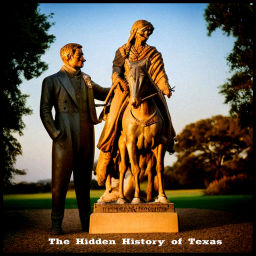
The Hidden History of Texas
Claim This Podcastby Hank Wilson
4.9(11 reviews)
68 episodes
Updated Weekly
Accepts GuestsHas SponsorsLocation 🇺🇸
34
Podcast Authority
BetaPoorBased on show quality, social media presence, reviews, charts, and more

Quality35
Social0
YouTube0
Engagement81
Podcast Overview
Here is where you will find The Hidden History Of Texas podcast. The episodes cover Texas history from the earliest days of Indigenous peoples to Spanish exploration, control by Mexico, the Anglo’s take over, Texas becomes part of the U.S., the confederates move in, and back to the U.S. The audio files are accurate and try to tell the story as best as they can from all sides of the issues. The hidden history of Texas is a history replete with heroes and villains of all sorts. There were good and bad people throughout Texas history, just as there were throughout world history.
Language
🇺🇲
Publishing Since
3/25/2022
Unlock The Full Podcast Authority Score Report
See how your podcast performs across key metrics
34
Podcast Authority
BetaPoorBased on show quality, social media presence, reviews, charts, and more
Quality35
Social0
YouTube0
Engagement81
7
Excellent Areas
1
Good Performance
11
Growth Opportunities
excellent
Episode Length
9 minutes
Performing excellently!
good
iTunes Tags
7.2/10
Recommendations available
Unlock the full report to see detailed tips
needs improvement
Publishing Consistency
Every 28 days
Recommendations available
Unlock the full report to see detailed tips
+16 More Metrics
Unlock comprehensive insights including:
- • YouTube presence analysis
- • Social media reach metrics
- • RSS compliance scoring
- • Podcast 2.0 features
- • Technical standards
What's Included in Your Full Report
Detailed Analytics
- Complete breakdown of all 19 authority metrics
- Personalized recommendations for each metric
- Industry benchmarks and comparisons
- Technical RSS feed analysis and compliance scoring
Growth Strategies
- Step-by-step action plans for improvement
- Quick wins to boost your score immediately
- Pro tips from successful podcasters
Get your free podcast insights report
See how your show performs across every key metric
Instant delivery
No spam
Attract Better Guests
High authority scores make your podcast more attractive to industry leaders and influencers who want to appear on credible shows.
Secure Sponsorships
Sponsors look for podcasts with proven authority and engagement. Your score demonstrates your podcast's value to potential partners.
Grow Your Audience
Understanding your strengths and weaknesses helps you make data-driven decisions to expand your listener base effectively.
1 verified contact email on file for The Hidden History of Texas
Pitch yourself as a guest, propose sponsorships, or reach out directly to the host.
Recent Episodes
June 25, 2026
1976 After Watergate
1976: After Watergate America celebrated its 200th birthday in 1976. The Bicentennial brought parades, fireworks, tall ships, patriotic ceremonies, and a renewed appreciation for the nation's remarkable history. Yet beneath the celebration lingered a different mood. Only two years earlier, Richard Nixon had become the first American president to resign from office. The Vietnam War had finally ended. The long national ordeal that had dominated more than a decade was over. But peace did not immediately bring confidence. Americans had lost faith in many of the institutions they had once trusted. Government. Politics. The presidency itself. The question facing the country was no longer simply who should lead. It was whether Americans could trust their leaders again. I remember 1976 for another reason as well. While the nation celebrated its Bicentennial and debated its future, I found myself competing in Lincoln-Douglas debate, exploring many of the same questions about government, responsibility, and public life that Americans were asking on a much larger stage. Looking back now, it seems fitting. The country itself was engaged in one great national debate. The End of an Era The Vietnam War was over. American combat troops had already returned home. Then, in April of 1975, the fall of Saigon marked the final chapter of America's longest and most divisive war to that point. For many Americans, relief mixed with disappointment. The conflict had left deep scars. More than fifty-eight thousand Americans had lost their lives. Millions of veterans returned home carrying experiences that many found difficult to explain. The war was over. Its consequences were not. Watergate's Shadow Although Gerald Ford had assumed the presidency after Nixon's resignation, Watergate continued to shape public opinion. Ford's decision to pardon Nixon was controversial. Some believed it was necessary for national healing. Others believed accountability had been sacrificed. Regardless of where Americans stood, confidence in government had been shaken. Public trust would take years to rebuild. Section 3 — Jimmy Carter Into that atmosphere stepped Jimmy Carter. A former governor from Georgia, Carter presented himself as something Washington seemed to lack. Honesty. Humility. Decency. He promised a government that was as good as its people. After years of scandal and division, that message resonated. Carter wasn't asking Americans to become different people. He was asking them to believe again. The Realignment Continues Yet beneath Carter's victory, larger political forces continued moving. Southern voters continued drifting toward the Republican Party at the state and local levels. Religious conservatives were becoming increasingly organized. Suburban growth continued reshaping electoral politics. Working-class voters who had once identified strongly with the Democratic Party were becoming less predictable. The New Deal coalition had not disappeared. But it was becoming increasingly fragile. The political realignment that began during the 1960s had merely paused. It had not ended. Looking Toward 1980 History often remembers 1976 as Jimmy Carter's election. But in many ways, it was the bridge between two political eras. Americans wanted honesty. They wanted stability. They wanted competence. Jimmy Carter offered those qualities. Yet many of the economic and cultural pressures confronting the nation remained unresolved. Inflation. Energy shortages. International uncertainty. Questions about America's role in the world. Those issues would shape the election four years later. In Conclusion Looking back today, 1976 feels like a pause. Not the end of the story. Not the beginning of a new one. A pause. America had survived Vietnam. It had survived Watergate. It had celebrated two hundred years of independence. Yet beneath the celebration, the political landscape continued to shift. The coalitions that had defined American politics for decades were still changing. The arguments begun during the 1960s had not disappeared. They had simply become quieter. Only a few years later, they would return with new energy in the election of Ronald Reagan. If 1964 marked the breaking point... If 1968 revealed the fracture... If 1972 showed the electorate reorganizing itself... Then 1976 reminds us that history rarely moves in straight lines. Sometimes nations pause. Reflect. Catch their breath. Before beginning the next chapter.
June 17, 2026
Episode 92 – El Paso: The Pass of the North…The Rio Grande Frontier, Part One
Hello friends, and welcome back to Hidden History of Texas. This is episode 92 – this is the first in a series I’m calling The Rio Grande Frontier – Welcome to El Paso: The Pass of the North When most people think about Texas history, their minds usually start in the east. They think of Nacogdoches, San Antonio, Austin's Colony, the Alamo, cattle drives, oil fields, and railroads. But today, I want us to start from the opposite direction. Let’s travel nearly six hundred miles west of San Antonio, across deserts, mountains, and vast stretches of open country, to a city unlike any other in Texas. A city that was old before Texas existed. A city that was part of Spain, then Mexico, and only later became part of Texas. A city that sits on the Rio Grande and has served as a gateway between worlds for more than four centuries. In my lifetime, I’ve either driven through or, when I was a child, been driven through El Paso numerous times. But we never really stopped and visited the city, in fact, most of the times I drove to the west coast, I would usually drive through El Paso and stop in Las Cruces New Mexico. I really don’t know why, except when I was driving the Freeway just didn’t seem to offer any real enticing places to stop. The one occasion that I was able to actually spent time in El Paso was when a company I was working for asked me to temporarily run their branch office. After spending some time there, I realized that El Paso was and is distinctly different. We Texans have a tendency to talk about Texas as if it's a single culture. But standing in El Paso, listening to conversations switch effortlessly between English and Spanish, (or as we call it using Spanglish) and looking across the Rio Grande toward Ciudad Juárez, I understood that Texas has always been more complicated, and more interesting, than that. So join with me as we explore El Paso. The story begins long before there was a state of Texas. Long before there was an Alamo. Long before Stephen F. Austin brought settlers into Mexican Texas. In 1598, Spanish explorer and colonizer Juan de Oñate led an expedition north from Mexico. Near present-day El Paso, his expedition crossed the Rio Grande and entered lands that Spain hoped to claim and settle. That crossing took place more than twenty years before the Pilgrims landed at Plymouth. Think about that for a moment. Many Texans think of San Antonio as the oldest chapter of Texas history. But the El Paso region was already part of the Spanish frontier before the first permanent European settlement was established in San Antonio. For centuries, this crossing would become one of the most important gateways in North America. The Spanish called it El Paseo del Norte. The Pass of the North. And that name tells us everything we need to know about why the city exists. To understand El Paso, you have to forget the modern map for a moment. Today, we see a border separating the United States and Mexico. But for much of history, this region was not viewed as a dividing line. It was a corridor. A road. A meeting place. A connection between communities. Travelers moving north toward Santa Fe passed through here. Merchants passed through here. Soldiers passed through here. Missionaries passed through here. Families settled here. Trade flourished here. For generations, El Paso was less a frontier outpost than a crossroads of cultures. One of the most dramatic moments in its history came in 1680. That year, Indigenous Pueblo peoples in New Mexico launched what we historians call the Pueblo Revolt. Spanish settlements throughout New Mexico were attacked, and surviving colonists fled south. Many of them arrived at El Paso. For a time, El Paso became a refuge and administrative center for Spanish authorities driven from New Mexico. It is one of those remarkable stories that rarely appears in Texas history textbooks. For a period of time, the future of Spanish New Mexico was being directed from what is now Texas. As centuries passed, El Paso developed in ways very different from the rest of Texas. When settlers were arriving in East Texas from the American South, El Paso remained connected to older Spanish and Mexican traditions. Its trade routes stretched toward Santa Fe and Chihuahua. Its culture reflected centuries of interaction among Indigenous peoples, Spanish settlers, Mexicans, and frontier communities. In many ways, El Paso belonged to a different world than the one developing around Houston, Galveston, or Austin. And perhaps that's still true today. When Texas won its independence from Mexico in 1836, life in El Paso did not suddenly transform overnight. The city remained geographically distant from the centers of political power. The Republic of Texas claimed the region, but for many years its influence remained limited. The people of El Paso continued living lives shaped by trade, family, faith, and relationships that extended across the Rio Grande. The border on a map often meant far less than the connections between people. Everything changed with the arrival of the railroad. In the late nineteenth century, rail lines connected El Paso to the rest of Texas and the growing United States. Suddenly, a city that had once seemed isolated became an important transportation hub. Businesses arrived. Population increased. Investment followed. And with growth came many of the colorful characters we associate with the American West. Lawmen. Gamblers. Cowboys. Outlaws. Railroad men. Entrepreneurs. The frontier boomtown had arrived. Then came another chapter that few Americans remember today. The Mexican Revolution. For people living in El Paso, this wasn't distant foreign news. It was happening across the river. Residents could see troop movements. Hear gunfire. Watch history unfold from their own community. Few American cities have experienced anything quite like that. Imagine standing in downtown El Paso and witnessing the turbulence of a revolution taking place just beyond the water. Today, El Paso remains one of the most distinctive cities in Texas. It sits in a different time zone than most of the state. It is physically closer to California, Arizona, and New Mexico than it is to many of Texas's major population centers. Its landscape is different. Its history is different. Its culture is different. Yet El Paso is not somehow less Texan because of those differences. In many ways, it reminds us of something important. Texas has never been a single story. It has always been many stories woven together. Spanish frontiers. Mexican communities. Indigenous nations. German settlements. Czech farming towns. Cotton plantations. Oil fields. Railroad centers. Border cities. Each contributed something unique to the state we know today. Personal Reflection When you drive into El Paso from the East on I10, your eyes are drawn to the Franklin Mountains, now if you’re like me you wonder about the stories you’ve heard about lost gold mines being there. Maybe your imagination shifts to the magical power many of the indigenous people’s believe the mountains hold. Maybe you think of the thousands of people who have walked or ridden their horses through the pass. The indigenous peoples who lived in the area for thousands of years such as the Mansos, Jumanos, the Mescalero, or any of the nomadic groups who came into the area. One thing I can promise you is that if you get off the interstate and go downtown one thing you’ll notice is how different the city feels from Austin, Houston, or Dallas. It’s a city with a multitude of cultures and life forces. If you’re lucky, you’ll start to reflect on how easy it is for Texans to forget that communities on opposite ends of the state can have entirely different histories while still sharing the same identity. El Paso is not merely a city on the western edge of Texas. For centuries, it was a gateway. A crossing place. A meeting place. A place where cultures, languages, economies, and histories came together. And perhaps that is why its story remains so important. Because if we truly want to understand Texas, we have to understand all of Texas. Not just the places at the center of the map. But also the places at the edges. Sometimes the edges have the most interesting stories of all. I'm Hank Wilson, and this has been Hidden History of Texas. Join me next time as we continue our journey along the Rio Grande Frontier.
June 16, 2026
1972: The Landslide That Changed America
History often remembers elections by who won and who lost. But some elections matter because they reveal deeper changes taking place beneath the surface. The election of 1972 was one of those moments. Many of us consider it to be the landslide that changed America. Those of us who witnessed that time period remember that only four years earlier, America had experienced one of the most turbulent periods in its history. The assassinations of Doctor Martin Luther King Jr. and Robert Kennedy, riots in cities across the nation, anti-war protests, and the bitter divisions of the Vietnam era left many Americans wondering what had happened to the country they thought they knew. By 1972, those wounds had not healed. In fact, in many cases, they seemed to have gotten worse. The war continued. Protests continued. The arguments over race, culture, and the future of America continued. Yet something important had changed. Many Americans were no longer simply reacting to the turmoil. They were choosing sides. And in November of 1972, they made their choice overwhelmingly clear. The Long Shadow of 1968 For myself, the years between 1968 and 1972 felt unsettled. In 1968 I had graduated from high school in Houston and in 1969 I had enlisted in the Coast Guard amid one of the most turbulent periods in modern American history. By 1972, many of the arguments that had erupted during the 1960s were still raging. Yet something had changed. Americans were no longer simply arguing about the future. Increasingly, they were choosing sides. The Vietnam War remained a constant presence in American life. Young men continued to receive draft notices. Families continued to watch casualty reports on the evening news. College campuses became centers of protest. Then came May 1970. At Kent State University, National Guard troops opened fire on student demonstrators. I was serving as a radio man at the Coast Guard Radio Station in San Francisco. Emotions ran high as people found out that: Four students were killed. The images shocked the nation. For some Americans, the protests represented necessary dissent. For others, they symbolized disorder and disrespect. The divide widened. The same events were producing entirely different reactions depending on who was watching. Nixon's Appeal Richard Nixon understood something many politicians had missed. Millions of Americans were exhausted. They were tired of violence. Tired of unrest. Tired of uncertainty. In speech after speech, Nixon spoke of what he called the "silent majority." These were Americans who were not marching in the streets, not appearing on television, and not leading protests. They were raising families. Working jobs. Paying mortgages. Watching the evening news and wondering whether anyone was still in control. Nixon promised stability. Order. Gradual change rather than revolution. Whether one agreed with him or not, his message resonated with millions of voters. George McGovern and a Different Vision The Democrats nominated Senator George McGovern. McGovern represented a very different vision of America. He opposed the Vietnam War. He appealed strongly to younger voters, activists, and many who believed the country needed more dramatic social change. His campaign energized parts of the Democratic Party. But it also exposed growing divisions within the coalition that had dominated American politics since Franklin Roosevelt. Many working-class voters who had once been reliable Democrats felt increasingly disconnected from the party's direction. The old alliance was beginning to crack. The Great Realignment Begins The election results were stunning. Nixon carried forty-nine states. McGovern won only Massachusetts and the District of Columbia. Even many states that had supported Democratic candidates for generations voted Republican. It was one of the largest electoral victories in American history. Yet the significance of 1972 was not simply the size of Nixon's victory. The election revealed new political fault lines that would shape the decades ahead. White Southern voters continued moving toward the Republican Party. Many suburban voters became increasingly Republican. Working-class ethnic voters who had once formed the backbone of Democratic strength began drifting away. The New Deal coalition that had dominated American politics for nearly forty years was weakening. A new political map was emerging. The Contradictions Yet even as Nixon celebrated victory, trouble was already brewing. Just months earlier, operatives connected to Nixon's reelection campaign had been caught breaking into Democratic headquarters at the Watergate complex. At the time, almost nobody imagined that a minor break-in would eventually bring down a president. After all, at the time, the incident seemed minor. Few Americans paid much attention. The landslide victory overshadowed everything. But history would soon reveal that one of the greatest electoral triumphs in American history carried within it the seeds of one of the greatest political scandals. For the moment, however, most Americans saw only the victory. The scandal was still hidden in the shadows. Closing Looking back, 1972 was more than a landslide election. It was a snapshot of a nation searching for stability after years of upheaval. The arguments that had erupted during the 1960s had not disappeared. But voters were beginning to sort themselves into new political coalitions. The old Democratic dominance was fading. A modern Republican coalition was taking shape. The political map Americans recognize today was beginning to emerge. And while Watergate would soon shake the nation once again, the deeper story of 1972 was not simply about Richard Nixon. It was about millions of Americans trying to decide what kind of country would emerge from the turmoil of the previous decade. In many ways, that debate continues to this day. "At the time, none of us knew how this story was going to end." Looking back, 1972 was more than a landslide election. I still have a Presidential Certificate of Appreciation from those years, signed by Richard Nixon during my service in the Coast Guard. At the time, it was simply a certificate from the Commander-in-Chief. Like most Americans, I had no way of knowing how dramatically the story of that presidency would unfold. History has a way of doing that. We live through events one day at a time, rarely seeing where they will lead. Only years later do we begin to understand how the pieces fit together. And in many ways, the America that emerged from 1972 is still the America we live in today.
68 total episodes available
Similar Podcasts
Discover related shows you might enjoy

Wise About Texas
Ken Wise

American History Hit
History Hit

Legends of the Old West
Black Barrel Media

Common Sense with Dan Carlin
Dan Carlin

History Unplugged Podcast
History Unplugged

The Art of Manliness
The Art of Manliness

1001 Heroes, Legends, Histories & Mysteries Podcast
Jon Hagadorn Podcast Host

The Wild West Extravaganza
The Wild West Extravaganza

Stories Bigger Than Texas: The Alamo Podcast
The Alamo

Shawn Ryan Show
Shawn Ryan

American History Tellers
Audible

History Daily
History Daily

The Rest Is History
Goalhanger

The Jon Stewart Podcast
Comedy Central

The History of WWII Podcast - by Ray Harris Jr
Ray Harris Jr
Deep-dive analytics for The Hidden History of Texas
Frequently asked questions
Have a different question and can't find the answer you're looking for? Reach out to our support team by sending us an email and we'll get back to you as soon as we can.
- What is The Hidden History of Texas?
- How often does this podcast release new episodes?
This podcast updates weekly.
- Where can I listen to this podcast?
This podcast is available on 10 platforms including Apple Podcasts, Spotify, and more. You can also use the RSS feed directly.
- Does this podcast accept guests?
Information about guest appearances is not available.
Legal Disclaimer
Pod Engine is not affiliated with, endorsed by, or officially connected with any of the podcasts displayed on this platform. We operate independently as a podcast discovery and analytics service.
All podcast artwork, thumbnails, and content displayed on this page are the property of their respective owners and are protected by applicable copyright laws. This includes, but is not limited to, podcast cover art, episode artwork, show descriptions, episode titles, transcripts, audio snippets, and any other content originating from the podcast creators or their licensors.
We display this content under fair use principles and/or implied license for the purpose of podcast discovery, information, and commentary. We make no claim of ownership over any podcast content, artwork, or related materials shown on this platform. All trademarks, service marks, and trade names are the property of their respective owners.
While we strive to ensure all content usage is properly authorized, if you are a rights holder and believe your content is being used inappropriately or without proper authorization, please contact us immediately at hey@podengine.ai for prompt review and appropriate action, which may include content removal or proper attribution.
By accessing and using this platform, you acknowledge and agree to respect all applicable copyright laws and intellectual property rights of content owners. Any unauthorized reproduction, distribution, or commercial use of the content displayed on this platform is strictly prohibited.