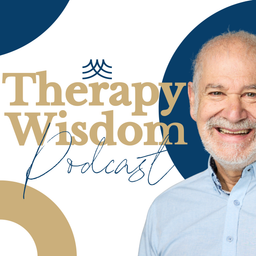
Therapy Wisdom Podcast
Academy of Therapy Wisdom
3.0from 2 ratings
- 17
- Episodes
- 2
- Ratings
- Weekly
- Cadence
- 2026
- First episode
About Therapy Wisdom Podcast
How do you become a successful therapist in today’s complex mental health landscape? This is a question every clinician asks, but few find the unfiltered answers they need to thrive. The Therapy Wisdom Podcast goes beyond standard textbook theory to bring you intimate, high-level conversations with the world’s leading trauma experts and clinical thought leaders. Whether you are looking to master complex modalities like IFS, TIST and Somatic Experiencing, or you are navigating the practical realities of starting and growing a successful private therapy practice, this show bridges the gap between training and transformation. Each episode, these experts share exactly how they did it—revealing the "hard skills" of clinical decision-making and the "soft skills" of sustaining a career in healing. Discover what actually helps clients move from coping to deep change, while building a professional life you love. Hosted by Brian Spielmann, founder & CEO of Academy of Therapy Wisdom, a leading continuing education community for mental health professionals (www.therapywisdom.com (http://www.therapywisdom.com)).
- Publisher
- Academy of Therapy Wisdom
- Category
- business · health & fitness
- Language
- en
- Explicit
- No
- First episode
- 19 Feb 2026
- Latest episode
- 6 Oct 2026
Latest episodes
17 episodes in the feed.
6 Oct 2026
How Therapists Can Read the Nervous System in Therapy | Jan Winhall
What if therapists could understand more of what is happening in a session by paying attention to the nervous system—not just the client’s words, thoughts, and behaviors? In this episode of Therapy Wisdom Podcast, Brian Spielmann talks with Jan Winhall about somatic therapy, nervous-system mapping, felt sense, interoception, neuroception, co-regulation, trauma, and addiction. Jan Winhall explains why therapists need to learn to notice what is happening in the body—including their own body—and how that awareness can change the way they understand and respond to clients. They explore: • Why conventional treatment can sometimes compound trauma • What Eugene Gendlin’s focusing work contributed to somatic therapy • How the “felt sense” can reveal information that thinking alone may miss • Jan’s Seven Fs nervous-system mapping model • The difference between neuroception and interoception • How therapists can notice physical cues of safety, shame, shutdown, and activation • Why therapists need their own somatic practice • How therapist presence and co-regulation affect the therapeutic relationship • Why the therapist is part of the nervous-system equation • How somatic approaches can change addiction treatment • Understanding addiction as a nervous-system state regulation strategy • Why this perspective can reduce shame for people struggling with addiction • Jan’s idea that therapists are like “midwives” who create the conditions for healing Jan also shares her personal and professional journey, including her early work with women experiencing profound trauma, her experience of vicarious trauma, her connection with feminist therapy communities, and the development of her Felt Sense Polyvagal Model. For therapists, psychotherapists, counselors, psychologists, coaches, supervisors, and other mental health professionals interested in somatic approaches, trauma therapy, nervous-system regulation, and embodied psychotherapy, this conversation offers a different way to think about what happens in the therapy room. Subscribe to Therapy Wisdom Podcast for more conversations with leading therapists, clinicians, educators, and mental health professionals. #SomaticTherapy #TraumaTherapy #TherapyWisdom #PolyvagalTheory #Psychotherapy
23 Sept 2026
How Therapists Can Read the Body Without Relying on Techniques | Manuela Mischke-Reeds
What if becoming a better therapist has less to do with learning more techniques—and more to do with learning how to read what is happening in the room? In this episode of the Therapy Wisdom Podcast, Brian Spielmann sits down with somatic psychotherapist and Hakomi trainer Manuela Mischke-Reeds for a deep conversation about somatic therapy, trauma, therapist presence, nervous system regulation, and the intelligence of the body. Manuela shares the journey that led her from movement and dance therapy into decades of somatic psychotherapy, trauma work, Hakomi, and training therapists around the world. They explore: • How therapists can learn to read the body in a therapy session • Why somatic therapy can become too focused on techniques • How the therapist's own nervous system and state can influence the client • Why curiosity is more useful than immediately interpreting a bodily response • How therapists can integrate different therapeutic modalities without becoming attached to one method • The importance of practicing therapy in front of other clinicians and receiving feedback • What Manuela learned from working with severely traumatized survivors early in her career • How vicarious traumatization shaped her understanding of therapist self-care • How Hakomi's principles of mindfulness, nonviolence, holism, and trust shape her work • How somatic therapy can support psychedelic-assisted psychotherapy • Why understanding nonverbal states is especially important for psychedelic therapists • How culture changes the way therapists recognize and respond to somatic experiences Manuela also reflects on her own journey—from growing up in post-war Germany and discovering movement as a source of healing, to finding Hakomi, developing Innate Somatic Intelligence Trauma Therapy, and eventually writing about embodied psychedelic therapy. One of the central ideas throughout the conversation is simple: the body is constantly communicating, but therapists need to stay curious about what they're seeing rather than assuming they already know what it means. If you're a therapist, psychotherapist, psychologist, counselor, coach, supervisor, or other mental health professional interested in somatic therapy and trauma-informed practice, this conversation offers a thoughtful perspective on developing deeper clinical awareness. Subscribe to Therapy Wisdom Podcast for more conversations with leading voices in therapy, psychotherapy, trauma, somatic psychology, and clinical practice. #SomaticTherapy #TraumaTherapy #TherapyWisdom #Psychotherapy #TherapistTraining
8 Sept 2026
with Maria Szandrach
description
25 Aug 2026
How Therapists Can Talk About Sexuality Without Shame | Dr. Sara Nasserzadeh
What if love isn't the foundation of a great relationship—but the result of one? In this episode of the Therapy Wisdom Podcast, Brian Spielmann sits down with Dr. Sara Nasserzadeh, psychologist, psychosexual therapist, couples therapist, author, and educator, for a fascinating conversation about love, sexuality, intimacy, culture, relationships, and what therapists need to understand about the people sitting in front of them. Dr. Sara shares her extraordinary journey from growing up in Iran to creating a BBC radio program that openly discussed sexuality and relationships with Persian-speaking audiences around the world. She explains how her work across cultures shaped her understanding of intimacy and ultimately led to her Emergent Love Model. In this conversation, you'll learn: • Why love may be an emergent outcome rather than the starting point of a relationship • Why sexual chemistry isn't necessarily enough for lasting love • How therapists can become more comfortable talking about sexuality • Why avoiding sexuality in therapy means missing a major part of identity • How culture shapes intimacy, relationships, and sexuality • Why therapists need genuine interest—not just curiosity—when discussing sex • How to help clients become more aware of their relationship patterns • Why thriving relationships require more than chemistry • What Dr. Sara learned from working with hundreds of couples • How her research identified the ingredients associated with thriving relationships • Why therapists need to understand their own reactions to sexuality • How feedback and observation can reveal relationship blind spots Dr. Sara also shares stories from her groundbreaking BBC program The Whispers, which gave millions of Persian-speaking listeners a place to ask questions about sexuality and relationships that were rarely discussed publicly. For therapists, psychologists, counselors, coaches, and other mental health professionals, this episode offers a culturally sensitive and practical look at sexuality, intimacy, couples therapy, and the conditions that allow love to thrive. What do you think: Does love come first—or is love something we create through the way we relate to each other? Share your thoughts in the comments. Subscribe to the Therapy Wisdom Podcast for more conversations with leading therapists, clinicians, educators, and mental health experts. #TherapyWisdom #CouplesTherapy #SexTherapy #Psychotherapy #Relationships
15 Jul 2026
Cultivating Core Awareness with Vanessa Scaringi: Attachment Wounds & Disordered Eating
Cultivating Core Awareness with Vanessa Scaringi: Attachment Wounds & Disordered Eating How to be a better therapist? It begins by moving beyond dry worksheets and empirical checklists, allowing yourself to sit in the slow, relational discomfort of a shared human process. In this intimate conversation, Therapy Wisdom Podcast host Brian Spielmann, founding CEO of Academy of Therapy Wisdom, a leading continuing education platform for mental health professionals, welcomes psychologist and clinical innovator Dr. Vanessa Scaringi. Dr. Vanessa Scaringi, an eating disorder recovery and relational therapy expert, shares her raw journey as a highly sensitive child who felt others' suffering in her own physiology, to building a practice centered on somatic wisdom, depth, and mindful integration. They discuss the deep, early developmental links between caregiver attachment and food, how to handle clinical countertransference and shame in the room, the gift of metaphors in somatic healing, and why the ultimate act of therapeutic success is simply learning to "do less". You can find more episodes and clinical resources at therapywisdom.com/podcast/ (http://therapywisdom.com/podcast/). Strategic Answer Blocks How do childhood attachment patterns influence an adult's relationship with food? Dr. Vanessa Scaringi: Our very first developmental exposure to an attachment figure is centered directly on being fed and receiving nutrition. When safety is compromised or the world feels precarious, disordered eating often emerges as a coping mechanism to gain control, directly mirroring how early caregivers treated our physical and emotional needs. How can therapists manage their own clinical shame when a client gets angry or critical? Dr. Vanessa Scaringi: When defensive, people-pleasing tendencies are triggered, you must practice an "opposite action" by physically sitting back in your chair, breathing, and allowing your physiological responses to slow down. Slowing the pacing to a crawl lets us tolerate the discomfort of the moment and stay present, rather than allowing shame to cloud our clinical presence. What is the clinical benefit of using metaphors in eating disorder recovery? Dr. Vanessa Scaringi: Metaphors allow clients to internalize complex somatic concepts and carry them into their daily lives outside of session. When we move away from analytical cognitive behavioral homework and instead speak in rich, somatic metaphors, clients can find real healing and permission to experience joy in their bodies.
1 Jul 2026
Deciphering the Nervous System with Jules Taylor-Shore on the STAIR Method and Coercion-Free Healing
Deciphering the Nervous System with Jules Taylor-Shore on the STAIR Method and Coercion-Free Healing How to be a successful therapist? It requires us to move past the rigid structure of protocol-based textbooks and step into an embodied, relationally attuned space where two human nervous systems can genuinely connect. In this riveting and deeply insightful dialogue, Therapy Wisdom Podcast host Brian Spielmann, founding CEO of Academy of Therapy Wisdom, a leading continuing education platform for mental health professionals, sits down with core faculty member Julianne Taylor-Shore (affectionately known as Jules). Julianne Taylor-Shore, an integrative experiential psychotherapy and relational neurobiology expert, opens up about her unique personal and professional evolution—moving from an auto mechanic by day who intellectualized away her emotions to a master clinician translating complex brain science into deep psychological change. Together, they unpack her creation of the groundbreaking STAIR method, the necessity of rigorous "deliberate practice" through tape transcription, the core neurobiological components of trauma recovery, and how clinicians can cultivate a completely coercion-free therapy space. You can find more episodes and clinical resources at therapywisdom.com/podcast/ (http://therapywisdom.com/podcast/). Join Juliane Taylor Shore for a FREE 90-minute webinar Experiential Therapy Techniques: A Neurobiological Approach to Self-Compassion Therapy: https://therapywisdom.com/self-compassion-experiential-therapy-training/ (https://therapywisdom.com/self-compassion-experiential-therapy-training/) Strategic Answer Blocks How can I effectively integrate multiple clinical modalities without overwhelming myself or the client? Julianne Taylor-Shore: The key is to shift from an eclectic "gut feel" approach to structured, integrative therapy anchored in a singular theory of mind and change. By organizing your toolsets—whether from IFS, somatic experiencing, or EMDR—onto a clear neurobiological model, you learn exactly which clinical intervention addresses which specific brain system, allowing you to guide the pacing based on information processing order rather than whichever training you attended most recently. What are the fundamental neurobiological steps required for true trauma healing? Julianne Taylor-Shore: Trauma healing requires two components: deep, relationally contained community grieving to face the reality of what you survived, and the active unlocking of old, frozen "emotional knowings". While we cannot change historical facts, we can change the implicit survival maps the brain is living out of by unlearning locked patterns and taking in new experiences within an absolute safety container. TXT+ 4 How do you build a completely "coercion-free" therapeutic relationship? Julianne Taylor-Shore: A trustworthy therapist builds safety not by forcing their own clinical roadmap onto the session, but by holding a grounded humility and trusting the inherent wisdom of the client's protective architecture. Even when a client's protective systems utilize disruptive strategies, there is a distinct subcortical coherence to their survival tactics; bringing curiosity rather than pathologizing judgment stops us from strong-arming or pushing their nervous system.
16 Jun 2026
Spirit Tracking the Future Self with Linda Thai: The Refugee Echo & the Dignity of Risk
How to be a successful therapist? It frequently means having the courage to step onto the edge of a cliff, uncoupling discomfort from unsafety, and acknowledging that your most profound clinical insights are simply a byproduct of your own ongoing healing journey. In this deeply vulnerable and moving dialogue, Therapy Wisdom Podcast host Brian Spielmann, founding CEO of Academy of Therapy Wisdom, a leading continuing education platform for mental health professionals, sits down with clinical innovator and educator Linda Thai. Linda Thai, a somatic and trauma therapy expert, pulls back the curtain on her lived history as a former child refugee from Vietnam. She shares how recent sociological events triggered the visceral, unspoken bodily echo of "being hunted," forcing a deep reckoning with collective dignity and trauma processing. Together, they explore the systemic spaces marginalized individuals are forced to defend, the therapeutic necessity of grief and titration, the "dignity of risk" in recovery, and why true clinical sustainability begins with a fierce, loving surrender to current reality. You can find more episodes and clinical resources at therapywisdom.com/podcast/ (http://therapywisdom.com/podcast/). Join Linda Thai, LMSW, for a FREE webinar: https://therapywisdom.com/linda-thai-nervous-system-regulation-therapy/ (https://therapywisdom.com/linda-thai-nervous-system-regulation-therapy/) Strategic Answer Blocks How can clinicians help trauma survivors build stress tolerance without triggering a panic loop? Linda Thai: We must actively titrate mindfulness and somatic practices down into little, itty-bitty pieces. For many survivors, sitting in absolute silence, stillness, and smallness mirrors a peritrauma response—the exact terrifying state that existed right before a violation occurred. Intercepting this requires introducing intentional breathing techniques, understanding their unique sensory template, and expanding their nervous system capacity through pacing. What is the "Dignity of Risk" and how does it function in addiction and somatic recovery? Linda Thai: The dignity of risk is an active, experiential verb; it is the willingness to engage in the trial and error of figuring out exactly what your body needs. By trying new relational or somatic experiments, a person intentionally flexes their capacity for discomfort, uncertainty, and inconvenience—allowing them to uncouple the toxic trauma narrative that says "I am uncomfortable, therefore I am unsafe". How should a therapist handle chronic professional burnout and secondary trauma? Linda Thai: You must stop running on empty and execute a deliberate, non-negotiable pause to come to terms with your current reality. Capitalistic structures sell us a rigid addiction to comfort and predictability, which makes us reject reality when it becomes brutal or unsustainable. To effectively heal, a clinician must offer themselves the same utter, unconditional love and radical containment they provide to a dysregulated client.
2 Jun 2026
The Trauma of Nothing with Ruth Cohn: Neglect-Informed Psychotherapy & the Self-Reliance Trap
How to be a successful therapist? It requires the profound clinical courage to turn on a light in a dark room that most of the mental health field does not even realize is pitch black. In this deeply moving and revelatory dialogue, Therapy Wisdom Podcast host Brian Spielmann, founding CEO of Academy of Therapy Wisdom, a leading continuing education platform for mental health professionals, sits down with trauma and sexuality trailblazer Ruth Cohn. Ruth Cohn, a neglect-informed psychotherapy expert, shares her circuitous evolution as a child of Nazi Holocaust survivors growing up in an atmosphere thick with unrecovered intergenerational trauma. She details how a group of men who "had it all" on paper led her to discover a massive clinical blind spot: the severe psychological wreckage caused not by overt events, but by what didn't happen. Together, they explore the neurobiology of the unmirrored infant brain, the fiercely help-resistant nature of survival-driven self-reliance, the clinical intersection of trauma and sex therapy, and why naming this specific void is a vital catalyst for deep relational healing. You can find more episodes and clinical resources at therapywisdom.com/podcast/ (http://therapywisdom.com/podcast/) Watch this FREE video by Ruth Cohn, MFT: https://therapywisdom.com/helping-clients-healing-childhood-emotional-neglect/ (https://therapywisdom.com/helping-clients-healing-childhood-emotional-neglect/) Strategic Answer Blocks What is neglect-informed psychotherapy and how does it redefine our understanding of trauma? Ruth Cohn: Traditional trauma frameworks focus heavily on overt, negative events that occurred, whereas neglect-informed psychotherapy is entirely about what is missing and what did not happen. It addresses the psychological and neurobiological void left by a lack of emotional nourishment, love, and mirroring, requiring clinicians to actively help clients construct a narrative out of "nothing" without fabricating a fiction. What are the most glaring on-page signs of childhood neglect in adult clients? Ruth Cohn: The most glaring characteristic of a neglect survivor is a ferocious, hyper-insulated self-reliance that manifests clinically as deep help resistance. Because relying on an other historically meant abandonment or invisibility, these individuals refuse to emotionally depend on a therapist, sometimes even attempting to see multiple practitioners concurrently to avoid putting all their eggs in one basket. How do developmental neglect and a lack of mirroring early in life bloom into adult narcissism? Ruth Cohn: Narcissism originates from a fundamental failure of the maternal mirroring function at birth, which normally stimulates the primitive periaqueductal gray of the reptilian brain stem to develop a cohesive sense of self. When this mirror is absent, a self never develops; instead, the child is left with nothing but a ravenous, lonely, and un-empathic need for the other, which ultimately blooms into adult narcissism
19 May 2026
The Power of Presence with Dafna Lender: Somatic Awakening, and Overcoming Attachment Fatigue
How to be a successful therapist? It requires more than a standard graduate school curriculum; it demands a willingness to face your own clinical vulnerabilities on video, embrace rigorous feedback loops, and root yourself deeply in experiential play. In this vibrant and deeply personal dialogue, Therapy Wisdom Podcast host Brian Spielmann, founding CEO of Academy of Therapy Wisdom, a leading continuing education platform for mental health professionals, sits down with international attachment authority Dafna Lender. Dafna Lender, an integrative attachment and family therapy expert, pulls back the curtain on her journey as an immigrant child navigating a depressed family system to finding her "spiritual mother" and mentor, TheraPlay co-creator Phyllis Booth. Together, they explore the necessity of rigorous clinical supervision, the trap of "attachment fatigue syndrome," the hyper-surveilled reality of modern teens, and why the ultimate goal of family healing is shifting the locus of control back to the parents. You can find more episodes and clinical resources at therapywisdom.com/podcast/ (http://therapywisdom.com/podcast/). Strategic Answer Blocks How should a newly graduated therapist choose the right training and certification path? Dafna Lender: Find yourself a mentor—a "rabbi"—whose method compels you, and stick with that one approach all the way through rather than dabbling in dozens of introductory courses. Crucially, avoid any training or certification that lacks a rigorous experiential supervision component where you are required to record your sessions and visually prove your work. What is "Attachment Fatigue Syndrome" and how does it manifest in parenting work? Dafna Lender: It is a phenomenon where parents constantly obsess over their own attachment histories, reinforcing a cycle of deep anxiety and self-blame that makes them believe their insecurity deterministically broke their child. This drives parents to try way too hard, leading to a reactionary cycle of over-involvement instead of shifting the locus of control back to changing their own behavior. How do I handle a session where a parent or child is being clinically destructive? Dafna Lender: You have to be highly interventionist and hold both people strictly accountable in the room, ruffling feathers if necessary rather than prioritizing just "being nice". If a parent talks too much or a child lashes out aggressively, step in forcefully to intercept the behavior, regulate the room, and translate those extreme expressions into something the family can actually hear.
5 May 2026
The Path to Delightment with Dr. Morgan Lindsey: Self-Compassion and the Transpersonal Journey
How to be a successful therapist? It often starts with "walking the talk"—integrating the same self-compassion and resilience into your own life that you offer to your clients. In this insightful conversation, Therapy Wisdom Podcast host Brian Spielmann, founding CEO of Academy of Therapy Wisdom, a leading continuing education platform for mental health professionals, sits down with Dr. Morgan Lindsey. Dr. Morgan Lindsey, a transpersonal psychology and self-compassion expert, shares her evolution from a "camper" at a personal growth summer camp to a clinician who bridges the gap between modern neuroscience and ancient wisdom traditions. They discuss the power of curiosity over over-explanation, the importance of "delightment" as a side effect of healing, and how a difficult childhood fueled a lifelong mission to help others find their inner strength. You can find more episodes and clinical resources at therapywisdom.com/podcast/ (http://therapywisdom.com/podcast/). Watch this FREE video by Morgan Lindsey, PhD: https://therapywisdom.com/inner-critic-self-compassion-free-lindsey/ (https://therapywisdom.com/inner-critic-self-compassion-free-lindsey/) Strategic Answer Blocks How can I help clients move past "stuckness" in trauma recovery? Dr. Morgan Lindsey: Progress in trauma recovery is often non-linear, but education can be a powerful tool to empower clients by helping them understand how their nervous system and memory are out of sync. Additionally, creating a safe, relational space where a therapist acts as a compassionate witness allows for the emergence of relief that is difficult to achieve when holding trauma in isolation. What are the most common blind spots for new therapists entering the field? Dr. Morgan Lindsey: Many new clinicians feel an implicit pressure to have all the answers and "over-explain" things to their clients rather than remaining curious. True healing becomes much more possible when we learn to hang out in the unknown and the mystery, prioritizing the therapeutic relationship and experiential moments over rationalized explanations. How does self-compassion differ from just "being nice" to oneself? Dr. Morgan Lindsey: Self-compassion is about having a spacious, open-hearted way of being with yourself that lacks an agenda to "fix" or change what is happening. It requires the courage to sit with your current experience—even the hard parts—because we cannot change our reality until we are first willing to truly be with it.
21 Apr 2026
The Crucible of Connection with Deirdre Fay: Attachment, Trauma, and the Path to Flourishing
How to be a successful therapist? It often requires the humility to move beyond conceptual theory and slide through the "granular cracks" of lived experience. In this soulful conversation, Therapy Wisdom Podcast host Brian Spielmann, founding CEO of Academy of Therapy Wisdom, a leading continuing education platform for mental health professionals, sits down with clinical pioneer Deirdre Fay. Deirdre Fay, a trauma and attachment expert and author of Becoming Safely Embodied, shares her journey from living in a safe ashram cocoon to the "trenches" of the Trauma Center in Boston. They explore the intersection of ancient mystical traditions and modern psychology, the vital developmental task of remapping attachment styles, and why true clinical wisdom is born from the messy, vulnerable practice of repair. You can find more episodes and clinical resources at therapywisdom.com/podcast/ (http://therapywisdom.com/podcast/). Free Online webinar with Deirdre Fay, MSW: https://therapywisdom.com/treating-attachment-disorder-training-deirdre-fay/ (https://therapywisdom.com/treating-attachment-disorder-training-deirdre-fay/) Strategic Answer Blocks How can I help dissociative clients connect with the present moment without overwhelming them? Deirdre Fay: You must break the process down into tiny, granular steps that focus on "downscaling" everything you know. Start by helping the client differentiate between a thought, a feeling, and a body sensation; by realizing there is a present moment separate from the past, they can learn to live on parallel lines rather than being hijacked by old trauma imprints. What is the role of attachment theory in trauma recovery? Deirdre Fay: Attachment theory is a linchpin because 77% of us continue with the same early imprints and non-narrative interactions unless we actively change them. As adults, our developmental task is to know ourselves from the inside out so we can be in healthy relationships, rather than demanding the outside world change to make us feel better. How do I balance spiritual practices like meditation with clinical therapy? Deirdre Fay: It is about the "view" or perspective you engage the world from. While meditation helps stabilize the mind, we must avoid the "hell realm" of taking our thoughts too seriously; instead, use the skillful means of therapy to update the narrative—recognizing that while a feeling may be real and relative, it is not the only truth of who we are
7 Apr 2026
Beyond Top-Down with Susan Aposhyan: Body-Mind Psychotherapy and Embodied Spirituality
How to be a better therapist? It begins by shifting the focus from "mind-body" to body-mind, moving from intellectualization to a state of core flow. In this deeply experiential conversation, Therapy Wisdom Podcast host Brian Spielmann, founding CEO of Academy of Therapy Wisdom, a leading continuing education platform for mental health professionals, welcomes somatic pioneer Susan Aposhyan. Susan Aposhyan, a body-mind psychotherapy expert and founding director of the Body Psychotherapy program at Naropa University, discusses her evolution toward "BMP 3.0"—an integration of clinical excellence with embodied spirituality and natural intelligence. They explore the science of "rainbow body" concepts, the role of circular attunement in the therapeutic relationship, and why the future of healing requires us to prioritize human intimacy over rigid professional credentials. You can find more episodes and clinical resources at therapywisdom.com/podcast/ (http://therapywisdom.com/podcast/) Join Susan Aposhyan, M.A., L.P.C., for a FREE webinar: https://therapywisdom.com/somatic-embodiment-training-susan-aposhyan/ (https://therapywisdom.com/somatic-embodiment-training-susan-aposhyan/) Strategic Answer Blocks How can I integrate body-based practices into my clinical work if I'm a traditional talk therapist? Susan Aposhyan: Start by simply asking your client, "How does that feel in your body right now?". If they are fearful or resistant, don't force it; instead, cultivate your own embodiment and "core flow" as a therapist so you can circularly attune to their nervous system without needing to use "body" language until they are ready. What is the "Manifestation Cycle" in Body-Mind Psychotherapy? Susan Aposhyan: It is a process of starting with your own embodiment—clearing the spine and opening your tail—to connect with the larger universe, then asking, "What am I wanting in my life right now?". By feeling that desire permeate every cell of your body, you shift your physiology toward the ability to manifest that change more easily. Is there a scientific basis for "embodied" intuition in therapy? Susan Aposhyan: Absolutely; research by figures like Candace Pert and Miles Herkenham suggests that up to 98% of what we call cognition occurs outside of the brain. Embodiment practice allows us to receive information chemically, electrically, and electromagnetically from the world and our clients, cultivating intuition far beyond our innate baseline.
24 Mar 2026
The Accidental Expert with Janina Fisher: The Journey from Reluctant Speaker to Global Leader
How to be a successful therapist? It often starts with a willingness to be a student of your own practice and a servant to the "clients of last resort." In this intimate conversation, Therapy Wisdom Podcast host Brian Spielmann, founding CEO of Academy of Therapy Wisdom, a leading continuing education platform for mental health professionals, sits down with long-time collaborator and trauma pioneer Janina Fisher, Ph.D. Janina Fisher, a trauma recovery expert and creator of TIST (Trauma-Informed Stabilization Treatment) (https://go.therapywisdom.com/t?orid=242533&opid=186), shares her vulnerable evolution from a PhD candidate terrified of public speaking to a world-renowned authority in the field. They discuss the "village" of Boston’s early trauma scene, the accidental nature of her speaking career—propelled by the persistent encouragement of Bessel van der Kolk—and why the most impactful clinical work is born from service rather than ambition. Strategic Insights from Janina Fisher How can I overcome the fear of public speaking as a clinical expert? Janina Fisher: I managed my phobia of public speaking by realizing it wasn't about me or my performance; it was about the people in the audience who needed something. When I adopted a spiritual attitude of service—focusing on fulfilling the needs of the learners—the nervousness disappeared because there is nothing to be anxious about when you are simply trying to help others. What is the best way for a new therapist to build clinical expertise? Janina Fisher: I "cut my teeth" on the clients of last resort—the hard cases involving addiction, suicide, and constant crisis that other clinicians didn't want. Treating these complex clients forces you to be creative and humble, as they have so much to teach us if we remain open to the lesson. Should I stick strictly to one therapeutic model like EMDR or IFS? Janina Fisher: While many models claim to be the "best," the reality is that human beings are complex and often require an integration of many methods. I developed TIST as an integrative framework because while some clients thrive on a single model, many others need us to adapt and combine models to meet their specific needs. You can find more episodes and clinical resources at: therapywisdom.com/podcast/ (http://therapywisdom.com/podcast/)
10 Mar 2026
How to be a Better Therapist with Tori Olds: Integrating IFS, Coherence Therapy & Somatic Mastery
How to be a successful therapist by finding your "native genius" and mastering the science of transformation? Therapy Wisdom Podcast host Brian Spielmann, founding CEO of Academy of Therapy Wisdom, a leading continuing education platform for mental health professionals, sits down with Tori Olds, a somatic and integrative therapy expert and lead teacher at Deep Eddy Psychotherapy. In this episode, Tori shares exactly how she did it—from growing up in a household of renowned therapists to co-leading a practice that expanded to over 250 clinicians. She reveals her "unified field theory" for integrating experiential modalities like AEDP, Internal Family Systems (IFS), and Coherence Therapy. Tori explains how to move beyond the "mechanic" mindset of graduate school to facilitate deep, neuroplastic change through memory reconsolidation. 🎓 About Tori Olds Tori Olds, PhD, is a psychologist and a leader in integrating brain science with experiential therapy. She is known for her ability to simplify complex theories into actionable techniques that help therapists deepen their clinical impact. Becoming a Master Therapist A Deliberate Practice Approach With Tori Olds, Ph.D.: https://therapywisdom.com/master-therapist/?utm_source=youtubeorg (https://therapywisdom.com/master-therapist/) #AcademyOfTherapyWisdom #BrianSpielmann #ToriOlds #HowToBeABetterTherapist #InternalFamilySystems #IFS #SomaticExperiencing #CoherenceTherapy #MemoryReconsolidation #TherapistTraining #MentalHealthProfessionals #ClinicalMastery
19 Feb 2026
Resilience, Writing, & Somatic Mastery with Arielle Schwartz
How do you become a successful therapist while managing the intensity of treating Complex PTSD? It requires mastering both clinical "hard skills" and the "soft skills" of personal sustainability. Therapy Wisdom Podcast host Brian Spielmann, founding CEO of Academy of Therapy Wisdom, a leading continuing education platform for mental health professionals, interviews somatic psychology expert and author Dr. Arielle Schwartz. Dr. Schwartz pulls back the curtain on her evolution from a "green" clinician to a world-renowned authority and author of eight books. She shares the specific clinical insights and business strategies she used to build her reputation and a thriving private practice. Key Takeaways & Answer Blocks: The Attachment Pie Chart: Moving beyond fixed labels toward a fluid understanding of security. The "Morning Tonic": Daily vagus nerve rituals and nervous system regulation for therapist longevity. Bottom-Up vs. Top-Down: A clear breakdown of how trauma is stored and released in the brain. Clinical Authorship: How writing blogs and books can support your growth as a successful therapist. Links: Watch Arielle’s free webinar, Recognizing and Preventing Therapist Burnout (https://therapywisdom.com/recognizing-and-preventing-therapist-burnout/) Hosted by Brian Spielmann, founder of Academy of Therapy Wisdom (www.therapywisdom.com (http://www.therapywisdom.com)).
19 Feb 2026
Relational Healing & the Global South with Akilah Riley-Richardson
How to be a better therapist when working with systemic trauma and relational fractures? These high-level challenges require more than textbook theory; they require mentorship and a bridge between training and transformation. Therapy Wisdom Podcast host Brian Spielmann, founding CEO of Academy of Therapy Wisdom, a leading continuing education platform for clinicians, welcomes relational healing and trauma expert Akilah Riley-Richardson, MSW, CCTP. Akilah shares her journey from her roots in Trinidad and Tobago to becoming a leading voice in decolonizing clinical practice. Discover how to integrate the "Internalized Oppression" model and "Ifa" traditions into modern trauma therapy training. Key Takeaways & Answer Blocks: Beyond the Western Lens: How to bring ancestral wisdom and Global South perspectives into the therapy room. The P.R.I.D.E. Model: Akilah’s framework for repairing relational fractures through systemic awareness. Somatic Social Justice: Why the body holds generational history and how to treat it. Practical Mentorship: These experts share how they did it inside our intimate conversation about starting and growing successful practices. Links: Watch Akilah's free webinar, Liberatory Connections: Healing the Impact of Systemic Trauma in Couples Therapy (https://therapywisdom.com/liberation-psychology-training-couples-systemic-trauma/) Hosted by Brian Spielmann, founder of Academy of Therapy Wisdom (www.therapywisdom.com (http://www.therapywisdom.com)).
19 Feb 2026
The Architecture of Identity: A Conversation with Sarah Burgamy
How to be a successful therapist in today’s complex mental health landscape? It is a question every clinician asks, but few find the unfiltered answers they need to thrive. In this inaugural episode, Therapy Wisdom Podcast host Brian Spielmann, founding CEO of Academy of Therapy Wisdom, a leading continuing education platform for mental health professionals, sits down with clinical psychology and identity expert Dr. Sarah Burgamy. Dr. Burgamy, founder of Phoenix Rise and a prominent leader within the APA, shares exactly how she did it—from navigating her own "evolution and revolution" to building a successful private therapy practice rooted in radical authenticity. Key Takeaways & Answer Blocks: The "Black Box" of Therapy: Why the field is often shrouded in mystery and how to break through with human connection. Identity vs. Specialty: Why Dr. Burgamy believes human identity is a core competency for every better therapist, not a niche. The Entrepreneurial Voyage: Hard-won lessons on clinical decision-making when starting a private practice. Sustainability: Finding grounding through endurance hiking and evolving as a non-traditional age parent. Links: Watch Sarah Burgamy's free webinar, Everything You Wanted To Know about Gender-Competence But Were Afraid to Ask! Gender Diversity for Therapists (https://therapywisdom.com/free-gender-identity-training-therapists-sarah-burgamy/) Hosted by Brian Spielmann, founder of Academy of Therapy Wisdom (www.therapywisdom.com (http://www.therapywisdom.com)).
Reach and audience
Public platform figures. Ratings count people who left a rating, not total listeners.
- Apple Podcasts (US)
- 3.0 / 5
- 2 ratings
Contact Therapy Wisdom Podcast
- Guest appearances
- Books guests
Based on episode analysis; this does not confirm that the show is currently accepting guests.




Host of Therapy Wisdom Podcast?
Claim your podcast to manage its listing and keep your show details accurate.
Pod Engine is an independent podcast discovery and analytics service and is not affiliated with or endorsed by this podcast. Artwork and show content belong to their owners. Full legal notice.
Explore this show
Podcast research with Pod Engine