- 30
- Episodes
- 15
- Ratings
- Bi-weekly
- Cadence
- 2025
- First episode
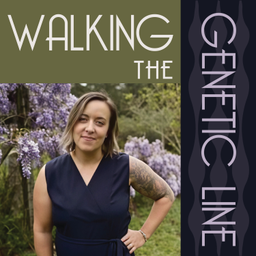
About Walking the Genetic Line
Conversations about navigating hereditary cancer risk. Join us to talk about life between the scans, and how finding out you have a genetic mutation can be a portal to emotional, relational and intergenerational healing.
- Publisher
- Sara Champie
- Category
- health & fitness · society & culture
- Language
- en
- Explicit
- No
- First episode
- 27 Jun 2025
- Latest episode
- 8 Oct 2026
Latest episodes
30 episodes in the feed.
8 Oct 2026
Randi Eichenbaum: BRCA2, Access to Care, and the birth of MOTA
Episode summary Randi Eichenbaum was 19 when her mother died of ovarian cancer. Somewhere in those years she absorbed a quiet belief: this is going to happen to me too. Years later, a new OB-GYN recommended genetic testing based on her family history. The BRCA2 result came by phone from a third-party lab while she was at work, followed by an emailed PDF that no one walked her through. She put it in a drawer, literally and figuratively, and went back to work. What followed was a series of turning points. She became a mother and experienced acute postpartum anxiety. She had a prophylactic hysterectomy and oophorectomy three to four months after an emergency C-section. Then, while her preventive mastectomy was delayed, a routine MRI found stage 1 breast cancer. At almost every turn, someone in Randi's personal life opened a door. Her mother's best friend, a longtime UCSF nurse, urged her to see a genetic counselor. Her sister-in-law, a breast cancer survivor, insisted she see Dr. Anne Peled. Randi and Sara explore the tension Randi names directly: feeling deeply lucky, and also a little bit pissed that this kind of care is the exception rather than the norm. That tension became MOTA, a digital companion for people with hereditary cancer risk, starting with BRCA1 and BRCA2 carriers. Together they talk about why a provider's experience and steadiness matter emotionally as well as medically, why surgical menopause carries so much fear, and why there is no real "other side" of carrying a genetic mutation. We cover Growing up with a parent's ovarian cancer diagnosis and the internalized belief that "this is going to happen to me" Dissociating and building a career as a way of moving forward after loss Receiving a BRCA2 result by phone from a third-party lab with no one to walk her through it Emotional compartmentalization: putting a result "in a drawer" until life makes it impossible to ignore How approaching 40, the age her mother was diagnosed, and becoming a mother brought the urgency back Postpartum anxiety, grief for her mother, and choosing a hysterectomy and oophorectomy months after giving birth The relief of partnering with a genetic counselor and having an actual plan A stage 1 breast cancer diagnosis found on a routine MRI while preventive surgery was delayed The surgeon whose first words were "I'm sorry this is happening to you, but it's going to be okay" How access to excellent care often travels through informal networks, luck, and privilege Why a provider's familiarity with hereditary cancer risk affects how safe a patient feels, and which options get pushed Fear and misinformation around HRT and surgical menopause How MOTA works: a personalized roadmap based on NCCN guidelines, planning tools, a directory of providers experienced in hereditary cancer care, reminders, and mental health referrals The wounded healer: turning one of the hardest chapters of life into something for the community Why carrying a genetic mutation is lifelong, and what it means to trade one mental load for another Highlights & takeaways "I'm sorry this is happening to you, but it's going to be okay." Randi recalls the first words her breast surgeon said to her, and the moment that became the foundation of MOTA. "There is this tension of feeling very lucky, but also a little bit pissed." Gratitude for good care and anger that it isn't the norm can live side by side. Getting a result is not the same as being supported to understand it. Randi had a phone call and a PDF. What she needed was a person to help her build a plan. A provider's comfort with hereditary cancer risk shapes the patient's experience. When carriers are an outlier on a caseload, fear can enter the room and push people toward the most cautious options without room for the rest of their lives. "We never want to explain ourselves." Working with a doctor or therapist who doesn't understand this position can feel isolating, even after years of therapy. "I've traded in one mental load for another." Finishing a surgery doesn't mean you are done. Carrying hereditary risk is a lifelong experience with new chapters. Content note This episode includes discussion of a parent's death from ovarian cancer during adolescence, a breast cancer diagnosis, postpartum anxiety, an emergency C-section, prophylactic hysterectomy and oophorectomy in the postpartum period, surgical menopause, fear of dying, and gaps in medical care. Resources mentioned MOTA: A free digital companion for people with hereditary cancer risk, starting with women who carry a BRCA1 or BRCA2 mutation. Offers a personalized roadmap based on NCCN guidelines, planning tools, a provider directory, and mental health referrals. mota.care | Instagram @mota.care Randi Eichenbaum: Share a provider you recommend or feedback on what you wish you'd had: randi@mota.care Dr. Anne Peled: Breast surgeon in San Francisco, mentioned by Randi and by a previous Walking the Genetic Line guest, Violet Page Rachel Frankenthal, PA: Menopause specialist at UCLA Health and member of MOTA's advisory team UCSF genetic counseling: Where Randi met with a genetic counselor to build her plan NCCN Guidelines: The clinical guidelines MOTA's roadmaps are based on The Breasties: Online community and app for people affected by breast and reproductive cancers Connect If this conversation resonated, follow Walking the Genetic Line, rate and review the show, and share this episode with someone who is holding a result they haven't known what to do with. Connect with Sara Champie, LCSW at sarachampielcsw.com and on Instagram @SaraChampieLCSW. Let's walk this line, together. Sara Champie
24 Sept 2026
Jaclyn Carnevale: From Cancer Diagnosis to Embryos Without the Mutation, A BRIP1 Previvor's IVF Journey
Episode summary In May 2022, at 30 years old, Jaclyn found a lump in her breast. Her doctor, seeing no family history and a young, healthy patient, suggested she wait a week and see if it was still there. Jaclyn didn't take no for an answer — she asked for a mammogram, and within a single day learned she had DCIS, an early-stage breast cancer. What came next moved at a speed she describes as "medical timeline on fast forward": genetic counseling that flagged something didn't add up in her family's supposedly cancer-free history, a large genetic panel that turned up a mutation called BRIP1, and, within the same week, her first round of IVF — all while she was still absorbing a cancer diagnosis. She spent that period, by her own account, floating somewhere above her body, letting her husband and parents carry her through appointment after appointment she wouldn't fully remember. Three and a half years later, Jaclyn is cancer-free and the mother of identical twin girls — conceived from an embryo deliberately selected because it didn't carry her mutation, after she and her husband chose to genetically test their embryos and donate the ones that did carry BRIP1 to research. But the story doesn't end at "healthy and healed." This conversation moves through the grief that arrived late — the loss of a body part, the inability to breastfeed after mastectomy, a complicated twin pregnancy and NICU stay — and what it looks like to keep choosing ongoing surveillance and hard conversations as an act of care for herself and, eventually, her daughters. We cover Finding a lump at 30 with no known family cancer history, and having to push back when her doctor initially said to wait a week A single-day whirlwind of biopsies, scans, and an MRI that ended in a DCIS diagnosis — and the geneticist's suspicion that her family's "clean" history didn't check out Testing positive for BRIP1, a lesser-known mutation linked to ovarian and, sometimes, breast cancer, after ruling out BRCA1 and BRCA2 Starting IVF and fertility preservation in the middle of active cancer decision-making, and the dissociation of moving through a medical timeline the psyche couldn't keep pace with Double mastectomy and reconstruction, and the delayed grief around body image and body-part loss that surfaced years later, not in the moment Cascade testing within her family after her diagnosis — her mother testing positive, other relatives testing positive and negative, and the mutation's origin finally coming into view The decision to genetically test their embryos, implant the healthiest one free of the mutation, and donate the affected embryos to research rather than discard them A complicated twin pregnancy with preeclampsia, a month-long NICU stay, and repeated medical-system triggers around being asked whether she'd breastfeed Living with ongoing surveillance for ovarian cancer risk — blood tests and ultrasounds every six months — and the double-edged nature of knowledge as both power and weight Reframing surveillance and testing as something she "gets to" do rather than "has to" do, and what it means to parent from that place Highlights & takeaways "This doesn't check out." — the geneticist's response to her family's reported cancer-free history "You get to do this. You don't have to." — her therapist's reframe of ongoing screening and testing "If we know better, we could do better." — on the decision to genetically test their embryos "No one gets through life unscathed. This is just a part of my body now." "Different and hard. Different and hard." — on honoring every version of this diagnosis, whether it comes with cancer or without it "It's learning that joy can exist with grief... vulnerability is sacred and stories are medicine." — quoted from Wildfire Magazine Content note This episode names a breast cancer diagnosis (DCIS), genetic mutation results, mastectomy and reconstruction, IVF and embryo genetic testing, a high-risk twin pregnancy with preeclampsia and a NICU stay, medical-system triggers around infant feeding after mastectomy, body image grief, and family cascade testing. Resources mentioned FORCE (Facing Our Risk of Cancer Empowered) — referenced as a resource for hereditary cancer support LIVESTRONG Fertility — fertility preservation support for cancer patients The Chick Mission — fertility preservation grants for cancer patients The Bresties — support community for previvors and survivors who are unable to breastfeed Bobbie — infant formula company partnering with The Bresties to provide formula for cancer patients and previvors Wildfire Magazine — publication for previvors, survivors, and the hereditary cancer community Connect If this episode moved something in you, follow, rate, and share Walking the Genetic Line — it helps this conversation reach the people who need it. Follow Sara Champie, LCSW at @SaraChampieLCSW for more. Let's walk this line, together. Additional support If this episode brought up grief around body image, fertility decisions, or navigating a genetic mutation in real time, you don't have to sit with it alone. Sara Champie, LCSW offers trauma-informed therapy for people navigating hereditary cancer risk, genetic testing decisions, and preventive or reconstructive surgery.
10 Sept 2026
Kathy Baker: Founding My Faulty Gene & Surviving Hereditary Cancer
EPISODE SUMMARY Kathy Baker grew up in a family that, as she puts it, "looked like a poster for a BRCA mutation" — a sister diagnosed with breast cancer at 31, a mother with three primary cancers, a grandfather lost to aggressive prostate cancer, a great-grandmother lost to pancreatic cancer. And still, when genetic testing became available, Kathy said no. Not out of denial exactly, but out of a fierce instinct to protect her own life from being lived under a shadow. She was diagnosed with breast cancer herself in 2000, treated without ever seeing an oncologist first, and then spent nine years declining the genetic testing her oncologist gently, patiently kept raising — until a single statistic changed her mind. What happened next is the kind of story that reframes what "protective" actually means. Kathy tested positive for a BRCA1 mutation alongside her sister, honored a promise to her dying mother, and underwent ten hours of piggybacked surgery with three surgeons working in tandem — only to learn, mid-procedure, that she already had early-stage ovarian cancer no one knew was there. It's a story about the long, human runway between having information and being ready to use it, and about what Kathy built afterward: a nonprofit that funds the testing other people can't yet afford, or aren't ready, or don't know they're allowed to ask for. WE COVER Growing up in a family history so dense with cancer it reads like a genetics textbook — and why that didn't automatically translate to testing Kathy's decision, in her twenties and thirties, not to pursue early mammograms or testing: "I didn't want to live in fear of cancer" Her 2000 breast cancer diagnosis, the surgery choices she made without a genetic counselor in the room, and what she'd do differently in hindsight The nine years her oncologist quietly kept raising genetic testing — and the study that finally moved her to say yes Testing BRCA1 positive alongside her sister, and the promise she made her dying mother to pursue risk-reducing surgery The ten-hour, three-surgeon surgery that uncovered an early ovarian cancer no one expected to find Founding My Faulty Gene in 2020 to fund germline genetic testing for people who fall outside insurance criteria Why cascade testing — testing the family members of someone with a known mutation — is Kathy's central focus, and why fewer than 10% of relatives ever follow through The emotional and family-system barriers underneath low cascade testing rates: avoidance, fear, and families that don't talk about hard things Real-world access barriers: the cost of testing, the lack of paid leave for self-employed patients, and life insurance underwriting for known mutation carriers HIGHLIGHTS & TAKEAWAYS "Not knowing doesn't change whether you have it or not. All it changes is how you can respond — and whether you respond." "I've already told you I'm not that compliant patient... I am not somebody who would have presented with the vague symptoms of ovarian cancer. I would not be here." "I was spared for a reason. I really believe that." "How can I not? I've been given a great gift. How can I not?" On persuading reluctant family members: "Everyone knows when they see me that I'm coming to talk to them." "If you have the ability to go and buy a $300 purse, spend that money this month on your own testing." CONTENT NOTE This episode names breast cancer diagnosis and treatment, an unexpected ovarian cancer discovery, a parent's death from cancer, major risk-reducing surgery (double mastectomy, hysterectomy, bilateral salpingo-oophorectomy), family history of multiple cancers across generations, financial strain during cancer treatment, life insurance discrimination against mutation carriers, and the host's own disclosure of losing her mother to ovarian cancer at age ten. RESOURCES MENTIONED My Faulty Gene — myfaultygene.org — Kathy's nonprofit, funding germline genetic testing for patients who don't meet insurance criteria for coverage Family Gene Share — familygeneshare.org — an educational video series of patient stories, created to help families start cascade testing conversations FORCE (Facing Our Risk of Cancer Empowered) — referenced as an ally organization in the hereditary cancer space OCRA (Ovarian Cancer Research Alliance) — referenced as offering limited free testing under specific guidelines J Screen — genetic testing and counseling partner organization KIC (Knowledge is Cancer's Kryptonite) — partner organization referenced in the episode The Metcalf study — research on ovarian cancer risk in BRCA1/BRCA2 carriers, referenced as the turning point in Kathy's decision to test Connect If this episode moved something in you, follow, rate, and share Walking the Genetic Line — it helps this conversation reach the people who need it. Follow Sara Champie, LCSW at @SaraChampieLCSW for more. Let's walk this line, together. Additional support If this episode brought up grief, fear, or decision fatigue around your own genetic risk or family history, you don't have to sit with it alone. Sara Champie, LCSW offers trauma-informed therapy for people navigating hereditary cancer risk, genetic testing decisions, and preventive or reconstructive surgery. Sara Champie
Reach and audience
Public platform figures. Ratings count people who left a rating, not total listeners.
- Apple Podcasts (US)
- 5.0 / 5
- 9 ratings
- Spotify
- 5.0 / 5
- 6 ratings
Contact Walking the Genetic Line
- Guest appearances
- Books guests
Based on episode analysis; this does not confirm that the show is currently accepting guests.
Shows with a similar audience




Host of Walking the Genetic Line?
Claim your podcast to manage its listing and keep your show details accurate.
Pod Engine is an independent podcast discovery and analytics service and is not affiliated with or endorsed by this podcast. Artwork and show content belong to their owners. Full legal notice.
Explore this show
Podcast research with Pod Engine