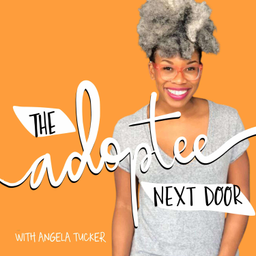
Podcast thumbnail for The Adoptee Next Door

The Adoptee Next Door

Claim This Podcast

by The Adopted Life

4.9(212 reviews)
18 episodes
Updated Bi-weekly
Accepts GuestsHas SponsorsLocation 🇺🇸
24

Podcast Authority

Beta
PoorBased on show quality, social media presence, reviews, charts, and more
Pod Engine
Quality22
Social0
YouTube0
Engagement67

Podcast Overview

There is something temptingly tidy about the idea of adoption: a family with extra love and resources meets a child in need of both. The Adoptee Next Door takes the listener beyond the sparkly fairy tale of adoption. <br/><br/><a href="https://angieadoptee.substack.com?utm_medium=podcast">angieadoptee.substack.com</a>

Language

🇺🇲

Publishing Since

7/25/2020

Unlock The Full Podcast Authority Score Report

See how your podcast performs across key metrics

24

Podcast Authority

Beta
PoorBased on show quality, social media presence, reviews, charts, and more
Pod Engine
Quality22
Social0
YouTube0
Engagement67
6
Excellent Areas
3
Good Performance
10
Growth Opportunities
excellent
Episode Length
9 minutes
Performing excellently!
good
Show Experience
14 episodes over 5.0 years

Recommendations available

Unlock the full report to see detailed tips

poor
Publishing Consistency
Every 131 days

Recommendations available

Unlock the full report to see detailed tips

+16 More Metrics

Unlock comprehensive insights including:

  • • YouTube presence analysis
  • • Social media reach metrics
  • • RSS compliance scoring
  • • Podcast 2.0 features
  • • Technical standards
What's Included in Your Full Report

Detailed Analytics

  • Complete breakdown of all 19 authority metrics
  • Personalized recommendations for each metric
  • Industry benchmarks and comparisons
  • Technical RSS feed analysis and compliance scoring

Growth Strategies

  • Step-by-step action plans for improvement
  • Quick wins to boost your score immediately
  • Pro tips from successful podcasters
Get your free podcast insights report

See how your show performs across every key metric

Instant delivery
No spam
Attract Better Guests

High authority scores make your podcast more attractive to industry leaders and influencers who want to appear on credible shows.

Secure Sponsorships

Sponsors look for podcasts with proven authority and engagement. Your score demonstrates your podcast's value to potential partners.

Grow Your Audience

Understanding your strengths and weaknesses helps you make data-driven decisions to expand your listener base effectively.

1 verified contact email on file for The Adoptee Next Door

Pitch yourself as a guest, propose sponsorships, or reach out directly to the host.

Recent Episodes

Episode thumbnail for A Live Book Talk with Rev. Alissa Newton

March 4, 2026

A Live Book Talk with Rev. Alissa Newton

Host Angie shares a live book talk with Rev. Alissa Newton, Canon to the Ordinary, exploring the complex realities of adoption, identity, and institutional accountability.

Episode thumbnail for From Indonesia to the Netherlands: A Documentary That Holds the Paradox of Adoption

January 15, 2026

From Indonesia to the Netherlands: A Documentary That Holds the Paradox of Adoption

<p>Al Jazeera released this documentary and it’s available <a target="_blank" href="https://www.youtube.com/watch?v=aPFLAJCfjeQ">HERE</a>.</p><p>I had so much fun interviewing Huibert van Wijk for this podcast—and watching Child of Their Time left me quietly undone in the best way. Two things struck me immediately. First, this is an adoption story told with deep care by the adoptee’s brother. Second, the film allows the adoptive father to be fully seen and not as a caricature or a villain, but as someone actively grappling with paradox.</p><p>Lex, the adoptive father, recalls the excitement of adoption in the 1970s: “The baby didn’t come from a mother’s belly, but from the belly of the plane. It was so exciting.” Later, we hear him say, with equal clarity and humility, “If I’d known then what I know now, I wouldn’t have done it.” That shift lands with force, especially when paired with archival images of women holding Indonesian babies on the plane while Lex reflects, “Now I understand the impact.” It is rare and powerful to witness an adoptive parent name both love and regret without collapsing into defensiveness.</p><p>At the center of the film is Tim, the adoptee, who was adopted from Indonesia to the Netherlands and shares that he never really felt able to bond. From the opening moments, we understand that Tim and Lex are estranged. And yet, throughout the film, it is unmistakable how deeply Lex longs to connect with his son—even as Tim works to make sense of an adoption that cost him culture, history, and belonging.</p><p>Part of what makes this film so compelling is that it resists a tidy narrative. Child of Their Time centers on Tim and Lex, with Huibert (Tim’s brother) guiding us through a story that refuses the familiar binaries of rescue or gratitude. Instead, we are invited into a layered, sometimes painful exploration of how the same adoption can hold radically different meanings depending on where you stand.</p><p>After nearly twenty years of working professionally in adoption, I have watched the adoptee-versus-adoptive-parent discourse harden. Conversations become brittle. Defensive. Futile. As if the only way to tell the truth is to decide who is “wrong.” For a long time, inclusive conversations that made room for everyone touched by adoption felt impossible to sustain. Lately, though, something has shifted for me. I’m no longer experiencing adoption as a zero-sum equation. I’m beginning to understand it as a both/and conversation.</p><p>I’m deeply grateful to my dear friend Cynthia Hansen, a Korean adoptee, who introduced me to Both/And Thinking by Wendy K. Smith and Marianne W. Lewis. The authors describe how embracing paradox begins by noticing tensions—those moments that push us to choose one side over another. They name three familiar traps: rabbit holes, where strengths are overdeveloped until they become weaknesses; wrecking balls, where we overcorrect from one extreme to another; and trench warfare, where polarization hardens into us-versus-them thinking. Their invitation is not to resolve tension too quickly, but to find comfort in the discomfort.</p><p>That framing feels especially alive in this episode.</p><p>Lex points to generational differences in how adoption is understood, and I hear that layered alongside broader cultural shifts. Tim, born in 1970, sits at an intersection—experiencing not only the deracination of international adoption, but also a moment when Gen X, Millennials, and Gen Z are increasingly willing to name harm, prioritize mental health, and choose distance or estrangement when relationships feel unsafe. These frameworks were largely unavailable to Boomers, who were raised with a mandate to honor parents at all costs. None of this negates love, but it does contextualize rupture.</p><p>What is extraordinary to witness in Child of Their Time is an adoptive father taking responsibility for the complexity of adoption. Lex is able to say, “I love him. He is my son,” while also acknowledging that he may be experienced as a surrogate father, not a replacement. That kind of honesty requires relinquishing certainty.</p><p>Huibert van Wijk’s documentary asks a deceptively simple question: In whose interest is international adoption, anyway? And what this film makes clear is that the only honest answer is not either/or, but both/and.</p><p>Using home videos, archival footage, and deeply personal interviews, Huibert gently pieces together Tim’s adoption story alongside reflections from his father and brother. After arriving in the Netherlands, Tim struggled to land, culturally, emotionally, and relationally, and over time pulled away from Lex. The film moves back and forth between their perspectives: Tim trying to make sense of his Indonesian and Dutch identities, and Lex slowly realizing that what once felt purely loving now lives inside a much more complicated story.</p><p>When Tim receives new information about his biological family and travels back to Indonesia, the past doesn’t stay politely in the background. Old assumptions get shaken. Long-avoided conversations finally get some air. The film builds toward a family constellation session, not as a magic fix, but as a brave attempt to sit in the mess together and hold more than one truth at the same time.</p><p>Child of Their Time is personal, and at the same time, it’s also part of something bigger. It echoes what many adoptees are doing right now: naming impact alongside intention, and refusing the idea that love cancels out loss. Research by Shila Khuki de Vries shows how adoptees in the Netherlands have turned these reckonings into real change—shifting public conversations and pushing policy forward, even when progress is slow and incomplete.</p><p>That’s where Huibert’s film, and this episode, really land for me. Not in blame. Not in neat conclusions. But in honesty. In staying curious. In choosing both/and over either/or, and letting complexity be part of the story instead of something we rush past.</p> <br/><br/>Get full access to The Adopted Life at <a href="https://angieadoptee.substack.com/subscribe?utm_medium=podcast&#38;utm_campaign=CTA_4">angieadoptee.substack.com/subscribe</a>

Episode thumbnail for Reshaping Adoption Narratives in LA's Entertainment Capital

December 4, 2025

Reshaping Adoption Narratives in LA's Entertainment Capital

<p>In mid-November, I found myself standing inside a glowing cube in Hollywood.</p><p>Not metaphorically. Literally. Emerson College’s West Coast micro-campus is a futuristic beacon rising from the heart of the entertainment capital, housing the ambitions of 200+ students who are learning to write, produce, act and report on the stories that will shape our culture. And on this particular night, the stories we were making space for were the ones so often pushed to the margins in the realm of entertainment: adoption, identity, belonging. </p><p>Next to me sat <a target="_blank" href="https://www.imdb.com/name/nm3643006/">Marissa Jo Cerar</a>. Screenwriter. Storyteller. She’s the force behind Hulu’s Black Cake and ABC’s Women of the Movement, a writer who cut her teeth on The Handmaid’s Tale, The Fosters, and Birthright. Her mantle holds an NAACP Image Award and two Humanitas Prizes—accolades that matter, yes, but what matters more is this: Marissa writes adoption like she knows it. Because she does. Her work doesn’t tiptoe around identity; it bleeds it onto the page, unapologetically, relentlessly.</p><p>Our guide for the evening was <a target="_blank" href="https://www.adopteementorship.org/our-team">Juliet Rubin Ramirez</a>, Emerson alum, CFO of the Adoptee Mentoring Society and fellow transracial adoptee, whose voice carried the quiet authority of someone who’s lived these questions, not just asked them.</p><p>Marissa peeled back the curtain on her <a target="_blank" href="https://scriptmag.com/interviews-features/intentional-storytelling-a-conversation-with-black-cake-creator-and-showrunner-marissa-jo-cerar">adaptation of Charmaine Wilkerson’s novel</a>, Black Cake, revealing how—with Wilkerson’s trust and blessing—she rewrote scenes to honor what adoption actually feels like, not what people want it to feel like. I shared my own small adoptee win: educating the writers of This Is Us about Ghost Kingdom’s, which led to Randall discussing his own in <a target="_blank" href="https://www.imdb.com/video/vi3619537689/?ref_=tt_vids_vi_1">Season 5, Episode 13</a>. We’ve both attempted to hold up a mirror for adoptees who rarely see themselves reflected back.</p><p>We didn’t shy away from the hard parts. We talked about scarcity—the belief that there’s only room for one adoptee story, one adoptee voice, as if our experiences were a zero-sum game. I unpacked Marika Lindholm’s concept of <a target="_blank" href="https://www.psychologytoday.com/us/blog/more-than-womens-work/201906/a-plea-for-boundary-spanning">Boundary Spanning</a>, the skill adoptees develop when we’re constantly translating between worlds that don’t quite fit us. And we named the impossible burden: the expectation that any one of us could stand in for all of us, that our singular stories should somehow contain the multitudes.</p><p>By the time the evening wound down, the air had softened. Laughter threaded through the crowd. Pens scratched across title pages—Marissa signing her daughter’s book, <a target="_blank" href="https://www.today.com/parents/essay/talking-to-child-about-adoption-rcna178989">Spanky and His Blanky</a>, while I signed copies of <a target="_blank" href="https://bookshop.org/p/books/you-should-be-grateful-stories-of-race-identity-and-transracial-adoption-angela-tucker/03624d1501da6db9?ean=9780807006511&#38;next=t&#38;aid=90270&#38;listref=adoption-568f9f59-8dd5-40b5-a2eb-1d1d531b9126">You Should Be Grateful: Stories of Race, Identity and Transracial Adoption</a>.</p><p>It was a lovely gathering centered on truth, artistry, and the adoptee imprint on our cultural imagination. </p> <br/><br/>Get full access to Angela Tucker at <a href="https://angieadoptee.substack.com/subscribe?utm_medium=podcast&#38;utm_campaign=CTA_4">angieadoptee.substack.com/subscribe</a>

18 total episodes available with 5 transcripts

Deep-dive analytics for The Adoptee Next Door

Frequently asked questions

Have a different question and can't find the answer you're looking for? Reach out to our support team by sending us an email and we'll get back to you as soon as we can.

What is The Adoptee Next Door?

There is something temptingly tidy about the idea of adoption: a family with extra love and resources meets a child in need of both. The Adoptee Next Door takes the listener beyond the sparkly fairy tale of adoption. <br/><br/><a href="https://angieadoptee.substack.com?utm_medium=podcast">angieadoptee.substack.com</a>

How often does this podcast release new episodes?

This podcast updates bi-weekly.

Where can I listen to this podcast?

This podcast is available on 4 platforms including Apple Podcasts, Spotify, and more. You can also use the RSS feed directly.

Does this podcast accept guests?

No, this podcast does not typically feature guests.

Legal Disclaimer

Pod Engine is not affiliated with, endorsed by, or officially connected with any of the podcasts displayed on this platform. We operate independently as a podcast discovery and analytics service.

All podcast artwork, thumbnails, and content displayed on this page are the property of their respective owners and are protected by applicable copyright laws. This includes, but is not limited to, podcast cover art, episode artwork, show descriptions, episode titles, transcripts, audio snippets, and any other content originating from the podcast creators or their licensors.

We display this content under fair use principles and/or implied license for the purpose of podcast discovery, information, and commentary. We make no claim of ownership over any podcast content, artwork, or related materials shown on this platform. All trademarks, service marks, and trade names are the property of their respective owners.

While we strive to ensure all content usage is properly authorized, if you are a rights holder and believe your content is being used inappropriately or without proper authorization, please contact us immediately at hey@podengine.ai for prompt review and appropriate action, which may include content removal or proper attribution.

By accessing and using this platform, you acknowledge and agree to respect all applicable copyright laws and intellectual property rights of content owners. Any unauthorized reproduction, distribution, or commercial use of the content displayed on this platform is strictly prohibited.