Welcome to the Woodland Trust podcast, 'Woodland Walks'. We'll be exploring some of the greatest woods, forests and sites in the Woodland Trust estate. Join our host, Adam Shaw, as we discover the stories and characters that make each of our woods so very special. We'll explore awe-inspiring ancient woodland and get lost together in the rich habitats that support our native wildlife. We'll meet the site managers and the magnificent volunteers who protect woods and plant trees. For wildlife. For people.
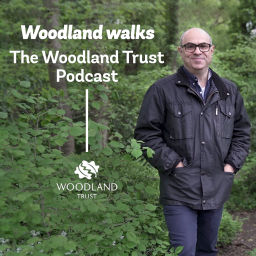
Woodland Walks - The Woodland Trust Podcast
Claim This Podcastby Woodland Walks - The Woodland Trust Podcast
4.7(25 reviews)
57 episodes
Updated Bi-weekly
Accepts GuestsHas SponsorsLocation 🇬🇧
58
Podcast Authority
BetaFairBased on show quality, social media presence, reviews, charts, and more

Quality43
Social0
YouTube93
Engagement92
Podcast Overview
Welcome to the Woodland Trust podcast, 'Woodland Walks'. We'll be exploring some of the greatest woods, forests and sites in the Woodland Trust estate. Join our host, Adam Shaw, as we discover the stories and characters that make each of our woods so very special. We'll explore awe-inspiring ancient woodland and get lost together in the rich habitats that support our native wildlife. We'll meet the site managers and the magnificent volunteers who protect woods and plant trees. For wildlife. For people.
Language
🇺🇲
Publishing Since
5/15/2019
Unlock The Full Podcast Authority Score Report
See how your podcast performs across key metrics
58
Podcast Authority
BetaFairBased on show quality, social media presence, reviews, charts, and more
Quality43
Social0
YouTube93
Engagement92
7
Excellent Areas
2
Good Performance
10
Growth Opportunities
excellent
Episode Length
27 minutes
Performing excellently!
good
Show Notes Quality
3.0/5
Recommendations available
Unlock the full report to see detailed tips
poor
Publishing Consistency
Every 44 days
Recommendations available
Unlock the full report to see detailed tips
+16 More Metrics
Unlock comprehensive insights including:
- • YouTube presence analysis
- • Social media reach metrics
- • RSS compliance scoring
- • Podcast 2.0 features
- • Technical standards
What's Included in Your Full Report
Detailed Analytics
- Complete breakdown of all 19 authority metrics
- Personalized recommendations for each metric
- Industry benchmarks and comparisons
- Technical RSS feed analysis and compliance scoring
Growth Strategies
- Step-by-step action plans for improvement
- Quick wins to boost your score immediately
- Pro tips from successful podcasters
Get your free podcast insights report
See how your show performs across every key metric
Instant delivery
No spam
Attract Better Guests
High authority scores make your podcast more attractive to industry leaders and influencers who want to appear on credible shows.
Secure Sponsorships
Sponsors look for podcasts with proven authority and engagement. Your score demonstrates your podcast's value to potential partners.
Grow Your Audience
Understanding your strengths and weaknesses helps you make data-driven decisions to expand your listener base effectively.
1 verified contact email on file for Woodland Walks - The Woodland Trust Podcast
Pitch yourself as a guest, propose sponsorships, or reach out directly to the host.
Recent Episodes
May 8, 2026
17. Superstar Nile Rodgers visits Faughan Valley Woodlands
<p class="MsoNormal"><span style="mso-ansi-language: EN-GB;">Did you know American music legend Nile Rodgers is helping the Trust plant and protect woodland in Northern Ireland? Alongside generous donations to Faughan Valley Woodlands from the We Are Family Foundation (WAFF), Nile has got stuck in with planting on site. Nile and the foundation he co-founded with his partner, Nancy Hunt, are working with us to reconnect fragmented native woods in a region where less than 1% of ancient woodland remains. We caught up with the multiple Grammy Award winner on his latest visit to find out why. </span><span style="mso-ansi-language: EN-GB;">We also hear from David Saddington, trustee of both WAFF and the Trust, on why empowering young people to take direct action is key to this work, and we chat to some of those volunteering at this special event. Please note this episode contains references to drugs.</span></p> <p>Don't forget to rate us and subscribe! Learn more about the Woodland Trust at <a href= "https://www.woodlandtrust.org.uk/">woodlandtrust.org.uk</a><span class="EOP SCXW141445647 BCX0" data-ccp-props= "{"134233117":false,"134233118":false,"335557856":16777215,"335559738":0,"335559739":0}"> </span></p> <p><span style= "text-decoration: underline;"><strong>Transcript</strong></span></p> <p class="MsoNormal"><span lang="EN-US" xml:lang="EN-US">You are listening to Woodland Walks, a podcast for the Woodland Trust, presented by Adam Shaw. We protect and plant trees for people to enjoy, to fight climate change and to help wildlife thrive.</span></p> <p class="MsoNormal"><span lang="EN-US" xml:lang="EN-US">Nile: But it just made me feel so good. It was so real, it was almost like a drug. So my parents were doing heroin, I was doing music *laughs*.</span></p> <p class="MsoNormal"><span lang="EN-US" xml:lang="EN-US">Nile: So I always thought that an artist was the guy trying to be the smartest person in the room, that everybody said, 'well, I wish I could play like him, I wish I could do that'. No, it was the person who touched people's hearts.</span></p> <p class="MsoNormal"><span lang="EN-US" xml:lang="EN-US">Nile: We actually had them locked out the studio because we still hadn't finished the lyrics to We Are Family.</span></p> <p class="MsoNormal"><span lang="EN-US" xml:lang="EN-US">Nile: Trees do, all plants, but trees, you know, especially, do so much for life. Let's not just talk about the overall environment, life, all life forms that exist.</span></p> <p class="MsoNormal"><span lang="EN-US" xml:lang="EN-US">Adam: For 40 years, if you've been on a dance floor, you'll have been dancing to the music of one of our guests today. He co-founded Chic, produced and collaborated with David Bowie, Madonna, Richard Jackson, and well, to be honest, too many others to mention. But to give you an idea of the sort of musical success he's had, I can say that he has produced and performed on records which have sold more than 750 million albums and 100 million singles. Born to teenage parents in an environment where drug use was very much part of his every day, he has come from that background with an attitude to life which is as upbeat and as positive as his music. And together with his partner, Nancy Hunt, they have established the We Are Family Foundation, focused on empowering young people around the world. Together, they're in Northern Ireland, in Derry, to support and protect and indeed restore woodland in this country, and indeed Nile is on the Woodland Walks sofa and joined by one of the trustees of the We Are Family Foundation and indeed the Woodland Trust, David. So we'll come to David in a moment. Why don't we start now where it all started with the music? Reading about you and listening to stuff you've done, my impression is you're the most positive person I've read about and that surprises me because of the disjointed background you grew up in. So two questions. Do you think that's a fair description and if so, why?</span></p> <p class="MsoNormal"><span lang="EN-US" xml:lang="EN-US">Nile: So the... the interesting thing about my childhood was that though my parents were heroin addicts, they were extremely loving and they believed in me so much so that, believe it or not, I was never, ever told what to do. They knew that I instinctively would figure it out. Or I was just one of those nerdy, nice kids that they knew would never get into trouble. I mean, I have never stolen anything. I've never, I bullied one kid once and the reason why is because everybody bullied me because I was a nerd. And when I bullied this kid, he started crying and I started crying. He's probably forgotten that incident. I will never forget it. It'll bother me my entire life. I could not believe that I did that. So my childhood was actually on one level very happy, but at the exact same time, and I don't know how these two situations could have coexisted, except only now forensically, but it was super happy, but then I actually called my childhood a fear-based childhood. I was afraid of things, so I did things to make me unafraid or happy. And music was that thing. But it just made me feel so good. It was so real. It was almost like a drug. So my parents were doing heroin. I was doing music *laughs*.</span></p> <p class="MsoNormal"><span lang="EN-US" xml:lang="EN-US">Adam: I mean, it's weird you describe yourself as a nerd. You're the least nerdy-looking nerd I've ever come across, but fair enough.</span></p> <p class="MsoNormal"><span lang="EN-US" xml:lang="EN-US">Nile: Oh God, test me.</span></p> <p class="MsoNormal"><span lang="EN-US" xml:lang="EN-US">Adam: Oh really, okay, we'll do a nerd off *both laugh*. Fair, fair enough. But that positivity, I mean, you talk about being nice, but what I think is striking about your music, and perhaps problematic for some of it, is that it's relentlessly positive. And I think sometimes it's seen as sort of very surface level because of that and yet you talk about the deeper meaning behind the music, which I think some fans of yours perhaps don't see, or that's not what they're getting from it.</span></p> <p class="MsoNormal"><span lang="EN-US" xml:lang="EN-US">Nile: But that's okay, though.</span></p> <p class="MsoNormal"><span lang="EN-US" xml:lang="EN-US">Adam: That's fine.</span></p> <p class="MsoNormal"><span lang="EN-US" xml:lang="EN-US">Nile: It's okay. Yeah, you're so correct. I mean, I'll try and quickly just tell you this story. So when I said I was a nerd, believe me, I studied music on a level that was so intense, that was ridiculous. So I thought it was my job to prove to my tutors and various teachers how smart I was, how well I learned the rules and the discipline of music. I wrote symphonic music when I was a child, I wasn't even 10 years old yet. And I remember I was going to one of my tutors. I was around 22 years old and I was a very serious jazz student. And I went into him one day with a very sourpuss attitude and look, and that was not me. He just was like, no, you're always so happy and you're always so upbeat. What's wrong with you today? And I said, well, look at this ******** pop music that I have to play tonight. Now, maybe I thought it was sort of ******** but maybe I was just trying to score brownie points with him because I always thought being a great musician was being the smartest guy or the greatest virtuoso in the room. So what happened was my teacher, I showed him the list of songs that I was playing that night. And I said, look at what I have to start my set with. This song by The Archies called Sugar, Sugar. He said, yeah, but now what's wrong? Why are you so sad? And I said, because I got to play Sugar, Sugar. You know, I want to play straight ahead jazz. He was like, that's okay that you want to play straight ahead jazz, that's what I love. But why is it bothering you to play Sugar, Sugar? And I said, because it goes, *sings* Honey, do, do, do, do, do, do, oh sugar, sugar, do, do, do, do, do, do, you are my candy girl, and you got me wanting you. And he said, Nile, that's a great composition. I went, you call Sugar, Sugar a great composition? He said, absolutely. He said, what do you think about it? He says, and I went, well, it sucks. It's some ******** bubblegum pop music. And he went, now, do you know that Sugar Sugar's been number one for about three weeks? And I said, yeah, but what does that got to do with anything? And he went, so those millions of people around the world, they're wrong, but you, Nile Rodgers, are right? And all of a sudden I felt, uh-oh, *laughs* something weird's getting ready to happen. So he held me behind my head and he pulled my face close to him and he said, Nile, let me explain something to you. Every record in the top 20 is a great composition. And so remember, we're going back now 50 years. I'm 73 years old, so we're going back a long time. And I say, every record in the top 20 is a great composition? He says, yes. I said, why would you say something so absurd? He says, Nile, because it speaks to the souls of a million strangers. And I literally started crying at that moment because in one spark, in a nanosecond, he explained to me what an artist was. So I always thought that an artist was the guy trying to be the smartest person in the room, that everybody said, well, I wish I could play like him. I wish I could do that. No, it was the person who touched people's hearts. It was the person who made people feel something, be it happiness, be it sadness or whatever. But a lot of my friends who are virtuosos, we just would go, wow, he can play his *** off. That was the thing. We didn't feel anything necessarily. Sometimes we did, but I was determined to try and make people feel something every time. And to me, I wanted people to feel happy because I wanted to feel happy. Why do I want to write sad music?</span></p> <p class="MsoNormal"><span lang="EN-US" xml:lang="EN-US">Adam: So that phrase, speaking to the souls of a million strangers, it's clearly an iconic thing about your music. The other striking thing, I think, which you've talked about, is about life, not just your music, but I think obviously connected, is not about surviving the storm, but learning how to dance in the rain. Is that one of the tenets of your approach to music and life? Are they the same thing?</span></p> <p class="MsoNormal"><span lang="EN-US" xml:lang="EN-US">Nile: That's exactly it. That's why people wonder why I do so much music, and it's because I believe that I could always, I honestly, and this is not an egotistical statement, I always believe that I can add something to the song. I believe that I can make it better, even if it's just a little better, but you can hear it. I mean, five minutes before I came down here, I asked an artist that I sent a piece of music to, I said, you never wrote me back. How do you feel about the guitar streams that I sent you? And Kygo just wrote me, he said, he just literally just wrote me, where the hell is it? I went, cool. He went, oh, yes sir, sounding really cool *laughs*. Minutes ago.</span></p> <p class="MsoNormal"><span lang="EN-US" xml:lang="EN-US">Adam: Okay. So look, we need to talk more about that, but I want, you're here not for the music, but for the work of your, and Nancy, your partner's, foundation. And David Saddington, sitting next to you, is a trustee of that foundation. You also happen to be a trustee of the Woodland Trust as well. So the purpose of the We Are Family Foundation is what?</span></p> <p class="MsoNormal"><span lang="EN-US" xml:lang="EN-US">David: I mean, the We Are Family Foundation, Nile and Nancy started 20, 25 years ago now, which is insane *both laugh*. And Nile, I mean, you'll tell it better than me in terms of sort of your origin story, which came from, you know, a horrendous event of 9/11. And Nile and Nancy wanted to do something positive for the world, to heal the world. And thankfully, you know, when they sort of asked that question around how do we sort of have more peace in the world, how do we have more harmony, young people came out as the answer and actually finding that hope, finding that positivity, finding those solutions. So the foundation really is built upon curating, nurturing and growing this talent and giving these young people visibility.</span></p> <p class="MsoNormal"><span lang="EN-US" xml:lang="EN-US">Adam: And the work that the We Are Family Foundation is starting to do in Northern Ireland, we were today at a planting with Nile and Nancy and you. What is the project here?</span></p> <p class="MsoNormal"><span lang="EN-US" xml:lang="EN-US">David: Yeah, my God, like, you know, I work on climate change every day. It's really sort of hard and difficult, but actually by doing something very local with the Woodland Trust, you make such a tremendous difference, not only just about place, but the communities which you bring along. So this partnership just made a lot of sense. And then when we started talking after that visit around sort of why it made sense to support from the foundation, Northern Ireland came out really as a winner. And the beautiful site we visited earlier in the Faughan Valley is so special because, in a sad way really, because so little of the ancient woodland is left in Northern Ireland, less than 1%. And the vision of the Woodland Trust in Northern Ireland to preserve those tiny fragments of ancient woodland, but protect them by restoring the land around it, letting them expand, is so special. And particularly given that site is, what, I mean, like 10 minutes away from Derry? That's so cool. It is right on the doorstep of so many people to restore such a precious habitat, but make sure that people can actually enjoy it and be part of that as well. Amazing.</span></p> <p class="MsoNormal"><span lang="EN-US" xml:lang="EN-US">Adam: A little before Nile and I sat down to speak, we both visited Faughan Valley Woodlands with a group of young people who were there to help plant some trees. Now, this is an important area. Since 2000, the Woodland Trust has brought small clusters of native woodlands, including Brackfield, Oaks, Red Brae, Burntollet, Killaloo and Auter, all fragmented along the Faughan Valley, which is a site of special scientific interests. And it's been a vision of the Woodland Trust Northern Ireland for well over a decade, really, to try and connect these fragments for both people and nature. And so when I met the younger people who are busy planting trees, I asked them why they felt what they were doing was important.</span></p> <p class="MsoNormal"><span lang="EN-US" xml:lang="EN-US">Speaker 1: So usually it's around every Sunday morning. We go around and it's just odd jobs, like it's never the same thing every week. It's usually planting trees, but recently we've been building fences to keep sheep out and removing tree guards.</span></p> <p class="MsoNormal"><span lang="EN-US" xml:lang="EN-US">Adam: And why are you interested in that instead of watching TV or playing Xbox or whatever?</span></p> <p class="MsoNormal"><span lang="EN-US" xml:lang="EN-US">Speaker 1: Well, I've always kind of liked outdoorsy stuff in nature and usually I wouldn't really do much on a Sunday. So it's just better to get out rather than do nothing on a Sunday morning so.</span></p> <p class="MsoNormal"><span lang="EN-US" xml:lang="EN-US">Adam: And you're about to plant a tree.</span></p> <p class="MsoNormal"><span lang="EN-US" xml:lang="EN-US">Speaker 1: Yeah.</span></p> <p class="MsoNormal"><span lang="EN-US" xml:lang="EN-US">Adam: Do we know what type of tree that is?</span></p> <p class="MsoNormal"><span lang="EN-US" xml:lang="EN-US">Speaker 1: I think it's oak.</span></p> <p class="MsoNormal"><span lang="EN-US" xml:lang="EN-US">Adam: Oh, there we are see, I don't know, but you know, go on plant away.</span></p> <p class="MsoNormal"><span lang="EN-US" xml:lang="EN-US">Speaker 2: I'm Sophie McGee.</span></p> <p class="MsoNormal"><span lang="EN-US" xml:lang="EN-US">Adam: And what are you doing, Sophie?</span></p> <p class="MsoNormal"><span lang="EN-US" xml:lang="EN-US">Speaker 2: Well, we're planting trees today for the 30th anniversary. It's just more interesting because we're actually doing something that's worthwhile for the environment and for ourselves.</span></p> <p class="MsoNormal"><span lang="EN-US" xml:lang="EN-US">Adam: And do you feel you're making a difference?</span></p> <p class="MsoNormal"><span lang="EN-US" xml:lang="EN-US">Speaker 2: Yes, every tree will help. No matter if it's a wee tiny stick or a big massive one.</span></p> <p class="MsoNormal"><span lang="EN-US" xml:lang="EN-US">Speaker 3: Well my name is Evie, I'm 13 years old and I've always been interested in nature and plants and animals and stuff and then my auntie decided, or she showed me the Woodland Trust young volunteers so I thought that sounds right up my street. So I joined, I've only been here for a few weeks and so far I've really enjoyed it. We've been trimming down, we've been trimming away trees that'll grow back to let light into the forest floor. We've been looking at different kinds of moths and caterpillars and we've been for walks and here we are planting trees and meeting celebrities!</span></p> <p class="MsoNormal"><span lang="EN-US" xml:lang="EN-US">Speaker 4: My name's Milo and you know we're with the Woodland Trust, you know, planting trees and stuff because, well, you know, trees are important and they support a lot of species and insects and wildlife and it's great for the water quality and soil erosion in general. And in my opinion personally, I think biodiversity is really important, especially in, the UK and Northern Ireland in general. It's just seem to be really sort of nature depleted and, you know, I kind of want to change that. I think it doesn't seem fair, you know?</span></p> <p class="MsoNormal"><span lang="EN-US" xml:lang="EN-US">Adam: Nile, I think the phrase we've already used many times is We Are Family, the name of one of your most successful songs, but obviously the name of your foundation. And we've talked about your family. That's an obvious theme, family. I'm struck by that because of a disjointed background, even though loving and literarily full. Your family were artists and you had a full and rich literary life. The connection to family, clearly a theme for you. Why?</span></p> <p class="MsoNormal"><span lang="EN-US" xml:lang="EN-US">Nile: It wasn't my idea. It was other people's ideas. And they talked me into it. I, as an artist, I wrote We Are Family for Sister Sledge and for Sister Sledge alone. I didn't write it for the world. I wrote it for them. And they, it was their job to now take it out into the world, which they did very well. But what happened as a byproduct of the composition was just the love that I put into the song that my partner Bernard Edwards and I put into the song, we were trying to talk about this wonderful family, you won't believe this, that we never met. We never met Sister Sledge until they came in to sing the song. The entire album was already produced. We didn't know any other way to make records except for by ourselves. So we made the record and said, okay, now sing this. And they were like, what? We've never been treated like this. We're like, we don't know any other way to make records. Me and Luther Vandross and Bernard Edwards and Tony Thompson, and we go in and we write and produce, and there you go, here's your record. But so the love that we projected onto Sister Sledge was something that we superimposed upon them. We don't know whether they liked each other or not. We just presupposed that they did. And that's what we wrote, this loving, anthemic, wonderful dance song. And Kathy Sledge, at 15 years old, came in and just gave the performance of her life. We actually had them locked out the studio because we still hadn't finished the lyrics to We Are Family *both laugh*. It was the final song that we wrote, right? So we wouldn't let them come in. We're inside trying to be professional. And they're like, why can't we come in and hear what you guys are making as demos? Making as demos? No, we made, it's the record. But anyway, what happened was, as a result of the popularity of the song, this baseball team in America, the Pittsburgh Pirates, adopted it as their theme song. And they're not women, they're men. And we saw these big burly men going, we are family, I got all my sisters with me. And I was like, whoa. And anyway, they won the World Series *laughs*.</span></p> <p class="MsoNormal"><span lang="EN-US" xml:lang="EN-US">Adam: But I mean, that's a fascinating insight how you made that song. But what I'm struck by is that you have talked about this deeper hidden meaning, your phrase, right, behind your songs. So that's an obvious question to ask. You talk about family. It's a key song in your career. It hints of the deeper meaning here is about the importance of your family. And your family are unusual. Super talented people, not particularly stable, I hope that's not insulting or anything. But it's sort of, I'd expect you to maybe be more traumatised by that or to have, but no, it's all good. It's all good.</span></p> <p class="MsoNormal"><span lang="EN-US" xml:lang="EN-US">Nile: It wasn't, you see, it wasn't traumatic because I developed my own survival mechanism and it was actually good. But I don't think you realise this. I said, everybody told me, oh, you got Grammys, you got this, you're the head of the Songwriters Hall of Fame, you're the Rock and Roll Hall of Fame, I said, you know what? The thing that I am the most proud of in my life is at seven years old, I set the national truancy record for the United States of America *both laugh*. I cut school 75 days in a row and went to the movies. I learned more at the cinema in 75 days than everybody in my class learned in an entire semester. You could see Fellini, you could see Truffaut, you could see anything. My mom, when she had her second child, suffered from postpartum depression and threatened to murder my brother every day. So after a few weeks, and I can't remember how long it took because I was a child, but after her going to psychiatrist every day, that's how bad it was, they decided that she had to be separated from her children. She was a danger to herself and others. So they sent me off to Los Angeles to live with my maternal grandmother. And my youngest brother, who was just born, was sent to live with his paternal grandparents. And so while I was in Los Angeles, I was treated ah man, boy, talk about bullying. Every place in LA was sort of run by gangs. And I didn't know anything about the gang culture. And I spoke like a New Yorker. And everybody in LA was, you know, street slang. And, you know, and now look at how big hip hop is. You know, that's the way that that everyone spoke. I didn't know half the stuff they were saying. So kids would try and beat me up. They only beat me up once, no, twice, sorry, twice. And then I just decided, I'm not going to where those kids are. I'm going to where adults are. Because I got along with adults and I went to the cinema every day for 75 days straight.</span></p> <p class="MsoNormal"><span lang="EN-US" xml:lang="EN-US">Adam: There's lots to talk about, not much time. But I do want to ask one more question around this sort of area. In actually the podcast we've just done, I spoke to quite a significant business leader who has ADHD. And I said to him at the end of the chat we had, if you had a magic wand and could wave away your ADHD, would you do it? And he went, no, I absolutely wouldn't do it because it's part of who I was, I am, and it's informed and helped me. And I wonder if there's a similar question about your drug past, whether if you could wipe it away, would you?</span></p> <p class="MsoNormal"><span lang="EN-US" xml:lang="EN-US">Nile: Never, never, ever, ever, ever. I, you know, I developed a very horrible drug habit. I actually, my heart stopped six times in one night. I don't remember the medical phrase, but it's called something like multiple drug interaction. Like, so if you take cocaine and then you take alcohol and then you take either LSD or something else, your brain doesn't know which one is dominant, right? So it starts going, it tells your heart, do I expand or contract? I don't know. And every time they tried to revive me, I would only stay alert or alive, my heart would only pump a couple of times and then stop again.</span></p> <p class="MsoNormal"><span lang="EN-US" xml:lang="EN-US">Adam: So what did that bring you as an artist in retrospect?</span></p> <p class="MsoNormal"><span lang="EN-US" xml:lang="EN-US">Nile: Nothing. Because to me, all I remember was driving home, Not getting into an accident, not getting a ticket, driving home, parking in my same parking space, going up to my apartment. However, I mistakenly pushed the number 14 instead of 28. That saved my life. I didn't know that I did, I didn't know I made a mistake. I was so high, I thought 14 was 28. The way that they emptied the garbage in my building, they started at the top and they went down floor by floor. When the elevator hit 14, the doors opened, I fell out onto the floor dead. They just happened to be on the 14th floor and they saw me lying there dead. They go over, I have no pulse. They probably tried to do, I don't know any of this for a fact because I was, out, yeah. So I just assumed they must have tried to help me. They liked me, so they must have tried to do something. Fortunately, the hospital was two blocks away from my house. And they get me to the hospital. The doctors revived me six times. After the sixth time, they figured this is hopeless because they did everything they could possibly do. And he said that, we worked so hard to save your life, but in fact, I was filling out the death certificate and the orderly in the room said, hey doc, we got a live one here. And my heart just started going automatically again by itself.</span></p> <p class="MsoNormal"><span lang="EN-US" xml:lang="EN-US">Adam: Amazing. I want to bring you back to your foundation. So we're here because of the good work you're doing for the environment. But the environmental issue may be relatively new, but you've been a political activist since your early days. This is not a recent conversion. You're super plugged in to these sort of big debates, aren't you? Part of the Black Panthers in your early age?</span></p> <p class="MsoNormal"><span lang="EN-US" xml:lang="EN-US">Nile: Yeah, I was a subsection of the Black Panther Party when I was 16 years old.</span></p> <p class="MsoNormal"><span lang="EN-US" xml:lang="EN-US">Adam: So lots of political issues. Why now the environment?</span></p> <p class="MsoNormal"><span lang="EN-US" xml:lang="EN-US">Nile: It's just one of many issues that We Are Family Foundation supports. You asked me about being a nerd. So I grew up as a scientist. I have a scientific background. So I understand how these things in our environment are fundamentally to life itself. That, if you think about it, in today's world, there are a million different species on this planet, but that's only 1% of all the life that's ever lived on this planet. So it just goes up and down and up and down. And prior to humans, we were never the cause. Now we're the cause of things dying and species going away. Before, it was just the fact that Earth was this very volatile planet and over millions, billions, in fact, years, things were changing. But now we're doing the bad stuff. We're killing ourselves, which is incredible. And it's mainly because most people don't know that all these life forms are dependent upon one another. Last night I heard someone talking about plankton. And I was saying, yeah, well, look at how important plankton is. You know, like hydrogen, we need, we don't have hydrogen, we have no life. You know, it's like, so, I mean, trees do, all plants, but trees, you know, especially, do so much for life. Let's not just talk about the overall environment, life, all life forms that exist.</span></p> <p class="MsoNormal"><span lang="EN-US" xml:lang="EN-US">Adam: We're running out of time. Just one last question each. David, first, you set the context of what that foundation is doing here and what the Trust is doing here. What are your hopes for if Nile, us, we all gather, come back in ten years' time? Your hope for the project by then would be what?</span></p> <p class="MsoNormal"><span lang="EN-US" xml:lang="EN-US">David: I mean, my hope for the project in that time is to see the forest grow, because what I find so encouraging is when you let nature recover with a little bit of help from us, it doesn't take that long to actually start putting it right, you know, to restore those habitats, to protect that ancient woodland, to let it regrow, rejuvenate, with the help of people supporting communities at the same time. It can recover in such a remarkable amount of time, which I just find really quite hopeful and empowering in the world we're in at the moment. Will it restore very precious nature here in Northern Ireland? Will it inspire people to make a difference with all the volunteers we're bringing in? Absolutely. And who knows what the catalytic sort of nature of that will be, which I think is sort of magical to see. So it's a pleasure to bring this partnership together between the We Are Family Foundation and the Woodland Trust and see that grow and grow over the years.</span></p> <p class="MsoNormal"><span lang="EN-US" xml:lang="EN-US">Adam: And I think often with trees, people think it's 100 years, their great-grandchildren will come. That's not the case, is it? 10, 20 years is a reasonable time frame to see significant change in this landscape we just visited this morning.</span></p> <p class="MsoNormal"><span lang="EN-US" xml:lang="EN-US">David: Yeah, absolutely. I mean, some of the trees we were walking around this morning, the beautiful silver birches, which looked like a woodland, were 20 years old. And actually, it is incredible, actually, it doesn't take a huge amount of time for nature to recover.</span></p> <p class="MsoNormal"><span lang="EN-US" xml:lang="EN-US">Adam: Nile, last question. It's been an amazing life. It is an amazing life, perhaps a great life. Your third act? Hard to imagine what new things you could do, but do you, what are the, how do you see your future and what you want to spend that third act doing?</span></p> <p class="MsoNormal"><span lang="EN-US" xml:lang="EN-US">Nile: Wow, I'm doing so much now. I'm almost going back to where I started, which was with theatre performances that are more story-ented instead of just going out and playing a whole bunch of hit songs. I think I got super inspired completely accidentally. I wrote a song for Diana Ross years ago. And the first time I worked for the Prince's Trust, he said, now, my dear fellow, I wish I knew more of your music, everybody seems to love it so much. And then he became the King and he printed out his top 10 favorite songs. Number 3 was one of my songs. And he didn't realise it because, you know, the King, what have you got time to sit around and read, you know *laughs* And I said to him, I said, you know, Your Majesty, I promise you, you know some of my songs. But then his list comes out and my #3 song, I mean my song, Upside Down by Diana Ross is #3. He was like, that's one of my favorite songs, and there's a whole video that we put out of him sort of like doing his best dance to Upside Down. It's quite funny. I just thought that the one thing I've not really explored or worked hard on, I'm at the part of my life where I really do want to do all the music that I can do. And I want it to have the same effect as the pop music that I do. So I want my jazz music to make people feel good. So I did Candy Dulfer's last record and she's just unreal. So that's really, I think, where I want to be. And honestly, and I'm being very, very honest, I never keep track of any of this stuff. I did a conference a few weeks ago, and it was all these billionaires and all these tech guys and blah, blah, blah. And I said, you know, I did the biggest selling Madonna album in the world, we sold 10 million copies. All of my memories are from when I first heard this stuff. And somebody hollered out from the back of the room, 23 million copies, you know Nile, it keeps selling and keeps adding up. And I went, oh. In the first few weeks, we sold 10 million copies. And that's all I remember. And I move on to the next record and the next record and the next record. I had huge success with the last two Beyoncé records. But I've done that, and obviously you can see with Kygo, I continue to do that. That's never going to go away. But when I think in terms of full projects, it's going to be more theatrical and maybe more film.</span></p> <p class="MsoNormal"><span lang="EN-US" xml:lang="EN-US">David: There's about two things as well. There's one thing that you said to me before, which I think is just so great about the foundation, about how you want the foundation to be bigger than the song, which I think is a pretty epic aspiration there to have, the We Are Family Foundation and We Are Family the song, but I just think that's amazing to think around, the impact which has been achieved over twenty-five years and thinking about the years to come, and then secondly, because with your audience, Adam, we have so many obviously sort of people who love getting out on walks and nature. And my goodness, you won't be up as early as this guy doing his morning walks. And you definitely need to follow him on Instagram at a moment because he's on a roll doing sort of walks all over the world.</span></p> <p class="MsoNormal"><span lang="EN-US" xml:lang="EN-US">Nile: It's true. I love, you know, I wake up every morning very, very early. Right now, life and enjoying nature and being out in it is really exciting. Like when I was younger, being indoors, like I used to, there was a joke I used to say, I used to go to like clubs every night and go, ah the great indoors *all laugh*.</span></p> <p class="MsoNormal"><span lang="EN-US" xml:lang="EN-US">Adam: Well, look, a sample of how busy you are is I know you have other meetings to go to and other jobs to do, so I won't keep you anymore. Here's to the good times. Thank you very much indeed, both of you.</span></p> <p class="MsoNormal"><span lang="EN-US" xml:lang="EN-US">Nile: Thank you. I hope I wasn't too long-winded.</span></p> <p class="MsoNormal"><span lang="EN-US" xml:lang="EN-US">David: Thank you.</span></p> <p class="MsoNormal"><span lang="EN-US" xml:lang="EN-US">Adam: You were brilliant. It's a real treat to talk to you.</span></p> <p class="MsoNormal"><span lang="EN-US" xml:lang="EN-US">David: A pleasure.</span></p> <p class="MsoNormal"><span lang="EN-US" xml:lang="EN-US">Thank you for listening to the Woodland Trust Woodland Walks. Join us next month when Adam will be taking another walk in the company of Woodland Trust staff, partners and volunteers. And don't forget to subscribe to the series on iTunes or wherever you are listening. And do give us a review and a rating. If you want to find out more about our woods and those that are close to you, check out the Woodland Trust website. Just head to the Visiting Woods pages. Thank you.</span></p>
February 13, 2026
16. Flavours of the forest: drinking the taste of trees with Ben Branson
<p>Have you ever wondered what trees taste like? That's the thought that spurred our guest, Ben Branson, to launch his latest venture, Sylva. We meet in Essex at his woodland, distillery and lab, where he crafts non-alcoholic drinks that capture the natural flavours of trees. Also the founder of Seedlip, the world's first distilled non-alcoholic spirit, Ben has now turned his focus entirely to nature to make Sylva 'a tree company that makes drinks'. Join us to explore the production process, admire a centuries-old oak that could offer a new flavour, and discover Ben's mission to encourage others to love trees as much as he does. We also learn how Ben's ADHD and autism help fuel his curiosity and innovation, and inspired him to launch The Hidden 20%, a charity, podcast and movement finding and sharing the truth about neurodiversity.</p> <p>Don't forget to rate us and subscribe! Learn more about the Woodland Trust at <a href= "https://www.woodlandtrust.org.uk/">woodlandtrust.org.uk</a><span class="EOP SCXW141445647 BCX0" data-ccp-props= "{"134233117":false,"134233118":false,"335557856":16777215,"335559738":0,"335559739":0}"> </span></p> <p><span style= "text-decoration: underline;"><strong>Transcript</strong></span></p> <p class="MsoNormal"><span lang="EN-US" xml:lang="EN-US">You are listening to Woodland Walks, a podcast for the Woodland Trust presented by Adam Shaw. We protect and plant trees for people to enjoy, to fight climate change and to help wildlife thrive.</span></p> <p class="MsoNormal"><span lang="EN-US" xml:lang="EN-US">Adam: Well, in today's episode of Woodland Walks, I'm off to see a man who invented the world's first distilled non-alcoholic drink. It was called Seedlip and effectively he created it in his kitchen and took it to 40 countries and in the process, I think it's fair to say, helped change the world of adult drinks and it certainly spurned lots of imitators, which you may well know. He also has a different mission. Really, I think it's fair to say his mission is now at least partly to involve the environment in much of what he does. He has, for instance, won two golds at the prestigious Chelsea Flower Show, and last year launched Pollen Projects, which aims to continue to disrupt the drinks industry, in particular though, by harnessing the flavour powers of trees. And that's something I suppose I've really never thought about. Anyway, so I met him at his farm, his home, his laboratory - they're all more or less the same thing - somewhere in Essex.</span></p> <p class="MsoNormal"><span lang="EN-US" xml:lang="EN-US">Ben: My name is Ben Branson. I'm the founder of Sylva.</span></p> <p class="MsoNormal"><span lang="EN-US" xml:lang="EN-US">Adam: Fantastic. So first of all, we've lots to talk about.</span></p> <p class="MsoNormal"><span lang="EN-US" xml:lang="EN-US">Ben: We do.</span></p> <p class="MsoNormal"><span lang="EN-US" xml:lang="EN-US">Adam: Because we are sitting in an amazing, is this a laboratory?</span></p> <p class="MsoNormal"><span lang="EN-US" xml:lang="EN-US">Ben: Yeah, I guess.</span></p> <p class="MsoNormal"><span lang="EN-US" xml:lang="EN-US">Adam: It doesn't feel like a laboratory, it feels something much more designery. It feels like a Porsche should be made here or something. Anyway, looking over an extraordinary landscape, and we're going to go for a walk through that. But first of all, would you tell me a little bit about what, I suppose, what's brought you here and your history and why, why you're doing what you're doing.</span></p> <p class="MsoNormal"><span lang="EN-US" xml:lang="EN-US">Ben: So I grew up on a farm and my family have been farming up in Lincolnshire for 320 years now. So that's nine generations and we're still farming. And I guess that meant I enjoyed a childhood largely outside and trees played a big part of that. Animals did, fields, produce, and hard work, I guess, not from me, but from my family.</span></p> <p class="MsoNormal"><span lang="EN-US" xml:lang="EN-US">Adam: Right. So did you ever work on the farm?</span></p> <p class="MsoNormal"><span lang="EN-US" xml:lang="EN-US">Ben: I did, yeah. And I would spend summers...</span></p> <p class="MsoNormal"><span lang="EN-US" xml:lang="EN-US">Adam: So you got your hands dirty?</span></p> <p class="MsoNormal"><span lang="EN-US" xml:lang="EN-US">Ben: Yeah, I would spend summers sitting on a tractor or going and sitting with my grandfather on a combine.</span></p> <p class="MsoNormal"><span lang="EN-US" xml:lang="EN-US">Adam: Right. And you came to prominence for something completely different. I mean, not sheep or potatoes or anything, but the non-alcoholic drink called Seedlip. So briefly, how on earth did that happen?</span></p> <p class="MsoNormal"><span lang="EN-US" xml:lang="EN-US">Ben: Yeah, Seedlip was a, I guess, a series of sort of curious accidents.</span></p> <p class="MsoNormal"><span lang="EN-US" xml:lang="EN-US">Adam: I suppose we should pause, just tell, for those who don't know, what on earth we're talking about, what is Seedlip?</span></p> <p class="MsoNormal"><span lang="EN-US" xml:lang="EN-US">Ben: So Seedlip was the, or is, the world's first distilled non-alcoholic spirit.</span></p> <p class="MsoNormal"><span lang="EN-US" xml:lang="EN-US">Adam: Fine.</span></p> <p class="MsoNormal"><span lang="EN-US" xml:lang="EN-US">Ben: So botanicals, distilled. and made into various different blends that you could have with tonic or in a cocktail.</span></p> <p class="MsoNormal"><span lang="EN-US" xml:lang="EN-US">Adam: Will you get annoyed or too crude to describe it as a non-alcoholic gin?</span></p> <p class="MsoNormal"><span lang="EN-US" xml:lang="EN-US">Ben: Too crude in that it is illegal to describe it as a non-alcoholic gin now *both laugh*</span></p> <p class="MsoNormal"><span lang="EN-US" xml:lang="EN-US">Adam: Oh okay, not just too crude! Okay, incorrect. But okay, in my mind, I saw it as a...</span></p> <p class="MsoNormal"><span lang="EN-US" xml:lang="EN-US">Ben: Akin to.</span></p> <p class="MsoNormal"><span lang="EN-US" xml:lang="EN-US">Adam: Akin to.</span></p> <p class="MsoNormal"><span lang="EN-US" xml:lang="EN-US">Ben: In that, in that world of a clear, botanical-driven liquid.</span></p> <p class="MsoNormal"><span lang="EN-US" xml:lang="EN-US">Adam: Fine. So we know what it is.</span></p> <p class="MsoNormal"><span lang="EN-US" xml:lang="EN-US">Ben: We know what it is. I've never worked for somebody else's drinks business before. I've never worked in manufacturing. Yeah, I learned how to distill ingredients partly through YouTube, partly through a book that was originally published in 1651. I have a 1664 copy of here called The Art of Distillation that details apothecaries' experiments for herbal remedies using distillation. So I, this started with me growing herbs at home and down the rabbit warren of Wikipedia looking at different lists of ingredients.</span></p> <p class="MsoNormal"><span lang="EN-US" xml:lang="EN-US">Adam: So why did you want to do that?</span></p> <p class="MsoNormal"><span lang="EN-US" xml:lang="EN-US">Ben: Because I'm the kind of guy that has a collection of 4,000 1940s Penguin books. And I'm the kind of guy that learned how to do taxidermy in an ancient church on a family farm in Lincolnshire. And I'm the kind of guy that likes to tinker and experiment and go really deep into things that I'm interested in.</span></p> <p class="MsoNormal"><span lang="EN-US" xml:lang="EN-US">Adam: So it was just a, it wasn't, this wasn't, 'I'm going to be a businessman', you just fancied having a go?</span></p> <p class="MsoNormal"><span lang="EN-US" xml:lang="EN-US">Ben: Nothing to do with drinks. I was just curious.</span></p> <p class="MsoNormal"><span lang="EN-US" xml:lang="EN-US">Adam: Amazing.</span></p> <p class="MsoNormal"><span lang="EN-US" xml:lang="EN-US">Ben: And taking mint from my garden and then making a liquid that smells and tastes like that plant was really magical.</span></p> <p class="MsoNormal"><span lang="EN-US" xml:lang="EN-US">Adam: I mean, I don't want to talk about Seedlip a lot.</span></p> <p class="MsoNormal"><span lang="EN-US" xml:lang="EN-US">Ben: Me neither *laughs*</span></p> <p class="MsoNormal"><span lang="EN-US" xml:lang="EN-US">Adam: No, but just, I suppose, the last question on that, it must have come a point at which you've gone, this is a project in my garage to, hey, we could do this. How important was that? How significant a moment was that?</span></p> <p class="MsoNormal"><span lang="EN-US" xml:lang="EN-US">Ben: Yeah, so the two key turning points were one, driving into London to go out for dinner, obviously not drinking alcohol and being served the most disgusting, pink, fruity, sweet, horrible mocktail and thinking, why is it so difficult to get a decent option? That was one key moment. And the second key moment was I made 1,000 bottles of Seedlip two years after I'd started distilling and I thought they'd last six months and they sold out in Selfridges in three weeks. And that went from my kitchen to, yeah, 35 countries and set this movement alight, which is all part of, yeah, we're slowly meandering towards now where we've got to today.</span></p> <p class="MsoNormal"><span lang="EN-US" xml:lang="EN-US">Adam: So you sold that to Diageo?</span></p> <p class="MsoNormal"><span lang="EN-US" xml:lang="EN-US">Ben: I sold the majority of that to Diageo in 2019.</span></p> <p class="MsoNormal"><span lang="EN-US" xml:lang="EN-US">Adam: You own a bit of it.</span></p> <p class="MsoNormal"><span lang="EN-US" xml:lang="EN-US">Ben: Yes.</span></p> <p class="MsoNormal"><span lang="EN-US" xml:lang="EN-US">Adam: And now you're starting a new venture.</span></p> <p class="MsoNormal"><span lang="EN-US" xml:lang="EN-US">Ben: Yes.</span></p> <p class="MsoNormal"><span lang="EN-US" xml:lang="EN-US">Adam: Which is?</span></p> <p class="MsoNormal"><span lang="EN-US" xml:lang="EN-US">Ben: Which is a company called Pollen Projects that has two brands. Seasn, which is a pair of cocktail bitters. So people may know Angostura. Very intense, concentrated, strong liquids that transform your sparkling water or your cocktail. And then my favourite, favourite project, which is Sylva, which is all about trees and making aged non-alcoholic spirits.</span></p> <p class="MsoNormal"><span lang="EN-US" xml:lang="EN-US">Adam: So we'll talk about the trees, we'll, let's go for a trip about that. But before we get into all of those specifics, I think I'm right in saying that you, one of the purposes, one of the sort of foundations of the work you do is a sort of purpose-led business. Again, is that a fair description?</span></p> <p class="MsoNormal"><span lang="EN-US" xml:lang="EN-US">Ben: Absolutely.</span></p> <p class="MsoNormal"><span lang="EN-US" xml:lang="EN-US">Adam: And the business talks about that. Now, I'm a business journalist. It's now ubiquitous for businesses to go, we're purpose-led and we feel we're strong in the community. And one of the problems for journalists, and I think the public at large, is distinguishing between those who have some sort of genuine purpose here and those who feel we need to add that as our marketing strand.</span></p> <p class="MsoNormal"><span lang="EN-US" xml:lang="EN-US">Ben: Yeah.</span></p> <p class="MsoNormal"><span lang="EN-US" xml:lang="EN-US">Adam: Do you recognise that issue and if so, how do you overcome that? It must be very difficult to go, no no, I know everyone's saying this, but I really believe it.</span></p> <p class="MsoNormal"><span lang="EN-US" xml:lang="EN-US">Ben: I am very, very clear that the reason why I'm doing this is because this is a way in which I can express myself. This isn't work for me. This is how I express myself because it's what I'm interested in. I'm very interested in trees and I'm incredibly curious and I really want to learn. And so I believe that trees are this most incredible, underestimated source of flavour, as well as all the other wonderful things that we already know about trees. And I want people to love trees. And so that is, if I can make a product that meets a need in people's lives and tastes delicious and they want to drink again, that for me is a real win-win rather than, I don't know, any other kind of business purposes or made-up, I'm really clear, like half of this is really selfish.</span></p> <p class="MsoNormal"><span lang="EN-US" xml:lang="EN-US">Adam: Selfish in what way?</span></p> <p class="MsoNormal"><span lang="EN-US" xml:lang="EN-US">Ben: In the sense that I want to keep working with trees. And I want to explore trees in my working life rather than it being a hobby at the weekends.</span></p> <p class="MsoNormal"><span lang="EN-US" xml:lang="EN-US">Adam: And is it about that? Is it about like, I like trees and I want to work in the environment and it's great because I've got a sort of commercial reason to do that. Is there something, I get that, is there something also about social purpose, about feeling that the business should do some good or not? I don't mean to judge it in either way because it's perfectly fine for business not to do that.</span></p> <p class="MsoNormal"><span lang="EN-US" xml:lang="EN-US">Ben: Sure. I think it's baked in. Seedlip, Sylva, Seasn. Someone said to me, probably about 12 months ago, they're born good. They don't have any alcohol in them. They are there to offer choice and they are there to include people. That's already baked in, in terms of the product. And so, yeah, there's lots of details we have with Sylva of some of the environmental credentials around our packaging or what we do with our waste, all that, but they are sort of below the surface, as it were. Ultimately, we want people to have a delicious drink and a great option and great choice.</span></p> <p class="MsoNormal"><span lang="EN-US" xml:lang="EN-US">Adam: And how important do you think the public feel that sort of role for companies? It feels to me that certainly since COVID, there was a bigger demand for the public to hear companies stand up for something. Do you see that or do you think that was there and has gone away or what's your view on that?</span></p> <p class="MsoNormal"><span lang="EN-US" xml:lang="EN-US">Ben: I, or we, are big believers that our brands or the company should have a point of view and part of your company having a point of view is how you're positioned in the market and against your competitors and ultimately what makes you unique and different.</span></p> <p class="MsoNormal"><span lang="EN-US" xml:lang="EN-US">Adam: The weather's been so good to us, so I don't want to stay in too long. But I suppose the last question, I read other interviews you've done talking about other business leaders who've inspired you. Who and why?</span></p> <p class="MsoNormal"><span lang="EN-US" xml:lang="EN-US">Ben: So David Hieatt was one of the team behind howies jeans. And then he went on to, he's a Welshman, he moved back to Wales to a town that used to be famous for making jeans. And over a, I don't know, 10, 12 year period, he got that town making jeans again. And those jeans were typically worn by lots of creative people. I hate jeans, so I never bought a pair.</span></p> <p class="MsoNormal"><span lang="EN-US" xml:lang="EN-US">Adam: Sorry, here I am wearing a pair of jeans, you should have said. *both laugh*</span></p> <p class="MsoNormal"><span lang="EN-US" xml:lang="EN-US">Ben: I just hate wearing them. I hate wearing them. And I just followed, I can't even remember how I came across him. I followed his work. He then, I was amazed to be included in one of his, he calls them mavericks and makers. I was included in one of his lists of people doing interesting things. And then I was invited to give a talk at his sort of cult following retreat called the Do Lectures.</span></p> <p class="MsoNormal"><span lang="EN-US" xml:lang="EN-US">Adam: The Do Lectures?</span></p> <p class="MsoNormal"><span lang="EN-US" xml:lang="EN-US">Ben: The Do Lectures. And it's an amazing retreat on a farm in Wales. Everyone's sort of in wigwams and you kind of, you're in this old, old barn giving this, giving this talk. And I sort of plucked up a bit of courage to actually talk to him, but was quite starstruck actually. And I've just followed his writing and and he came out with a brilliant phrase that we used or adopted or adapted, which was Hiut Denim was an ideas company that made jeans. And I loved that. And we adapted that for Seedlip to be a nature company that made drinks. And I've adapted it again for Sylva to be a tree company that makes drinks. And so we are not just our product and the thing that we make, I guess. So David is, he's a wonderful writer, great thinker, and yeah, I love him.</span></p> <p class="MsoNormal"><span lang="EN-US" xml:lang="EN-US">Adam: Okay, brilliant. Which is a good point. You raised the trees, which is why we're here. Let's go hug some.</span></p> <p class="MsoNormal"><span lang="EN-US" xml:lang="EN-US">Ben: That's the most important room. That's the wood room.</span></p> <p class="MsoNormal"><span lang="EN-US" xml:lang="EN-US">Adam: Okay, so this is, right. Sorry, what's the dog called?</span></p> <p class="MsoNormal"><span lang="EN-US" xml:lang="EN-US">Ben: The dog is Pesto.</span></p> <p class="MsoNormal"><span lang="IT" style="mso-ansi-language: IT;" xml:lang="IT">Adam: Pesto, enormous Pesto. Enormous Pesto.</span> <span lang="EN-US" xml:lang="EN-US">So we're in a shed. That's an ultrasound you can hear in the background, which Ben will explain why. So you've got bits of wood with numbers on, so you're just trying out, oh, so you chipped up the wood?</span></p> <p class="MsoNormal"><span lang="EN-US" xml:lang="EN-US">Ben: Yeah, we chip up the wood, that's plum.</span></p> <p class="MsoNormal"><span lang="EN-US" xml:lang="EN-US">Adam: Right.</span></p> <p class="MsoNormal"><span lang="EN-US" xml:lang="EN-US">Ben: So everything's from the UK. That'll be probably apple... So we process all the wood here.</span></p> <p class="MsoNormal"><span lang="EN-US" xml:lang="EN-US">Adam: Right. And then, okay, so we can hear the ultrasound next door. So you've got lots of chips of apple, let's say. You dry it out in a domestic oven. You've got a couple of ovens. The point of putting it in this ultrasound is what?</span></p> <p class="MsoNormal"><span lang="EN-US" xml:lang="EN-US">Ben: Yeah, so we want to extract the flavour and the character from the wood. So we distill grain in the lab where we just were. And then we fill a keg with the wood chips and the grain distilled. So you've got liquid and wood together. We add lots of oxygen to that to make it a really rich environment. And then we put it in our ultrasound machine.</span></p> <p class="MsoNormal"><span lang="EN-US" xml:lang="EN-US">Adam: And the ultrasound does what?</span></p> <p class="MsoNormal"><span lang="EN-US" xml:lang="EN-US">Ben: And the ultrasound gets into the wood and forces out all of the aromatic compounds. So we're talking esters, the tannins, the colour, all the bits that taste yummy, we take out, and that's cycling on 28,000 kilohertz ultrasound at temperature for varying different amounts of time.</span></p> <p class="MsoNormal"><span lang="EN-US" xml:lang="EN-US">Adam: And then you have a liquid.</span></p> <p class="MsoNormal"><span lang="EN-US" xml:lang="EN-US">Ben: Then we have a liquid.</span></p> <p class="MsoNormal"><span lang="EN-US" xml:lang="EN-US">Adam: Which has got flavours in it.</span></p> <p class="MsoNormal"><span lang="EN-US" xml:lang="EN-US">Ben: Exactly. And then we're separating the wood from the liquid, and we want all the wonderful flavour from the wood to go into the grain liquid.</span></p> <p class="MsoNormal"><span lang="EN-US" xml:lang="EN-US">Adam: And is that literally just, well, I've got a bit of liquid, I'm going to add a bit of flavour to that? Is that sort of...</span></p> <p class="MsoNormal"><span lang="EN-US" xml:lang="EN-US">Ben: Yeah, I mean, this process for me started 14 years ago. There's nobody in the world doing this. I've had to basically develop and create a whole production process.</span></p> <p class="MsoNormal"><span lang="EN-US" xml:lang="EN-US">Adam: Wow, amazing.</span></p> <p class="MsoNormal"><span lang="EN-US" xml:lang="EN-US">Ben: I'm interested in the whole tree, yeah, and what flavour is there in different parts of the tree, different ages of tree, different growing conditions of trees. I mean, the scope when there's 73,000 tree species is enormous.</span></p> <p class="MsoNormal"><span lang="EN-US" xml:lang="EN-US">Adam: So you've got that...</span></p> <p class="MsoNormal"><span lang="EN-US" xml:lang="EN-US">Ben: And then we have silver walnut, which was a very small, we only made 300 bottles. All of the wood comes from here. And that was a real, I wanted to try and capture kind of the forest in winter, so a dormant forest. And that uses black walnut wood, sweet chestnut wood, elm wood. We had an elm tree fall down and so we took some of that. And then we sourced some reindeer moss, which is actually a lichen from Scotland. And so, yeah, silver walnut, which comes in packaging made of the forest floor. So mycelium, you get a couple of glasses.</span></p> <p class="MsoNormal"><span lang="EN-US" xml:lang="EN-US">Adam: So are you never cutting down a tree? Are you taking bits of it?</span></p> <p class="MsoNormal"><span lang="EN-US" xml:lang="EN-US">Ben: I'm not saying we're never cutting down a tree, but we are being very choiceful with how we source and where it comes from. And look, trees are falling down all the time.</span></p> <p class="MsoNormal"><span lang="EN-US" xml:lang="EN-US">Adam: Yeah, no, I understand.</span></p> <p class="MsoNormal"><span lang="EN-US" xml:lang="EN-US">Ben: And we don't need to... Yeah, we can, basically, we can use a very small amount of wood for a lot of bottles.</span></p> <p class="MsoNormal"><span lang="EN-US" xml:lang="EN-US">Adam: And what happens, so you get all this wood, you've chipped it up, you're extracting all the flavours, now you have a lot of wood without any flavour in it. So what happens to all that stuff?</span></p> <p class="MsoNormal"><span lang="EN-US" xml:lang="EN-US">Ben: So the spent wood, two things. One, at the moment, because we are small and new and kind of figuring out what we're doing, everything goes back to the forest. So to compost, back to the forest floor.</span></p> <p class="MsoNormal"><span lang="EN-US" xml:lang="EN-US">Adam: You just spread it around?</span></p> <p class="MsoNormal"><span lang="EN-US" xml:lang="EN-US">Ben: Yeah. What we'd, I mean, we can use it as mulch in the orchard. What we'd love to do is, you know, I know we could dry that wood out and make incense from it, for example. I know that we could dry that wood out and make a surface. And there are lots of, there is terrazzo type products called ferrazzo.</span></p> <p class="MsoNormal"><span lang="EN-US" xml:lang="EN-US">Adam: I don't know what those are.</span></p> <p class="MsoNormal"><span lang="EN-US" xml:lang="EN-US">Ben: Terrazzo is the, you'll see it, it's speckly kitchen surfaces that have got bits of ceramics and yeah, well, somebody's launched ferrazzo with bits of wood in.</span></p> <p class="MsoNormal"><span lang="EN-US" xml:lang="EN-US">Adam: *laughs* Okay fair enough.</span></p> <p class="MsoNormal"><span lang="EN-US" xml:lang="EN-US">Ben: So yeah, I think there's a lot that we could do in the future. We can't eat wood, because our bodies can't process lignin. But in terms of, yeah, the afterlife of what happens when we've extracted the flavour and the colour, there's going to be options.</span></p> <p class="MsoNormal"><span lang="EN-US" xml:lang="EN-US">Adam: So this whole area of using trees for a drink, I've not, I mean, I'm ignorant of loads of stuff, so maybe this is common and I just don't know about it, but how novel is this?</span></p> <p class="MsoNormal"><span lang="EN-US" xml:lang="EN-US">Ben: It's, if you think about maple syrup, birch water, we've tapped trees for a long time. And then you think about aged alcoholic spirits, specifically whisky, I guess. And then you think...</span></p> <p class="MsoNormal"><span lang="EN-US" xml:lang="EN-US">Adam: And oaked wines.</span></p> <p class="MsoNormal"><span lang="EN-US" xml:lang="EN-US">Ben: And oaked wines. Or you think about barbecued food, smoked food. We actually do have this connection and a lot of history in terms of the flavour and power of wood for things that we kind of consume. But in non-alcoholic drinks, yeah, not in the process that we're using or to the breadth of trees that we're working with.</span></p> <p class="MsoNormal"><span lang="EN-US" xml:lang="EN-US">Adam: It's quite primal in a way, the way you describe it there. You can imagine early cooking would have taken place on wood, wouldn't it?</span></p> <p class="MsoNormal"><span lang="EN-US" xml:lang="EN-US">Ben: Yes, yes.</span></p> <p class="MsoNormal"><span lang="EN-US" xml:lang="EN-US">Adam: So, and then we go, oh, actually that tastes quite nice, that sort of woody flavour to it.</span></p> <p class="MsoNormal"><span lang="EN-US" xml:lang="EN-US">Ben: I liken it to, or the picture I have, the most perfect rose-tinted picture I have in my mind is, I am sat by a fire, a wood fire, on a wooden chair, at a wooden table, with a piece of paper, and a pen that uses oak gall ink.</span></p> <p class="MsoNormal"><span lang="EN-US" xml:lang="EN-US">Adam: Right, yeah.</span></p> <p class="MsoNormal"><span lang="EN-US" xml:lang="EN-US">Ben: And I am drinking, probably from a wooden vessel, some Sylva.</span></p> <p class="MsoNormal"><span lang="EN-US" xml:lang="EN-US">Adam: OK.</span></p> <p class="MsoNormal"><span lang="EN-US" xml:lang="EN-US">Ben: And that is, you know, that's kind of, that's pretty heavenly, I think, in my head.</span></p> <p class="MsoNormal"><span lang="EN-US" xml:lang="EN-US">Adam: Have you ever...</span></p> <p class="MsoNormal"><span lang="EN-US" xml:lang="EN-US">Ben: Here's a sweet chestnut tree.</span></p> <p class="MsoNormal"><span lang="EN-US" xml:lang="EN-US">Adam: Have you ever written with oak gall?</span></p> <p class="MsoNormal"><span lang="EN-US" xml:lang="EN-US">Ben: I haven't. Have you?</span></p> <p class="MsoNormal"><span lang="EN-US" xml:lang="EN-US">Adam: Yes.</span></p> <p class="MsoNormal"><span lang="EN-US" xml:lang="EN-US">Ben: Have you! And?</span></p> <p class="MsoNormal"><span lang="EN-US" xml:lang="EN-US">Adam: Yeah, I mean... *both laugh* We just did it in the forest, so I'm sure you can improve the quality of the ink. But it is extraordinary that you go, I think, I could have got this wrong, but I think Shakespeare wrote with oak gall.</span></p> <p class="MsoNormal"><span lang="EN-US" xml:lang="EN-US">Ben: Absolutely. A thousand years of printing history.</span></p> <p class="MsoNormal"><span lang="EN-US" xml:lang="EN-US">Adam: Yeah, I mean, it is extraordinary and it sort of worked. You know, it wasn't great, but then we didn't know what we were doing. So it is interesting that you just go, take that off the tree, grind that up, let's write. And you go, it worked. That's extraordinary that that worked at all, really. So yeah, yeah. *both laugh*</span></p> <p class="MsoNormal"><span lang="EN-US" xml:lang="EN-US">Ben: All because of a little wasp. I mean, it's kind of... Yeah, it is it is wild.</span></p> <p class="MsoNormal"><span lang="EN-US" xml:lang="EN-US">Adam: Amazing. So I know you're running a business and this is both your home and then the business and whatever, but what do you think about the environmental debate? We live in interesting times where, I mean, even really recently, people have been talking about moving to net zero and then lots of very serious political figures talking about, well, no, that's actually not going to work and stepping back from commitments to electric cars, and I think politicians are doing that partly because they feel there isn't the public support for the costs of supporting the environment. What's your take on all this?</span></p> <p class="MsoNormal"><span lang="EN-US" xml:lang="EN-US">Ben: I've been probably a few, maybe three, four years ago, I was really hopeful. I think there was some real energy behind COP and there was some just, there was, it felt like there was just a lot happening. And then the last couple of years, I guess, I felt less hopeful in terms of the, sustainability has lost its edge and lost, maybe just lost being a priority. Or we've got bored of it or lots of things have been set up which are brilliant and there is a bit of lack of interest from the public. Or we've stopped worrying so much about the future of the environment because other things have come in for us to worry about.</span></p> <p class="MsoNormal"><span lang="EN-US" xml:lang="EN-US">Adam: Right, so you think we have a limited scope for worrying and that's full?</span></p> <p class="MsoNormal"><span lang="EN-US" xml:lang="EN-US">Ben: Yeah, I do. So I don't know, I kind of, you know, and it's obviously it's incredibly geopolitical and dependent on the time in terms of who's in charge and therefore what energy this gets given and therefore what then seeps into the media, the narrative, the public discourse on this. And I can't speak for everybody, but if I had a sense, it would probably be, I'm doing my bit now. You told me I need to recycle this or turn this off or get an electric car or I don't know, like I'm doing that.</span></p> <p class="MsoNormal"><span lang="EN-US" xml:lang="EN-US">Adam: Yeah.</span></p> <p class="MsoNormal"><span lang="EN-US" xml:lang="EN-US">Ben: So what are you guys doing? You know, I don't know. Not that I'm not hopeful, but I feel like the sentiment has become less hopeful.</span></p> <p class="MsoNormal"><span lang="EN-US" xml:lang="EN-US">Adam: You think these things change?</span></p> <p class="MsoNormal"><span lang="EN-US" xml:lang="EN-US">Ben: Absolutely. I mean, look at the, yeah, I, if I... hold on to the last 10 years of seeing our attitudes towards alcohol and the non-alcoholic drinks options to now where we are, things can change.</span></p> <p class="MsoNormal"><span lang="EN-US" xml:lang="EN-US">Adam: Yeah. It is interesting. I mean, which way? Because we've got...</span></p> <p class="MsoNormal"><span lang="EN-US" xml:lang="EN-US">Ben: I just wanted to draw this wonderful oak tree to your attention.</span></p> <p class="MsoNormal"><span lang="EN-US" xml:lang="EN-US">Adam: Oh I see, yes. This is something from Harry Potter, the great whomping willow.</span></p> <p class="MsoNormal"><span lang="EN-US" xml:lang="EN-US">Ben: The whomping willow.</span></p> <p class="MsoNormal"><span lang="EN-US" xml:lang="EN-US">Adam: That's right, yeah, which it's not a willow, but go on.</span></p> <p class="MsoNormal"><span lang="EN-US" xml:lang="EN-US">Ben: So our woodpecker...</span></p> <p class="MsoNormal"><span lang="EN-US" xml:lang="EN-US">Adam: Oh, yes, look at that.</span></p> <p class="MsoNormal"><span lang="EN-US" xml:lang="EN-US">Ben: Look at that. I mean, absolutely perfect, perfect hole. So this oak tree, probably at least 400 years old and struck by lightning last year.</span></p> <p class="MsoNormal"><span lang="EN-US" xml:lang="EN-US">Adam: Wow, is that what the damage we're seeing?</span></p> <p class="MsoNormal"><span lang="EN-US" xml:lang="EN-US">Ben: This natural char.</span></p> <p class="MsoNormal"><span lang="EN-US" xml:lang="EN-US">Adam: Yeah, I was going to say, we can see this very charred bit of it. Gosh, and there's bits fallen down, is that from the lightning strike?</span></p> <p class="MsoNormal"><span lang="EN-US" xml:lang="EN-US">Ben: This is what we've taken down.</span></p> <p class="MsoNormal"><span lang="EN-US" xml:lang="EN-US">Adam: Oh, you've taken that down.</span></p> <p class="MsoNormal"><span lang="EN-US" xml:lang="EN-US">Ben: So that is naturally charred. So to me that is...</span></p> <p class="MsoNormal"><span lang="EN-US" xml:lang="EN-US">Adam: Ahh, is that flavour?</span></p> <p class="MsoNormal"><span lang="EN-US" xml:lang="EN-US">Ben: Yeah.</span></p> <p class="MsoNormal"><span lang="EN-US" xml:lang="EN-US">Adam: Everyone else goes, oh my God, the tree got hit by lightning. Ben rushes out and goes, fantastic, a new flavour!</span></p> <p class="MsoNormal"><span lang="EN-US" xml:lang="EN-US">Ben: I am, that takes me to A, we've got some of that back at the lab. So we've, we've seen what it tastes like, which is wonderful. B, this is what barrels do to the, you know, it's what they do to the inside of a barrel, they char it. And 3, I start thinking, how can you engineer lightning to strike wood?</span></p> <p class="MsoNormal"><span lang="EN-US" xml:lang="EN-US">Adam: Right.</span></p> <p class="MsoNormal"><span lang="EN-US" xml:lang="EN-US">Ben: Not a tree, but wood.</span></p> <p class="MsoNormal"><span lang="EN-US" xml:lang="EN-US">Adam: Right, okay.</span></p> <p class="MsoNormal"><span lang="EN-US" xml:lang="EN-US">Ben: To create this natural char.</span></p> <p class="MsoNormal"><span lang="EN-US" xml:lang="EN-US">Adam: Okay, amazing. So we might see that in a drink sometime soon.</span></p> <p class="MsoNormal"><span lang="EN-US" xml:lang="EN-US">Ben: *laughs* Yeah, we love we love this tree.</span></p> <p class="MsoNormal"><span lang="EN-US" xml:lang="EN-US">Adam: You also run, well not run, you present a podcast about ADHD. Is that correct?</span></p> <p class="MsoNormal"><span lang="EN-US" xml:lang="EN-US">Ben: I set up a neurodiversity charity two years ago following my autism and ADHD diagnosis. And yeah, we set up a podcast called The Hidden 20% where on a weekly basis I sit down with everything from neuroscientists to top researchers, psychologists, celebrities, people running neurodiversity charities. And yeah, we kind of try and get to the truth.</span></p> <p class="MsoNormal"><span lang="EN-US" xml:lang="EN-US">Adam: And you having ADHD, is that significant for you?</span></p> <p class="MsoNormal"><span lang="EN-US" xml:lang="EN-US">Ben: It's significant in the sense that I didn't know that I was autistic and ADHD until I was 39. That's quite significant, and that's been a big learning.</span></p> <p class="MsoNormal"><span lang="EN-US" xml:lang="EN-US">Adam: But whether it was diagnosed or had a label or whatever, is sort of separate from what I was trying to ask, you must have noticed some characteristics?</span></p> <p class="MsoNormal"><span lang="EN-US" xml:lang="EN-US">Ben: Oh, I was the last to know, apparently.</span></p> <p class="MsoNormal"><span lang="EN-US" xml:lang="EN-US">Adam: Right. You didn't feel, or even looking back on it now, you don't feel that your ADHD has had some sort of influence on what you've done?</span></p> <p class="MsoNormal"><span lang="EN-US" xml:lang="EN-US">Ben: It's my brain, so it absolutely has influenced everything that I've done. But given that I saw my first psychiatrist when I was 8, and I've seen multiple psychologists, psychiatrists, you know, I've been in rehab in my early 20s, and no one ever, ever had talked about autism, ADHD. And so to get to 39, and I'm not alone, unfortunately, and a huge amount of people who've been missed, because we thought it was only little boys.</span></p> <p class="MsoNormal"><span lang="EN-US" xml:lang="EN-US">Adam: Right. Do you think it's been, whatever challenges or difficulties that's brought, in looking in retrospect, do you think it's brought some positives as well?</span></p> <p class="MsoNormal"><span lang="EN-US" xml:lang="EN-US">Ben: Oh, I think one of the biggest challenges around people and understanding or having more understanding around neurodiversity is that it's not all bad and that it's not a disease. And there are huge, you know, I have, I'm a synesthete, so I can taste colour and I see flavour and colour.</span></p> <p class="MsoNormal"><span lang="EN-US" xml:lang="EN-US">Adam: Ok so that's a very clear benefit isn't it!</span></p> <p class="MsoNormal"><span lang="EN-US" xml:lang="EN-US">Ben: Really helpful. I have a pretty photographic memory, which is incredibly helpful when you're analysing or trying to memorise lots of different plants or trees and behaviour around how a tree performs.</span></p> <p class="MsoNormal"><span lang="EN-US" xml:lang="EN-US">Adam: Seems to me you're also very focused. Is that fair?</span></p> <p class="MsoNormal"><span lang="EN-US" xml:lang="EN-US">Ben: Very focused.</span></p> <p class="MsoNormal"><span lang="EN-US" xml:lang="EN-US">Adam: And that's often a symptom, isn't it, super focus?</span></p> <p class="MsoNormal"><span lang="EN-US" xml:lang="EN-US">Ben: Yeah, so we talk about, in ADHD, people talk about hyper-focus. And in autism, people talk about special interests.</span></p> <p class="MsoNormal"><span lang="EN-US" xml:lang="EN-US">Adam: Right.</span></p> <p class="MsoNormal"><span lang="EN-US" xml:lang="EN-US">Ben: And I have both of those *laughs*. And trees, so trees is my special interest and being ADHD allows me to hyper-focus on that. I'm only learning that I can harness it and use it and I have a really good understanding of how my brain works now and that's massively empowering.</span></p> <p class="MsoNormal"><span lang="EN-US" xml:lang="EN-US">Adam: Okay, brilliant. All right. Well, you've taken us on a circuit. We're back to, not the shed, that's a terrible...</span></p> <p class="MsoNormal"><span lang="EN-US" xml:lang="EN-US">Ben: The lab.</span></p> <p class="MsoNormal"><span lang="EN-US" xml:lang="EN-US">Adam: The barn. Very nice barn. So shall we go back in? Is there something to taste?</span></p> <p class="MsoNormal"><span lang="EN-US" xml:lang="EN-US">Ben: Yeah, I think we should have a drink.</span></p> <p class="MsoNormal"><span lang="EN-US" xml:lang="EN-US">Adam: I shouldn't leave without tasting it. Brilliant.</span></p> <p class="MsoNormal"><span lang="EN-US" xml:lang="EN-US">Ben: No *laughs* You can go and see all this apple wood as well.</span></p> <p class="MsoNormal"><span lang="EN-US" xml:lang="EN-US">Adam: Oh yeah. Oh look, the apple wood van is leaving. So has he deposited his apple wood? Yes. Okay, that was quick. So while Ben prepares some rather nice non-alcoholic tree tipples for us, I wanted to take this opportunity of thanking you for joining us on this particular podcast. And wherever you are and whenever you do it, I wanted to wish you from all of us, to all of you, some very happy wanderings.</span></p> <p class="MsoNormal"><span lang="EN-US" xml:lang="EN-US">Thank you for listening to the Woodland Trust Woodland Walks. Join us next month when Adam will be taking another walk in the company of Woodland Trust staff, partners and volunteers. And don't forget to subscribe to the series on iTunes or wherever you are listening. And do give us a review and a rating. If you want to find out more about our woods and those that are close to you, check out the Woodland Trust website. Just head to the Visiting Woods pages. Thank you.</span></p> <p class="MsoNormal"><span lang="EN-US" xml:lang= "EN-US"> </span></p>
December 18, 2025
15. Reflections: CEO Darren Moorcroft and podcast best bits
<p class="lead">As we head towards the New Year, we catch up with Woodland Trust CEO Darren Moorcroft to reflect on 2025 and look back at some of our favourite episodes. Darren takes us through some of the challenges and successes of the last 12 months and emphasises how the power of public support for woods and trees can create a greener, healthier future for people and nature. We also share some highlights from past woodland walks, including reading a tree with natural navigator Tristan Gooley, a former golf course being transformed into a thriving community space in Cheshire, and a visit to Welsh woodlands with Kate Humble.</p> <p>Don't forget to rate us and subscribe! Learn more about the Woodland Trust at <a href= "https://www.woodlandtrust.org.uk/">woodlandtrust.org.uk</a><span class="EOP SCXW141445647 BCX0" data-ccp-props= "{"134233117":false,"134233118":false,"335557856":16777215,"335559738":0,"335559739":0}"> </span></p> <p><span style= "text-decoration: underline;"><strong>Transcript</strong></span></p> <p>You are listening to Woodland Walks, a podcast for the Woodland Trust, presented by Adam Shaw. We protect and plant trees for people to enjoy, to fight climate change and to help wildlife thrive. </p> <p>Adam: Well, as we head towards Christmas and New Year beyond that, many people will be looking back at what the past year brought them and indeed looking to the next year to see what things they want to do or what challenges they'll face. And I thought this was a good time for us to do that too on this podcast. Now, I have now done over 50 Woodland Walk podcasts for the Woodland Trust and so there's lots to pick from of some of my highlights over those 50 and I want to share just a few clips of those. But before we get to those clips, I wanted to share a chat I had with Darren Moorcroft, who is the chief executive of the Woodland Trust. And I began by asking him for his reflections on the challenges and achievements of the past year. </p> <p>Darren: So I think throughout 2025, probably the greatest challenges that we've faced have been a range of things, but I'd say probably the greatest has been the kind of political environment in which we're operating. Now as an organisation, we are apolitical so we advocate on behalf of woods and trees and it's felt a little bit like in 2025, there's been a growth agenda that's been versus nature and versus the environment and versus woods and trees, rather than thinking about them being an integral part of and actually underpinning our entire economy. So that's been a real challenge for us to continue to step up to and make the case for why woods and trees for people and nature are so really important. And I think that then plays into some of the great achievements that the Trust has had. It's not only been a case of taking the urgency of the cause that we are fighting for and growing the relevance and resonance of the organisation's voice so that we can stand up for people and who care about trees, the great thing about the Woodland Trust is our supporter base is really ethos sort of centred. So all of our estate is free and open to all, regardless of whether you are a member of the Trust. And that means that people aren't buying their way into the benefits that woods and trees give them. They are understanding that the benefits should be there for everyone and for nature. And therefore, it's really a strong argument when talking to decision makers at any level of government, whether that's local government, metro mayors or in the devolved administrations or Westminster, there's a real power to the voice that the Woodland Trust has for woods, trees, people and nature. And people care about woods and trees, as we saw with incidences like the Sycamore Gap and the Whitewebbs Oak in Enfield. When those trees are damaged, destroyed, then there's a real outpouring of grief, it's fair to say, because people care about this part of our natural heritage, which is really important in their individual lives, but actually for society as a whole. </p> <p>Adam: Well, there'll be more from Darren a little later on. But first, let's now go to one of my favourite clips. This is from a podcast where I met presenter and naturalist Kate Humble. Well, in early spring I went on a woodland walk in Wales with presenter, author and farmer Kate Humble, who was taking me around what promised to be some amazing woodland with her dogs. But as is increasingly common in these podcasts, We of course had to begin with me getting absolutely and entirely lost. </p> <p>Okay, this is an absolute disaster. Although I am bad at directions, this is not my fault. So Kate sent me a pin because she said, well, this is going to be hard to find my place. She sent me a map pin. I followed the map pin. Look, I'm here. I don't know if you can hear this. You probably can't hear this. This is the gate that's locked, which is across some woodland path. So I can't get there. And of course, there is no phone signal. So I'm going to have to drive all the way back to some town to find a phone signal and I'm already late. Okay. I have managed to find a village where there is a phone signal. I've managed to call Kate. And Kate...*laughs* Kate has clearly got the measure of me and has told me to give up. And she is now going to get in her car and find me in this village and I will follow her back. In the meantime, we have passed Google Map pins back and forwards, which apparently tell her that I'm sitting outside her house, but I really am nowhere near her house. So I seem to have broken Google, which, well, that's a first. Anyway, I've got a banana here. So if she's a long time, I have dinner. Meantime I'll just wait. This will never happen. This will actually never happen. We found Kate. We found her. So, yeah. So, well, you're leading me off with your two dogs. </p> <p>Kate: I am. I am. I'm leading you off into one of the most beautiful, I think. I mean, obviously I'm a little bit biased, but it is one of the most important areas of ancient woodland in Britain. This is the Wye Valley. We're the Lower Wye Valley, so we are the bit really where the River Wye is in its sort of last bit of its journey. It's risen in mid-Wales about... 136 miles from here. I know that because I've walked the whole route. </p> <p>Adam: Really? </p> <p>Kate: Yeah. </p> <p>Adam: We're not doing that today, are we? No, we're not. </p> <p>Kate: No, I promise. I promise, Adam *both laugh* So, yes, and we are basically about 5 or 6 miles from where it flows into the River Severn and then out into the Bristol Channel. And the woods around here are a lovely mix of broadleafs. So we're walking through broadleaf woodland now and this is literally, this is what I walk out of my front door. Aren't I lucky? </p> <p>Adam: You are lucky. </p> <p>Kate: I'm so lucky. So we've got a lovely mix of broadleaf woodland now and we're just coming into that time of year, which is the time of year that makes everybody's spirits lift because we are coming into spring. And if we actually just stop just for a second, you can hear that's a blue tit calling. And I mean, this isn't the perfect day for birdsong, but the birdsong is really picking up. And that's the lovely thing about living alongside woodlands. So even in the winter, even when you don't think there are any birds at all, what you hear in these woods is *makes ch-ch-ch noise* That's a very, very bad impression of a great spotted woodpecker. We're going to cut off piste a little bit and head down here. </p> <p>Adam: Is this a precursor warning that I'm about to get bumps and scrapes? </p> <p>Kate: This is a precursor warning that you might, yes, you might *laughs*. It's quite a steep descent. </p> <p>Adam: That's fine. Just as long as, my face is my fortune so as long as that's safeguarded throughout this, that'll be fine. </p> <p>Kate: *laughs* Of course. It'll be a soft landing. </p> <p>Adam: Okay, well that's good. Yeah, lots of leaves around. </p> <p>Kate: Lots of leaves. </p> <p>Adam: So, I mean, I thought we were going to chat about your conversion to nature and everything, but actually that's a lot of nonsense. This has been a constant in your life. </p> <p>Kate: Well, it's been, I mean, coming to Wales, so I did live in London, you know, after I left home. </p> <p>Adam: I mean, you didn't choose a nature career, did you? I mean, you're involved now, we can talk about that, but first, what was your first career? </p> <p>Kate: Well, I mean, career always seems such a grand word and that you've planned it. </p> <p>Adam: Yeah, OK. So your accidental career. </p> <p>Kate: So my accidental career. Well, I had this idea that I wanted to work in television, although, again, I don't really know where that came from. We're going just down here. Part of me also wanted to be a safari guide. </p> <p>Adam: Right, good. I can see the appeal of that. </p> <p>Kate: I went to, when I was 19, having never really been abroad at all, because again, our generation didn't really go abroad as a matter of course, and so I went to Africa when I was 19. </p> <p>Adam: Sorry, we're not talking on a holiday? </p> <p>Kate: No. It was a, it was a, it was probably a rebellion *laughs* </p> <p>Adam: You went as far away as possible, I'm not going out for the evening, I'm popping off to Africa. </p> <p>Kate: I'm popping off to Africa and I don't know when I'll be back. One of those. </p> <p>Adam: Good exit line. </p> <p>Kate: And I think it was that journey that turned my mind to really re-look and re-examine the natural world and think, it's extraordinary, it's extraordinary. It's mind-blowing in every way. And yeah, so even though I then came back and thought, I want to have this sort of career in telly, what I really wanted to do in my career in telly was work for the natural history unit. </p> <p>Adam: Right. And is that what you did? </p> <p>Kate: No. </p> <p>Adam: And do you feel, I mean, you feel passionate about it. Do you feel evangelical about it? </p> <p>Kate: Yes. </p> <p>Adam: So what, do you have a prescription to help to bring others on side? </p> <p>Kate: I wish it didn't mean, I wish you didn't have to ask me that question. I wish it didn't have to be an on side. </p> <p>Adam: Do you feel that's an unfair question? </p> <p>Kate: No, I don't. I think it's a very fair question because lots of people don't feel or don't, perhaps don't experience it, experience the advantages of the natural world or they haven't been given the opportunities to properly understand the impact that it can have on us and all those impacts are positive. I mean there's loads of science and you know it was talked about endlessly during the pandemic about how green spaces are good for our mental health, blue spaces are good for our mental health, being outdoors, being in nature, listening to birdsong, seeing plants grow, all those things are good for us. But we've got to a place where we've been so divorced from it, where we look for our pleasures in shopping malls and online, and we forget that actually all we need is right here. </p> <p>Adam: One of the themes that has come up over our 50 or so podcasts many times is the fact that a lot of people feel rather lost in the environmental debate. They know there's problems but don't feel they can do very much about it. And that's an issue I asked Darren Moorcroft, the Woodland Trust CEO, to address. </p> <p>Darren: I suppose in the face of some really big challenges that we face from climate change to nature loss, it can sometimes feel that that is such a big job, what can an individual do to play their part? And that might be that they can plant a tree if they have the opportunity, or if they're managing land, they are able to integrate trees into that land. But lots of us don't have that opportunity. So being a supporter of the Woodland Trust, giving a membership to the organisation, regular contributions adds real value. And it adds real value in a number of ways. The first of which is it gives that greater sense of voice when we as an organisation and me as chief executive can walk into what can be considered the corridors of power and say people care about woods and trees, they care about nature and they care about the benefits of those woods and trees for people. So it gives a real point to the sword when we're doing our advocacy. But the other way as well is, if you don't own large parts of, chunks of the UK, then actually what your contribution can do is be placed together with lots of others and we can make a difference with you and on your behalf. So, the individual, most individuals across the UK can't restore peatland. They can't plant new forests. But we can and we have done and we will do and continue to do so. And the only way we can do that is through those contributions that individuals make, which may on the surface only look like a small part of a bigger jigsaw, but without those small pieces, we don't able to create the picture that everybody wants to see in the landscape. </p> <p>Adam: Well that's Darren talking about landscapes, which reminded me of another podcast in which I met a famous explorer who had, I suppose, relearned the skill of navigating the landscape without any tools, maps, compasses or computers. </p> <p>Well today I'm off to meet a writer, navigator and explorer who has led expeditions in five continents and I'm told he's the only living person to have both flown solo and sailed single-handedly across the Atlantic. He's known as the natural navigator because he has learned how to find your way through the natural world, really by looking at the clues that nature provides us. </p> <p>Tristan Gooley: There's a very widespread feeling that we ought to connect with nature, that we should feel something, that if we just go and stand in a wood, that it should somehow magically make us feel something. But actually, our brains have evolved to be doing things and to be understanding things. And if we think about the animal kingdom, which we're obviously part of, we're not the fastest by a long way. We're not the strongest by a long way. We don't have the best senses. But the one thing we do really, really well, our one trump card, is an ability to take in a landscape and understand the patterns and build a more interesting and meaningful picture from what we see than any other creature can. So every single organism, including every single tree, is full of meaning, which is another way of saying nothing is random. And if we just come around the side of this one, I'll be able to show you, hopefully, and this one will be a good one to... So a nice introduction to the idea that that nothing is random is that if you ask anybody to draw a tree, you'll get a symmetrical tree. Symmetrical trees, of course, don't exist. When we think about it, we know that. Every single tree appears as a unique individual, and that means that there's a reason for all the asymmetries and the differences we find. I mean, as we look at this one here, we can see it's not symmetrical. There's more tree on the left side as we look at it, pretty sort of, pretty clear asymmetry. So noticing that it's not symmetrical on its own is not fascinating. But knowing that we get most of our light from the southern side and that every tree is harvesting light, we put those two pieces together and that tree is clearly showing us that south is out this way. </p> <p>Adam: Right. Is that true? </p> <p>Tristan: *laughs* It is, it is, yeah. I'm pretty confident on that one. </p> <p>Adam: Now, while a lot of the work of the Woodland Trust involves protecting what we have, a lot more is about creating new woodland in areas which didn't previously have it. And that's why I wanted to include this exciting podcast about a whole new landscape creation programme. </p> <p>Well today's podcast is a bit of an unusual one because I'm off to an abandoned golf course in Cheshire overlooking Liverpool, not far away in fact, and the vision is to create this once golf course into a thriving mosaic of habitats, including lush broadland, woodland, grassland meadows and wooded glades dotted with wild flowers. Throughout the site, they're creating a network of grassy paths so people can walk through them and get far-reaching views of the Welsh borders, the Western Pennines and the Bowland Fells, along with, of course, Liverpool and the Mersey Estuary. And very excitingly, the man actually who's all the tree planting there is also in a band and it's his music and his band's music you can hear in the background. More about that a little later. </p> <p>Tim: Imagine you've got an oak tree. And that throws down 40,000 acorns in usually every four years. So it doubles its weight above ground. </p> <p>Adam: Sorry, 40,000 acorns? </p> <p>Tim: 40,000. A mature oak, yeah. </p> <p>Adam: It's worth pausing on that. </p> <p>Tim: *laughs* I know, it's incredible isn't it. </p> <p>Adam: A mature oak drops 40,000 acorns a year? </p> <p>Tim: Every four years, roughly. </p> <p>Adam: Because it doesn't do it every year, do they? </p> <p>Tim: No. So, it has what they call a mast year, which is the year when everything's come together. It's usually based on the previous weather, weather conditions. So, that doubles the weight of the tree above ground, that throws all those acorns. Now you imagine they're gonna be a couple of centimetres apart on the ground. They're not all going to make it. What they're hoping is that something will take those away. So, a jay or a squirrel, they'll move those acorns away. Not all of them will get eaten. In fact, jays let the acorn germinate, and then they eat the remains. So, they wait to see where the oak tree comes up and then they come back and eat the remains of the cotyledon. So, you imagine if all those were going to germinate, there'd be a mass rush, and what they're waiting for is for the parent plant to die. And if that falls over, then they can all shoot up, but they're not all going to survive. So maybe only one, maybe two will survive out of those 40,000 if they're close to the tree. Now, what we're doing here is, imagine there's the parent plant, the parent plant's not here. We've already spaced these out by this distance already. So, we've given them a better chance. </p> <p>Adam: Fantastic. Well, it's been a great day for me, a half day out here, and I'll definitely return. It's an amazing, amazing, positive place, isn't it? And the sun has shone on us, sort of metaphorical smile from above. Brilliant. Thank you very much. </p> <p>Well from Liverpool, let's go back to the home of the Woodland Trust in Grantham, back to its CEO, Darren Moorcroft, for a final word from him. </p> <p>Darren: I think my message for everyone as we enter into 2026 is think about the difference that you can make and how the Woodland Trust can help you. Now that might be providing a membership subscription to the organisation in order for us to underpin the work that we do. It may be taking advantage and being one of the 7,000 plus schools and communities that we saw in 2025 stepping up and asking for free trees to plant into their community. Or many other ways, but the real difference that you can make is to stand up for woods and trees and the conversations you have and the actions that you take, because we as an organisation are fighting for the health of people and the planet with every tree. And that means improving the lives of people where they live, improving the lives of nature where they live, and also making sure that we broaden and deepen the support that woods and trees get so that when people say should we protect that tree, the automatic answer is yes. Should we restore that woodland? The automatic answer is yes. And should we create more woods and trees? Absolutely, the answer is yes. So that would be my message to people going into 2026. </p> <p>Adam: And so, if you can afford it and want to become a member of the Woodland Trust, they would very much like to have you join up and in fact, maybe give it as a gift this Christmas. But even if you can't afford it or don't want to, just by being the voice of nature, you will be one of its greatest friends. From all of us, to all of you, this year and next, can I wish you many happy wanderings. </p> <p>Thank you for listening to the Woodland Trust Woodland Walks. Join us next month when Adam will be taking another walk in the company of Woodland Trust staff, partners and volunteers. And don't forget to subscribe to the series on iTunes or wherever you are listening. And do give us a review and a rating. If you want to find out more about our woods and those that are close to you, check out the Woodland Trust website. Just head to the Visiting Woods pages. Thank you. </p>
57 total episodes available
Recent guests on Woodland Walks - The Woodland Trust Podcast
Guests from recent episodes — sign up to see every guest that has ever appeared on this show.
Tinuke Oyediran
Guest
Danny Clarke
Guest
Similar Podcasts
Discover related shows you might enjoy

Open Country
BBC Radio 4
The Knepp Wildland Podcast
Knepp.co.uk

The Plodcast
Our Media

National Trust Podcast
National Trust

A Life More Wild
Canopy & Stars

Ramblings
BBC Radio 4

Folk on Foot
Matthew Bannister

Scotland Outdoors
BBC Radio Scotland
Rewilding the World with Ben Goldsmith
Ben Goldsmith

Rosebud with Gyles Brandreth
Gyles Brandreth / Plain Jaine Media

Farming Today
BBC Radio 4

Gardeners' Question Time
BBC Radio 4

Bold Politics with Zack Polanski
Bold Politics
Get Birding
Peanut & Crumb

As the Season Turns
Ffern
Deep-dive analytics for Woodland Walks - The Woodland Trust Podcast
Frequently asked questions
Have a different question and can't find the answer you're looking for? Reach out to our support team by sending us an email and we'll get back to you as soon as we can.
- What is Woodland Walks - The Woodland Trust Podcast?
- How often does this podcast release new episodes?
This podcast updates bi-weekly.
- Where can I listen to this podcast?
This podcast is available on 9 platforms including Apple Podcasts, Spotify, and more. You can also use the RSS feed directly.
- Does this podcast accept guests?
Yes, this podcast regularly features guests.
Legal Disclaimer
Pod Engine is not affiliated with, endorsed by, or officially connected with any of the podcasts displayed on this platform. We operate independently as a podcast discovery and analytics service.
All podcast artwork, thumbnails, and content displayed on this page are the property of their respective owners and are protected by applicable copyright laws. This includes, but is not limited to, podcast cover art, episode artwork, show descriptions, episode titles, transcripts, audio snippets, and any other content originating from the podcast creators or their licensors.
We display this content under fair use principles and/or implied license for the purpose of podcast discovery, information, and commentary. We make no claim of ownership over any podcast content, artwork, or related materials shown on this platform. All trademarks, service marks, and trade names are the property of their respective owners.
While we strive to ensure all content usage is properly authorized, if you are a rights holder and believe your content is being used inappropriately or without proper authorization, please contact us immediately at hey@podengine.ai for prompt review and appropriate action, which may include content removal or proper attribution.
By accessing and using this platform, you acknowledge and agree to respect all applicable copyright laws and intellectual property rights of content owners. Any unauthorized reproduction, distribution, or commercial use of the content displayed on this platform is strictly prohibited.