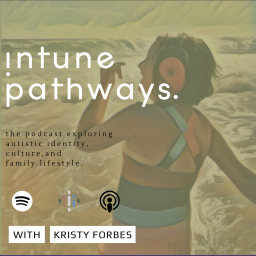
Podcast thumbnail for inTune Pathways: The Podcast

inTune Pathways: The Podcast

Claim This Podcast

by Kristy Forbes

4.9(75 reviews)
12 episodes
Updated Bi-weekly
Accepts GuestsHas SponsorsLocation 🇦🇺
23

Podcast Authority

Beta
PoorBased on show quality, social media presence, reviews, charts, and more
Pod Engine
Quality12
Social0
YouTube0
Engagement85

Podcast Overview

As the host of a unique and impactful podcast, Kristy Forbes combines her professional experience as an educator with a special interest in Pathological Demand Avoidance with a personal touch. She brings an authentic voice to the dialogue on neurodivergence, drawing from her own experiences as an autistic adult, a parent to neurodivergent children, and a professional in the field. KF's mission (and dreaming) invites families and carers to imagine transcending conventional approaches in supporting their children and loved ones; invites professionals to dismantle traditional power imbalances & social hierarchies rooted in privilege and to disengage from power imbalances and engage in meaningful, community-level presence and deep listening. Most importantly, Kristy offers a reframe; an alternate perspective of what it truly means to be neurodivergent and how we both formulate and cultivate a positive sense of autistic identity and culture within a neuronormative society. Her passion stems from a commitment and drive to decolonise and dismantle the ways in which we hear one another and begin to rewrite what the textbooks say we are, as neurodivergent people and communities. With radical acceptance.

Language

🇺🇲

Publishing Since

8/11/2022

Unlock The Full Podcast Authority Score Report

See how your podcast performs across key metrics

23

Podcast Authority

Beta
PoorBased on show quality, social media presence, reviews, charts, and more
Pod Engine
Quality12
Social0
YouTube0
Engagement85
5
Excellent Areas
2
Good Performance
12
Growth Opportunities
excellent
Episode Length
7 minutes
Performing excellently!
good
Show Experience
12 episodes over 2.4 years

Recommendations available

Unlock the full report to see detailed tips

poor
Publishing Consistency
Every 74 days

Recommendations available

Unlock the full report to see detailed tips

+16 More Metrics

Unlock comprehensive insights including:

  • • YouTube presence analysis
  • • Social media reach metrics
  • • RSS compliance scoring
  • • Podcast 2.0 features
  • • Technical standards
What's Included in Your Full Report

Detailed Analytics

  • Complete breakdown of all 19 authority metrics
  • Personalized recommendations for each metric
  • Industry benchmarks and comparisons
  • Technical RSS feed analysis and compliance scoring

Growth Strategies

  • Step-by-step action plans for improvement
  • Quick wins to boost your score immediately
  • Pro tips from successful podcasters
Get your free podcast insights report

See how your show performs across every key metric

Instant delivery
No spam
Attract Better Guests

High authority scores make your podcast more attractive to industry leaders and influencers who want to appear on credible shows.

Secure Sponsorships

Sponsors look for podcasts with proven authority and engagement. Your score demonstrates your podcast's value to potential partners.

Grow Your Audience

Understanding your strengths and weaknesses helps you make data-driven decisions to expand your listener base effectively.

1 verified contact email on file for inTune Pathways: The Podcast

Pitch yourself as a guest, propose sponsorships, or reach out directly to the host.

Recent Episodes

Episode thumbnail for Is it demand avoidance or PDA?

January 13, 2025

Is it demand avoidance or PDA?

Kristy Forbes, a PDA expert and advocate, explores the complexities of Pathological Demand Avoidance, dispelling myths and highlighting the importance of autonomy and agency for individuals with PDA.

Episode thumbnail for Symptoms of dysfunction or signs of recovery?

September 28, 2024

Symptoms of dysfunction or signs of recovery?

<p>In this episode, we tackle a topic that resonates deeply with many families: recognizing the difference between dysfunction and signs of recovery when transitioning children out of the school system, especially those with PDA (Pathological Demand Avoidance) or those experiencing burnout. <br>We explore the stages of recovery and why what might seem like problematic behaviors—such as changes in sleep patterns, resistance to routine, or shifts in eating habits—can actually be part of a natural healing process.</p> <p><br><strong>Key Points Covered:</strong><br>- The expectations we often hold when bringing children home from a high-stress school environment, and why those expectations may not match the reality of recovery.<br>- How the brain and body respond to prolonged stress, and why the shift out of survival mode may look like exhaustion, disrupted sleep, or changes in behavior.<br>- The role of neurobiology in the recovery process: why children may stay awake at night and sleep during the day, refuse basic tasks like brushing their teeth, or experience shifts in food intake.<br>- The wisdom of the body and brain in recovery—how survival instincts help children find safety in unexpected ways.<br>- Shifting our perspective from seeing these behaviors as dysfunctional to understanding them as steps in the healing process.<br>&nbsp;&nbsp;<br>We also discuss how family members can hold space for children during these critical phases of recovery, understanding that their needs are being met in ways that may not align with societal expectations but are vital for their healing.</p> <p><br><strong>Key Takeaways:</strong><br>- Recovery from school-related trauma is a process, and the behaviors that may seem dysfunctional could actually be signs of deep healing.<br>- The neurobiological response to chronic stress can lead to sleep and eating disruptions, as well as resistance to demands—this is part of the body’s way of recovering from trauma.<br>- It’s crucial for families to trust the recovery process and provide a safe, supportive environment where children can heal in their own time.</p> <p><br><strong>Who Is This Episode For?:</strong><br>This episode is for parents, caregivers, and educators working with children who are recovering from school-related trauma or who have a PDA profile. It provides insights into understanding what recovery looks like and how to support children through it without pathologizing natural healing responses.</p> <p><br><strong>Connect with Us:</strong><br>- Website: ⁠<a href="http://www.kristyforbes.com.au⁠">www.kristyforbes.com.au⁠</a><br>- Instagram: <a href="⁠instagram.com/_kristyforbes⁠">⁠instagram.com/_kristyforbes⁠</a><br>- Facebook: <a href="⁠facebook.com/intunepathways⁠">⁠facebook.com/intunepathways⁠</a></p> <p><br><strong>Thank You:</strong><br>A special thanks to our listeners for engaging with these important discussions. Your experiences and stories continue to inspire and guide us. And to my lovely friend, Alli Davies of Music and the Brain, for sitting alongside me as I infodumped about this topic, close to my heart.</p> <p>&nbsp;</p>

Episode thumbnail for Recovering our children from school related trauma

September 20, 2024

Recovering our children from school related trauma

<h1>Healing from School Trauma: A Family-Centred Approach</h1> <p>In this episode, we dive deep into the impact of school trauma on children, particularly those with a PDA (Pathological Demand Avoidance) profile. This episode answers a key question: <em>what are the next steps in the healing journey, when living a low-demand, school-free life?</em></p> <p>Join us as we unpack the concept of trauma, how it manifests in children, and why post-traumatic stress is a rational and orderly response to distress. We challenge the idea of pathologizing children's trauma responses and emphasize the importance of providing long-term, consistent trust, safety, and space.</p> <p><strong>Key points covered include:</strong></p> <p>-The origins of trauma in children, even before school begins.</p> <p>-How society's demands for productivity and compliance create barriers for PDA children.</p> <p>-The importance of holding space for children during recovery, honouring their individual needs, and understanding what low demand or no demand looks like for each family.</p> <p>-Why recovery from trauma can take as long or longer than the time spent in survival mode.</p> <p>-The impact of hypervigilance on PDA children during recovery and the importance of creating an environment that supports rest and connection.</p> <p>The episode also touches on the importance of parallel living, finding connection through simple activities like screen time, and how parents must prioritize their own healing as an essential part of supporting their children.</p> <p><strong>Key Takeaways: </strong></p> <p>-Trauma can begin long before school starts, rooted in the expectations society places on children and families.</p> <p>-Post-traumatic stress is a logical response to trauma, not a disorder, but a way the body and mind protect themselves.</p> <p>-Recovery from trauma is a delicate, long-term process that requires individualized approaches.</p> <p>-Families need to prioritize their own healing in order to help their children heal.</p> <p>-Connection can look different in neurodivergent families and might involve non-traditional forms of bonding, such as parallel living.</p> <p><strong>Who is this episode for?</strong>&nbsp;</p> <p>This episode is for parents, caregivers, and professionals working with neurodivergent children, particularly those dealing with school-related trauma. It provides insights into the realities of trauma recovery, low-demand living, and how to navigate the complex needs of children with PDA.</p> <p><strong>Connect with Us:</strong></p> <p>Website: <a href="http://www.kristyforbes.com.au">www.kristyforbes.com.au </a></p> <p>Instagram: _kristyforbes</p> <p>Facebook: intunepathways</p> <p><strong>Thank You:</strong></p> <p>A special thank you to our community member who generously shared their story and question about supporting their child through PTSD recovery. Your experience will resonate with many families on a similar journey. You are a phenomenal parent doing all the right things.</p>

12 total episodes available

Deep-dive analytics for inTune Pathways: The Podcast

Frequently asked questions

Have a different question and can't find the answer you're looking for? Reach out to our support team by sending us an email and we'll get back to you as soon as we can.

What is inTune Pathways: The Podcast?

As the host of a unique and impactful podcast, Kristy Forbes combines her professional experience as an educator with a special interest in Pathological Demand Avoidance with a personal touch. She brings an authentic voice to the dialogue on neurodivergence, drawing from her own experiences as an autistic adult, a parent to neurodivergent children, and a professional in the field.

KF's mission (and dreaming) invites families and carers to imagine transcending conventional approaches in supporting their children and loved ones; invites professionals to dismantle traditional power imbalances & social hierarchies rooted in privilege and to disengage from power imbalances and engage in meaningful, community-level presence and deep listening. Most importantly, Kristy offers a reframe; an alternate perspective of what it truly means to be neurodivergent and how we both formulate and cultivate a positive sense of autistic identity and culture within a neuronormative society.

Her passion stems from a commitment and drive to decolonise and dismantle the ways in which we hear one another and begin to rewrite what the textbooks say we are, as neurodivergent people and communities.

With radical acceptance.

How often does this podcast release new episodes?

This podcast updates bi-weekly.

Where can I listen to this podcast?

This podcast is available on 9 platforms including Apple Podcasts, Spotify, and more. You can also use the RSS feed directly.

Does this podcast accept guests?

No, this podcast does not typically feature guests.

Legal Disclaimer

Pod Engine is not affiliated with, endorsed by, or officially connected with any of the podcasts displayed on this platform. We operate independently as a podcast discovery and analytics service.

All podcast artwork, thumbnails, and content displayed on this page are the property of their respective owners and are protected by applicable copyright laws. This includes, but is not limited to, podcast cover art, episode artwork, show descriptions, episode titles, transcripts, audio snippets, and any other content originating from the podcast creators or their licensors.

We display this content under fair use principles and/or implied license for the purpose of podcast discovery, information, and commentary. We make no claim of ownership over any podcast content, artwork, or related materials shown on this platform. All trademarks, service marks, and trade names are the property of their respective owners.

While we strive to ensure all content usage is properly authorized, if you are a rights holder and believe your content is being used inappropriately or without proper authorization, please contact us immediately at hey@podengine.ai for prompt review and appropriate action, which may include content removal or proper attribution.

By accessing and using this platform, you acknowledge and agree to respect all applicable copyright laws and intellectual property rights of content owners. Any unauthorized reproduction, distribution, or commercial use of the content displayed on this platform is strictly prohibited.