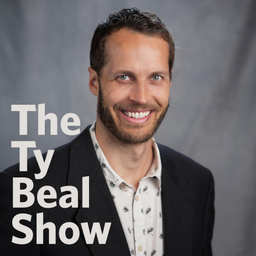
The Ty Beal Show
Claim This Podcastby Ty Beal, PhD
Podcast Authority
Beta
Podcast Overview
<p>Are you overwhelmed by conflicting nutrition advice? Tired of trying to separate health facts from fleeting fads? I’m Ty Beal, PhD, a nutrition scientist exploring what we eat and how it truly impacts our wellbeing.<br /><br />On The Ty Beal Show, we cut through the noise. Each week, I’ll be talking with leading experts in nutrition, public health, and food systems—bringing you the latest science in simple, practical terms. We’ll explore why there’s no one perfect diet, how to nourish your body, and ways to help avoid chronic disease.<br /><br />Here’s the truth: Nutrition shouldn’t be confusing. Our goal is to empower you with knowledge that’s actually useful—so you can feel your best, without the hype. We focus on facts, not fear; understanding, not judgment; and a dose of common sense—and maybe even some humor—along the way.<br /><br />If you’re ready to take charge of your health with credible, science-backed insights, hit subscribe. Let’s learn and grow together.</p> <p>Connect with me on <a href="https://x.com/TyBealPhD" target="_blank" rel="noreferrer noopener">X</a>, <a href="https://www.linkedin.com/in/tybeal/" target="_blank" rel="noreferrer noopener">LinkedIn</a>, <a href="https://www.instagram.com/tybealphd/" target="_blank" rel="noreferrer noopener">Instagram</a>, and <a href="https://www.youtube.com/@TyBealPhD" target="_blank" rel="noreferrer noopener">YouTube</a>. Read my publications on <a href="https://scholar.google.com/citations?user=3y5uHRIAAAAJ&hl=en&oi=ao" target="_blank" rel="noreferrer noopener">Google Scholar</a>. Sign up for my <a href="https://tybeal.com/" target="_blank" rel="noreferrer noopener">Newsletter</a>.</p>
Language
🇺🇲
Publishing Since
6/5/2025
Unlock The Full Podcast Authority Score Report
See how your podcast performs across key metrics
Podcast Authority
BetaRecommendations available
Unlock the full report to see detailed tips
Recommendations available
Unlock the full report to see detailed tips
Unlock comprehensive insights including:
- • YouTube presence analysis
- • Social media reach metrics
- • RSS compliance scoring
- • Podcast 2.0 features
- • Technical standards
Detailed Analytics
- Complete breakdown of all 19 authority metrics
- Personalized recommendations for each metric
- Industry benchmarks and comparisons
- Technical RSS feed analysis and compliance scoring
Growth Strategies
- Step-by-step action plans for improvement
- Quick wins to boost your score immediately
- Pro tips from successful podcasters
See how your show performs across every key metric
High authority scores make your podcast more attractive to industry leaders and influencers who want to appear on credible shows.
Sponsors look for podcasts with proven authority and engagement. Your score demonstrates your podcast's value to potential partners.
Understanding your strengths and weaknesses helps you make data-driven decisions to expand your listener base effectively.
1 verified contact email on file for The Ty Beal Show
Pitch yourself as a guest, propose sponsorships, or reach out directly to the host.
Recent Episodes
April 14, 2026
Nutritional Value Score: We Rated 289 Foods From 1 to 100 — #1 Will Surprise You | Flaminia Ortenzi
In this episode, nutrition researcher Flaminia Ortenzi—PhD candidate and longtime colleague at the Global Alliance for Improved Nutrition (GAIN)—joins the show to break down the Nutritional Value Score (NVS), a new food rating system we co-developed and recently published in the Journal of Nutrition that scores foods from 1 to 100 based on both nutrient density and protection from chronic diseases. Flaminia walks through the seven components that make up the score—vitamins, minerals, protein quality, omega-3s, fiber, calorie density, and nutrient ratios like sodium-to-potassium and saturated-to-unsaturated fat—and explains why existing systems like Nutri-Score and Health Star Rating fall short, often giving high marks to sugary cereals while penalizing sardines. We reveal the top-scoring food groups (dark green leafy vegetables, organ meats, and fatty fish), the single food that scored a perfect 100 (it's not what you'd expect), and why both low-carb and plant-based camps have found reasons to disagree with us—which we take as a sign the system is working. The second half digs into the practical applications and honest limitations. Flaminia explains how the NVS was designed to guide food policy and programs globally—helping organizations decide which foods to promote in markets, supply chains, and consumer awareness campaigns—and how it could be adapted for front-of-package labeling and mobile apps. We discuss the enormous challenge of food composition data gaps, especially for indigenous and traditional foods where the only nutritional data comes from individual papers at local universities. Flaminia also addresses the system's key limitation as a relative score that shifts when the dataset changes, why beef scores a surprisingly solid 59 for different reasons than soy milk's 61, and how using nutritional value as the functional unit in environmental and affordability assessments completely reshuffles the conventional rankings—with fish and even ruminant meat often outperforming legumes and nuts per unit of nutritional value delivered. Timestamps 00:00 Introduction to Nutritional Value Score (NVS) 02:29 Development and Evolution of NVS 05:30 Components of the Nutritional Value Score 08:21 Tailoring NVS for Specific Populations 11:20 Challenges in Food Composition Data 14:15 Top Scoring Foods and Nutritional Insights 17:28 Lowest Scoring Foods and Dietary Implications 20:27 Applications of NVS in Policy and Programs 23:36 Understanding Nutri-Score and Health Star Rating 27:30 The Role of Mobile Apps in Food Choices 29:35 Challenges in Data Collection for Food Scoring 31:17 Limitations of the Nutritional Value Score System 33:45 Debating the Scores of Whole Grains and Dairy 36:44 Comparing Nutritional Quality: Beef vs. Soy Products 44:30 Integrating Nutritional Value in Environmental Assessments Nutritional Value Score Rates Foods Based on Nutrient Density and Noncommunicable Disease Prevention: https://jn.nutrition.org/article/S0022-3166(26)00092-1/fulltext Connect with Ty YouTube: https://www.youtube.com/@TyBealPhDX: https://www.x.com/TyBealPhDLinkedIn: https://www.linkedin.com/in/tybealInstagram: https://www.instagram.com/tybealphdWebsite: https://www.tybeal.com
April 7, 2026
The Food Combo That Makes Us Overeat — And It's In Breast Milk | John Speakman, PhD
In this episode, Professor John Speakman—biologist at the University of Aberdeen and the Chinese Academy of Sciences, and one of the world's foremost experts on energy balance—joins the show to reveal what a 1,200-mouse feeding study and 30,000 human data points have uncovered about why we really gain weight. The answer isn't fat alone and it isn't carbs alone—it's a specific combination of the two, around 40–50% fat and 20–30% carbohydrate by calories, that sits at the peak of a "mountain" of weight gain. John explains why both low-fat and low-carb diets work (they're descending opposite sides of the same mountain), and then drops the evolutionary bombshell: that peak maps almost perfectly onto the macronutrient composition of breast milk—a reward signal hardwired into our brains from infancy that was never switched off because, until the modern food environment, no natural food matched it. We also dig into why John doesn't find the carbohydrate-insulin model convincing, his attempts to replicate David Ludwig's glycemic index findings, and why he believes adversarial collaborations are the only way to break the impasse in nutrition science. The second half covers the deeper forces behind the obesity pandemic. John walks through his doubly labeled water analysis of over 6,000 people showing that physical activity hasn't actually declined—instead, basal metabolic rate has quietly dropped over the past century, with two surprising potential drivers: reduced infection burden and the dietary shift from saturated animal fats to linoleic acid–rich seed oils. We explore why people underreport about 30% of what they eat and why that error gets worse at higher BMIs, making diet-disease epidemiology far shakier than most authorities acknowledge. John then lays out his "drifty gene" hypothesis—a provocative alternative to the thrifty gene idea, arguing that once early humans eliminated predators, the upper limit on body weight drifted apart across the population with no selective pressure to rein it in. We close with his "clean cupboards" framework for calorie restriction and longevity: the body isn't strategically investing in repair—it's just trying to survive until tomorrow, cleaning out junk proteins and dead cells along the way, with real benefits but also real trade-offs in immune function and wound healing. Timestamps 00:00 Introduction to Energy Balance and Doubly Labeled Water 07:36 Surprising Findings on Energy Expenditure Across Lifespan 12:48 The Obesity Epidemic: Intake vs. Expenditure 18:59 Declining Basal Metabolic Rate: Causes and Implications 22:53 Dietary Composition: The Role of Macronutrients in Weight Gain 34:17 The Role of Breast Milk in Reward Systems 37:52 Dietary Flexibility and Cultural Variations 38:20 Debating the Carbohydrate Insulin Model 45:46 The Need for Collaborative Research in Nutrition 49:41 Challenges in Dietary Reporting and Accuracy 56:39 The Drifty Gene Hypothesis vs. Thrifty Gene Hypothesis 01:13:05 Caloric Restriction and Longevity: The Clean Cupboards Concept Connect with Ty YouTube: https://www.youtube.com/@TyBealPhDX: https://www.x.com/TyBealPhDLinkedIn: https://www.linkedin.com/in/tybealInstagram: https://www.instagram.com/tybealphdWebsite: https://www.tybeal.com
March 31, 2026
Your Gut Microbiome Shapes Your Health More Than Your Genes | Tim Spector, MD
In this episode, Professor Tim Spector—epidemiologist at King's College London, co-founder of ZOE, and one of the world's most cited scientists—joins the show to share what 15 years of pioneering microbiome research has revealed about human health. We start with the finding that upended his career: identical twins, despite sharing 100% of their DNA and a childhood home, share only about 25% of their gut microbe species—meaning 75% of your microbiome is entirely unique to you. From there, we explore the landmark ZOE feeding study of 1,000 twins, which found up to a tenfold difference in blood fat and glucose responses to identical meals, and Tim's new Nature paper on 30,000 ZOE participants that introduces a more sophisticated gut health scoring system—moving beyond crude diversity metrics to a ratio of beneficial to harmful microbes linked to immune function, metabolism, and body composition. We also break down the difference between prebiotics and probiotics, why Tim's Biome trial found prebiotics deliver roughly 9–10 times more benefit to gut health scores than a standard lactobacillus probiotic, and how just small, regular amounts of fermented foods can reduce inflammatory markers by up to 25%. The second half of the conversation turns to practical application. Tim walks through his six core principles for gut-centered eating—including why 30 different plants per week is the sweet spot, how to eat the rainbow for polyphenols, why calories are a misleading lens for evaluating food, and how pivoting your protein toward high-fiber legumes serves both muscle and microbiome. We dig into the surprising science on coffee (it's a fermented bean, packed with 600+ polyphenols, a source of fiber, and linked to a 20–25% reduction in heart disease and stroke risk), the specific additives and hyper-palatability tricks that make ultra-processed foods uniquely harmful beyond just their calorie content, and the emerging science of the gut-brain axis—where 80% of vagal nerve signals travel from the gut to the brain, and where gut-friendly diets are now showing effects comparable to antidepressants in clinical trials. Tim also shares his thinking on why rates of bowel cancer in people in their 30s and 40s have tripled, and what that signals about a generation raised on ultra-processed food. Timestamps 00:00 The Microbiome Revolution Begins 02:39 Understanding Gut Microbiome Diversity 05:47 Personalized Nutrition and Microbiome Clusters 08:46 Causation vs Correlation in Microbiome Research 11:33 Prebiotics vs Probiotics: Understanding Their Roles 14:41 Personalized Nutrition Insights from Microbiome Testing 17:37 The Importance of Dietary Diversity 20:47 Mindful Eating and Technology's Role 23:44 Challenges of Fiber in Diets 29:32 Transitioning to a High Fiber Diet 34:03 The Importance of Long-Term Dietary Changes 36:33 Key Principles for a Healthy Diet 41:14 The Role of Coffee in Gut Health 48:19 Understanding Ultra-Processed Foods 52:46 The Gut-Brain Connection 57:46 Dietary Risks for Bowel Cancer Zoe: https://zoe.com/en-us Connect with Ty YouTube: https://www.youtube.com/@TyBealPhDX: https://www.x.com/TyBealPhDLinkedIn: https://www.linkedin.com/in/tybealInstagram: https://www.instagram.com/tybealphdWebsite: https://www.tybeal.com
38 total episodes available
Similar Podcasts
Discover related shows you might enjoy

The Genius Life
Max Lugavere

The Dr. Gabrielle Lyon Show
Dr. Gabrielle Lyon

Dhru Purohit Show
Dhru Purohit

The Model Health Show
Shawn Stevenson

LEVELS – A Whole New Level
Levels
The Doctor's Farmacy with Mark Hyman, M.D.
Dr. Mark Hyman

The Metabolic Link
Dr. Dominic D'Agostino PhD, Dr. Angela Poff PhD, and Victoria Field

The Ultimate Health Podcast
Jesse Chappus

Metabolic Mind
Bret Scher

Well Beyond 40
JJ Virgin

Dr. Ruscio Radio, DC: Health, Nutrition and Functional Healthcare
Dr. Michael Ruscio, DC

The Proof with Simon Hill
Live better for longer

The Neuro Experience with Louisa Nicola
Louisa Nicola

Everyday Wellness
Everyday Wellness™

The Energy Blueprint Podcast
Ari Whitten
Deep-dive analytics for The Ty Beal Show
Frequently asked questions
Have a different question and can't find the answer you're looking for? Reach out to our support team by sending us an email and we'll get back to you as soon as we can.
- What is The Ty Beal Show?
<p>Are you overwhelmed by conflicting nutrition advice? Tired of trying to separate health facts from fleeting fads? I’m Ty Beal, PhD, a nutrition scientist exploring what we eat and how it truly impacts our wellbeing.<br /><br />On The Ty Beal Show, we cut through the noise. Each week, I’ll be talking with leading experts in nutrition, public health, and food systems—bringing you the latest science in simple, practical terms. We’ll explore why there’s no one perfect diet, how to nourish your body, and ways to help avoid chronic disease.<br /><br />Here’s the truth: Nutrition shouldn’t be confusing. Our goal is to empower you with knowledge that’s actually useful—so you can feel your best, without the hype. We focus on facts, not fear; understanding, not judgment; and a dose of common sense—and maybe even some humor—along the way.<br /><br />If you’re ready to take charge of your health with credible, science-backed insights, hit subscribe. Let’s learn and grow together.</p> <p>Connect with me on <a href="https://x.com/TyBealPhD" target="_blank" rel="noreferrer noopener">X</a>, <a href="https://www.linkedin.com/in/tybeal/" target="_blank" rel="noreferrer noopener">LinkedIn</a>, <a href="https://www.instagram.com/tybealphd/" target="_blank" rel="noreferrer noopener">Instagram</a>, and <a href="https://www.youtube.com/@TyBealPhD" target="_blank" rel="noreferrer noopener">YouTube</a>. Read my publications on <a href="https://scholar.google.com/citations?user=3y5uHRIAAAAJ&hl=en&oi=ao" target="_blank" rel="noreferrer noopener">Google Scholar</a>. Sign up for my <a href="https://tybeal.com/" target="_blank" rel="noreferrer noopener">Newsletter</a>.</p> - How often does this podcast release new episodes?
This podcast updates daily.
- Where can I listen to this podcast?
This podcast is available on 4 platforms including Apple Podcasts, Spotify, and more. You can also use the RSS feed directly.
- Does this podcast accept guests?
Information about guest appearances is not available.
Legal Disclaimer
Pod Engine is not affiliated with, endorsed by, or officially connected with any of the podcasts displayed on this platform. We operate independently as a podcast discovery and analytics service.
All podcast artwork, thumbnails, and content displayed on this page are the property of their respective owners and are protected by applicable copyright laws. This includes, but is not limited to, podcast cover art, episode artwork, show descriptions, episode titles, transcripts, audio snippets, and any other content originating from the podcast creators or their licensors.
We display this content under fair use principles and/or implied license for the purpose of podcast discovery, information, and commentary. We make no claim of ownership over any podcast content, artwork, or related materials shown on this platform. All trademarks, service marks, and trade names are the property of their respective owners.
While we strive to ensure all content usage is properly authorized, if you are a rights holder and believe your content is being used inappropriately or without proper authorization, please contact us immediately at hey@podengine.ai for prompt review and appropriate action, which may include content removal or proper attribution.
By accessing and using this platform, you acknowledge and agree to respect all applicable copyright laws and intellectual property rights of content owners. Any unauthorized reproduction, distribution, or commercial use of the content displayed on this platform is strictly prohibited.