
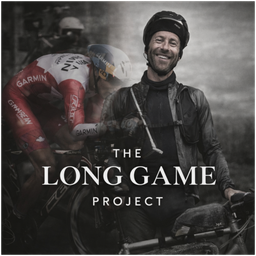
The Long Game Project
Claim This Podcastby svein tuft
Podcast Overview
<p><strong>The Long Game Project</strong></p><p>There comes a point where things start to shift.</p><p>You don’t bounce back quite the same. The numbers don’t come as easily. The body talks back more. And whether you like it or not, there’s this quiet narrative that creeps in—maybe this is where you ease off… maybe this is where you let it go.</p><p>This podcast pushes back against that.</p><p>The Long Game Project is built on a simple idea: getting older doesn’t mean you’re done. It doesn’t mean you stop chasing things, testing yourself, or seeing what you’re capable of.</p><p>If anything, it means the opposite.</p><p>It means you get more intentional. More focused. More connected to why you’re doing it in the first place.</p><p>This is about continuing to do hard things.</p><p>Not recklessly. Not blindly. But deliberately.</p><p>It’s about asking: What am I still capable of? And then going out and finding out.</p><p>Because yes—things change. You may not recover like you used to. You may not hit the same numbers. You may not be as robust.</p><p>But that doesn’t mean you stop.</p><p>It means you adapt. You evolve. You find a different way forward.</p><p>And you keep going.</p><p>At this stage, it takes more vigilance than ever.</p><p>Not the kind you needed in your twenties, where you could get away with cutting corners. This is different.</p><p>Now it’s about discipline at a higher level.</p><p>Paying attention to sleep, nutrition, stress, recovery. Showing up consistently. Making the right decisions when no one’s watching.</p><p>Because the margin gets smaller.</p><p>And that’s not a bad thing.</p><p>It sharpens you.</p><p>It forces you to be honest about what matters. It forces you to train smarter, live better, and take ownership of the process.</p><p>Discipline becomes the foundation—not as restriction, but as a way to keep doing the things you care about at a meaningful level.</p><p>This podcast brings together stories from athletes and everyday people navigating that same space.</p><p>Some are still performing at a high level. Some are rediscovering it. Some are just getting started.</p><p>All of them are figuring out how to balance:</p><ul><li>performance and longevity</li><li>ambition and responsibility</li><li>family, work, and personal drive</li></ul><p>Because life doesn’t slow down just because you want to train.</p><p>So how do you make it work?</p><p>How do you keep chasing meaningful goals while being present for your family? How do you stay sharp without burning everything else down?</p><p>There’s a bigger question underneath all of this:</p><p>What does a good life actually look like?</p><p>For me, it’s always been about quality.</p><p>About being able to move, push, and feel alive. About not arriving at the later years completely worn down from avoiding the very things that make life meaningful.</p><p>This isn’t about self-destruction. It’s about intention.</p><p>And it matters beyond just you.</p><p>Because how you live sets an example—for your kids, for the people around you.</p><p>Showing that you don’t have to give things up just because you hit a certain number. That you can still care, still commit, still go all in.</p><p><strong>About the host</strong></p><p>I’m Svein Tuft.</p><p>I spent years as a professional cyclist, racing at the highest level—winning a stage at the Tour de France, competing in Grand Tours, standing on the podium at the World Championships, and becoming a national time trial and road champion.</p><p>But this project isn’t about looking back.</p><p>It’s about what comes next.</p><p>These days, I’m still chasing that edge—through time trials, endurance challenges, and projects like FKT Challenges and bikepacking routes.</p><p>Not to relive the past, but to see how far I can still go.</p><p>Because the goal isn’t to hold onto who I was.</p><p>It’s to keep evolving into who I am now.</p><p>Welcome to The Long Game Project.</p>
Language
🇺🇲
Publishing Since
4/22/2026
2 verified contact emails on file for The Long Game Project
Pitch yourself as a guest, propose sponsorships, or reach out directly to the host.
Recent Episodes
July 24, 2026
Cody McKay of Project Heart
<p>Cody McKay was racing his bike at an elite level at 29 years old when a routine chest X-ray — ordered for something as mundane as winter congestion — revealed an ascending aortic aneurysm. What followed was a journey through diagnosis, open heart surgery, and an unlikely return to competitive racing.</p><p>In this episode, host Svein Tuft sits down with Cody to unpack what it's like to discover a life-threatening heart condition when you feel completely healthy, the mental weight of being an athlete whose identity is suddenly on hold, and what recovery looks like when your sternum has been cracked open and wired back together. Cody also shares the story behind Project Heart, his not-for-profit using his racing comeback to spark conversations about cardiovascular health in the cycling community.</p><p>Svein opens up too — sharing his own experience with AFib during the Tour Divide — and together they make the case that fitness and heart health aren't always the same thing, and that the endurance athlete's sense of invincibility can be its own blind spot.</p><p>A conversation about performance, vulnerability, and why looking after your heart is part of the long game.</p>
July 10, 2026
Geoff Kabush Legendary Canadian Mountain biker
<p>Geoff Kabush on Racing Longevity, Skill, Doping Era Survival, and Still Finding New Adventures </p><p>Svein Tuft talks with mountain bike legend Geoff Kabush about building a decades-long career, from growing up in the Comox Valley and discovering cycling in his teens to racing internationally as a junior in 1995. Kabush describes the mid-’90s “glory days” of XC racing, his formative years in Victoria, and the long-term development approach shaped by coach Jürg Feldmann’s physiology-driven mentorship. He explains why he still races at 49—variety, adventure, and staying fit—while noting age-related changes in recovery and repeat intensity. They discuss modern athlete pressures, social media, development mistakes like rushing to Europe, and the importance of balance. Kabush reflects on equipment evolution, experimenting with 1x drivetrains and 32-inch gravel wheels, and speaks candidly about doping’s impact, why he spoke out, and his pride in winning the 2009 Bromont World Cup. </p><p>00:00 Welcome To Long Game 00:42 GripGrab Sponsor Shoutout 01:34 </p><p>Meet Geoff Kabush 02:18 Home Base In Squamish </p><p>03:46 </p><p>Early Sports And First Bikes 05:19 Solo Trip To Worlds 1995 </p><p>08:01 Nineties MTB Glory Days 09:40 Victoria Years And Breakthrough </p><p>12:26 Coach Jurg Long View </p><p>15:11 Why Keep Racing 19:06 Aging And Recovery Changes </p><p>23:46 Experience Skills And Tactics 26:02 Training Week Now </p><p>27:27 Next Gen Pressures 31:07 </p><p>Advice For Young Riders 38:49 Staying Motivated With Goals </p><p>43:13 Trainer Or Racer Mindset 44:05 Offseason Training Love 45:14 Racing Beyond World Cups 47:38 </p><p>32 Inch Gravel Experiment 49:41 Bike Tech Evolution 52:51 Early Gear and Setup </p><p>55:10 One By and Wide Bars 57:48 BC Skills Advantage 01:00:15 </p><p>Speaking Out on Doping 01:04:58 Exposure and Career Fallout 01:10:20 </p><p>Truth Reconciliation Debate 01:19:17 Proudest Win at Home 01:25:10 </p><p>Advice and Long Game 01:27:36 Semi Retired Adventures 01:29:34 Thanks and Sponsors</p>
July 1, 2026
Metabolic cart testing and Respiratory training
<p><strong>What does your body actually do during a long ride — and how do you find out?</strong></p><p>In this episode, Svein sits down with performance physiologist Steve Neal, who traveled to Nelson, BC with his full metabolic cart setup to put the Svein through a comprehensive testing session ahead of the BC Epic 1000 — a 1,040 km ultra-endurance race.</p><p>This isn't a standard VO2 max test. Steve's protocol goes far deeper, measuring fat oxidation, carbohydrate crossover, ventilatory thresholds, muscle oxygen (via Moxy sensors), spirometry, and recovery response — all in a single session. The result? More actionable data than most world tour riders ever receive.</p><p><strong>In this episode, we cover:</strong></p><ul><li>Why shorter ramp tests miss most of what matters — and why longer protocols reveal the full picture</li><li>Fat max vs. metabolic efficiency: what they are, how to improve them, and why the difference matters for multi-day events</li><li>VT1 and VT2: the ventilatory thresholds most coaches ignore, and what it means when they collapse together (hint: you're probably more tired than you think)</li><li>The Moxy muscle oxygen sensor — what it shows on a working muscle vs. a non-working one, and why the bicep reading can be more revealing than the quad</li><li>The recovery test: why your heart rate recovering doesn't mean your respiratory system has</li><li>Spirometry and FEV1: how lung function testing on the bike reveals a limiter almost no one is training</li><li>Breathing mechanics — nasal vs. mouth, diaphragmatic vs. chest, and how slowing your respiratory rate at a fixed wattage can change your metabolism in real time</li><li>Respiratory training devices: SpiroTiger, Breathe Way Better, AeroFit, and the Go2 mouthpiece — what each does and when to use them</li><li>The zone 2 problem: why training at your fat max wattage might actually make you worse if that number is too low</li><li>The freediving connection: what elite breath-hold athletes know about thoracic mobility that cyclists are completely missing</li></ul><p><strong>The headline result from today's test:</strong> fat max improved from 280 to 320 watts compared to the previous test — while the athlete is two years older. That's the kind of data that changes how you train.</p><p>Whether you're preparing for a 1,000 km bikepacking race or just trying to understand why long rides feel harder than they should, this episode gives you a framework for thinking about endurance performance that goes well beyond watts and heart rate.</p><p><strong>Guest:</strong> Steve Neal, performance physiologist and metabolic testing specialist based in British Columbia. <a target="_blank" rel="noopener noreferrer nofollow" href="mailto:steve@stevenealperformance.com">steve@stevenealperformance.com</a></p><p></p><p>Svein Tuft</p><p><a target="_blank" rel="noopener noreferrer nofollow" href="http://tuftcamps.com">tuftcamps.com</a></p><p><a target="_blank" rel="noopener noreferrer nofollow" href="mailto:tuftcamps@gmail.com">tuftcamps@gmail.com</a></p><p>@svein.tuft on instagram</p><p></p>
6 total episodes available
Similar Podcasts
Discover related shows you might enjoy

FKT Challenges
svein tuft

The Time-Crunched Cyclist Podcast by CTS
CTS

Marginal Gains Cycling Podcast, Presented by Silca
SILCA

Fast Talk
Fast Talk Labs

The Pinkbike Podcast
Pinkbike

The Roadman Cycling Podcast
Anthony Walsh

Ask a Cycling Coach Podcast - Presented by TrainerRoad
TrainerRoad
Velo Podcast
Velo

The Adventure Stache
Payson McElveen

Life in the Peloton, presented by MAAP
Mitch Docker

THEMOVE
Lance Armstrong

Geek Warning
Escape Collective

Bonk Bros
Bonk Bros

Downtime - The Mountain Bike Podcast
Downtime MTB
Phil Gaimon Cycling Podcast
Phil Gaimon
Deep-dive analytics for The Long Game Project
Frequently asked questions
Have a different question and can't find the answer you're looking for? Reach out to our support team by sending us an email and we'll get back to you as soon as we can.
- What is The Long Game Project?
<p><strong>The Long Game Project</strong></p><p>There comes a point where things start to shift.</p><p>You don’t bounce back quite the same. The numbers don’t come as easily. The body talks back more. And whether you like it or not, there’s this quiet narrative that creeps in—maybe this is where you ease off… maybe this is where you let it go.</p><p>This podcast pushes back against that.</p><p>The Long Game Project is built on a simple idea: getting older doesn’t mean you’re done. It doesn’t mean you stop chasing things, testing yourself, or seeing what you’re capable of.</p><p>If anything, it means the opposite.</p><p>It means you get more intentional. More focused. More connected to why you’re doing it in the first place.</p><p>This is about continuing to do hard things.</p><p>Not recklessly. Not blindly. But deliberately.</p><p>It’s about asking: What am I still capable of? And then going out and finding out.</p><p>Because yes—things change. You may not recover like you used to. You may not hit the same numbers. You may not be as robust.</p><p>But that doesn’t mean you stop.</p><p>It means you adapt. You evolve. You find a different way forward.</p><p>And you keep going.</p><p>At this stage, it takes more vigilance than ever.</p><p>Not the kind you needed in your twenties, where you could get away with cutting corners. This is different.</p><p>Now it’s about discipline at a higher level.</p><p>Paying attention to sleep, nutrition, stress, recovery. Showing up consistently. Making the right decisions when no one’s watching.</p><p>Because the margin gets smaller.</p><p>And that’s not a bad thing.</p><p>It sharpens you.</p><p>It forces you to be honest about what matters. It forces you to train smarter, live better, and take ownership of the process.</p><p>Discipline becomes the foundation—not as restriction, but as a way to keep doing the things you care about at a meaningful level.</p><p>This podcast brings together stories from athletes and everyday people navigating that same space.</p><p>Some are still performing at a high level. Some are rediscovering it. Some are just getting started.</p><p>All of them are figuring out how to balance:</p><ul><li>performance and longevity</li><li>ambition and responsibility</li><li>family, work, and personal drive</li></ul><p>Because life doesn’t slow down just because you want to train.</p><p>So how do you make it work?</p><p>How do you keep chasing meaningful goals while being present for your family? How do you stay sharp without burning everything else down?</p><p>There’s a bigger question underneath all of this:</p><p>What does a good life actually look like?</p><p>For me, it’s always been about quality.</p><p>About being able to move, push, and feel alive. About not arriving at the later years completely worn down from avoiding the very things that make life meaningful.</p><p>This isn’t about self-destruction. It’s about intention.</p><p>And it matters beyond just you.</p><p>Because how you live sets an example—for your kids, for the people around you.</p><p>Showing that you don’t have to give things up just because you hit a certain number. That you can still care, still commit, still go all in.</p><p><strong>About the host</strong></p><p>I’m Svein Tuft.</p><p>I spent years as a professional cyclist, racing at the highest level—winning a stage at the Tour de France, competing in Grand Tours, standing on the podium at the World Championships, and becoming a national time trial and road champion.</p><p>But this project isn’t about looking back.</p><p>It’s about what comes next.</p><p>These days, I’m still chasing that edge—through time trials, endurance challenges, and projects like FKT Challenges and bikepacking routes.</p><p>Not to relive the past, but to see how far I can still go.</p><p>Because the goal isn’t to hold onto who I was.</p><p>It’s to keep evolving into who I am now.</p><p>Welcome to The Long Game Project.</p> - How often does this podcast release new episodes?
This podcast updates daily.
- Where can I listen to this podcast?
This podcast is available on 4 platforms including Apple Podcasts, Spotify, and more. You can also use the RSS feed directly.
- Does this podcast accept guests?
Yes, this podcast regularly features guests.
Legal Disclaimer
Pod Engine is not affiliated with, endorsed by, or officially connected with any of the podcasts displayed on this platform. We operate independently as a podcast discovery and analytics service.
All podcast artwork, thumbnails, and content displayed on this page are the property of their respective owners and are protected by applicable copyright laws. This includes, but is not limited to, podcast cover art, episode artwork, show descriptions, episode titles, transcripts, audio snippets, and any other content originating from the podcast creators or their licensors.
We display this content under fair use principles and/or implied license for the purpose of podcast discovery, information, and commentary. We make no claim of ownership over any podcast content, artwork, or related materials shown on this platform. All trademarks, service marks, and trade names are the property of their respective owners.
While we strive to ensure all content usage is properly authorized, if you are a rights holder and believe your content is being used inappropriately or without proper authorization, please contact us immediately at hey@podengine.ai for prompt review and appropriate action, which may include content removal or proper attribution.
By accessing and using this platform, you acknowledge and agree to respect all applicable copyright laws and intellectual property rights of content owners. Any unauthorized reproduction, distribution, or commercial use of the content displayed on this platform is strictly prohibited.