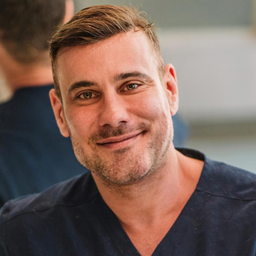
The Science of Age-less Living
Claim This Podcastby Dr. Ethan Hausman-Marquis
Podcast Authority
Beta
Podcast Overview
<p><strong>Welcome to The Science of Age-Less Living !</strong> </p><p>Dr. Ethan Hausman-Marquis—logevity researcher, biohacker and founder of The Catalyst Clinic—shares his journey into the fields of aesthetics, regenerative medicine, and longevity science, and offers a look at what the future of aging may hold.</p><p>From his early studies at UCLA to advanced work in genomics and molecular biology at L’École Normale Supérieure in Paris and a PhD at the Karolinska Institute in Stockholm, Dr. Ethan’s path has been guided by one goal: helping people live longer, healthier, and more vibrant lives.</p><p>He is the author of <a target="_blank" rel="noopener noreferrer nofollow" href="https://amzn.eu/d/9XyD9vq">Exploring the World of Peptides: From Basics to Breakthroughs</a> and <a target="_blank" rel="noopener noreferrer nofollow" href="https://amzn.eu/d/5gq44kP">Peptide-Based Cancer Therapies: A New Frontier in Precision Medicine</a>, and has contributed to several peer-reviewed publications on cutting-edge medical research.</p><p>In this episode, Dr. Ethan reflects on his transition from academic research to clinical innovation at The Catalyst Clinic—with locations in London, New York, Amsterdam, and soon Zürich—and sets the stage for what’s to come in future episodes.</p><p>Each week, The Science of Age-Less Living explores the molecular and cell biology of longevity—the evolving landscape of regenerative medicine, the power of peptides, the genetics of aging, and the simple, practical tools that can help you thrive at any age.</p><p>Join us as we explore what it truly means to age well—combining science, medicine, and mindset to help you live not just longer, but better.</p><p><strong>Let’s begin the journey to Age-Less Living.</strong></p><p>Learn more at: <a target="_blank" rel="noopener noreferrer nofollow" href="http://thecatalystclinic.com/wellness/peptide-therapy">thecatalystclinic.com/wellness/peptide-therapy</a></p>
Language
🇺🇲
Publishing Since
3/2/2025
Unlock The Full Podcast Authority Score Report
See how your podcast performs across key metrics
Podcast Authority
BetaRecommendations available
Unlock the full report to see detailed tips
Recommendations available
Unlock the full report to see detailed tips
Unlock comprehensive insights including:
- • YouTube presence analysis
- • Social media reach metrics
- • RSS compliance scoring
- • Podcast 2.0 features
- • Technical standards
Detailed Analytics
- Complete breakdown of all 19 authority metrics
- Personalized recommendations for each metric
- Industry benchmarks and comparisons
- Technical RSS feed analysis and compliance scoring
Growth Strategies
- Step-by-step action plans for improvement
- Quick wins to boost your score immediately
- Pro tips from successful podcasters
See how your show performs across every key metric
High authority scores make your podcast more attractive to industry leaders and influencers who want to appear on credible shows.
Sponsors look for podcasts with proven authority and engagement. Your score demonstrates your podcast's value to potential partners.
Understanding your strengths and weaknesses helps you make data-driven decisions to expand your listener base effectively.
Reach the team behind The Science of Age-less Living
Verified contact details for this show aren't on file yet — sign up to get notified when they land.
Recent Episodes
August 8, 2026
Age-less by Design: The Centenarian Genes That Rewrite How We Grow Old
<p>What separates someone managing a pharmacy's worth of medications at seventy-five from someone who's just getting started on the road to a hundred and two? In this episode, we crack open the biological instruction manual of the world's centenarians and read its most remarkable pages. We start with a crucial distinction — the difference between lifespan (how long you live) and healthspan (how long you live well) — and the striking pattern researchers call the compression of morbidity: the way the very longest-lived people tend to stay healthy far longer and then decline quickly, burning clean and steady rather than guttering out over decades.</p><p>From there, we tour the genes that show up again and again in centenarian studies across the globe. We meet APOE, the double-edged gene whose different versions tilt the odds toward risk or protection; FOXO3, the "building superintendent" that switches on your cells' repair, cleanup, and recycling crews; and the counterintuitive growth paradox of IGF-1 and mTOR, where dialing down the body's relentless "grow!" signal turns out to favor a longer, more durable life. We round out the cast with Klotho, the DNA-repair scribes that keep your genetic manuscript faithful over a lifetime, and the immune-signaling genes that know when to stand inflammation down instead of letting it smolder into "inflammaging."</p><p>But the real payoff isn't a list of genes you either have or don't. It's the single idea underneath all of them: genetics loads the gun, but lifestyle pulls the trigger. Many of the exact pathways centenarians inherit for free — maintenance, repair, restraint, regulation — have handles that your daily choices can reach, through movement, sleep, the rhythm of eating, and managing chronic inflammation. You can't swap your DNA, but you can influence which genes are switched on and how loudly. This episode is about learning where those dimmer switches are, and why aging age-lessly was never a locked door.</p>
August 3, 2026
The Age-less Night: How Your Pineal Gland Rewrites Your Genes While You Sleep
<p>Most people treat sleep as simple recovery, but this episode reframes it as the nightly window in which a gland smaller than a pea helps decide how fast you age. That gland is the pineal gland, buried at the center of your brain, and its job is to release melatonin — not really a "sleep chemical" but a darkness signal that tells every cell in your body it's night. This signal is wired to light hitting your eyes and routed through your brain's master clock, the SCN. The catch: the pineal gland tends to calcify and its melatonin output declines with age, so the darkness signal that once washed cleanly through your body every night grows quieter over the decades.</p><p>That fading signal matters because you don't have one clock — you have trillions. Nearly every cell runs its own roughly-24-hour rhythm built from "clock genes," and those genes control the timing of a huge share of what your body does, from DNA repair to metabolism to immune activity. Melatonin helps keep all these clocks synchronized. When chronic stress and poor sleep scramble that synchronization, gene expression shifts: the inflammation program (driven by NF-κB) creeps on, while repair-and-protection systems tied to the clock — like the longevity-linked SIRT1 — get thrown off schedule. Crucially, none of this mutates your DNA; it changes which genes are switched on and off through epigenetic "bookmarks" that respond to how you live.</p><p>The hopeful takeaway is that because these are shifts in gene expression rather than permanent damage, much of it responds to daily behavior. The episode's highest-leverage moves are unglamorous and free: get bright light into your eyes early in the morning, defend real darkness in the hour before bed, keep your sleep timing consistent, and wind down evening stress so your cortisol rhythm stays intact. Melatonin supplements are framed honestly as a timing tool, not a proven anti-aging cure. The through-line is the show's core promise — that the most powerful levers on aging are often the quietest ones you already control.</p>
July 26, 2026
The Age-Less Off-Ramp: What Happens When You Stop GLP-1s
<p>The GLP-1 receptor agonists are the most effective weight loss agents ever brought to market, and their efficacy is entirely contingent on continued administration. Three randomized withdrawal studies across two molecules make this unambiguous: the STEP-1 extension found participants regained roughly two-thirds of their lost weight within a year of stopping, with blood pressure, lipids, glycaemia and inflammatory markers reverting alongside it. STEP-4 and SURMOUNT-4 showed the same pattern under cleaner designs, with the gap between continuing and stopping running to fifteen percentage points of body weight in under a year. The science of getting onto these drugs is mature. The science of getting off them is roughly a decade behind.</p><p>This episode explains why, and the answer is physiological rather than behavioral. Weight loss of any kind provokes a coordinated defense — leptin falls disproportionately, ghrelin rises above pre-treatment levels, satiety peptides decline, and energy expenditure adapts downward — and that response persists for at least a year. Throughout treatment, the drug doesn't resolve this counter-regulation; it masks it by agonizing the same receptors the system uses to signal satiety. Withdraw the drug and what emerges isn't the patient's old appetite. It's the unopposed appetite of a person who has just lost fifteen percent of their body weight. Compounding this is an asymmetry in body composition: lean tissue is lost readily and regained poorly, so a completed cycle returns the patient to their starting weight with a worse ratio — a trajectory that runs directly counter to healthy aging.</p><p>We work through the pharmacology properly — albumin-binding, hypothalamic melanocortin signaling, dual GIP/GLP-1 agonism, the mesolimbic reward effects — then take the off-ramp strategies one at a time and label the evidence for each honestly: chronic therapy, maintenance dosing, tapering, bridging technologies like Fractyl's duodenal resurfacing, and the next-generation oral and triple agonists. Most of what is currently done in clinical practice rests on mechanistic reasoning rather than trial data, and the distinction matters. The conclusion is straightforward: these drugs are a chronic therapy for a chronic condition, not a course of treatment, and anyone presenting them as a finite intervention with a permanent result is either not reading the withdrawal trials or choosing not to mention them.</p>
49 total episodes available
Recent guests on The Science of Age-less Living
Guests from recent episodes — sign up to see every guest that has ever appeared on this show.
Dr Ethan Hausman-Marquis
Guest
Similar Podcasts
Discover related shows you might enjoy

The Hunter Williams Podcast
Hunter Williams
Peptide of The Week
JD Denham and Will Haas

The Peptide Podcast
The Peptide Queen
Peptides Explained
John Garrett

Biohacking Superhuman Performance
Nathalie Niddam

The Human Upgrade with Dave Asprey
Dave Asprey

Mind Pump: Raw Fitness Truth
Sal Di Stefano, Adam Schafer, Justin Andrews, Doug Egge
The Doctor's Farmacy with Mark Hyman, M.D.
Dr. Mark Hyman

The Keto Kamp Podcast With Ben Azadi
Ben Azadi

Huberman Lab
Scicomm Media

Better with Dr. Stephanie
Dr. Stephanie Estima, Perimenopause & Women's Fitness Expert

Unreasonable Health
Regan Archibald
The Peptide Effect
Peptides Made Simple

The Joe Rogan Experience
Joe Rogan
Deep-dive analytics for The Science of Age-less Living
Frequently asked questions
Have a different question and can't find the answer you're looking for? Reach out to our support team by sending us an email and we'll get back to you as soon as we can.
- What is The Science of Age-less Living?
<p><strong>Welcome to The Science of Age-Less Living !</strong> </p><p>Dr. Ethan Hausman-Marquis—logevity researcher, biohacker and founder of The Catalyst Clinic—shares his journey into the fields of aesthetics, regenerative medicine, and longevity science, and offers a look at what the future of aging may hold.</p><p>From his early studies at UCLA to advanced work in genomics and molecular biology at L’École Normale Supérieure in Paris and a PhD at the Karolinska Institute in Stockholm, Dr. Ethan’s path has been guided by one goal: helping people live longer, healthier, and more vibrant lives.</p><p>He is the author of <a target="_blank" rel="noopener noreferrer nofollow" href="https://amzn.eu/d/9XyD9vq">Exploring the World of Peptides: From Basics to Breakthroughs</a> and <a target="_blank" rel="noopener noreferrer nofollow" href="https://amzn.eu/d/5gq44kP">Peptide-Based Cancer Therapies: A New Frontier in Precision Medicine</a>, and has contributed to several peer-reviewed publications on cutting-edge medical research.</p><p>In this episode, Dr. Ethan reflects on his transition from academic research to clinical innovation at The Catalyst Clinic—with locations in London, New York, Amsterdam, and soon Zürich—and sets the stage for what’s to come in future episodes.</p><p>Each week, The Science of Age-Less Living explores the molecular and cell biology of longevity—the evolving landscape of regenerative medicine, the power of peptides, the genetics of aging, and the simple, practical tools that can help you thrive at any age.</p><p>Join us as we explore what it truly means to age well—combining science, medicine, and mindset to help you live not just longer, but better.</p><p><strong>Let’s begin the journey to Age-Less Living.</strong></p><p>Learn more at: <a target="_blank" rel="noopener noreferrer nofollow" href="http://thecatalystclinic.com/wellness/peptide-therapy">thecatalystclinic.com/wellness/peptide-therapy</a></p> - How often does this podcast release new episodes?
This podcast updates daily.
- Where can I listen to this podcast?
This podcast is available on 4 platforms including Apple Podcasts, Spotify, and more. You can also use the RSS feed directly.
- Does this podcast accept guests?
Information about guest appearances is not available.
Legal Disclaimer
Pod Engine is not affiliated with, endorsed by, or officially connected with any of the podcasts displayed on this platform. We operate independently as a podcast discovery and analytics service.
All podcast artwork, thumbnails, and content displayed on this page are the property of their respective owners and are protected by applicable copyright laws. This includes, but is not limited to, podcast cover art, episode artwork, show descriptions, episode titles, transcripts, audio snippets, and any other content originating from the podcast creators or their licensors.
We display this content under fair use principles and/or implied license for the purpose of podcast discovery, information, and commentary. We make no claim of ownership over any podcast content, artwork, or related materials shown on this platform. All trademarks, service marks, and trade names are the property of their respective owners.
While we strive to ensure all content usage is properly authorized, if you are a rights holder and believe your content is being used inappropriately or without proper authorization, please contact us immediately at hey@podengine.ai for prompt review and appropriate action, which may include content removal or proper attribution.
By accessing and using this platform, you acknowledge and agree to respect all applicable copyright laws and intellectual property rights of content owners. Any unauthorized reproduction, distribution, or commercial use of the content displayed on this platform is strictly prohibited.