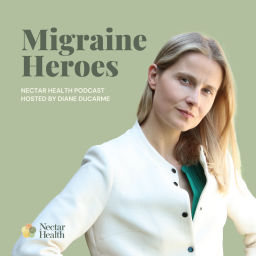
The Migraine Heroes Podcast
Hosted by Diane Ducarme · Diane Ducarme
4.8from 52 ratings
- 216
- Episodes
- 52
- Ratings
- Daily
- Cadence
- 2023
- First episode
About The Migraine Heroes Podcast
Are you doing everything right - avoiding triggers, taking your medication - and still experiencing migraine episodes that steal your day? You're not alone, and you're not broken. Deep dives into the science behind migraine, from food and hormones to sleep, stress, and the unexpected triggers few people talk about. Every topic holds a tension: is ginger a trigger or a remedy? Is stress the cause or the symptom? What does perimenopause actually change? There's rarely a simple answer, so each episode looks at the knowledge and science from different angles, East and West, and turns it into practical advice rooted in context. Migraine Heroes started when Diane Ducarme began helping her sister, then friends, then increasingly more people living with migraine. That work became a method, now used by over 3,000 people, to identify your own unique patterns and find real solutions. This podcast is where that thinking happens out loud. Curious what your own starting pattern looks like? Find out with the Migraine Heroes app: migraineheroes.com/app
- Publisher
- Diane Ducarme
- Category
- health & fitness · health & fitness · health & fitness
- Language
- en
- Explicit
- No
- First episode
- 9 Aug 2023
- Latest episode
- 7 Oct 2026
Latest episodes
216 episodes in the feed.
7 Oct 2026
Should You Tell Your Employer About Your Migraine? Who to Tell, When, and How Much to Share
5 Oct 2026
Silent Migraine & Visual Aura Without Headache: Kaleidoscope Vision, Zigzag Lines & Blind Spots
2 Oct 2026
20 Years of Looking in the Wrong Place: Susanne's Migraine Story
Who has been a guest on The Migraine Heroes Podcast
Names identified in recent episode analyses. Showing up to five guests.
- Cassie
- Janelle
- Jane Wake
Reach and audience
Public platform figures. Ratings count people who left a rating, not total listeners.
- Apple Podcasts (US)
- 5.0 / 5
- 13 ratings
- Spotify
- 4.7 / 5
- 39 ratings
Podcast Authority Score: 60 / 100
A composite of feed quality, social presence, YouTube performance and engagement. Read the methodology.
- Quality
- 90
- Social presence
- 0
- YouTube
- 0
- Engagement
- 77
Contact The Migraine Heroes Podcast
- Guest appearances
- Books guests
Based on episode analysis; this does not confirm that the show is currently accepting guests.
Shows with a similar audience





Questions about The Migraine Heroes Podcast
Who hosts The Migraine Heroes Podcast?
Diane Ducarme host the show. Published by Diane Ducarme.
How often do new episodes come out?
The show publishes daily, based on its RSS feed.
Does The Migraine Heroes Podcast take guests?
Yes. Guests have been identified in episode analyses.
Host of The Migraine Heroes Podcast?
Claim your podcast to manage its listing and keep your show details accurate.
Pod Engine is an independent podcast discovery and analytics service and is not affiliated with or endorsed by this podcast. Artwork and show content belong to their owners. Full legal notice.
Explore this show
Podcast research with Pod Engine