7 Oct 2026
Core Moves and Cues That Land Different
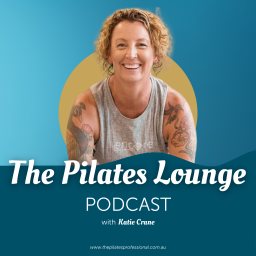
In this episode, Katie Crane takes a deeper look at how we cue the pelvic floor and deep core, and why traditional cues like "lift your pelvic floor" or "do a Kegel" may not be appropriate for everyone.
Rather than treating the pelvic floor as a single muscle that simply needs to be "switched on," Katie explores how it works as part of a much bigger system involving the diaphragm, fascia, breathing, the spine, jaw, tongue, and the way we move against gravity.
She shares practical movement ideas and tactile cues that Pilates teachers can use to help clients develop greater awareness and connection without constantly telling them to "activate" or "switch on" their muscles.
In this episode, Katie explores:
Why pelvic floor function develops alongside rolling, crawling, standing, and walking
How the pelvic floor works together with the deep abdominals and the rest of the body
Why traditional Kegel-style cues aren't necessarily appropriate for everyone
The difference between a pelvic floor that needs strengthening and one that may already be too tight
How stress and tension can influence pelvic floor function
Why it's okay not to know what a client's pelvic floor needs — and when to refer to a pelvic floor specialist
Using the sit bones and pubic bone as tactile feedback
How sitting on a Pilates ball can help clients become more aware of their pelvic floor
Using a rolled towel to create feedback through the pelvis
Connecting pelvic floor movement with the breath
How footwork can be used to explore pelvic floor movement
Why four-point kneeling is such a useful position for reconnecting with the deep core
Using pelvic clocks, tail wags, and spinal movement to create pelvic mobility
Exploring pelvic floor movement during bridges
How the tongue, jaw, and pelvic floor are connected through the fascial system
Using different breathing techniques to regulate the nervous system and reduce unnecessary tension
Why getting out of the chair and spending more time on the floor may benefit pelvic floor health
Key takeaway
Katie encourages Pilates practitioners to move beyond simply telling clients to "switch on their core" or "lift their pelvic floor."
Instead, she explores using imagery, movement, tactile feedback, equipment, breath, bones, and the environment to help clients discover how their bodies work.
The goal isn't always to create more contraction. Sometimes the body needs to learn how to soften, widen, release, and move.
Practical cues from this episode
Katie shares several ways to create pelvic floor awareness without directly cueing muscle contraction:
Using the sit bones
Can you feel your sit bones?
Can you allow them to widen?
Can you bring them closer together?
Using the pelvic bones
Can you bring the pubic bone and tailbone closer together?
Can you allow them to widen apart?
Using movement
Explore pelvic clocks.
Try happy dog, sad dog, and waggy tail movements.
Let the belly hang toward the floor in four-point kneeling, then explore lifting it away.
Using equipment
Sit on a fit ball or Pilates ball.
Use a rolled towel for tactile feedback.
Use the ground or equipment as a source of feedback rather than relying only on verbal cues.
Using breath
Notice what happens to the pelvic floor as you inhale and exhale.
Explore physiological sighs.
Try box breathing.
Experiment with different sounds during the breath.
A different way to think about the pelvic floor
One of the central ideas in this episode is that the pelvic floor isn't working in isolation.
It is part of an integrated system that includes breathing, fascia, the diaphragm, deep spinal muscles, the jaw, tongue, and the way the body responds to gravity and movement.
For Pilates teachers, this creates an opportunity to help clients experience their pelvic floor rather than simply telling them what it should be doing.
Who this episode is for
This episode is particularly useful for:
Pilates teachers and instructors
Movement professionals
Practitioners working with pelvic floor health
Teachers working with pregnant or postpartum clients
Instructors working with older adults
Anyone wanting a deeper understanding of the connection between the pelvic floor, breath, and whole-body movement
Listen to the previous episode
Katie references her previous episode, "Is She Too Tight Down There?", which explores pelvic floor hypotonicity, hypertonicity, the relationship between the pelvic floor and the feet, and the connection between the pelvic floor and a tight jaw.
Final thought
Sometimes the best cue isn't a cue at all.
Instead of telling the body what to do, Katie encourages us to create the conditions where the client can feel, explore, and discover what their body is already doing.
Get out of the chair. Get onto the floor. Move. Breathe. Explore.
And let the body learn.